Fascination with the moon is endemic with all poets and word weavers, me included. The magic of the moon irresistibly casts its spell as the night takes over the firmament. In spite of being 384,400 kilometers (238,855 miles) away from the Earth, the moon’s bewitching magic remains constant, if not ever increasing. It is said that the moon is inching away from the earth by 4 cm a year. Yet the poets gravitate towards it like bees to blossoms.
When we were kids, grandmother used to tell us the story of that old lady who has been sitting on the moon for epochs and sewing endlessly on her rickety spinning wheel. You see that faint black smear on its gleaming face. Scientists say it’s the shadow of the craters but the story tellers say that it’s a blot on her beatific countenance. It’s an old saying “even the moon has a blemish on its face”.
I guess it’s her blemished beauty that beguiles more. The imperfection makes her the perfect muse for romantic imagination. She is the confidante of broken hearts. She listens intently to the rants of unrequited love. She has tears but she hides them behind a glowing visage. And for the deprived it’s the symbol of that piece of round bread or roti that an empty stomach salivates for.
In celebration of this fatal attraction here’s a bunch of moon haiku highlighting how the ubiquitous moon is ever present in thoughts and cadence, rhymes and rhythms, verses and musings :
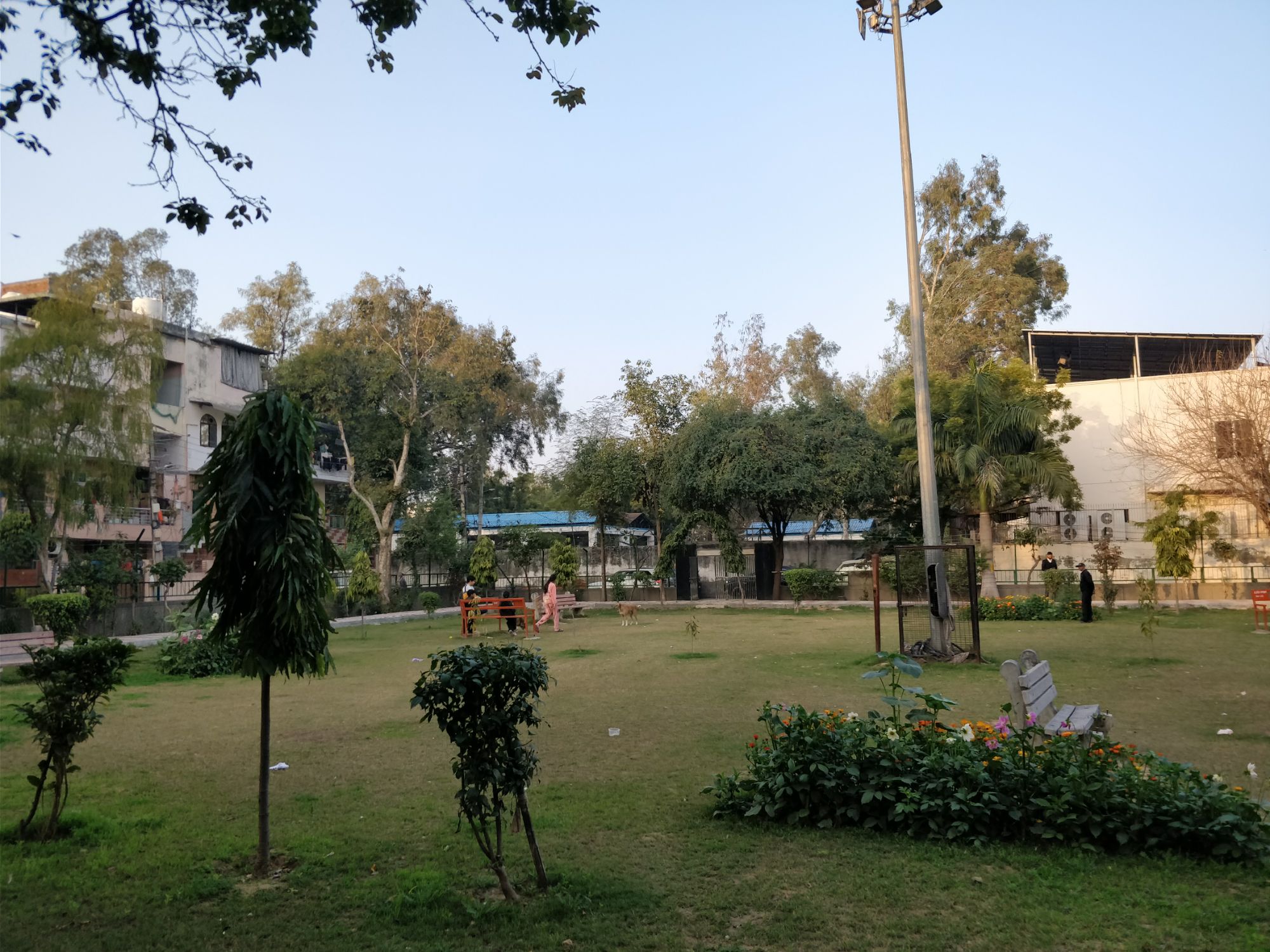
Not too hot not too cold. A clear blue sky with white shiny clouds pinned on it.
Unfortunately, this type of weather does not stay here for too long. Only in Spring (February – March) and Autumn (September – October). However, seasons have their own idiosyncrasies like this year the unseasonal rains have brought back the cold in spring. Oh! That brings me to Luisa’s invite for a Spring acrostic-
🌼🌼🌱🌼🌼
Sudden , swift
Palette of vibrant colours
Resonates with the melodies…cuckoo’s calls
Inspired by the soothing warmth
Nestling alongwith a mild chill…. and a sky
Gossiping with the flaky clouds
🌼🌼🌱🌼🌼
🌼🌼🌱🌼🌼
Prancing , scampering , dancing
Rippling with a grace so
Intoxicating… bewitching
Maiden in a swirly vibrance of
Astounding colours
Visually stunning.. the gardens…boulevards
Echoing the evergreen songs of
Rejuvenation…renewal …growth
Ascendance of SPRING …the enchantress !!
🌼🌼🌱🌼🌼
Having said that, during my stay in Bangalore, which has a mild climate throughout the year, I found it unsuitable for my constitution which proves what we dream of may not actually be beneficial for us.
Nonetheless, I’d like to imagine myself living in an igloo in Alaska. Or in an oasis in the midst of the burning African desert. Or it can be Thar as well closer home – rich with heritage monuments and unforgettable history of romances, warfares, invasions, lost love, devotion and blood curdling revenge!! What about with the Penguins in Antarctica? In the Himalayas with the Yetis? In the deep inaccessible forests with the human hater tribes or the formidable ravines of the dacoit infested Chambal?
But my favourite is the sea side not only because the weather there is mild but also because I can spend endless hours in the beach counting waves provided the beach is not overcrowded or ill-maintained. So many ifs and buts, huh?
I guess mountains are equally majestic – silent, brooding , meditative. I remember while visiting the Dadhikar Fort, near Alwar, Rajasthan, standing on the terrace, we could hear a group of ladies singing on the other mountain facing the Fort. They were going in a row to the temple for some evening ritual. Too far from where we were, we could only hear their song reverberating in the mountainous pathway but not see them. It was ethereal! Goosebumps!!
Have you been to Kalimpong? It is the perfect setting for murder mysteries and spooky stuff. Foggy, rainy, overcast sky, slippery paths winding through hills, cottages with glass windows requiring constant defogging to look out. And it’s cheese, momos, thukpa and tea !! The hilly district has been the backdrop of many cinematic narratives!! Of course the thrilling, suspenseful ones!!!
Contentment is packaged with acceptance and vice versa. Acceptance of what we have. And value it for its inherent worth. Post that imagination overdrive, down on earth, I love the eccentric and extreme weather of where I am now. The variant and ever changing canvas of the sky from season to season. The sudden unexpected U-turns of the moody weather defying the proclamations of the Met Department. Spring wedding rain. Rain giving way to scorching and then humid summers. Autumn sparing us with a short respite. And then that bone chilling winter with its cold waves, hail showers and biting winds.
All that varying , contrasting palette colours my sky. And that whimsical sky is mine, all said and done.
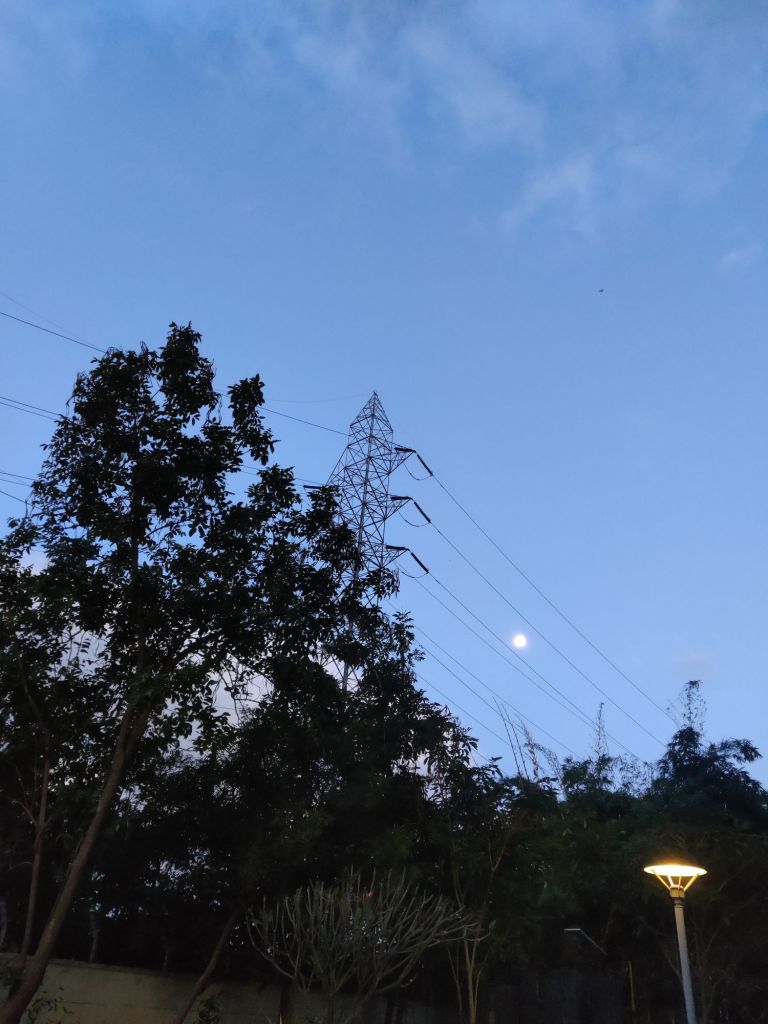
The sky now…
Postscript : The cuckoo is calling out so sweetly even on this gloomy day of drizzles and downpours.
Neelabho Bagchi is an illustrator. He is greatly inspired by another senior illustrator who works under the pen name Abadhut Chaki. When Neelabho’s friend, Poritosh, tells him that he has seen Abadhut Chaki’s residential house in Madhupur, which is viewable from the Shimulpur Halt Station on the way, Neelabho too wants to visit the place once to know his role model a little more.
Poritosh tells him that Abadhut Chaki’s house is unoccupied and no one stays there any longer. Strangely, the railway station of Madhupur (Shimulpur Halt Station) has a weird nickname – Suicide Halt – because many have committed suicide on its railway lines including the great Abadhut Chaki.
Neelabho makes up his mind to go to Madhupur. His choice of career has been influenced, rather shaped, by the sketches of Abadhut Chaki. Perhaps there are still a few of his art works preserved in his home which nobody has seen yet. He wants to curate an album of Chaki’s illustrations as a tribute to his mentor.
Neelabho takes the trip on a weekend. The house, as Poritosh has said, comes to view as he exits the Shimulpur Halt Station. Upon arrival at the gate the precinct looks desolate. But after a lot of hollering, a servant appears – Michhrilal – who has been taking care of the property after Abadhut Chaki’s untimely demise. Neelabho explains why he is there and wants to know if he can see Chaki’s works. To his disappointment Neelabho comes to know that Chaki has destroyed all his works before his death.
As evening is approaching, Neelabho wants to know if there is a hotel nearby where he can spend the night and wander a bit around. Michhrilal generously offers him a room in the house itself but cautions him not to prowl around at night. As Michhrilal leaves for home in the village, two miles away from the backwater town, Neelabho decides to take a walk to the station.
The halt station seems unmanned. No locals or goods trains pass this line. Very few barring one or two Express trains pull up at this station. The entire area bears a deserted look. Not even a menial worker is seen to be around let alone railway employees. Neelabho, in a pensive mood, sits on a bench to pass some time.
As dusk falls and he is about to leave a middle aged bespectacled gentleman happens to stroll in. He pleasantly greets Neelabho and introduces himself as Aniket Chatterjee, a local who used to know Abadhut Chaki. Neelabho tells him why he is there, his disappointment in not finding any of Chaki’s works at his residence and that he is leaving empty handed the next day after spending the night in Chaki’s house.
Aniket tells him that there is still some brilliant work of Chaki remaining in the house. He knows where his sketch book is. Michhrilal, he says, is loyal to Chaki and does not disclose this piece of information to anyone. But Aniket promises to come by at night and show Neelabho the masterpieces which will prove once again what a talented illustrator Chaki is.
Neelabho is grateful for this unexpected turn of event and promises to wait for Aniket however late he may be. Night deepens. Neelabho keeps waiting. Aniket does not arrive. Neelabho is sure Aniket must have forgotten his promise. But no. At about midnight there’s a knock on the door. Aniket has come.
Aniket seems to be well conversant with the whereabouts. He takes Neelabho from room to room showing where Chaki used to sit and illustrate, where he burnt down his sketches and finally to the cupboard wherein the sketch book is kept containing his last works. As Neelabho opens the sketch book which has five of Chaki’s awe inspiring drawings he is stunned to find that each of the artist’s sketch corresponds to the views around the premise which surprisingly pulsates to life page after page.
Aniket tells Neelabho to take a walk with him and open the pages as he reaches the vantage points from where these have been drawn to compare them with the live scenes in order to fully comprehend the extent of the master’s brilliance and talent – the window from where the moon is smiling down on the trees, the short wooden walkway over the narrow stream between the station and the house and finally to the station, no, the railway tracks on which rushes the Express train at night – his ultimate signature of stupefying artistry.
Neelabho follows Aniket hypnotically drawn by the enchanting spell of the scenes so immaculately captured page by page not realising he is moving inch by inch towards his own end….
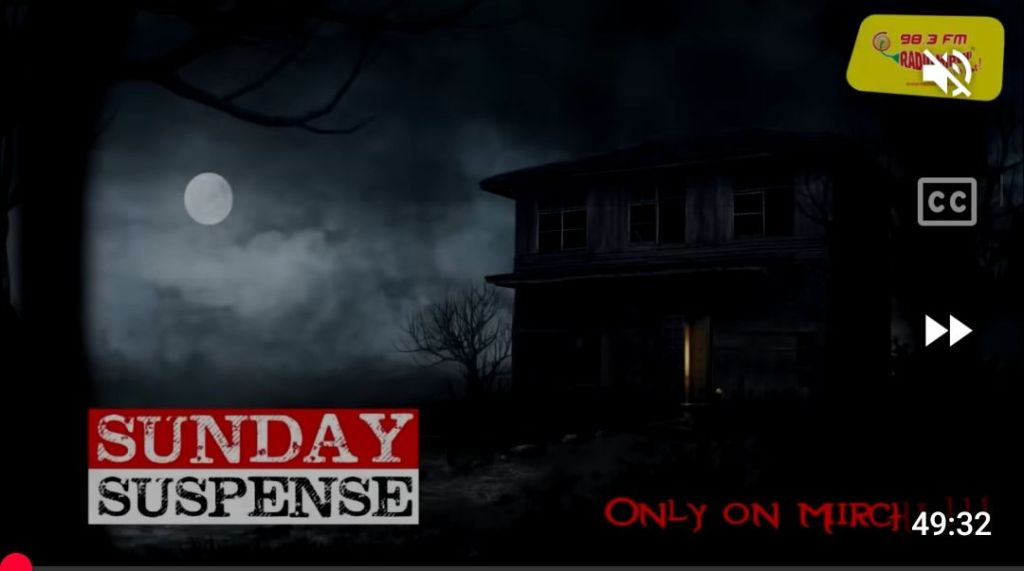
Aankar Khata or The Sketch Book, a short story by Himadri Kishore Dasgupta, is a spell binding tale of afterlife revenge brought to life by engrossing audio narration on Sunday Suspense on Radio Mirchi.
Bengalis have a fetish for ghost and detective stories. No wonder I choose to go back to these genres again and again. As the caption suggests, Radio Mirchi does an enthralling job of audio adaptations of such stories of master wordsmiths.
A Little About The Author:
Born in 1973, Himadri Kishore Dasgupta emerged as a promising storyteller in 2005. This story has been taken from Sandesh Magazine (2018 publication). Sandesh is a children’s magazine started by Satyajit Ray’s grandfather, Upendra Kishore Roy Chowdhury, and later managed (after his death) by his son Sukumar Roy (Satyajit Ray’s father) and thereafter by his grandson, Satyajit Ray himself.
Trivia:
It is to be noted that this short story probably predates the inception and pervasion of the internet. Abadhut Chaki presumably does not have a public profile or domain. His personal details are little known to his readers and admirers.
Public internet access was officially launched in India on August 15, 1995, by the state-owned Videsh Sanchar Nigam Limited (VSNL). While public access began in 1995, the internet first arrived in India in 1986 through the Educational Research Network (ERNET), which was restricted to academic and research communities. The service was initially launched in Bombay, Delhi, Calcutta, and Madras.
Since 2005, the growth of the broadband sector in the country accelerated but remained below the growth estimates of the government and related agencies due to resource issues in last-mile access, which were predominantly wired-line technologies – (Source: Wikipedia).
All said and done, this is a scoop of Saturday spook to regale you all amidst the mundanity of life.
This morning I opened the window to find its been raining. It rained yesterday too. As summer was confidently striding in unexpected rains lashed out. Today it is six degrees cooler than yesterday. And that’s quite and sudden cold.
Rain always makes me sad. A kind of wistful sadness. The downcast look of the sky adds to it.
Today, I felt like capturing the sky in a video. The prattle of the rain stopped a bit to continue again. In spite of the mood of the day, the vegetable seller is right on time. You can hear his voice in the background.
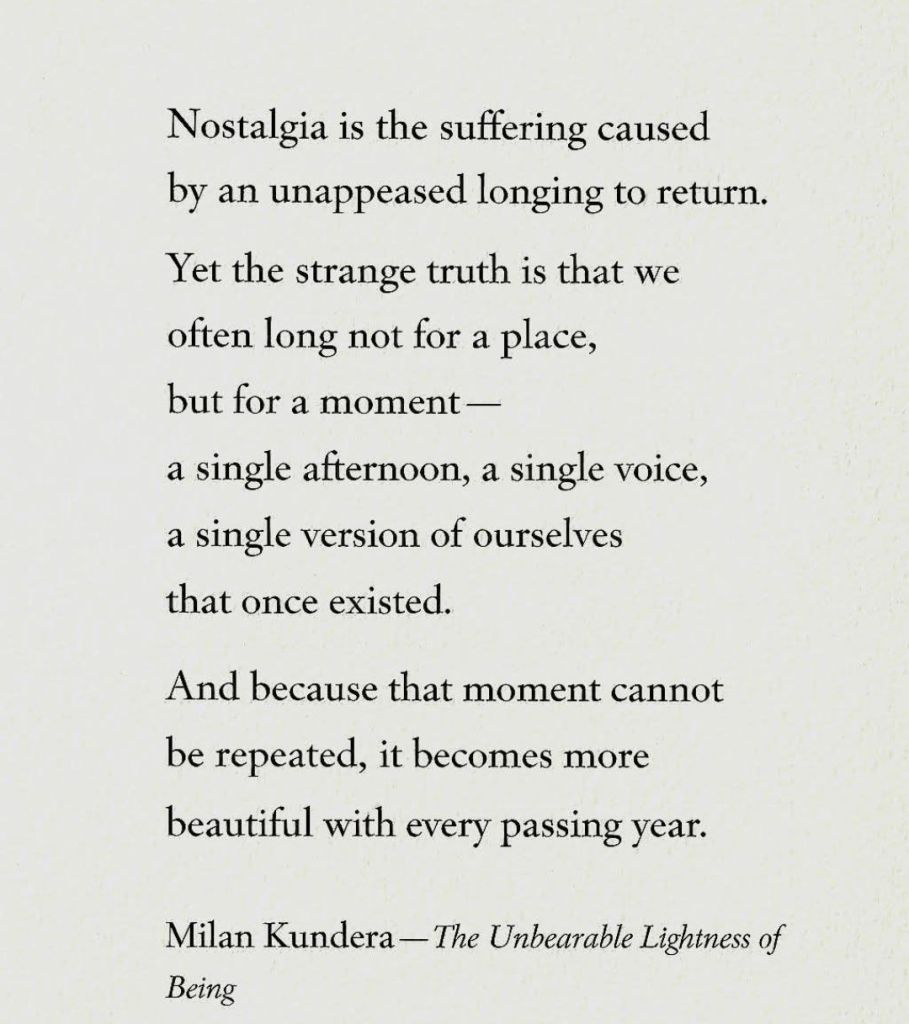
Again, to go with the rainy day, I came across this beautiful passage on FB and thought of sharing.
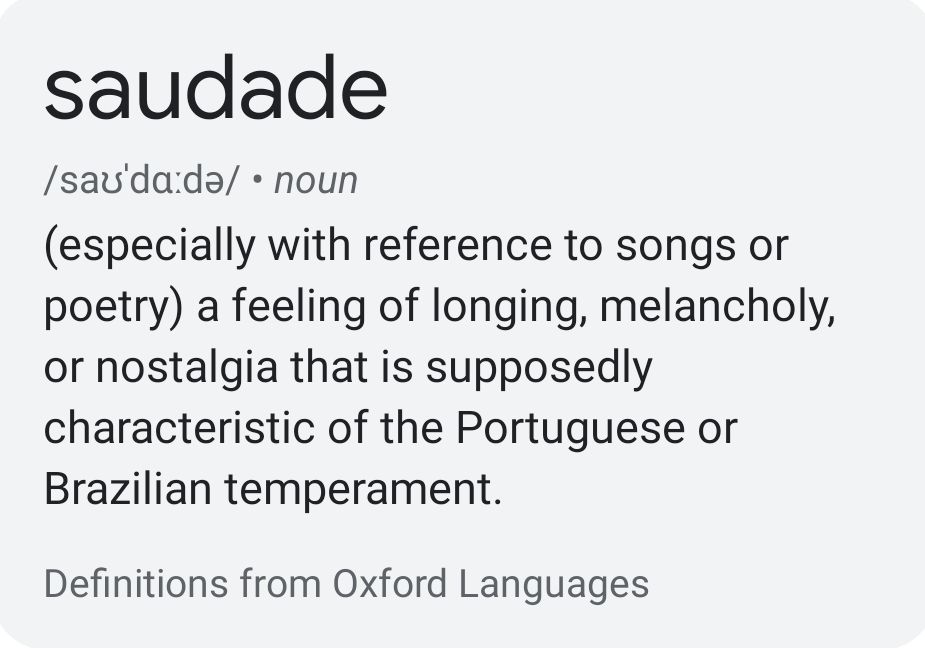
I thought it was appropriate for today. Rain brings in nostalgia too. The word that comes to mind reading this passage is sadaude.
Sadaude is a Portuguese word. It’s one of those untranslatables. I guess all untranslatables are culture-specific or deeply ingrained in the temperament of a particular populace.
Early morning reading Ganga’s post on GenX I kind of felt prehistoric and said so in the comment. GenX is the generation born between 1965 and 1970. As suggested by her, I googled to find more about my generation.
So, I am still a baby and that I guess will lift me up from my saudade.
Incidentally, have any of you read Milan Kundera? If you have, do let me know.
Here’s a little poem to make up for the grey climate outside.
A rainy day
A sip of chai
A little chit chat
Let time go by
Hum a tune
Tap your feet
To the prittle
Prattle of rain
All is not perhaps
In vain on this
Sultry day of rain
Say goodbye to
All your woes
Welcome friends
And also foes
A rainy day is
Meant for that
To forgive and
Forget what
Has gone by
A rainy day
A sip of chai
A little chit chat
Let hours fly by
Having said that I am off to prepare breakfast which I think is the most difficult task of the day because I am never sure what to break my fast with.
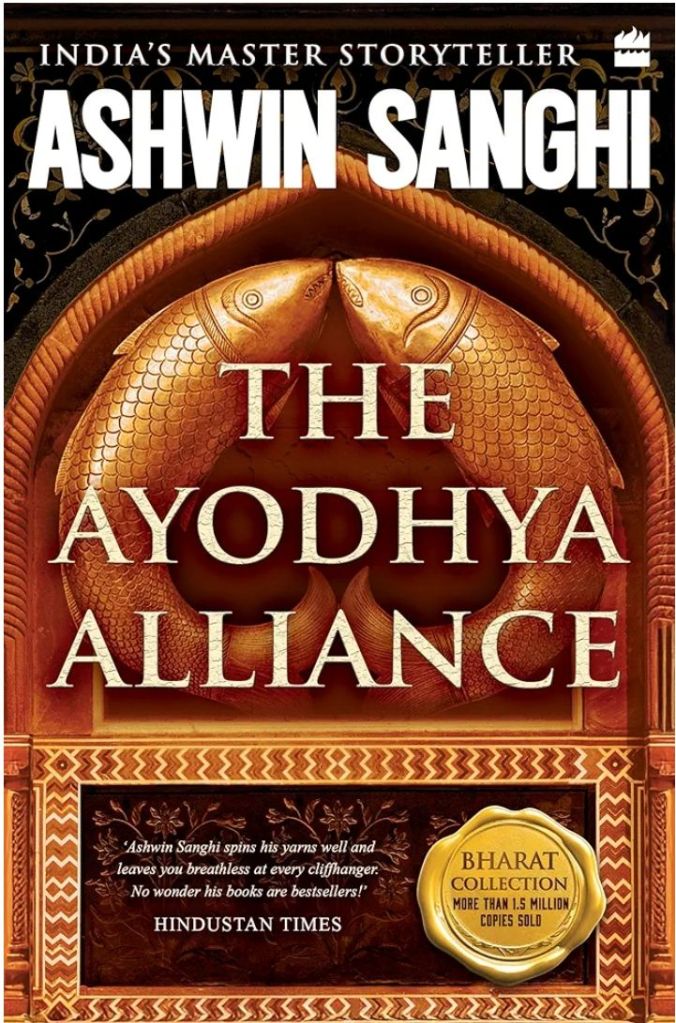
It took more than a month to finish reading TheAyodhya Alliance. I was determined not to hurry and went with the pace of the book. Every book needs to be read the way it is written. This book heavily relies on history. There are many characters. The narrative goes back and forth from present day to ancient to prehistoric times and back. The chronology at times is not always symmetrical. At times the narration jumps from one period to the other making it hard for the reader to retain continuity.
There are three main streams on which Ashwin Sanghi has based his story –
First – An ancient and powerful but secret technology which predates even the times of the epical battle of Lanka between the demon king Ravana and the exiled prince Rama, as chronicled in the Ramayana. On his deathbed the Mahagyani or the super intellectual but arrogant king Ravana passes the secret of the Atmalingam to Lakshmana, brother of Rama. It’s only with Rama’s touch that the Atmalingam gets activated into the Dwaitalingam – the cosmic balance of preservation and destruction – the catalytic technology subsequently lost in time.
Second – The journey of the 157th Dwaitalingam Rakshak (Protector of the ancient technology), Padmasen, from Saketa, that is present day Ayodhya, to Korkai , that is present day Kerala. From the position of a trusted advisor to the power crazy Saketa king, Vidushika, to being demoted to a cruelly tortured prisoner of the same king to narrowly escaping to Korkai with the help of once-a-beggar Somadutta and returning to Saketa to become the benevolent king initiating an alliance between the four corners of the world – Damascus in the West, Korea in the East, Korkai in the South of India and Saketa in the North of India – called the a-yudhya (which cannot be battled) or the Ayodhya Alliance for peace, progress, development and defence, through trade and transference of a technology, guarded by him with his life.
Third – The legend of an Indian princess, named Suriratna or Shambavalam or Sembavalam, also known as Queen Heo Hwang-ok, navigating high seas to marry the Korean King, Kim Suro, as per Korean chronicle Samguk Yusa. Millions of Koreans trace their matrilineal lineage to her.
These three streams merge with the present day search for a unique and invincible technology to power the defence of the country to safeguard its volatile and in parts porous borders.
As usual, Sanghi dabbles in history, debatable conjectures, symbols, science, technology, myths and mythology and imagination to build up the plot weaving in the sub plots lending credence to his craft. The geographical expanse and the time span through which the story gains momentum are enormous. Known as the Dan Brown of India he does justice to the epithet though faltering in parts.
Given the date of publication of the book, the reference to Operation Sindoor is confusing – the dates seemingly overlap. Likewise, the mention of Ram Janmabhoomi and the effort of infusing a correlation between the temple site and the site of the hidden technology gives the book a motivated perspective.
Those who are well versed with the mythological epics will know better – though it is mentioned that Ravana did impart profound knowledge to both the brothers, Rama and Lakshmana, before breathing his last, whether he transferred any cosmic secret received as a boon from Lord Shiva remains dubitable.
I loved the preciseness and lucidity of narration, the fitting and economical use of words and expressions throughout and more specifically to describe the battle scenes. The violence depicted in the book is not overdone and seems required in tandem with the plotline. Sanghi’s delicate venture into romance in one of the sub-plots is pleasantly surprising. His signature information overload is spread over five hundred odd pages and therefore not that overwhelming.
However, the character arc of Somadutta from a destitute to a disloyal prison guard to a rebel turned kingmaker seems in need of more detailed development perhaps at the expense of lengthening the narrative. Similarly, the root of antagonism between Soju or Kim Suro and Talhae, both orphans and brought up by the respective chieftains of Garak Confederacy of Korea, again requires a little more depth and clarity. And above all, how the successors of Lakshamana, the first Dwaitalingam Rakshak (to Padmasen), were chosen through the course of history, remains unexplained.
Sanghi has time and again reiterated that he is not a historian but primarily a fiction writer. The liberty taken by him in fictionalising history and raking up conjectures in a bid to plug in the gaps in tracing the historical roots of development of science, technology and human civilization, in the final analysis, appears justified though a bit far fetched and tests the elasticity of imagination, especially, the utopia of Kumara Kandam.
Having said that, this is, no doubt, my first significant reading of the year.
Life is a strange thing. At times all your well thought out proposals and plans come to naught and on others you are showered with what you had never thought of or imagined.
Living in Kolkata, a yearly outing with uncles and aunts was a ritual. I loved travelling then. Every year before the festive vacations me and my uncle (father’s youngest brother and my local guardian) would meticulously make plans which places to visit. That is how I came to tour the outskirts of the City of Joy – Digha – the seaside resort, Church at Bandel and Hangsheshwari Temple at Banshbedia, Tata Steel Plant at Jamshedpur.
But there were many more which were dreamt of but did not fructify. The hill station of Darjeeling, of course via the nestling-amidst-clouds-Kalimpong. The toy train rides in Darjeeling and the mesmeric sunrise at Tiger Hills in Ghoom.
My paternal aunt who had been lucky to visit these places gushed,”Oh! It’s absolutely enthralling! As the peaks get imbued with the rays of the rising sun, one by one, the different shades splashed over the hills will leave you speechless. Only jeeps can go up the steep path. You’ll have to hire one…. There’s a particular time to experience the colours…Our jeep came very early. 04.00 am sharp is the time to reach to see Mount Everest and Kanchenjunga lit up from Tiger Hills, of course, in good weather…. You know, I can’t bear the trip uphill. But the driver was very good. He said, Mayi don’t be afraid. I will take you safely there.” Travel tales which ignited my imagination to no end.
“This time Puri’s a must,” said uncle. But you get a darshan of Lord Jagannath only when He calls you!! So Puri, with its rough sea and a Holiday Home located right next to the beach remained a dream only.
Darjeeling to Kolkata is merely 644 Km. by road around fourteen and a half hour journey. One can go by train as well. Kalimpong is on the way. Kolkata to Puri is just 449 Km. by road and a six hour journey by Vande Bharat (train). Shantiniketan, famous for Tagore’s Vishwa Bharati (University), is 164 Km. by road. We could have caught the train from the station right at the back of our house. Father used to attend the Vasant Utsav regularly at Kavi Guru’s. Yet…
Back in Delhi in the office we colleagues made plans so many times of visiting the Dargah ofHazratNizamuddin Auliya during lunch break. It was that close. But never could. Even recently, the plans are still being made … One of my co-passengers in Delhi-Howrah Rajdhani Express had once told me it is a must to visit Nizamuddin first if you are going to Ajmer Sharif. From my office to the Dargah is a seven to ten minute ride by auto. Delhi to Ajmer Sharif max 400 Km. – at most a six and a half hour journey by Vande Bharat.
If you still consider that long enough what about Chandni Chowk in the walled city? Not even an hour’s ride by the Metro. And the Metro Station is a five minute walk from my home. Yet again…By the way Chandni Chowk is a shopper’s paradise and a foodie’s haven with its paranthewali gully, authentic Haldiram, its chaats, chhole puris, kebabs and naans… An array of street food. I can go on…
But having ranted to my heart’s content I staunchly believe I have reached whereexactly I was intended to be. With my current health condition, weak knees and calf muscles perhaps travel is one thing which should be counted out. Here, my Didi (elder sister) puts a finger on the lip and says,”Shh! Think positive and talk positive. You never know when the angels overhear you and say tathaastu.”
So I am keeping my fingers crossed 🤞.
Footnote: Tathaastu is a Sanskrit word meaning so be it.
We all want peace but we don’t know how to be in peace. I have given it a thought and come to the conclusion that only simplicity or Saadgi can bring peace in life.
Simplicity means simple living, simple food, simple attire, simple thoughts and company of simple people. The last is the most endangered breed in this world. Nonetheless.
Bereft of all entrapments and with a decluttered mind I guess we can recognise peace and experience it.
When I say simple living I don’t exactly mean the life of a hermit. By simple I mean giving up on , as Delhites call it, shoshabaazi or showing off. Our next door neighbour (first floor) has decided to remodel their flat. Ocassion – son’s upcoming marriage. Remodelling in this part means making the impossible effort to convert a flat into a kothi or house – an enormous and time consuming project – yet it’s a trend.
Walls, including the load bearing ones, have been stripped down and a 2 BHK has been turned into a 5 BHK flat – comparable to a pigeonhole. Now they want to encroach more and construct a balcony which will block light and air of other flats including mine. The common stairway has been extended. The electricity meter room has been shifted from one end to the other, which if reported, is punishable. A huge gate has been installed covering the passage way.
Battles of words have preceded their devious approaches to which the entire Block has been a party. My humble submission to this fracas is why disturb the architecture of a well built, well lit, airy apartment in the first place? Why not be contented with what one has got ? Is it a decoy to disguise the flaws of a not so eligible groom ?
The long and short of the story is the noise and pollution of this seemingly endless construction is most disruptive of the peace of the neighborhood.
Sometime back one of my well placed colleague was worrying about the financial viability of retired life. She wanted to know how much savings is required to lead a comfortable life post retirement. I think, here the issue is not the money one has or should have but what sort of life one wishes to lead. Of course, if one aspires for an Ambani-esq lifestyle no amount of savings is enough.
In fact, in my second innings, I am realising more and more that throughout life I have hoarded much more than required. I have a wardrobe bursting with clothes I don’t have ocassion to wear. I have gizmos which have lesser and lesser utility. I eat frugally because my health does not permit otherwise. So where does peace reside ? In accepting the fact that there can be happiness in minimisation – Kam mein zyada – more in less – a slogan popular during COVID.
Coming to think of it, COVID has really taught us the true mantra of peaceful living but post COVID we have again gone back to our usual hankering selves.
So, when my dear co-blogger Nusrat of Her daily Doses fame, asked me to share a recipe, in one of her comments, I wondered what to post for the mistress of authentic and exotic Kashmiri Wazwaan. Recently, I have come across this Nepali dish on the net, tried and found it to be again very simple, healthy and tasty. While on the subject of simplicity I thought this would be the best. It’s known as Chukauni varied versions of which are available on You Tube and Insta. I made it both the vegetarian and non-vegetarian ways but relished the former most.
Here’s the process –
To a bowl of boiled potatoes cut in medium pieces add chopped onion, green chillies (as per spice level), coriander leaves and salt (to taste). Take around 250 gm (for four to five big potatoes) of whipped curd (preferably home made) and mix well with the potatoes and other ingredients.
Now for the tempering – in two table spoonful (not more than 23 gm) of oil put cumin seeds, black mustard seeds, fenugreek seeds (just a little as it is bitter in taste), kasoori methi (dried fenugreek leaves) and half teaspoon of degi mirch powder (mildly hot red chilli powder only for colour). Let the seeds splutter then add the chhonk to the bowl of curd mixed potatoes and toss well.
The beauty of this recipe is the innovation with the tadka or tempering. If you wish you can put fennel and sesame seeds as well. I have thought of adding flax seed and curry leaves next time. Green (mint or coriander) chutney will also go well. The taste is absolutely chatpataa (tangy).
Chukauni can be made with chicken as well. Lightly sauting the chicken is advisable and cooling it before adding the curd. For tempering diced ginger and garlic are used with degi mirch powder. Likewise, the potatoes and onions can also be lightly sauted for the veggie version.
Both the versions are easy to make, light on stomach and lip smacking in taste. Both can be had with bread, roti or rice. But do have it cold or at room temperature. Warming up, I don’t think, will be a good option.