The Knack Of….


Do you ever see wild animals?

Welllll…..

I guess by now everyone knows that I am an animal lover, more specifically, a caninetrovert.

For certain very personal reasons I have not planned or undertaken any trips away from home for very long now.

Yes, If ever I do I will love to visit animal or bird sanctuaries among many other preferred sites. Till such time …. Discovery and You Tube shall suffice.

However, what makes this prompt interesting, even intriguing, not to say weird, is something entirely different as well as relevant.

Do you ever see wild animals? Yes, I do. Not in flesh and blood per se but in the faces of the worst possible animal God has ever created unintentionally, I presume – humans.

Yes you read right.

I have this habit of seeing animal faces and characteristics in humans and believe me they help me instinctually to deal with that particular person accordingly.

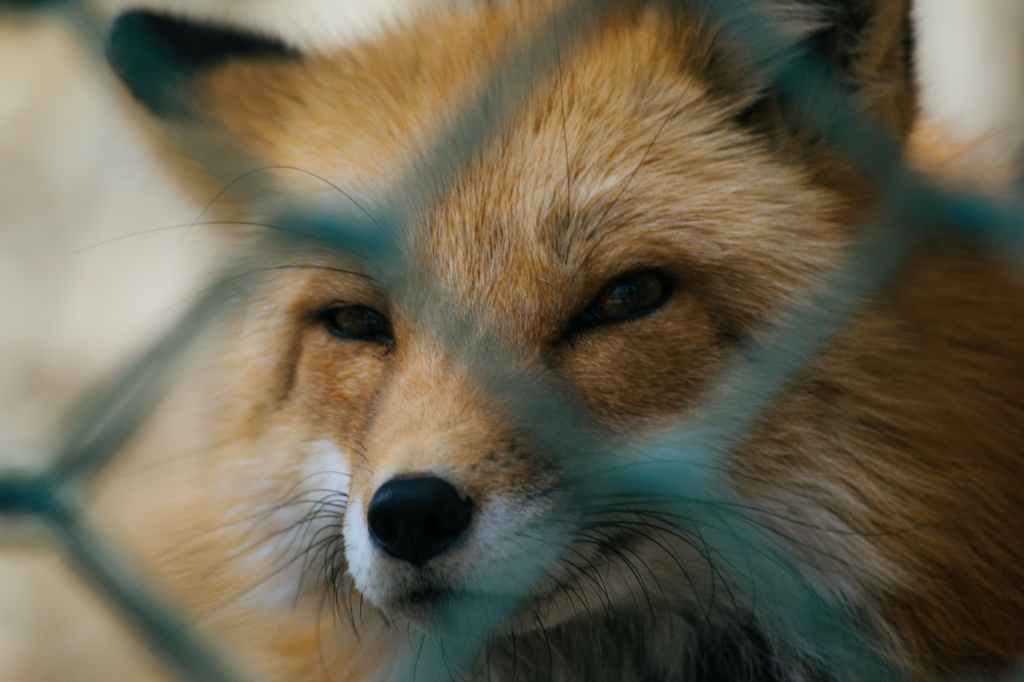
If a person has an uncanny resemblance with the fox, I will be careful dealing with him/her. Because foxes are supposed to be sly creatures. Aren’t they?
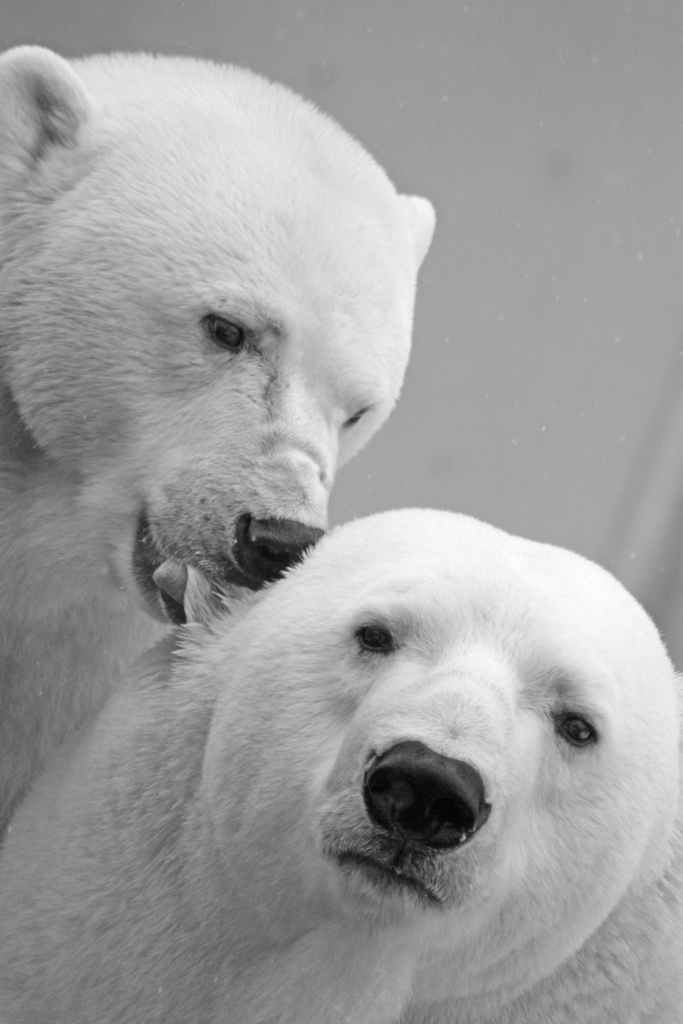
If someone reminds me of a polar bear I will be kind of relaxed coz polar bears are cute.
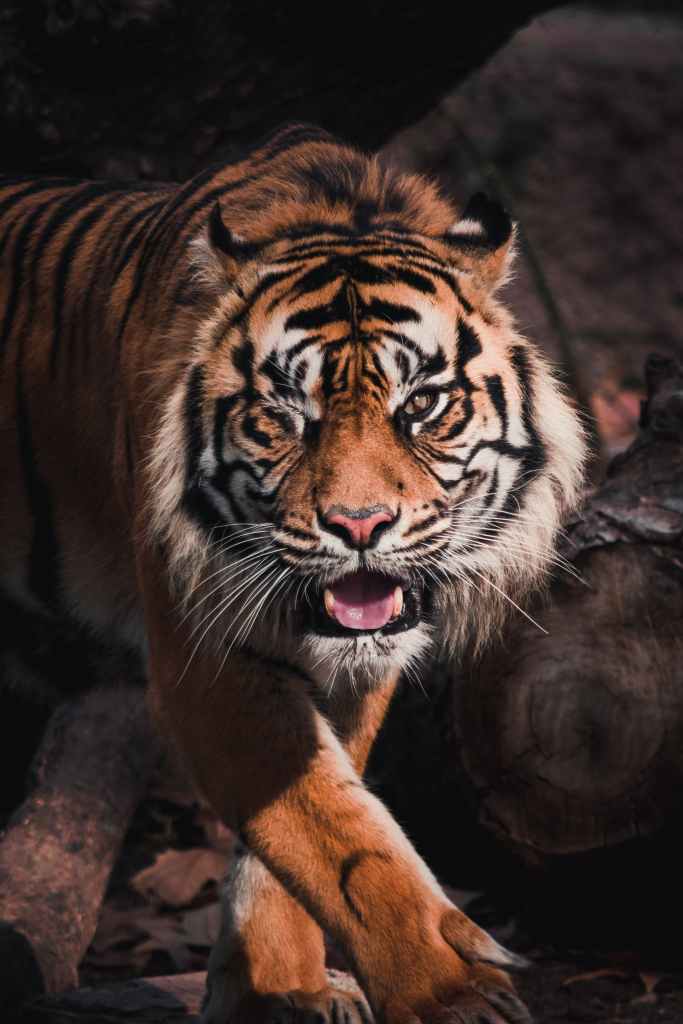
If someone has the qualities of a tiger I will be wary of that person. Because they can eat you up without your knowing.
Those who look like cows are considered docile. The saying in our part of the country goes – “he/she is such a cow!!!”

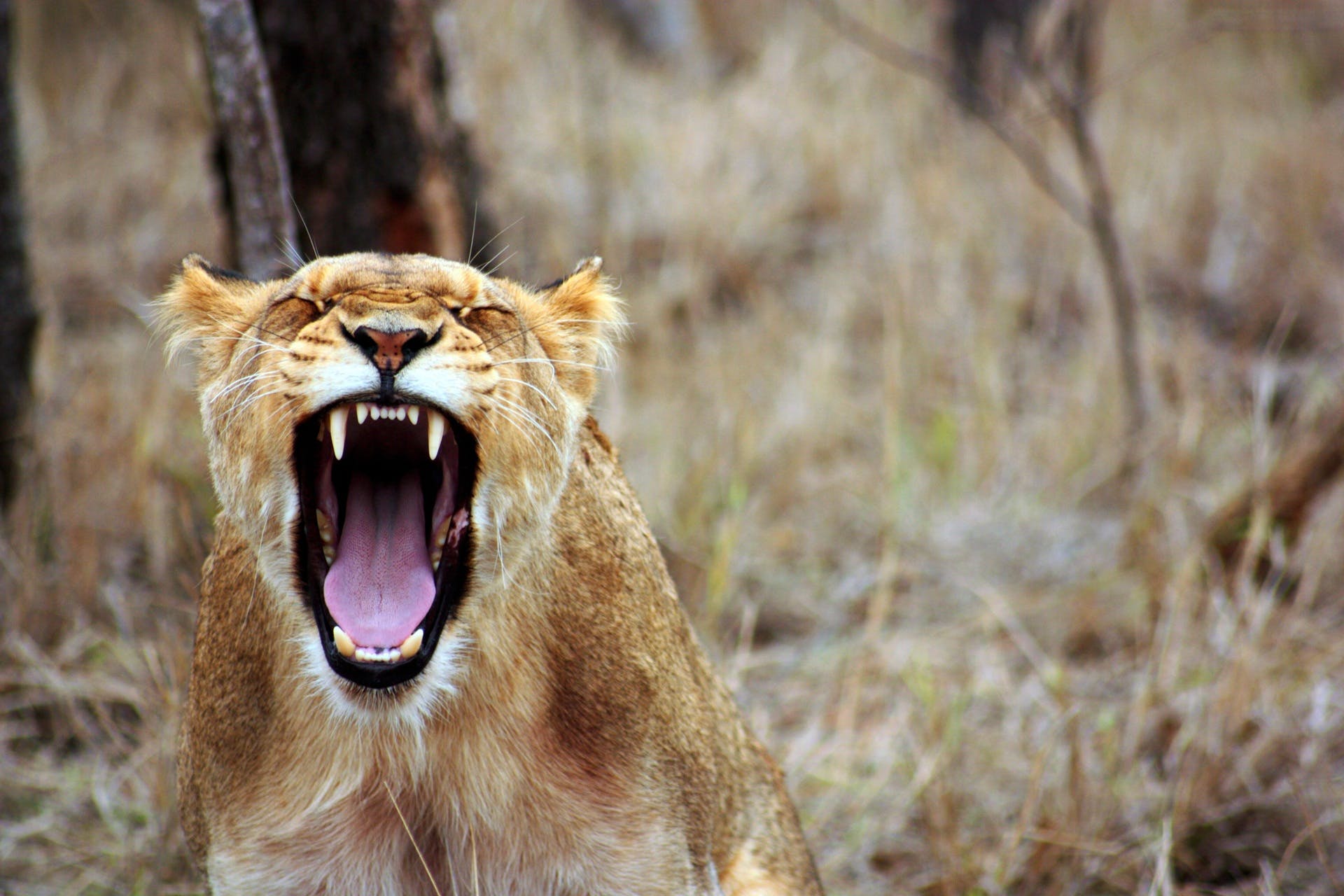
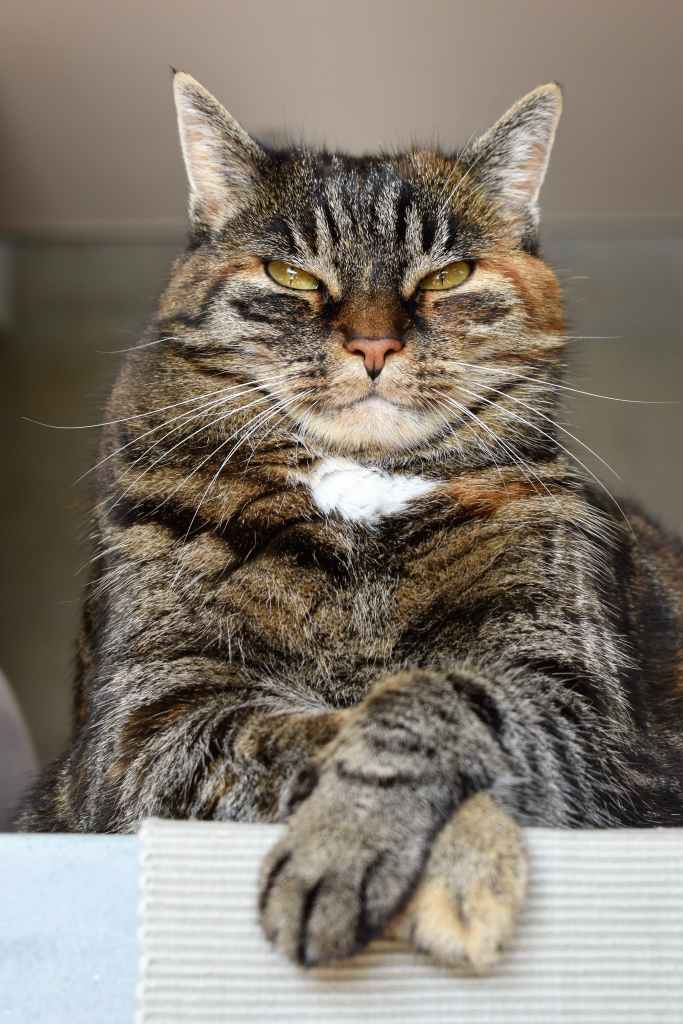
Feline grace is a symbol of contempt and sense of superiority. I stay away from smug and scornful people.
I love those who look like lazy Labradors. They are basically happy-go-lucky personalities with a glutton for good food.

I have seen usually men are attracted towards horsy women. They are generally of masculine built. Mostly sports person. What makes them so attractive, frankly, I do not know.

The one who reminds me of a sprightly deer is personification of innocence and freedom.

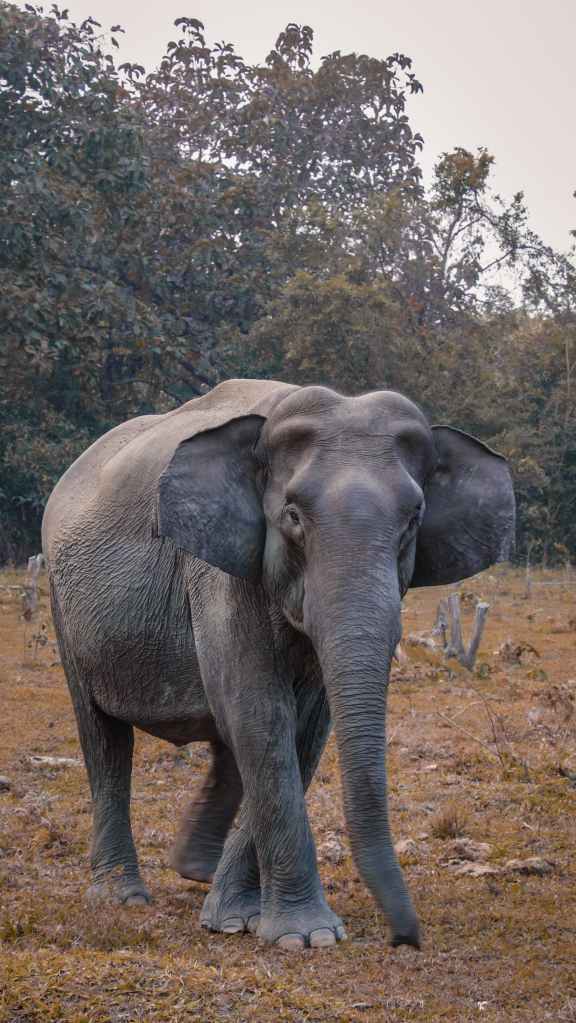
I love the elephantine gait. They are highly intelligent and can’t care less types. They exude ancient wisdom and respected unquestioningly.
This is just to give a few examples. Then there are rats, bulls, owls (yes, birds included), billy goats….

But humans are complex creatures and do not manifest a singular character alone . They may be a deadly combination of good and evil…ugly and beautiful.

So again I go by my intuition…..

I am by nature an observer. If you leave me with a room full of people you will find me sitting in a quiet corner watching them in action. That slight twitch near the eye. The one who is habituated to grab centre stage. The loud laugh. The cacophonic chatter. The one who only smiles knowingly and roams around with a drink in his hand. The one with a scoff. The other with a frown. The one with a florid look. The one with a sheepish grin. And then the loner who will surreptitiously move towards the terrace gazing at the sky unmoved by the fracas!

All of them have their.animal instincts genetically embedded in them. That sudden turn of face. That shaft of light playing on a seemingly saintly visage which sends a chill down your spine. And you know who to be careful of.

Imagination?

Not exactly. Try that out once and you will know….

A famous Bengali pulp fiction dealt with the same subject. Nagor Darpane ( The Mirror Of The City) wherein the protagonist had this uncanny habit of drawing similarity between man and animal. He was considered mad and put behind bars.

Listening to the story I had this sudden self-doubt. Am I mad too? Do I have a streak of lunacy in me?

Who hasn’t?

Those who will read this post can take me on face value or judge on their own.

I leave it to them…

But in support of my theory I can only say this unusual trait of finding the realm of intersection between the wild and the so called civilized have often saved me from misplacing my faith on the wrong ‘un.

Rest is for you to decide….
All pics from Pexel and Pixabay

My Shortcomings


What is one thing you would change about yourself?

I have many.

But the one which is most damaging is anger.

Anger is supposed to be one of the six enemies of humans as per Hindu Shastra/Dharma. These enemies are not external but internal which we require to control or completely let go to elevate to a higher level of ‘being’ spiritually as well as as a member of human society.

Unfortunately, mostly one takes pride in one’s shortcomings. I was very proud of my anger. It was my driving force. Also an armour to shield my vulnerabilities. Let’s see who has the gumption to rub me the wrong way ….etc…..etc….

If you are an angry person and you show that off like a medal no one is going to come near you, befriend or disturb you, encroach into your domain, cause you worry or fear. You are left alone. Safe in your cocoon.

Basically, you don’t want trouble. You are non-interfering and peace loving. You want the world to be like you. But it is not. So you use anger as a tool to achieve your safety, security and peace. But that is not a very great solution. It never happens like that.

Anger is killing because it destroys rationale. An angry person does not know what he/she is doing or saying. In fact anger cannot handle a situation properly which is it’s cause. Extreme anger is all the more destructive.

For some, like me, anger is the only expression/ reaction to varied stimulus.

If I am unhappy I am angry

If I feel victimised I am angry.

If something is against my principles I am angry.

If I am hungry I am angry

Yes, you have heard me right. Even hunger can cause anger. 😊 At least in my case.

Getting angry and showing anger are two different things. Sometimes it is necessary to show anger. But then show of anger is in your hand. It is deliberate and to some extent regulated or guided. It’s better than a sudden outburst. Guided anger helps you to make your point home because you have not given up on your ability to rationalise completely. It’s like flying a kite. The thread is in your hands and you know how much to let go and how much not to.

But uncontrollable anger often leads to incoherence of thoughts and speech. Your brain is numbed by the overpowering emotion. You may even pick up something and hit your opponent. It’s kind of temporary madness blinding you.

With my lousy neighbour about whom I have earlier talked about I am often uncontrollably and undeservingly angry. I have violent thoughts where they are concerned. Their way of speaking is most impolite to put it very lightly, they can only see their own perspective which is always most illogical, their actions are beyond the limits of social etiquettes and norms. Now, I am justifying my anger towards them but contrarily I should be laughing it out because they are so idiotic and unworthy of investing any emotion whatsoever.

Recently two of my colleagues betrayed me. One was my lunch partner and too junior. However, she somehow got it into her head that I was conspiring against her. The second one was again a junior whom I was patiently handholding to learn the ropes of my work area as he was to be my successor. Also I took extra care with him because he was specially abled. He made a mistake in work under misguidance by somebody senior. I pointed it out to him and that made him go around defaming me behind my back

In both cases my anger did not germinate out of hurt but in principle I found their actions against basic values which we uphold in interpersonal relations. In the first case, being my colleague of many years, I feel she should have cleared the air with me first before going to the superiors falsely complaining about me. In the second case, just because my successor wished to remain in the good books of the senior, who is incidentally also our boss, thought it easier to put the blame on me rather speak against his boss who wrongly guided him. It was his personal weakness. People cannot be changed. It is we who have to change and perceive actions and thoughts of our opponents from a different angle. Here I fail.

Deeply analysing myself I also feel anger has roots in our growing up days when we were too immature to fight back or give fitting replies to injustices done to us. That anger at the perpetrators as well as at our own selves for not appropriately reacting, rather retaliating, to the situation is somewhere embedded within slowly growing into raging flames devouring us as well as others when there is a recurrence of a similar situation of perceived injustice. Now the issue is injustices proliferate and pervade in every walk of life in one form or the other. Thus, scope of diminishing anger is slim given the situation.

I have tried many methods to let this anger dissipate. Meditation is one of them. Self observation and post facto assessment of how I confronted the stimulus is another. Mostly it’s disastrous. I cannot get normal with a person with whom I have had a show down very easily. That is another blockade which has made me look into other options of facing anger invoking, peace disrupting, bothersome situation.

I also observe others. Their managing abilities. Anger is a wasteful emotion. It drains you. In my case the aftermath is terrible. I get severe headaches and sleepless nights after an ugly confrontation. Ill-health taught me better not to react impulsively. It’s better to talk it out. Clear the misunderstanding or communication gap. Better still to give a piece of my mind without losing equanimity.

Another major obstacle is that I cannot hide my feelings. I am too transparent. There are many who are adept at masking their feelings and then taking a first class revenge at the opportune moment. I am the opposite. I will punch the irritant then and there without a second thought.

So all my readers who suffer from similar malady please read this post carefully. See whether it reaches out to you and makes sense.

Good living is something which is never taught under any syllabus. We have to learn it on our own weighing the pros and cons and what makes us live life without remorse, repentance and resentment.

Till then 👍👍👍

Night Melting Into Day


Are you more of a night or morning person?

As I look back I realise how routine changes as time passes and we age. In my school days I loved to stay awake at night and study. I guess the silence of late nights facilitated concentration and focus. But as I have written earlier I was not at all studious in school. I loved the idea of studying more than I actually studied.

However, in college I became more disciplined and decided to do well in studies. So I did. I do not remember whether I burnt the midnight oil then. But I definitely remember maintaining strict routine, only studying hard and giving up a lot more than I did in school.

Even a few years back binge watches kept me awake late into the night. Though in the morning I would not feel quite bright. Even then…

But now it’s absolutely different.

If I were watching something on mobile or reading I just wouldn’t know when I would fall asleep. Usually I feel quite tired while commuting back from office. Sometimes I doze off in the car. The distance and traffic both are exhausting.

Notwithstanding, I still like the early morning hours – 04.00 am-ish. Sometimes I wake up even before. In Sanskrit this early morning time is known as Brahmah Muhurtam or the ideal time for self- introspection or self-immersion, exercise, yoga, pranayam or meditation. The pin drop silence is tranquillising. It is the time you become aware of your own awareness.

I try to maintain this early morning hour. I don’t like late rising. It disturbs my routine. I remember years back getting up early and watching the sky gradually lighting up. Dawn and dusk are twilight hours. While dawn raises hopes dusk is depressing.

Twilight hours have special significance in classical music too. When I was learning music I would try to get up early for my riyaaz. Classical ragas have their own timings and when sung at the right time their intrinsic quality, beauty and effect are brought out.

I remember when mother got infected with Corona I refused to hospitalize her. Total isolation from family would have had a devastating effect on her being a dementia patient. I told the physician that I would rather convert her room into a ward than leaving her alone in the hospital. It was a difficult decision but a right one. During that second spell of Corona patients who were hospitalized never returned. But those who were treated at home survived.

I used to be surprised when people spoke of increased depression during and due to Corona. How could Corona be a cause of depression? But when I was nursing mother I was suddenly hit by it. All alone, couped up with a patient who did not have an inkling of what she was afficted with coupled with the despairing non availability of her physician, the shortfall of requisite medicines and the strain of coping up with the entirety of an almost non-combatable situation were enough to push anyone to the tipping point.

The days were hectic. Nights were fitful. But it was dusk when I felt agonisingly lonely. What I am trying to emphasize is that as per our Shastras (religious treatises) time plays a very important role which is manifest in our spiritual quests, creativity and also psyche.

How the hours affect us depends on a plethora of factors. How life takes a toll on us. How situations change from good to bad to good. How age defines our personalities. How we confront our circumstances as well as our inner turmoils and negativities.

And anything that we think we are is grossly overrated by our own selves. Nothing is constant in this world. Nor are we. As day melts into night melts into day again so do we evolve with time, space and where and how we are positioned in life.

The matrix is not so straightforward as we try to make it out…

Think over….

Hinduism And Vegetarianism


What are your feelings about eating meat?

This prompt is very crucial to the way beliefs are developing in our society in today’s times.

Indians are broadly divided in two segments – vegetarians and non-vegetarians. The divide, in some cases, is very watertight while in others not so much. Some vegetarians take eggs. Some vegetarians may also eat fish. But mostly vegetarians do not have meat of any kind. Strict vegetarians do not have any kind of meat, fish or egg.

In some households, the younger generation may have non-veg outside home, that is, in hotels or get togethers, because at home it’s entry is completely disallowed. In other households non-veg is cooked for young ones, however, under lot of restrictions, like the utensils in which non-veg is cooked are kept separately and not to be mixed with utensils which are used for cooking vegetarian dishes for elders and other members of the house. Needless to say, the same utensils are never used for cooking both vegetarian as well as non-vegetarian dishes.

Caste system in India is still very strong. Higher castes, like Brahmins, do not have non-vegetarian food at all. While other castes like Kshatriyas are non vegetarian. Castes are basically guild/profession based. Brahmins are priests and preachers. They are also the intellectual class of teachers. While Kshatriyas are warriors. Of course, the bounds of profession have blurred by now. One must also take into account the vastness of this subcontinent wherein different regions have different eating habits which we ourselves as Indians are not aware of.

However, there are always exceptions. In Bengal, Brahmins are also non-vegetarians. While the Vaishnavites or worshippers of Lord Krishna are pure vegetarian. They do not even have or prepare food with onion and garlic.

Hinduism has many sects. The Brahmakumaris believe that when you are having meat you are not only devouring the flesh but also the anguish and agony felt by the animal just before it’s slaughter. Of course, now science has taught us even the trees feel and express pain and pleasure. So they must also be agonised when we pluck fruits and vegetables off the branches or cut the leaves , stems or twigs of a tree. Brahmakumaris and also other religious groups advise against having onion and garlic because of their inherent (heat producing?) qualities.

There are many who take pride in saying that we are a class apart of veggies. You, who eat non-veg, are nothing short of barbarians. Nowadays, a belief is getting frequently vocalised that a true blue Hindu is a staunch vegetarian. Given the enormous encompass of Hinduism it is not right to equate or identity Hinduism with vegetarianism. There may be many voices for and against this statement.

Though, due to various reasons, I and many like me, have taken to vegetarianism, I still occasionally have chicken, fish or egg. I do not have red meat. In our religion having beef is banned. I have never tasted pork or crab.

However, Bengalis are ‘fashionably’ non-vegetarian and do not mind experimenting with or experiencing ‘good food’. They are basically foodies. If you invite a Bengali and only offer veg food it will be nothing less than personal humiliation. I always tell my guests I prefer veg and can only serve them the same. I guess that kind of waters down the humiliation quotient.

In sharp contrast, on auspicious days of Puja (worship) a Bengali household will not cook or even allow non veg to enter their premise. In ancient times, widows relinquished all pleasures of life including eating non veg and also some protein rich veg. Paradoxically, this stringent rule was not applicable to a widower. Even now, in many Bengali households there is a separate kitchen for elderly members of the society. Having the genes of a true blue Bengali me too following the same line of eating habit with growing age and turning into a veggie perhaps!!

I strongly feel against nurturing a goat or sheep or lamb like pets and then slaughtering it when ocassion arises. It’s immoral, unethical and inhuman. My mother’s caregiver, who is a tribal, follows similar practice at her home. I keep on advising her against it. It’s like killing the animal twice – bodily as well as emotionally.

While on the subject I should also write about the limitation of a confirmed veggie. Having stopped eating or infrequently preparing non veg at home, my sense of smell revolts when I visit a meat shop. There are many who store non veg like vegetables in the refrigerator. It’s a simple no-no for me. I cannot tolerate the smell of fish, chicken, egg or mutton kept for long in the fridge. Especially, river fish – they stink. Even if they are fresh and just out of water. Cooking fish means cleaning the kitchen over and over again after preparation. You may call it a psychological issue. But I am paranoid about smell. I do not like smelly house, more specifically, kitchen (cars/cabs/train compartments etc.). Many Bengalis have a ‘fishy’ smell in their house/kitchen. I hate it. I am allergic to strong smells. There are many other smells which I cannot bear.

Coming to the topic of discussion, I basically feel there is nothing wrong in having meat. But again it depends what kind of meat we are talking about. Given the practices detailed above, perhaps there is a religious flavour in our eating habits. But to disparage a Hindu just because he/she is a non-vegetarian is a malpractice and narrow mindedness.

Like the essence and larger motive of religion, eating habits should not be a cause of discrimination. (In earlier times, a staunch vegetarian would not sit with a ‘bohemian’ non vegetarian at the same table to partake food!!) While non vegetarians are very quick to furnish ecological balance in favour of their preference of food, a vegetarian has his own theories of religious proprieties.

Basically, I feel the bigger question should be whether our eating habits make us better human beings ? What food kills or minimises our primitive impulses of hurting our fellow brethren? What do we eat to make us more compassionate, big hearted and all embracing? What do we exclude from our meals to make us better human beings , more caring towards nature and mother earth, less conflictual and more fraternal?

Food for thought…

Animal Kingdom


What are your favorite animals?

All animals are beautiful.

As I have said earlier I am a dog person.

I love dogs. They are my bestest friends.

But I also like other animals whom I have not befriended though.

I am not a cat person. I don’t understand them. But I admire their feline grace, their contemptuous gaze towards humans, their self sufficiency when it comes to survival, their dauntless spirit while battling it out with their canine foes.

Our block has too many dogs. So cats are a rare sight.

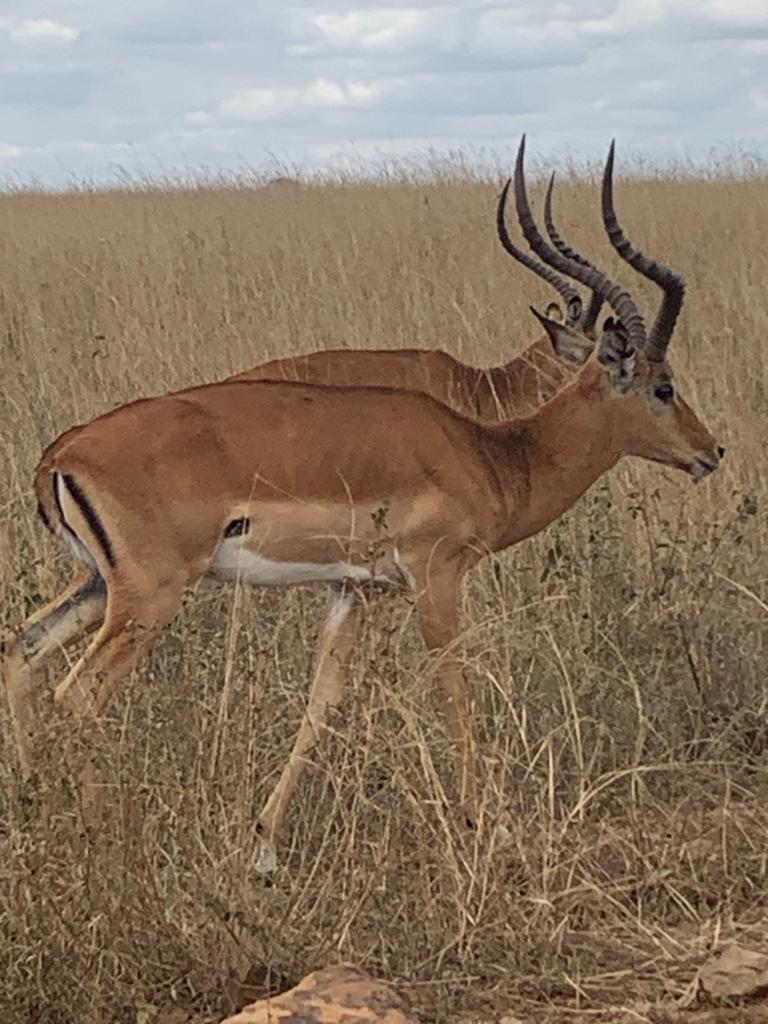
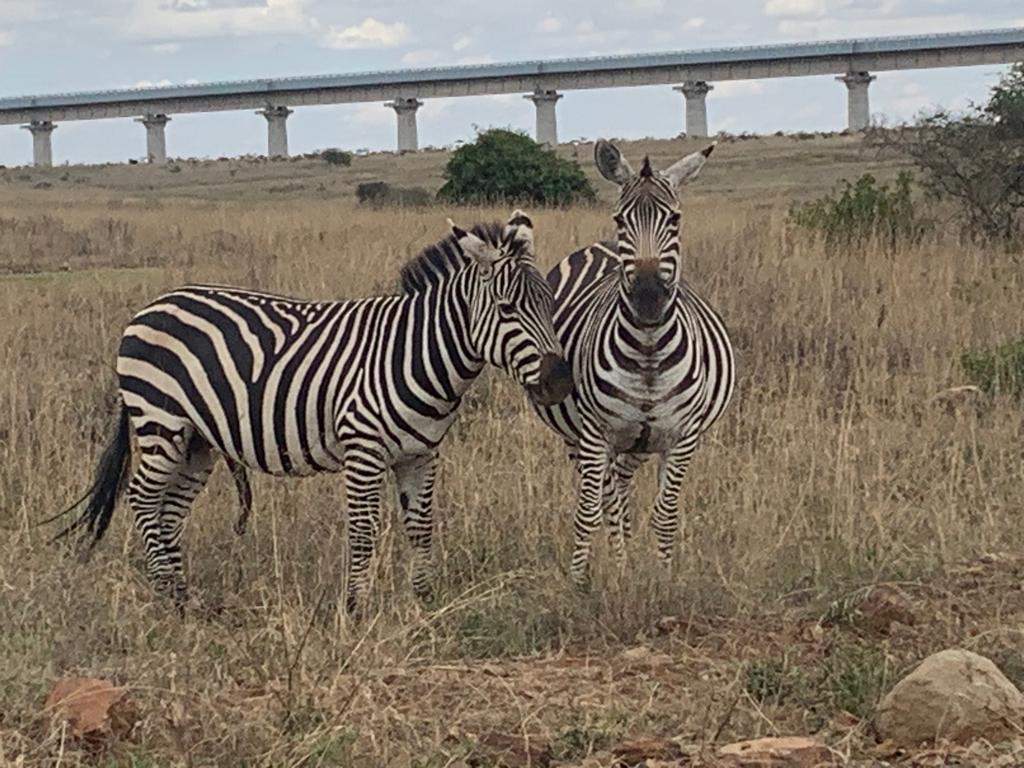
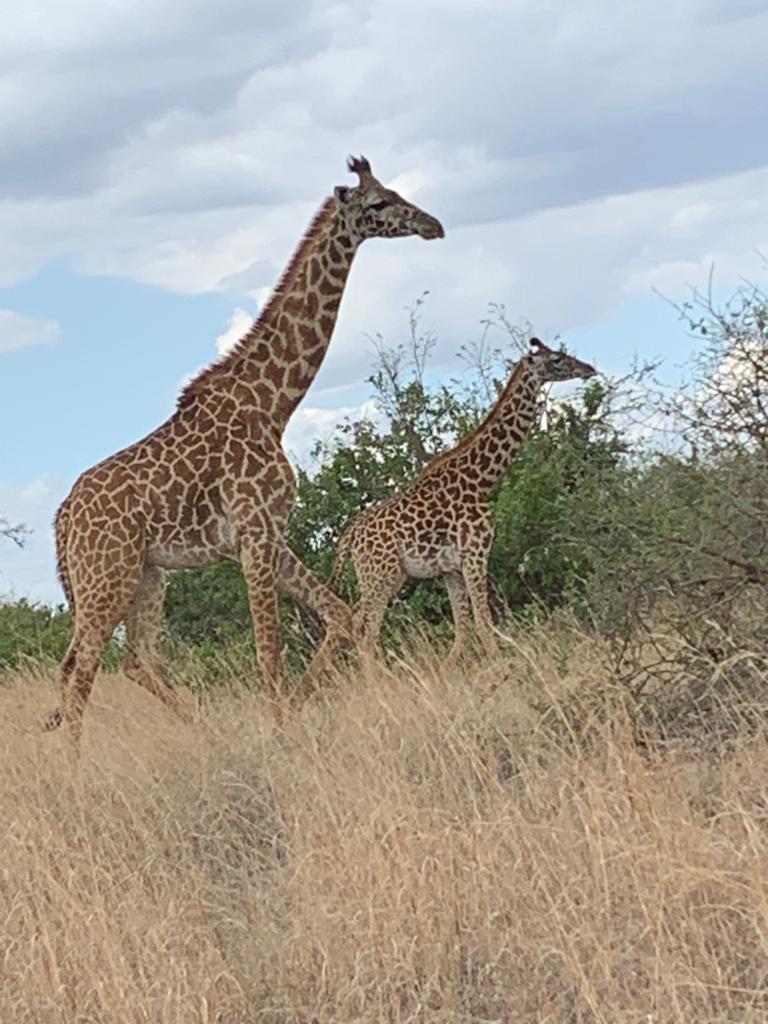
Recently, my friend went to Nairobi for a workshop. She sent me these pics :

Aren’t they graceful?

Deers are innocence and grace personified. Giraffes have a very cute but aloof look on their faces. Zebras seem to be self absorbed.

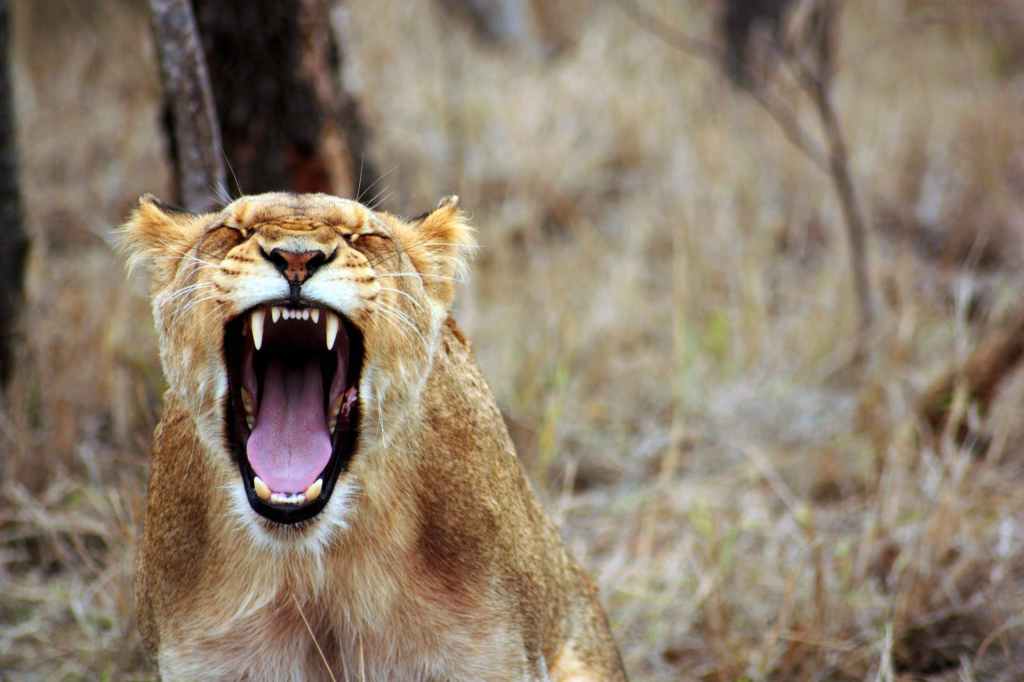
What to say about the “Lion King”? So regal and cool!!

I also like horses, especially, when they gallop at full speed. A well kept horse has a shine on its coat. The movement of their muscles have a cadence to it. The horses maintained at President’s estate are well bred and well cared for.

We often find elephant riders on road. Their mammoth body give them a formidable appearance. But they are friendly and trainable I am told. My mother’s caregiver tells me how the wild elephants destroyed her house thrice and she had to rebuild it each time. Now, thankfully, she lives away from the forests. But quite often she recounts how elephants in groups have attacked other villages and created havoc. I remember in Kolkatta we often got late to office in the Circus season when the participant elephants were taken for their daily baths blocking the highway. How amusing it used to be!!!

Monkeys are a common sight in Delhi. But they are quite ‘urbanised’ and don’t tease people much. We have a famous Monkey Lane in Central Delhi which is part of a receding forest land. The lane is, as the name goes, full of monkeys. It’s a walled hilly road. On top of the wall families of monkeys wait patiently as Delhiites stop their vehicles to feed them bananas. Needless to say, the lane is also dotted with banana sellers.

Our block is at times visited by stray monkeys. The dogs bark themselves hoarse at the sight of a stranger in their residence. Once a monkey entered my sister’s flat, sat on the dining table primly and had breakfast courtesy my B-I-L who was very excited about it.

If you look at this video carefully you can see our friend having a ramp walk on the pedestrian path.

There’s a very funny story recounted by a famous Bengali author, Shri Sunil Gangopadhyay, in one of his regular columns. A couple known to him shifted to the suburbs from Kolkata to settle amidst greenery and stay out of the maddening frenzy of metro life. But when he happened to visit them he found them tense and morose. Why ? Because day and night they were visited by bunch of monkeys who insisted that the television be kept on for their view from the balcony. In case it was put off they made such a ruckus that there was no other option but to put it on again. From urban frenzy to suburban fiasco!!. 😁😁😁

I feel sorry for asses and donkeys. They are used as beasts of burden. They perform their duties with such quiet patience. Assenine qualities in humans are looked down upon. The word ‘ass’ is used in a derogatory manner. But nobody appreciates how loyally, assiduously and uncomplainingly these animals do their strenuous job.

I am quite afraid of cows, buffaloes, bulls and oxes. They have kindly eyes but one can never make out their moods. They are often seen by the roadside sitting, sunning, chewing. It’s a sorry state of affairs because cattle owners don’t feed them properly. They are left on their own to find fodder. Many die on road eating plastics. But there are many who feed them too – vegetables, leaves and rotis.

Many traffic isles have bird baths and bird feeds. It’s a common sight as vehicles are pulled aside and owners empty out packets of seeds for pigeons, swallows, crows, parrots and others at the designated spot.

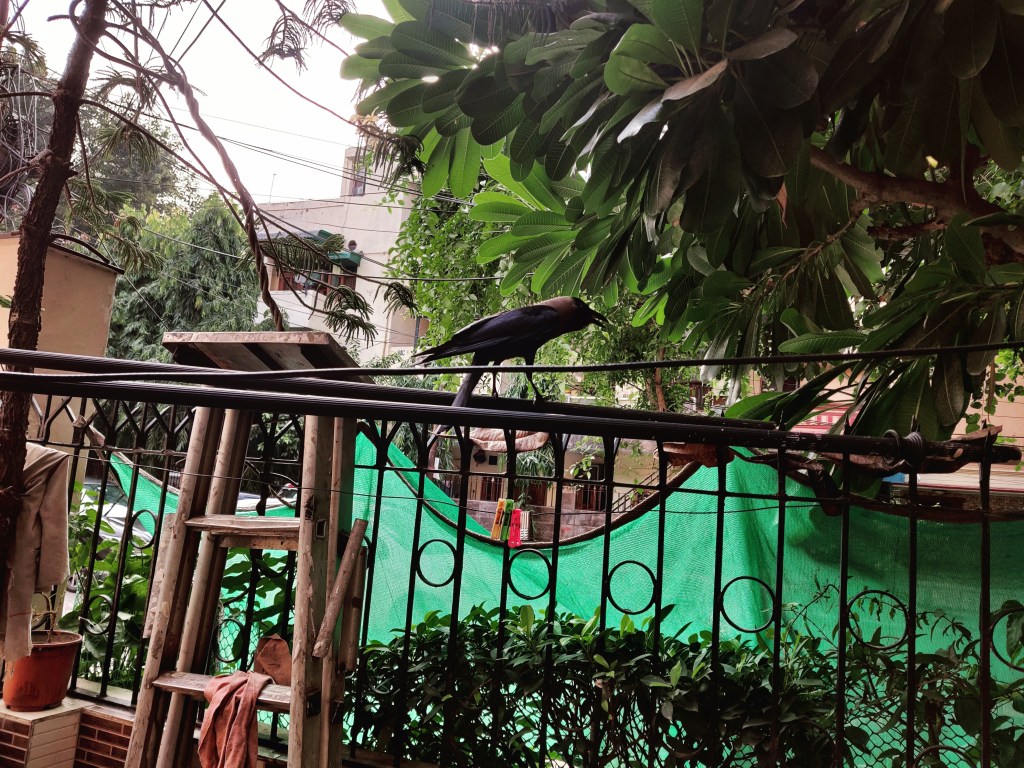
I have a pair of crows who visit me at a fixed time and caw away world affairs to Rinky. I call them Dringhankchu or Dhrigu in short, a nonsensical name coined by Satyajit Ray’s father Sukumar Ray, a renowned children’s writer who made nonsense popular through amusing, satirical poems.

A pair of wheatish coloured pigeons peck at the window in summer noons just like humans knocking at the door. Swallows and parrots are also common in the block. Parrots are the biggest fighters. Sparrows came back during Corona times when environment was pollution free. Now they have vanished again. A small bird with slender orange legs and beak used to have a loud chat with Mr. Snow Boot, my pet. Snow listened intently. Soon after it would rain. We called it Rain Bird.

We have squirrels who are miscreants. They prance around, peep inside, scoot away, play hide and seek with the crows. But they also chew away cable and broadband connection wires which is a recurrent nuisance.

Incidentally, I like pink pigs. The video is taken by my nephew in Vietnam.

I had kept an earthen water bowl for the birds and squirrels. The crows dirtied the water so much that I had to remove it. Later I was told that crows have a habit of wetting every morsel before eating. Once an unknown bird made an artistic nest in one of the Christmas trees, laid eggs, fed the chicks and once they were of age, all flew away.

As is evident I can go on and on on this prompt. So to put a full stop I give below the links of my writes here. Those who wish can read the posts and stories and let me know how you like them.

https://vanderloost.blogspot.com/2010/11/two-men-and-tiger-part-iii.html?m=1

https://vanderloost.blogspot.com/2010/11/i-am-worried-about-kaalu-and-not-for.html?m=1

https://vanderloost.blogspot.com/2010/10/whiff-of-smoke.html?m=1

http://vanderloost.blogspot.com/2010/10/story-of-strange-mr-briggs.html?m=1

http://vanderloost.blogspot.com/2010/09/two-men-and-tiger-part-i.html?m=1

http://vanderloost.blogspot.com/2010/07/rainbird.html?m=1

https://mindspeak-vanderloost.blogspot.com/2010/09/two-men-and-tiger-part-ii.html?m=1

To put on record I do not like rats, reptiles, cockroaches and lizards. Anything that crawls and stings.

Au Revoir

A Family Of Foodies


What are your family’s top 3 favorite meals?

Meals?

Of course breakfast, lunch and dinner.

We don’t have the concept of supper.

But being a family of foodies the more important question is what is our go-to-food during meals.

I am Bengali. Bengalis are known for their salivation for Non-vegetarian food. Three times a day. All the better. It has to be fish or chicken or mutton or egg. Having vegetarian food is akin to being sick. 🤪🤪

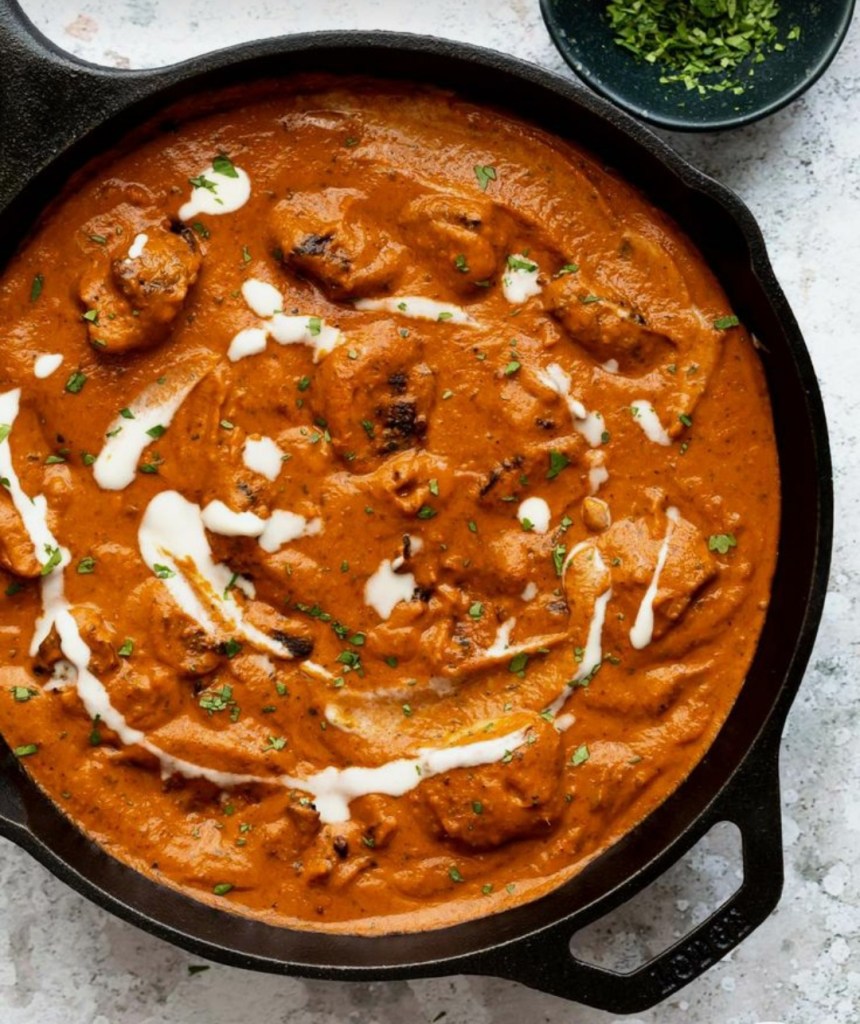
However, being brought up in the Northern part of the country, I have been exposed to varied vegetarian dishes of different states. I now feel one can experiment more with vegetables than with fish, chicken, mutton or eggs. A nicely cooked vegetarian item can very well compete with Chicken Butter Masala or Mutton Rezaala.

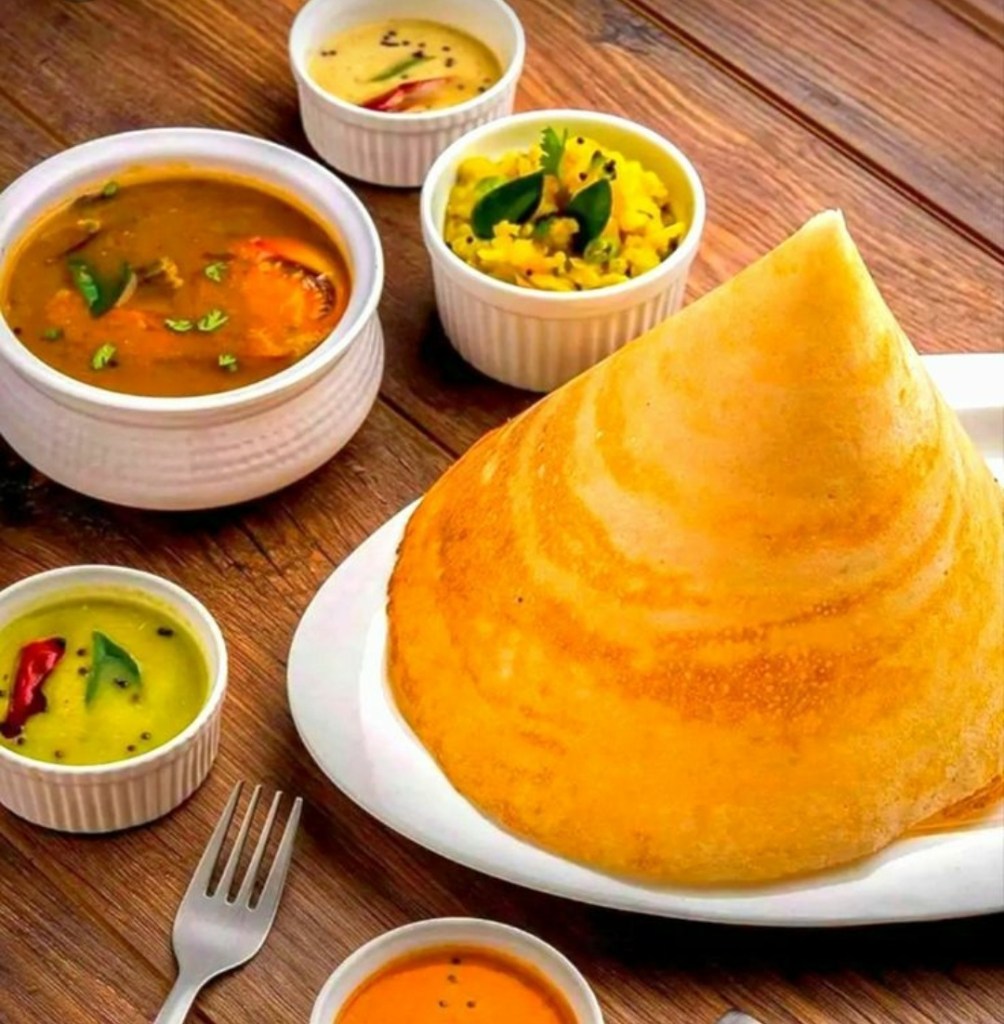
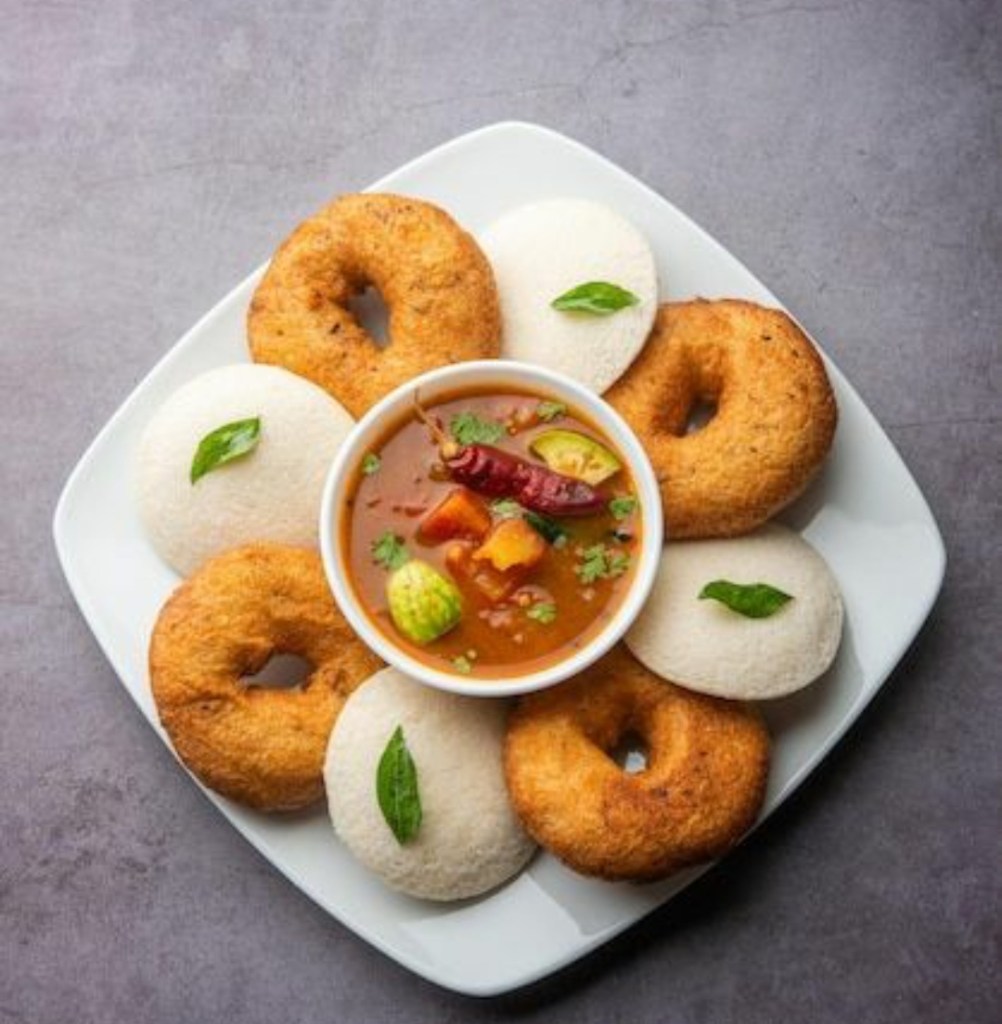
For a true blue Bengali the ideal breakfast will be omelette or boiled egg and buttered toasts. For a Probashi Bangaali that is a Bengali brought up outside Bengal breakfast can be anything from typical desi roti-sabzi (home made bread and curry) to something exotic like veg macaroni/pasta/vermicelli or just poha (flattened rice with vegetables). There is an array of South Indian dishes which are ideal for breakfast like idli sambar, vada sambar, dosa, uttapam , appam or upma.

Dosa – the attraction lies in the way it’s served in different shapes and sizes!!

Sambar Vada/Idli. Idly Sambar is considered one of the healthiest breakfast by nutritionists

Nowadays my breakfast has relegated to a bowl of milk and cornflakes which sounds boring.

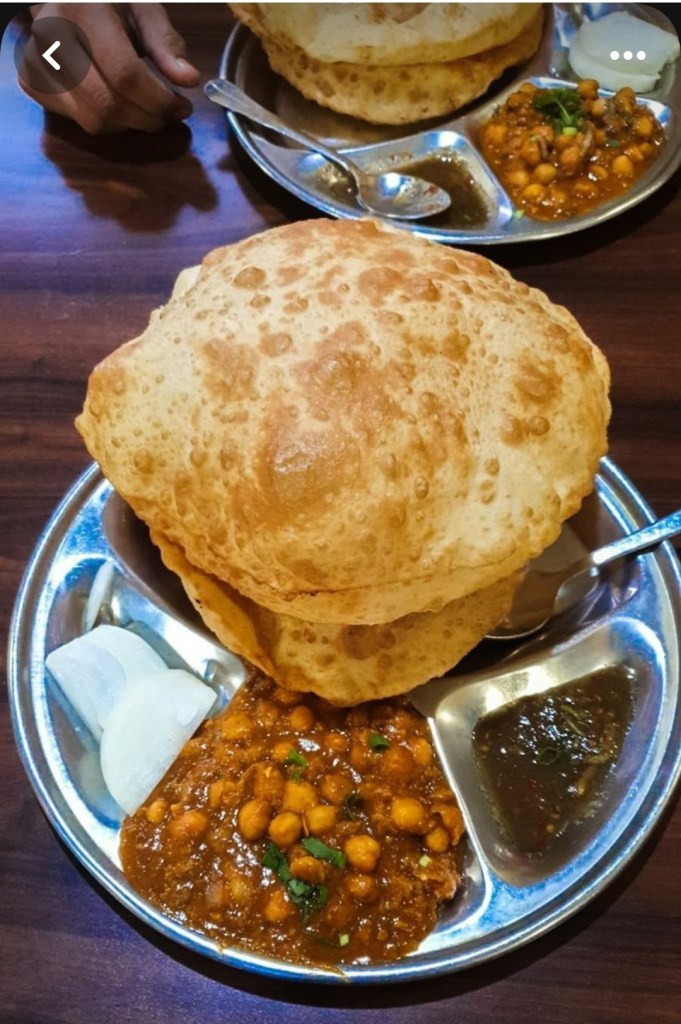
But Sundays or holidays for Indians mean celebration with food. So the ideal Sunday/holiday breakfast will be aloo Puri or chhole bhature. Aloo Puri is a combo of potato curry with fried puffs made up of floor dough. But the potato curry which goes with puris is cooked differently than the one which goes with rice during lunch Chhole is a rich chickpea preparation and bhatures are fermented, stuffed and bigger version of puris. Both dishes are accompanied by pickle and salad and spicy chillies.

This is a pic of Chhole Bhature. Yummy, isn’t it?

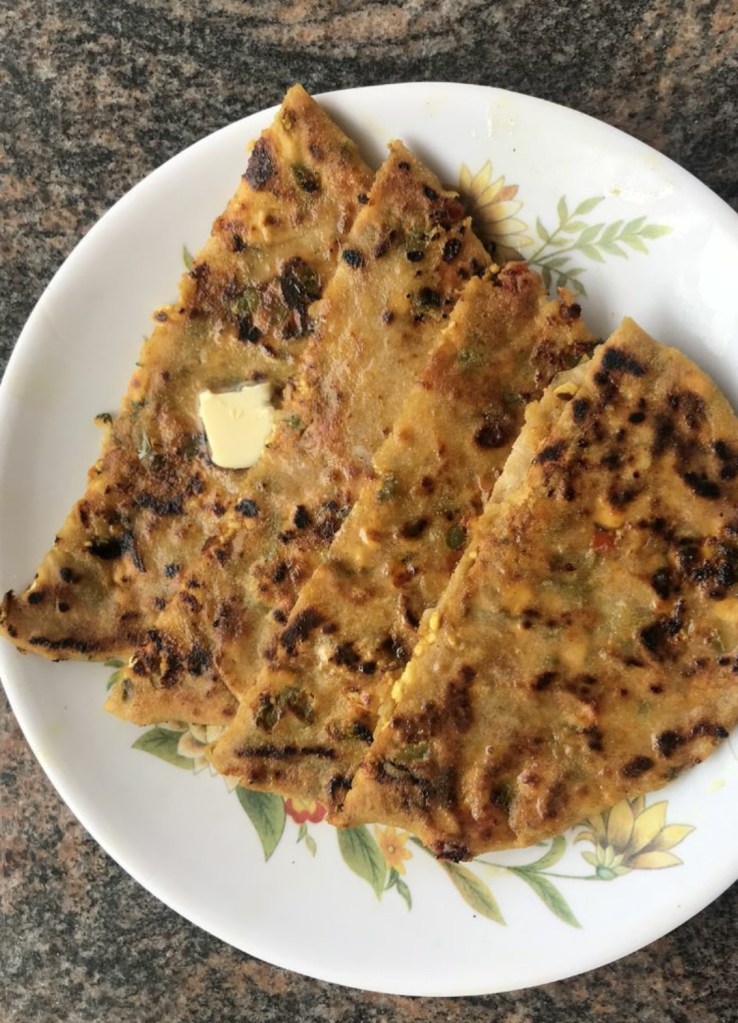
Winters are made for paranthas which are stuffed rotis fried in ghee/olive oil (for those who are super health conscious) The stuffings may be of spiced cabbage/cauliflower/spinach/peas/fenugreek leaves/potatoes/cheese/raddish with leaves or onion or plain carrom seeds. A wide range of choice to be had with white butter or raita or curd. Raita is again spiced up curd blended well. Paranthas also go well with lassi (sweetened yoghurt) or Chhanch (salted yoghurt).

Paranthas as delicious as ever!!!

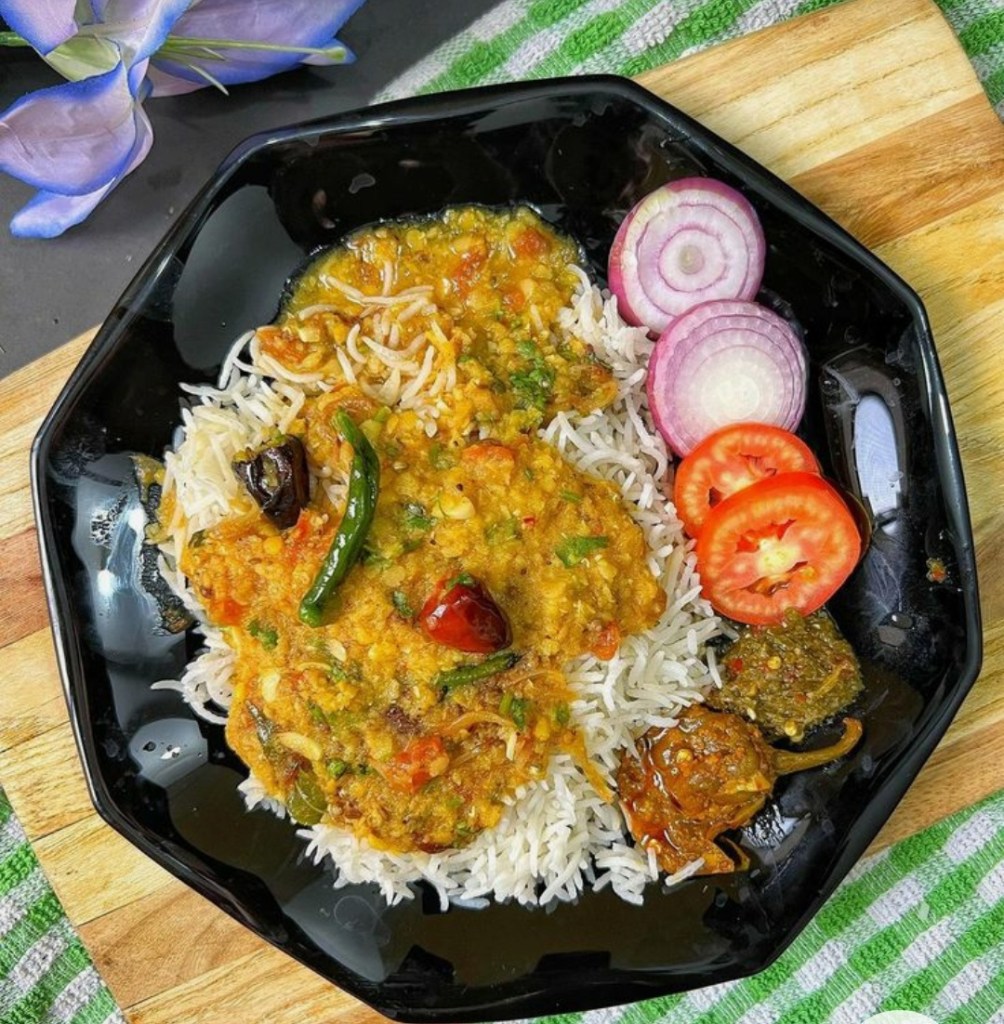
My favourite lunch is daal chawal or lentil and rice. But lentils can be prepared with rich spices and also simply boiled like a light soup tempered with herbs and seeds. A dry curry goes as a side dish. I have a sweet tooth. So a piece of sweet is a must after every meal. This is our family’s staple food for lunch.

Daal Chawal!! Looks messy? But it is such a soulful dish.

But we do at times prepare non-veg dishes but that is very rare as most of my family (including extended) members are vegetarians.

Dinner is light. My sister and brother- in-law prefer soup and salads at night. For my mother it’s always soup and bread. For me it is a small roti and any light gravy. A small piece of chocolate or sweet after meal is super satisfying.

Indian cuisine is rich in spices and oil. The same dish is prepared differently in different parts of the country. Every dish is flavour full and enjoyable if you have a taste for it. I try out dishes of other states when I need a change of taste. Every part of the country has a variety of herbs and spices which add flavour and fragrance to an item.

Our non-vegetarian cuisine is also wide. Unfortunately I have lost the taste for it. Writing about food is less exciting than tasting them in reality. I just realised while writing this post. It’s past dinner but I am again feeling hungry. 🤦🤦🤦🤦

Butter Chicken Masala – internationally craved. I don’t know how it’s served abroad but we over here really like it all creamy and buttery.

Meeting The Unmeetable


If you could meet a historical figure, who would it be and why?

This is a difficult prompt.

Difficult because it’s hard to make a choice.

History dazzles us with such charismatic figures!

Who to choose and who to leave?

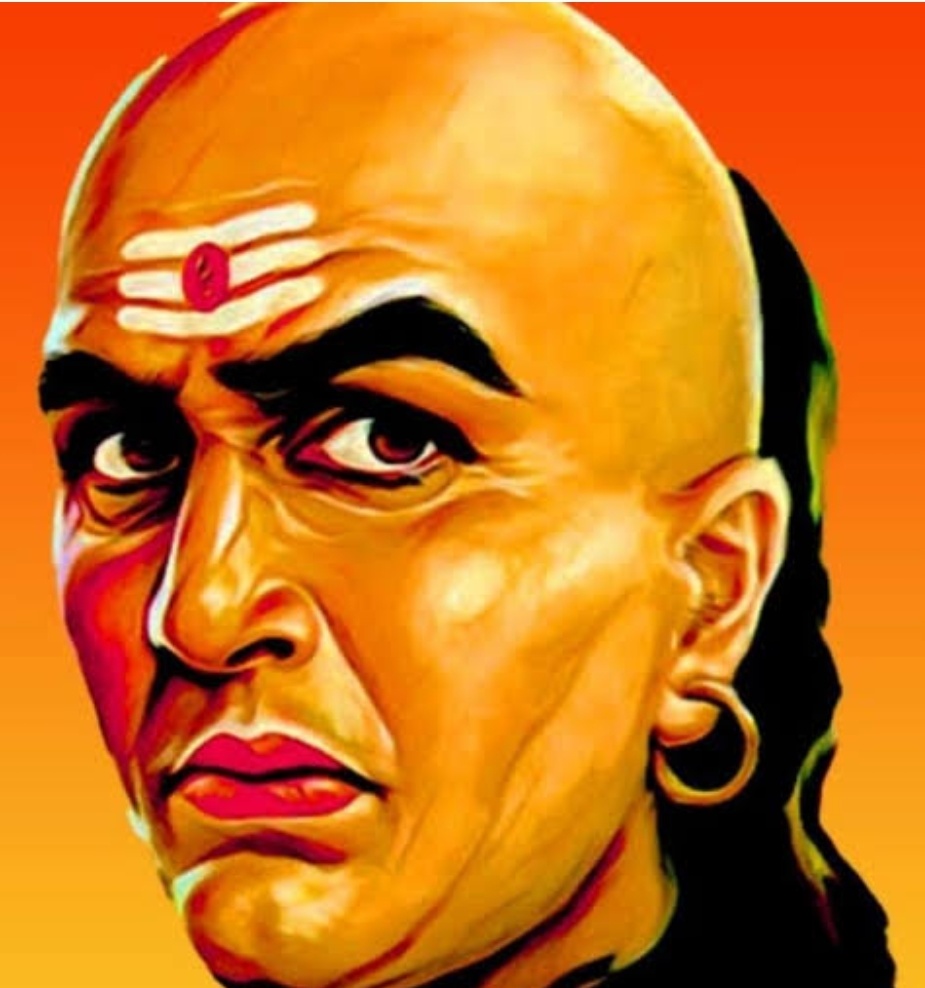
I guess if I go way back before the British rule, it would definitely be Chanakya (283-375 BCE) – the kingmaker….the writer of Arthashastra ( 4th – 3rd BCE – considered to be a precursor to classical economics)…..the treatise on Economics …the Father of Political Science and Economics in India. Or should it be diplomacy (Kootniti) ? Chanakya successfully dethroned the Nanda kings because he felt insulted by them and enthroned Chandragupta Maurya in Pataliputra (now Patna). He was the royal advisor to Chandragupta and his son Bindusara. A personality to reckon with, Chanakya was instrumental in establishing the Maurya Dynasty and it’s rise to power!!

Chanakya lived an ascetic’s life. He had a forceful personality. Chanakya Neeti or the doctrines of Chanaky are taught in Universities even now. He was also known as Kautilya and Vishnugupta. He was an ancient polymath – jurist, teacher, author, strategist, philosopher, economist, royal advisor.

I would like to know why he took up the role of a kingmaker? Why he never aspired for the throne for himself?

The history of Rajasthan has always bewitched me.

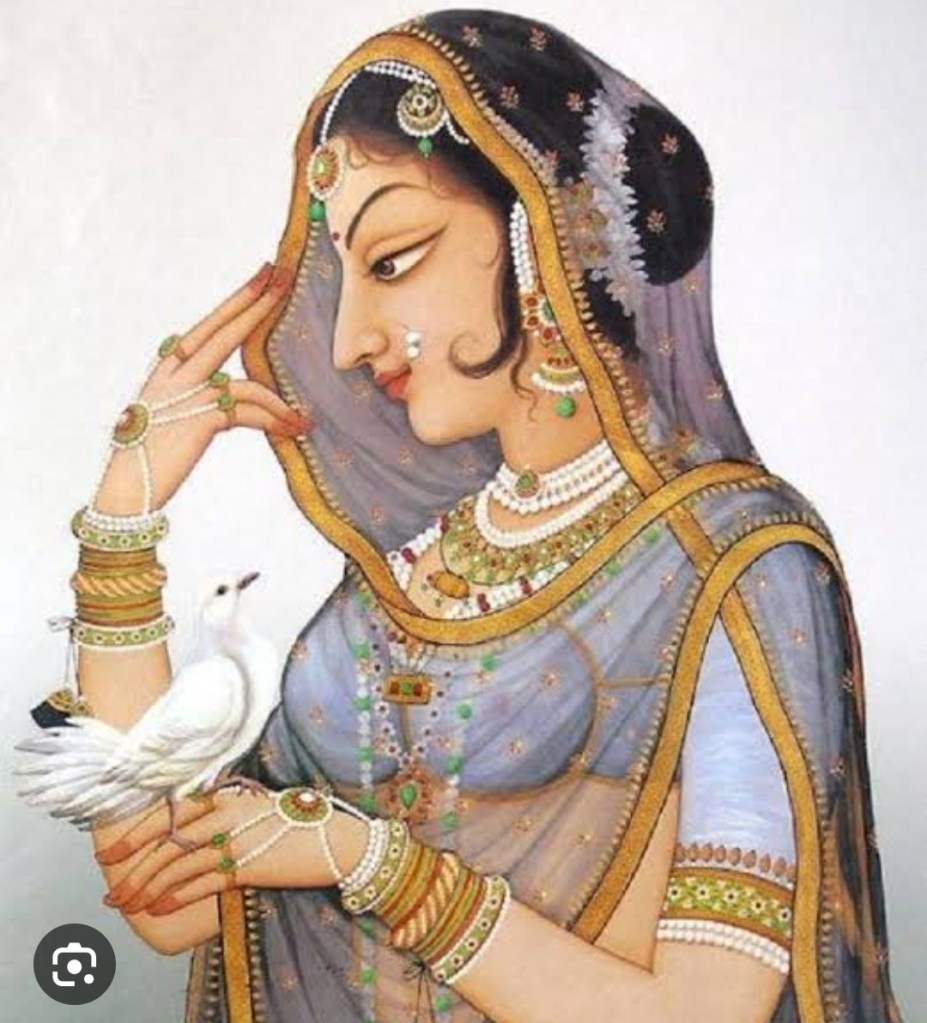
The Ranas of Mewar were brave warriors. So were the Ranis who protected their self respect fiercely. The Muslim Emperor Allauddin Khilji heard about the beautiful queen Padmini or Padmavati of Chittorgarh or Chittor from one of his court singers. He was greedy of extending his empire as well as making Padmini his empress.

Rani Padmini (13th – 14th Century) was Rana Rattan Sen’s wife. She loved her husband. When Allauddin sent a request to be Chittorgarh’s royal guest Rana had no option but to be gracious and welcome him. But when Allauddin expressed his wish to see Rani Padmini he was furious. In order to handle the matter diplomatically he replied that he could only see her reflection in a pond but not meet her in person as the queens never came out in the open before strangers. Allauddin agreed.

It is said that Rani Padmini stood before a mirror. Given the placement of the mirror, her image in the mirror got reflected on the crystal clear water of a pond inside the fort. An architectural marvel of ancient fort builders who were ace engineers no doubt!! Allauddin saw her reflection in the pond.

Legend has it that Allauddin fell madly in love with the queen knowing fully well that it was just her reflection and not she in person. Allauddin couldn’t believe his eyes. Could anyone be so exquisitely beautiful ! How entrancing would she be in person?

Blinded by greed and power, Allauddin waged war against the Rana of Chittor. Rana knew that his soldiers did not lack in valour but in number. Allauddin with his huge army, tanks, artillery, horsemen, elephant riders and armed men on foot were like a sea of invaders. But Chittor was famous for dauntless courage more so to save the honour of the queen herself.

Before the battle Allauddin sent a message to Rana. He wanted to barter the queen for his army’s retreat. How could it be? Knowing well that battle meant defeat the queen still advised Rana not to give up. Honour was more precious than peace. And the men fought fiercely…

When Rana’s news of ultimate defeat culminating in his death reached the fort all the ladies of the royal family led by Rani Padmini with their heads held high sacrificed themselves to the licking flames of the Jauhar. When Allauddin reached Chittorgarh it was empty and silent like a graveyard. The women of the palace had self immolated themselves.

I have read and re-read the story of Rani Padmini. And knowing what a powerful persona she was who wouldn’t like to meet her?

Two hundred years of British rule in India intercepted by numerous battles, wars, mutiny, revolts, rebellions, movements ….a saga of bloodbaths as well as heroism. Violent upsurges and the non-violent Satyagraha! Fearless leaders, orbit shifting reformers, trailblazing thinkers, blood boiling orators, philosophers and writers and poets who moved and united the masses with a single purpose – independence of India!!

Who should I choose among the plethora of men and women who gave their entire lives to build a nation ? There are whom the world recognises. And there are many more who have gone on doing their duty quietly, obscurely – the unsung heroes and heroines.

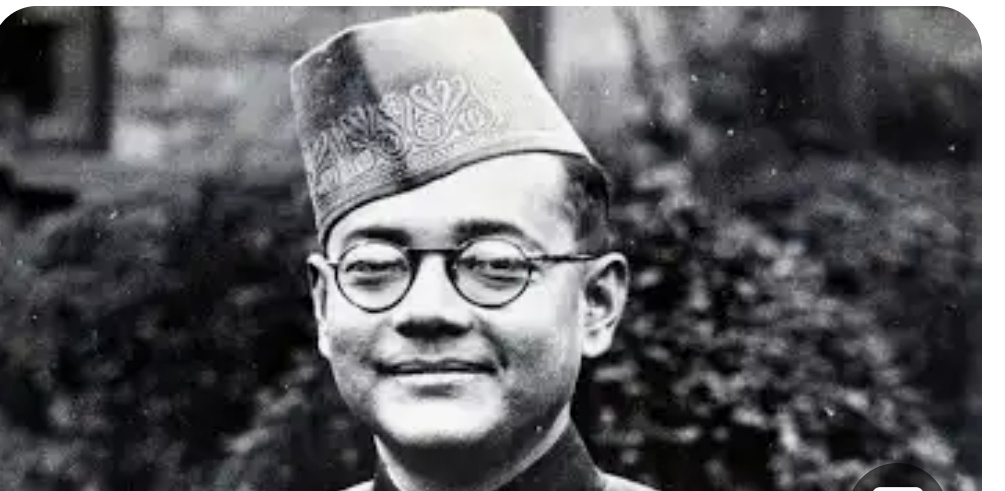
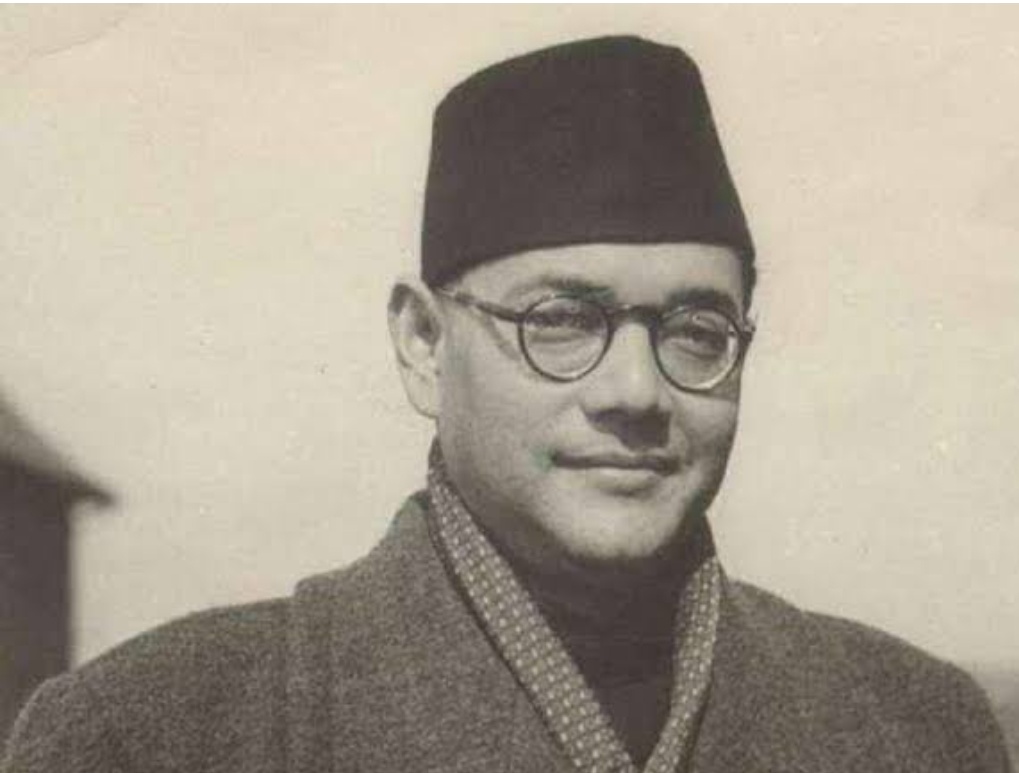
However, the one whom I would definitely like to meet and listen to is none other than our beloved freedom fighter from Bengal – Shri Subhash Chandra Bose (1897 – 1945) – whose life is legendary enough and so is his death.

He hailed from a privileged Bengali family from Orissa. The first Indian to qualify for ICS but did not continue for long as nationalism was a higher calling for him. A vocal non-conformist of Gandhian Policy of peaceful means of earning independence. His slogan was,”You give me blood I will give you freedom.” He was a great orator, organizer and had extraordinary leadership abilities. He was also a master masquerade. He escaped from house arrest, amidst heavily guarded barricades, left India for Japan and then Germany. He strategically aligned with the Axis powers, as they were anti British, to free India of British imperialism.

He also built the Aazaad Hind Fauj or Indian National Army of men and women and came to be known fondly as Netaji. But before his dream of independent India could transpire into reality he died a mysterious death. But even long after, his followers strongly believed that his death was a deliberately created myth. He was still alive and refused to come back to public life for some unknown reason.

I would definitely like to meet him and know more about his legendary life and ideology.

These are only a few historical figures I would like to meet. The choice was difficult as history is full of heroes and sheroes of larger than life stature. However all super achievers go by simple and time tested values. They are ordinary men and women of extraordinary conviction. If only we could time travel to meet them to learn a few lessons of a lifetime.

Instinct And Intuition


Do you trust your instincts?

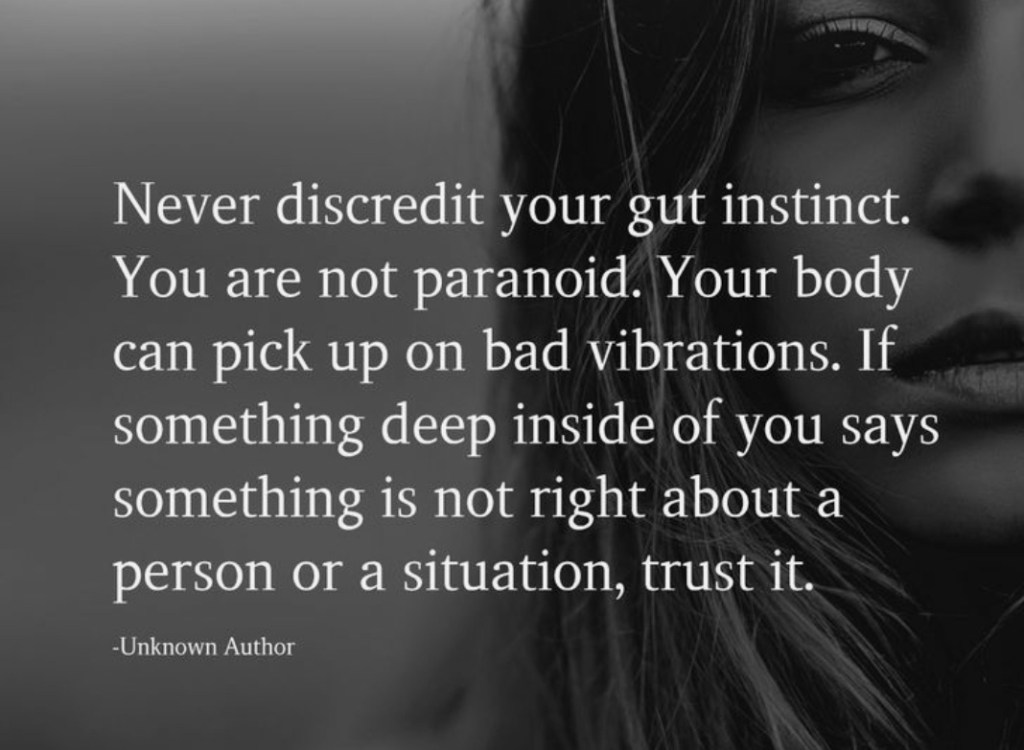
Instinct, as I understand, is an impulse to external stimulus. It has or may have a set pattern. Rather animalistic. For example, my instinct tells me not to trust a person who does not make eye contact while talking. I may be right or wrong. The person may be autistic for all one knows. But that will be my first impression given the circumstance. As is known, humans do act and believe on instinctual basis.

In contrast, intuition is something deeper. A cognition which may not be based on immediate indubitable facts and irrefutable reasoning. But the feeling emanates from your core and try if you may you cannot shrug it off. I may have an intuition of danger lurking round the corner. I, for myself, will not equate it with clairvoyance.

When I was doing the online course on Kriya Yoga ( a form of meditation) from Yogananda Satsanga Society founded by Swami Yogananda in 1917, strong emphasis was laid on developing the intuitive force through sadhana or habitual single minded practices.

Instinct is basically a primal endowment which becomes a guiding and driving factor if one is left alone to fend for oneself in this big bad world. It is the inbuilt surviving the jungle aptitude which not only leads us but also becomes our defence mechanism.

I have always relied on my instincts. More so, when I had to move to Kolkata, soon after graduation, on the promise of a job. Though It was my birth City I was brought up in a more cosmopolitan surrounding in the Capital. I found it difficult to deal with the Kolkattans because they thought differently.

I was young and not unattractive. I lived with my paternal aunt and uncle who were extremely orthodox. I not only had to survive in the narrow, regionalistic ethos of the city but also in the office which had a bad work culture.

For guidance, therefore, I leaned heavily on my inner voice. When young boys chased me on road my instinctive reaction was to retaliate. It’s not that all had malafide intentions. But my survival instinct was more overpowering than my evaluative abilities.

But intuitively I knew that this was not the place for me. On hindsight I can furnish undebatable justifications for my dislike towards the city and its dwellers. My colleagues considered me the other one. I was an outsider who couldn’t quite jell with them. I did not take the flattery route to placate the bosses or the ones who disliked me. I did not like the way, generally, women conducted themselves. I could not adopt their coy, artificial ways. I hated the men who thought women were easily available if they were single. Though I was known for my straightforwardness and no-nonsense attitude yet one could not always be on guard. It was tiresome and tedious. They were not used to me and I was not used to them. The non-acceptability was mutual.

But it was more than that. I could not see a future for myself there. A future where social control was minimal. Individual freedom was available and acceptable. A place where I did not feel like a stranger. I felt all these emotions churning inside me even then. But with that there was something else which was inexplicable, unignorable and unbearable. I knew I could not spend my entire life in this claustrophobic state of mind. I call this intuition which prompted me to pray day and night to make the impossible possible.

After eight long years the shackles broke. I came back to Delhi. Life was not easy thereafter. But the coping mechanism worked better in a known environment where I knew how to deal with people.

So, the summary of it is I have always relied on my instincts and intuitions. And I have never repented having done so even if it were a wrong choice or decision. At least, it was based on my faculties. I am proud of my preferences, avoidances as well as indecisions.

Because all were part of me. They were mine. And they made me.

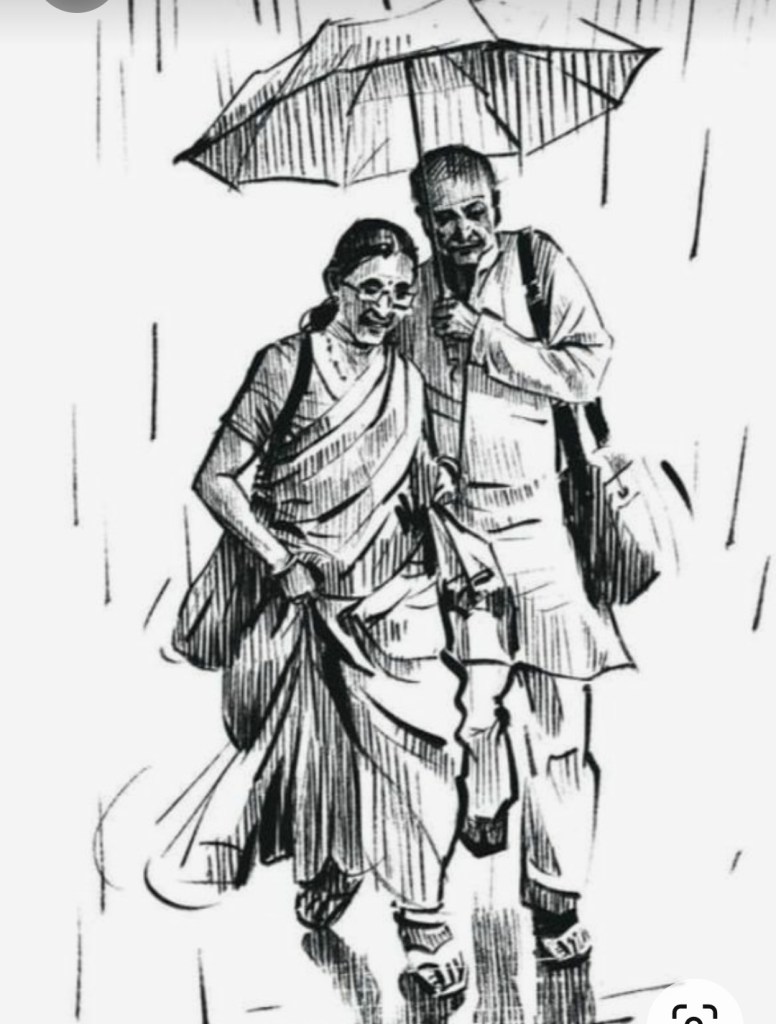
Wordless Wednesday # – Togetherness


Pic from Pinterest

Do share your thoughts by way of comments…

Autumnal Haunting


What’s your favorite month of the year? Why?

Nature lovers will say all months and all seasons of a year are beautiful and have their own attractions. True but in a city of extreme climates peak summer and winter become unbearable and cause health issues and handicaps. Both compel you to be indoors.

For me autumn is the best season. From September end to first half of November are the best because it is neither hot nor cold. The sky is a detergent washed blue. The clouds are pure white, soft and shiny. The breeze is soothing, fragrance -full and makes one wistful in a nostalgic kind of way. Though autumn is the harbinger of winter yet it’s the time when the past diffuses with the present, woes melt into warmth, remembrances make you sad as well as hopeful. There is a mysticism about autumn which even spring cannot steal away.

I know many will vouch for spring. Spring is intoxicating. It is ephemeral. And leaves behind a hangover. Autumn stays. It’s wistfulness lasts longer and gradually coagulates into winter.

Readers will notice I am not going by months but by season as the climate in this part is erratic. At times the heat of the summer persists longer and at others winter may creep in early.

Like spring, autumn is the time for festivities and celebrations. It starts with Janmashtami, that is, the birthday of Lord Krishna. Then comes Raksha Bandhan – the joyous bond of protection of brothers for sisters. Ganesh Chaturthi is the ten days’ festival of Lord Ganesha. Followed by four days’ sojourn of Goddes Durga and her entire family. A week later we have the Kojagari Lakshmi Puja. The season comes to an end with Deepawali – the festival of lights.

Some say the festive season begins with Teej which is actually celebrated during the rainy season. In autumn the married ladies of Northern part of India keep a day of fast for the well being of their husbands. It’s known as Karwa Chauth. The workers worship their tools and machineries on Vishwakarma Puja. The day after Deepawali is Govardhan Puja and the day next Bhai Duj – again a festival of brothers and sisters. In between there are again days of fasting and one of them is for the good health of children which is known as Hoi.

India, as I have said before, is a land of Gods and Goddesses and innumerable festivals. The celebrations that I have mentioned afore are of North India. Each part of India has their respective strings of worships and celebrations.

On the flipside, this is also the time when pollution is at its peak. There is smog and fog giving rise to cough and cold and other health related issues. This year the AQI (Air Quality Index) was at its maximum ( read highest in terms of pollution). A sudden shower right before Diwali was a divine blessing which though brought down the temperature giving relief from dust and pollutants, but burning of crackers on Diwali brought us back to square one. Fireworks and burning crackers are part of Diwali celebration.

Sometimes in our mood to rejoice we forget the damages and harm we are bringing on ourselves. It’s a shame and a pity. Although Government imposed a lot of restrictions festival fervour could not be brought under control.

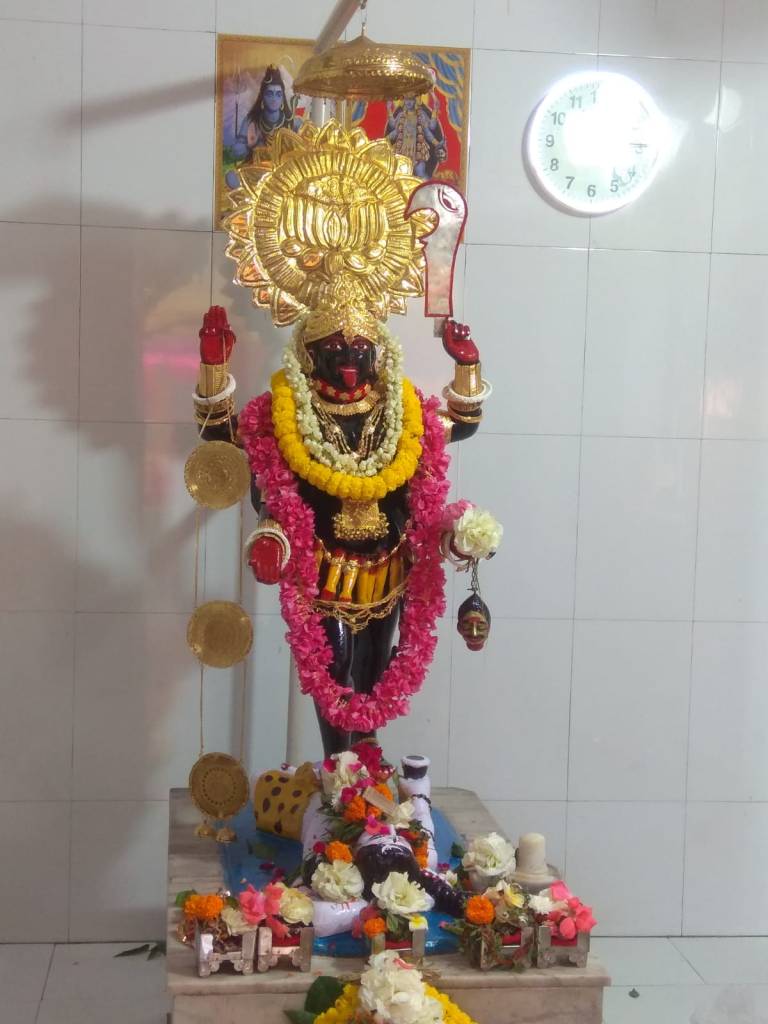
Deepawali or Diwali is also the day when Goddess Lakshmi and Mother Kali are worshipped.

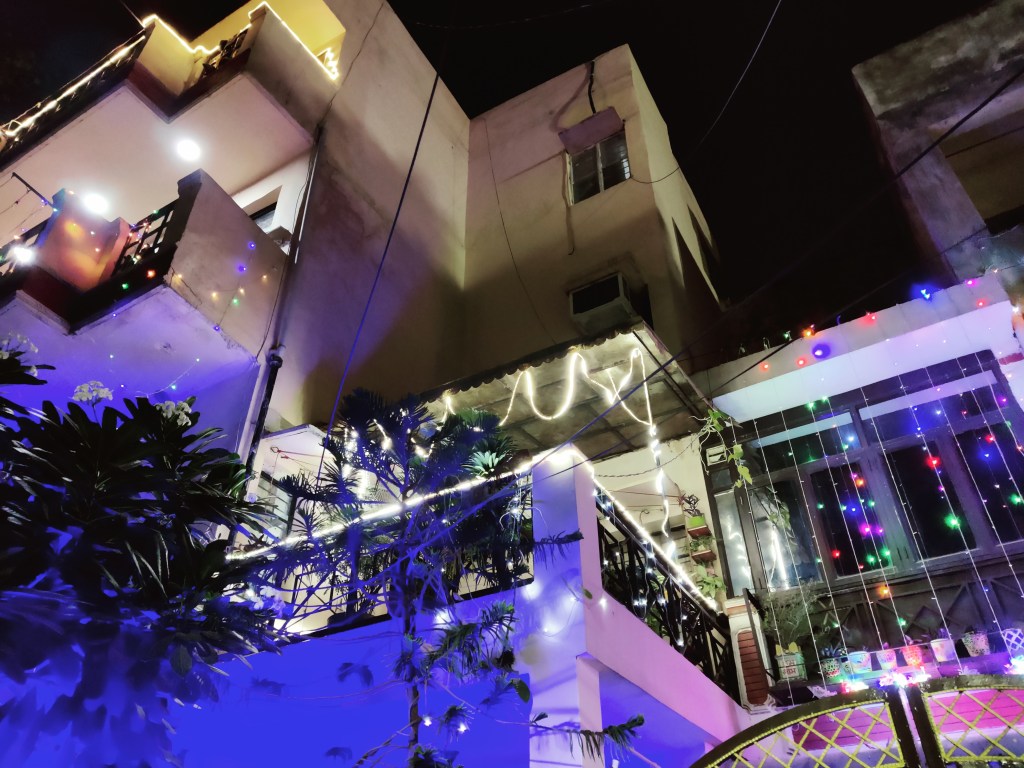
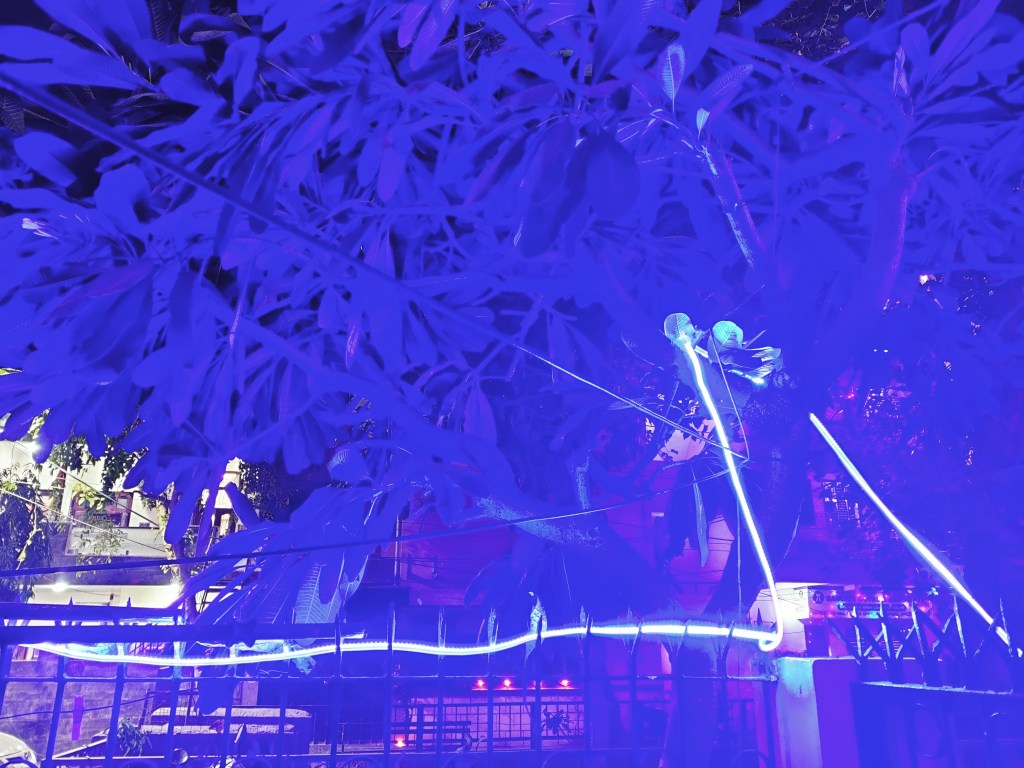
In Diwali the houses were lit up with earthen diyas as well as electric lights. I had put up a ribbon of blues lights. Therefore, the spooky, smoky effect. 😉😉

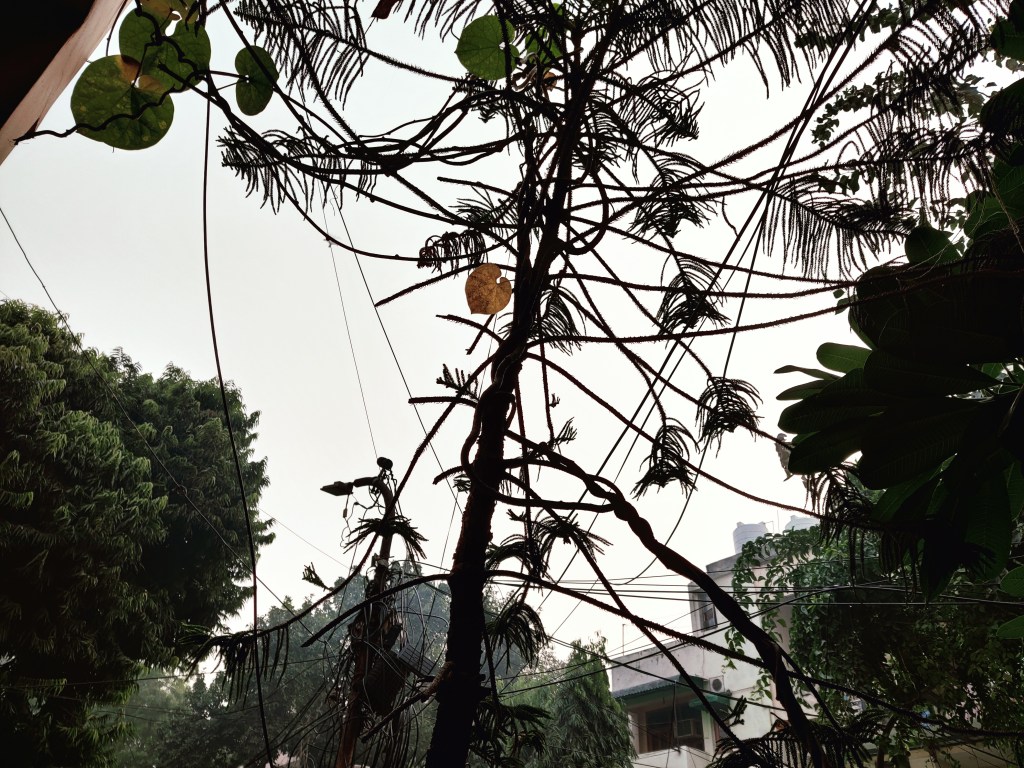
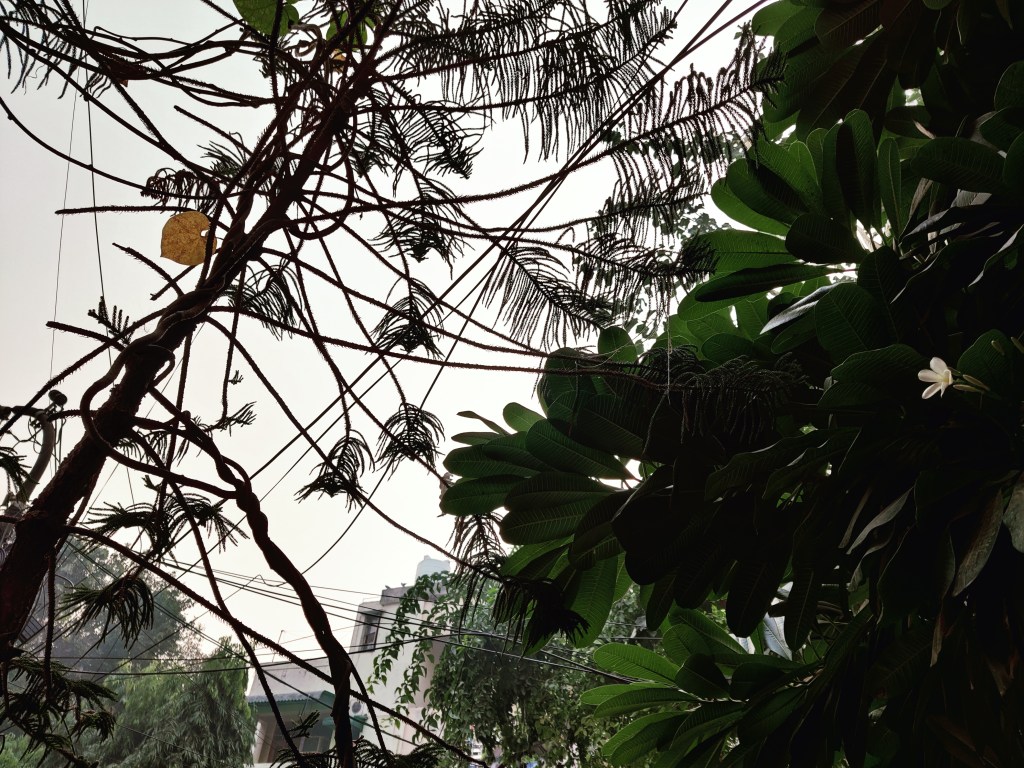
The next day the sky was overcast with pollution marring the joy of Diwali.

Coming back to autumnal hauntings, yes, autumn haunts with its wispy, misty beauty.

Howsoever, foggy outside was sun shone by midday spreading its golden hue warming up hearts and clearing our heads of all misgivings.

That is the blessing of autumn.