Dream Home


Write about your dream home.

What is a dream home ?

Stepping into a luxury resort ?

Or

Where you find yourself in peace and calm and feel safe. Where you want to return from your day of toil. Where you find your identity and security. Where you find yourself with your worries, turmoil and also laughter.

At one time I dreamt of a picture postcard house beautifully decorated filled with ethnic stuff, spic and span and kind of gorgeous. But then I realised the practical aspects of maintaining such a house. How much time and effort will be required to keep the house tidy, in order and just the same as it has been bought. Maintenance meant expense and manpower – both in the course of my life somewhere lost priority.

What took over is the need for a space which I could call my own. Where I am me. A little disorderly. A little spread out. A little, shall we say, improper. Where everything is not where it should be. But again a little disturbed. A little disoriented. Just like me.

It may sound strange but if we are to be honest with ourselves our house should reflect our true selves – not the made up one.

Such a place is where I stay now and have been staying for the past almost two decades. These flats were constructed in 1989. Their structure is old and requires constant upkeep. Also this is an extended part of the city – an erstwhile village which was later urbanized. It used to be a low lying area. So during the rainy season the flats used to get submerged under water. Even now in the ground floor flats there is the problem of seepage entering from the ground.

In spite of all these issues, this is my cocoon of comfort. Though it’s a regular tussle with dust and pollution nevertheless it’s where I like to burrow in. It’s important for me to find myself in the place where I live because I am extremely housebound to the point of being reclusive at times.

Having said that my flat has a totally lived in look. You may find  newspapers, books , mobiles and laptop strewn on the bed. Kaali snoozing in the living room. Aroma of food being cooked filtering through. But my friends say it’s cozy. And that’s exactly what I want it to be – a very private den filled with warmth, care and concern.

Mind you it has all the amenities. A small garden right outside next to the balcony so that in summers when the big windows are open I only see greenery around. The tall champa trees spread out their canopy so as to make the inside cooler than the temperature outside. It is also a saviour because I am not at ease under any artificial cooling system. But in winters though the flat is sun facing yet the interiors get cold.

I love my small balcony sitting where I admire the sky. As you all know I have the birds and the bees as my regular neighbours along with my canine friends who have their specific visiting hours. I love the spring breeze sashaying in and the autumn leaves carpeting the streets. The rains bring worries of seepage and leakage but life is like that. A little unruly. A little indisciplined. A little bothersome. Yet so enjoyable.

So this is a safe haven where I am myself having a chat over chai with you guys.

Cheerio!!
#WriteAPageADay
The AI Menace


Today I read a post by one of my well-meaning co-bloggers who pointed out that one of the comments, on a poem posted by me, was AI generated and though perfect in its lingual expression and effect it was ‘lifeless’.

The observation lingered in my mind for many reasons. A few very obvious questions that popped up were :

What is the psyche behind using AI Chatbots for writing posts and comments?

Should we check out each and every post or comment, whether it is AI generated, before liking, commenting or subscribing ?

Or

Should we totally ignore such posts and comments?

Whether WP, as a platform, should devise an appropriate mechanism to restrict the  posting of AI generated write-ups and comments ?

Are using AI generated images (which are quite obvious) equivalent to AI generated posts and comments?

To my mind the answers are :

In this fast moving age, putting up a post with the aid of an AI tool is the easiest way out. The dictum of modern times is to generate “results” without wasting time or making efforts. So, from that perspective, the use of AI, to some bloggers,  seems okay.

Moreover, not everyone has the skill to write but craves to say something. Hence the help of AI taken.

Similarly, one wants to impress with an expressive and appreciative comment. But does not have enough command over the language. That is why AI comes up as the best solution.

How do we differentiate between AI and genuine blogger generated comments or posts then ?

By checking out with AI tools each and every time (?) which is a time consuming exercise. Keep on doubting while acknowledging the comment or liking the post ?

I believe the blogging community emerged as a medium of expressing, exchanging and building public opinion on various issues. Every genuine blogger blogs out of certain inner necessity – an innate urge to vent. Those who are writing only by means of AI are actually competing with those who write on their own trying to assert that they are at par, if not better. This, in my opinion, infuses an element of unhealthy one-upmanship which is unacceptable and completely avoidable.

AI tools operate on vast resources of collected and collated inputs or information. It can be used as a referral to fall back upon, e.g.,  to authenticate/verify facts and figures (which is also not hundred percent fullproof/correct under all circumstances) but to float an idea or view thrown by AI as one’s own, for me,  is not exactly ethical, genuine or transparent.

Dishing out a thought provoking philosophy, an inspirational quote, a beautiful expression, soul stirring poetry or prose and getting numerous likes and appreciative comments on them is tantamount to making fools of the committed readers, co-writers and subscribers simply because the whole gamut of words and thoughts is not actually original.

Just as we declare the source of the images attached to a post why not make a disclaimer at the beginning of the write up that it is AI generated or AI aided ? But again that would take away the charm of recognition, wouldn’t it?

At the expense of making a farfetched assumption, in case views aired in a post happen to go the wrong way and create an uproar, hurt someone or some group or community’s sentiments who is to be held responsible? The AI? The user ? Or an identity which does not exist at all ?

Turning our faces away from modern day technology is no resolution of this complicated situation but yes leveraging technology sensibly, ethically and  with sensitivity should definitely not be averted.

Whether WP needs to address the issue in a comprehensive manner requires an extensive debate.

Views of readers are solicited.

Polite dissension is welcome.

Value addition is eagerly awaited.

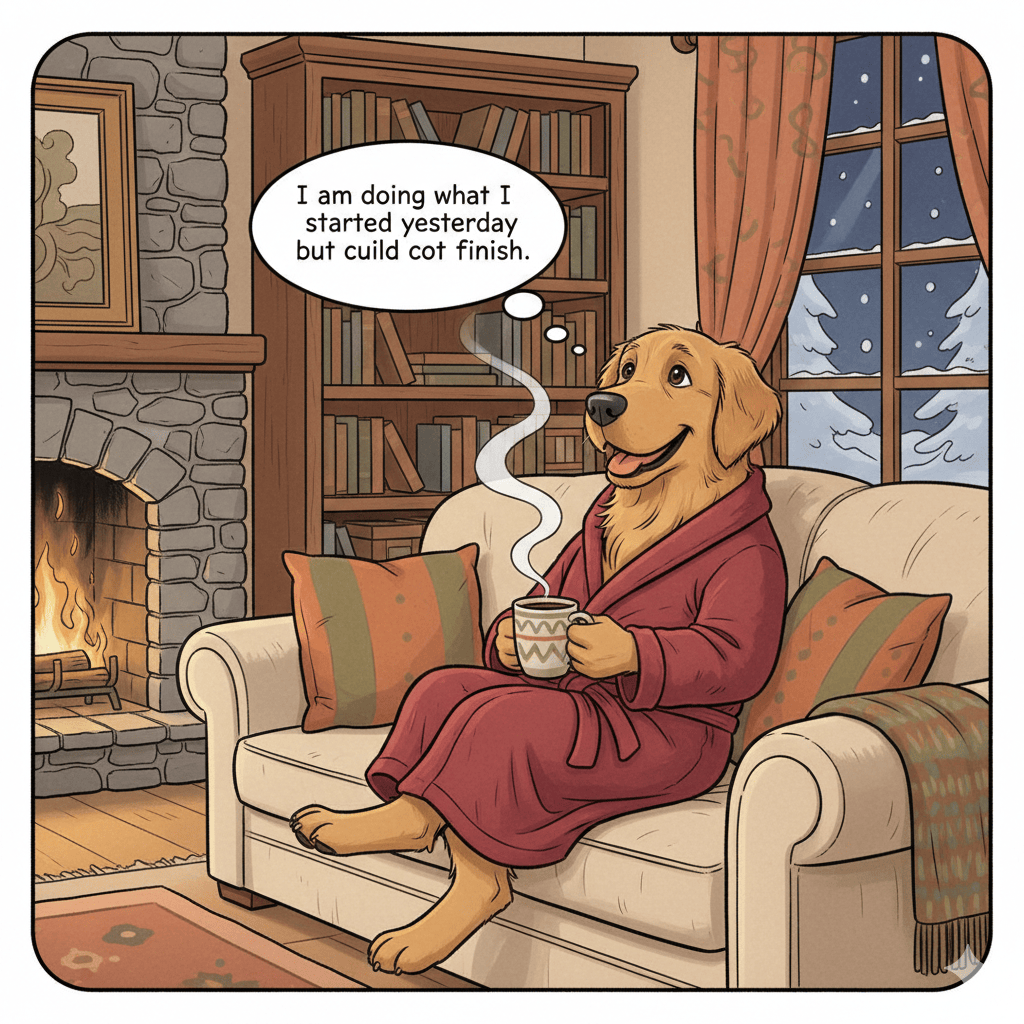
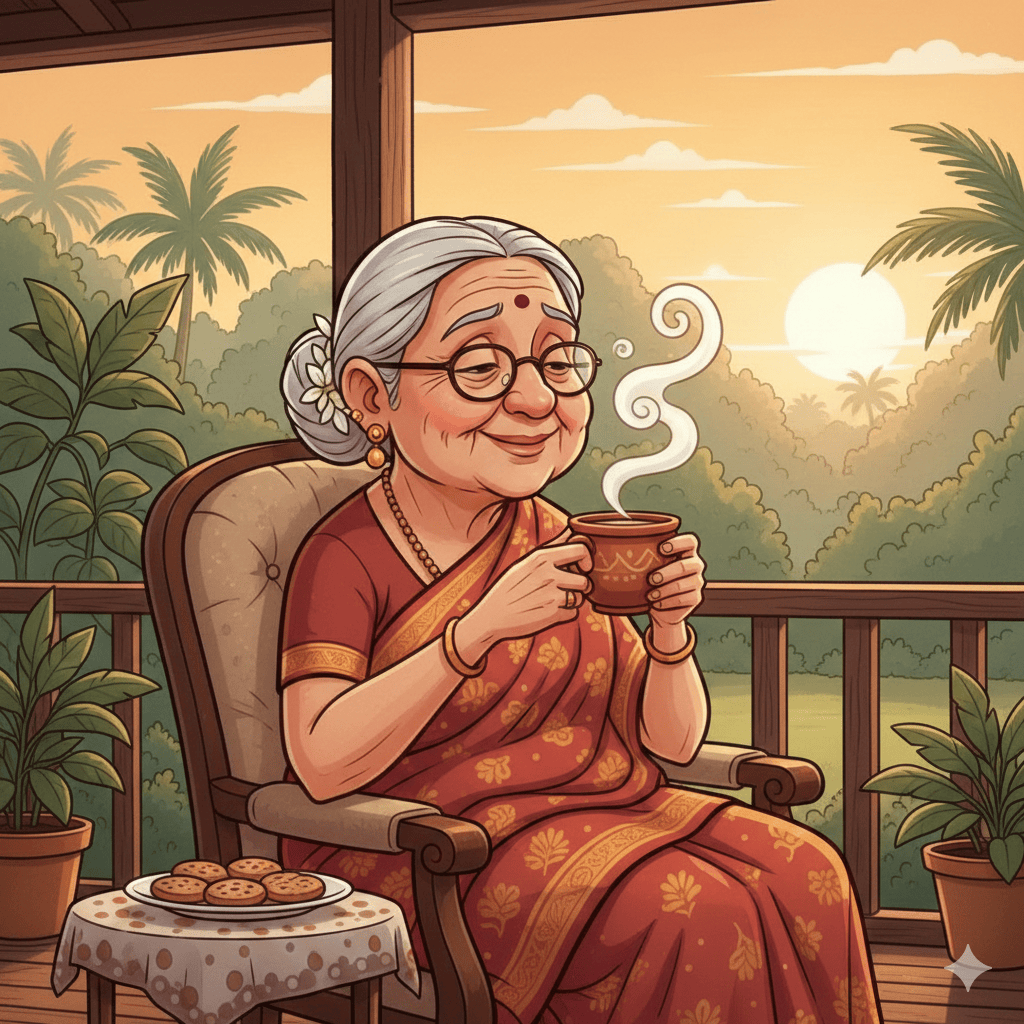
Though it is  obvious let me reiterate that the image is AI generated.

Interesting Foot note:

I have never used ChatGPT before. On a whim I asked it to write a poem on winter. This is what it came up with…

You said

Write a poem on winter

ChatGPT said:

Winter arrives on quiet feet,
A silver hush on every street.
The trees stand bare, their secrets shown,
Dark ink against the sky’s pale stone.

Breath blooms briefly in the air,
A fragile cloud, then gone somewhere.
The sun hangs low, a distant flame,
Too tired now to play its game.

Snow writes letters on the ground,
Soft white words without a sound.
Time slows down, the world grows small,
As frost etches lace on window and wall.

Yet deep beneath the frozen earth,
The seeds remember warmth and birth.
Winter, stern and clear-eyed, knows
How to teach us how to pause—then grow

I wonder from where these lines are taken (read stolen) because I am sure AI may be super intelligent and informed but not exactly poetic.

Poetry is not only a skill but essentially an art of crafting subtelity of feelings into words.

Can AI feel those subtle emotions and convert them into artistic expressions ?

Logic aside, I have an uncanny feeling that I have read this poem somewhere before.

God help the genuine writers!!!

I am participating in Blogchatter’s #EriteAPageADay Campaign

The Super Cop


I realise I have not written about the movies and series I have watched recently. In fact, I have reduced OTT time considerably, especially, before going to bed. Last night I was talking to my friend on the phone who also confirmed that she had to choose carefully what to watch at bedtime. The reason being what we watch right before sleep stays in the mind, comes back in our dreams in some form or the other and disturbs sleep. The same goes for scrolling or listening to something on the mobile neither of which has a soothing effect on the mind.

That’s why I saw Mardaani 3 on Netflix on a piecemeal basis – a little at a time. Mardaani 1 was based on the illustrious Mrs. Meeran Borwankar, the first female IPS Officer of Maharashtra cadre. I have not seen Mardaani 2. But my interest in Mardaani 3 was for a different reason all together.

Mardaani means a woman with a lot of masculine energy who can compete with men in brawn and brain. It’s a disturbing film supposedly based on true events. Inspector Shivani Shibaji Roy of the crime branch makes it her personal mission to bust a human trafficking racket after Pyari, an orphan and her niece’s friend, goes missing from the orphanage. The story is all about how she tracks down the kingpin and kills him.

Naturally, given the tenor of the story there is physical as well as sexual violence , bad language  and other inconsumable elements in the narrative. In my younger days such a movie would have got an A Certificate meaning only for adult viewing. But it’s now streaming on Netflix and can be seen by all age groups without any bar.

The villain of the piece was so hateful that I was getting impatient when he would be brought to books. Evidently it goes in favour of the actor’s caliber.

A week next to the release, a piece of news started doing the rounds on the internet about how a spike in the number of missing cases (all women and children) in the Capital had taken place in the month of January 2026 which understandably became a cause of worry for the citizens.

Subsequently, Delhi Police clarified on X that there was no spike in the number of missing cases and apparently the net-news was an outcome of paid promotion. Soon the netizens traced it back to the Production House of the film Mardaani 3. Delhi Police’s statement was followed by a Firstpost newsclip reconfirming with statistics (no less alarming) what Delhi Police had said before.

Yashraj Films, maker of the Mardaani series, retaliated saying that they were a fifty year old Production House committed to ethical business and would not dream of “sensationalising such a sensitive issue”.

In this exchange of X posts, Mardaani 3 got the publicity it required.

😆😆😆😆

Accounting


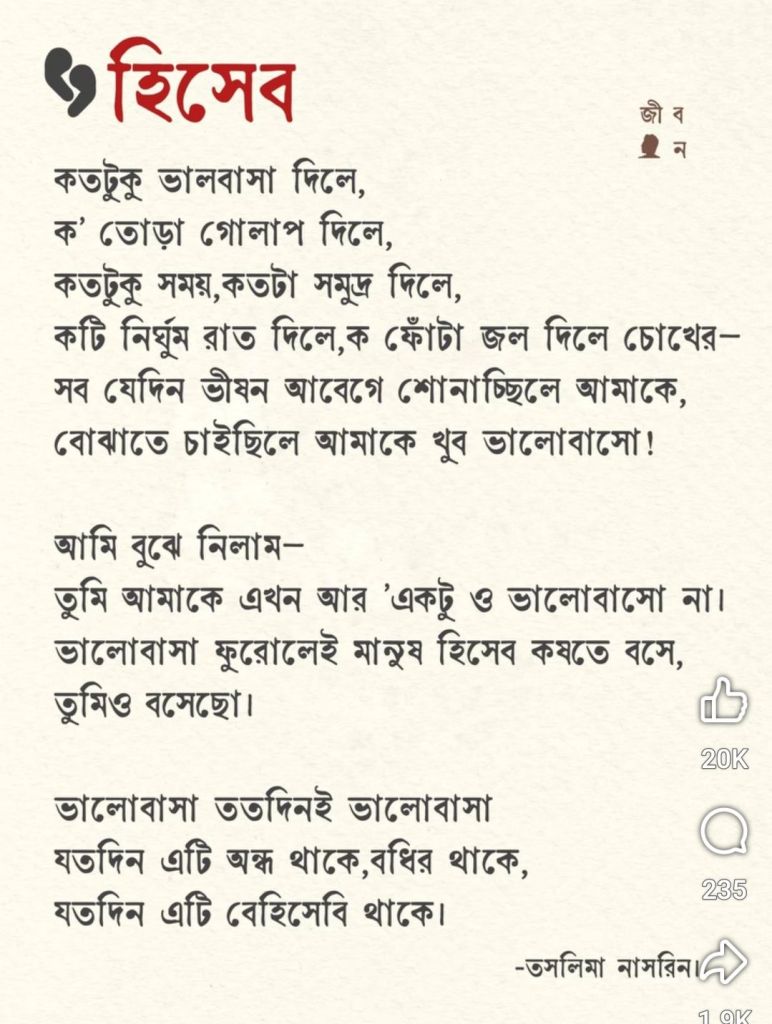
This is my humble attempt to translate a poem by the renowned though highly controversial Bangladeshi writer Tasleema Nasreen in Hindi and in English.

In case of any error I may please be pardoned for my incompetence.

The Hindi version:

कितना प्यार दिया,

कितने गुलाब के गुलदस्ते दिए,

कितना समय, कितने समुंदर दिए,

कितने बेनिंद रातें, कितने आँखों में आंसू दिए –

सब जिसदिन बहुत आवेगपूर्ण होकर सुना रहे थे,

समझाना चाहते थे मुझसे बहुत प्यार करते हो।

उसी दिन समझ गई थी –

तुम मुझसे अब और प्यार नहीं करते।

जब प्यार खत्म हो जाता है तभी इंसान उसका हिसाब लगाता है,

तुम भी लगा रहे हो।

प्यार तब तक प्यार रहता है

जब अंधा होता है , बहरा होता है

जब तक ये बेहिसाब होता है।

My Hindi is not very grammatically strong because Hindi’s grammar is way different from the grammar of Bengali language.

I would, therefore, request my Hindi speaking readers to correct me in the comment section if I have faulted anywhere.

The English version

How much you loved me,

How many bouquets of roses you gave me,

How much time, how many oceans,

How many sleepless nights, how many tears to the eyes-

The day you told me soaked in emotions,

Wanted to make me understand you loved me deeply.

I understood –

You do not now love me anymore.

When love dies down people sit and count,

You are counting too.

Love is really love till such time

It is blind,  it is deaf,

It is uncountable.

Transliteration of poetic lines is not easily attainable. I hope I have been able to convey the essence of the poem.

Taslima Nasreen is a Bangladeshi-Swedish writer, physician, feminist, secular humanist, and activist. She is known for her writings on feminism and her criticism of Islam. Some of her books are banned in Bangladesh. She has also been blacklisted and banished from the Bengal region, including both Bangladesh and the Indian State of West Bengal.

Nasreen has been living in exile since 1994, with multiple fatwas calling for her death. After living more than a decade in Europe and the United States, she moved to India in 2004. She currently stays in India on a renewable residency permit.

Tasleema is known for her brazen writings which are at times unpalatable to the sensibilities of readers. I started reading many of her books but couldn’t finish them because of her stark, unabashed, controversial views on love, relationship, society and religion.

The above poem is also very characteristic of her writings – matter of fact and unapologetic – making a statement without being accusatory or making any any excuse. However, there is an unmistakable pathos underlying the harshness of acceptance which pulls at the heartstrings of the readers.

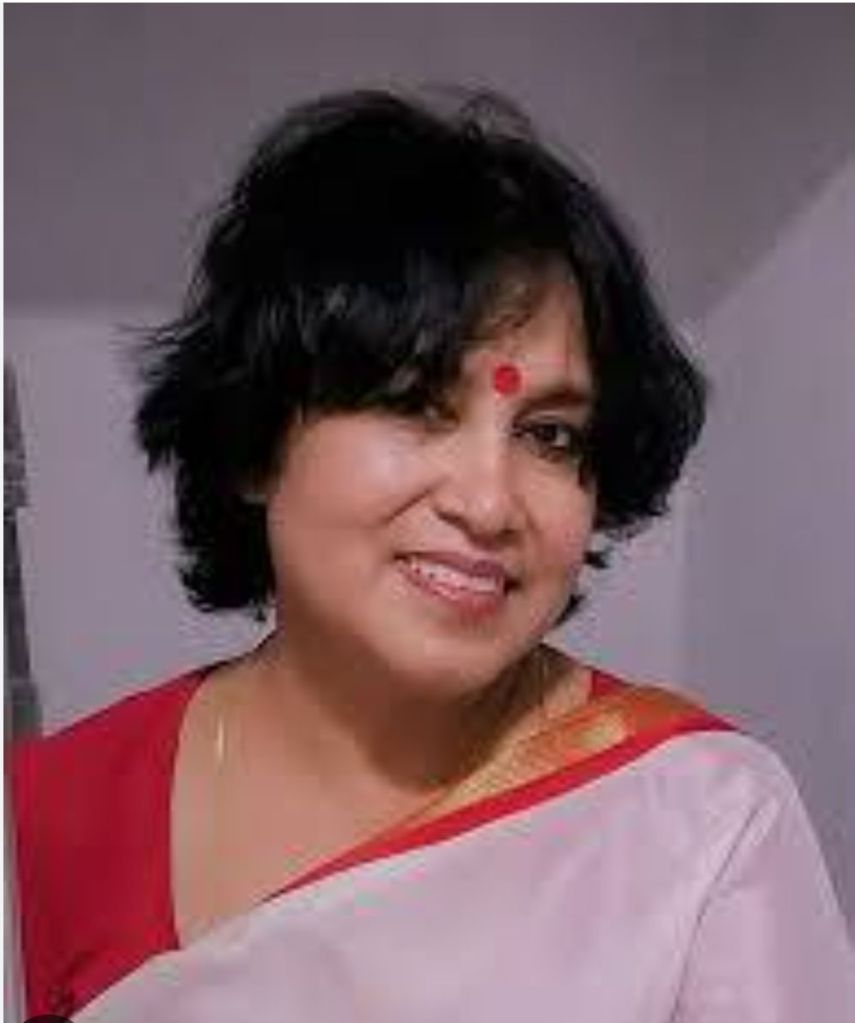
Tasleema Nasreen

Tasleema’s Poem : Courtesy Facebook

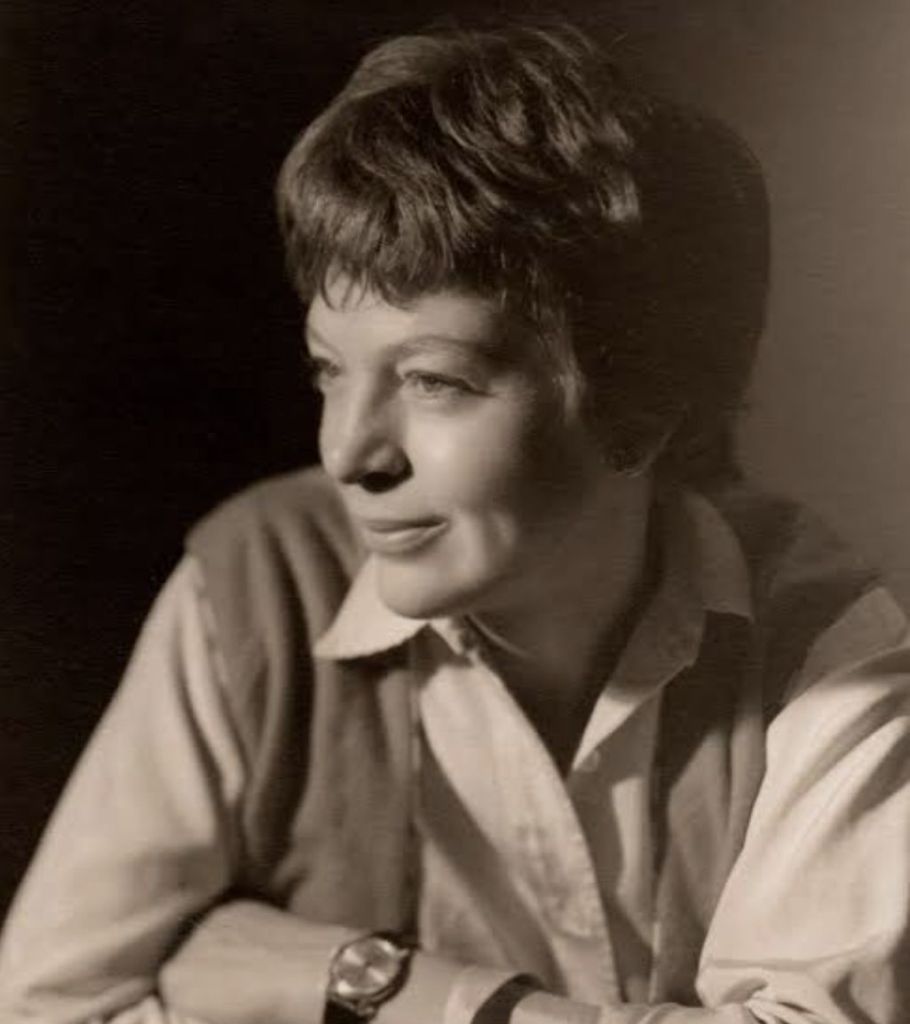
Tasleema Nasreen pic : Wikipedia

This Is Blogchatter’s #WriteAPageADay  Campaign

Visit To The Fort


This is in response to Sadje’s Weekly Photo Prompts on #Whatdoyousee.

The guide said, “This is the jharokha through which the jenana of the palace had glimpses of the outside world.

When they saw the victorious enemies marching towards the fort they performed jauhar – self immolation to save themselves from being manhandled by the greedy king and his indisciplined soldiers.”

He took us below a steep flight of steps where the women of the palace had burnt themselves alive. It was dark and musty. The ancient walls carried the indelible memories of the devouring flames.

“It is said that after nightfall you can still hear the painful cries of the women – their bodies licked by the all consuming fire invoked by them through secret chants.”

We came out of the fort a little dazed. The guide followed us, “You see the Board of the Archaeological Survey of India at the entrance. It carries strict instructions that the tourists should vacate the premise before 5.00 PM. This fort is haunted.”

Somebody scoffed in the group. The guide turned around and looked at him directly in the eye, “No babuji. Don’t laugh. Somebody like you had once strayed from the group to stay back and experience the paranormal. His body was found the next day inside the well in the courtyard overlooking the hamaam where the royal ladies used to take baths.”

There was a funny look in his eyes. Almost sinister. The locals believed in keeping the fort alive and we had been specifically told not to humour them.

I involuntarily looked at my watch. It was about time we left. The sun was setting in the western horizon streaked with red and purple. A wind had started blowing bringing in a chill which was not felt during the day.

We took the jeep back to the hotel. I needed a cup of garam chai very badly. We stopped at a departmental store to pick up some snacks to munch with the tea. The tour of the fort still playing vividly in our minds we stood in front of the shelf stacked with chips and cookies for quite some time before making our choice.

I guess we have to forego our plan of going back to the fort at midnight for that real time experience of ancientness and forgotten history.

We wish to be back home alive to tell the stories.

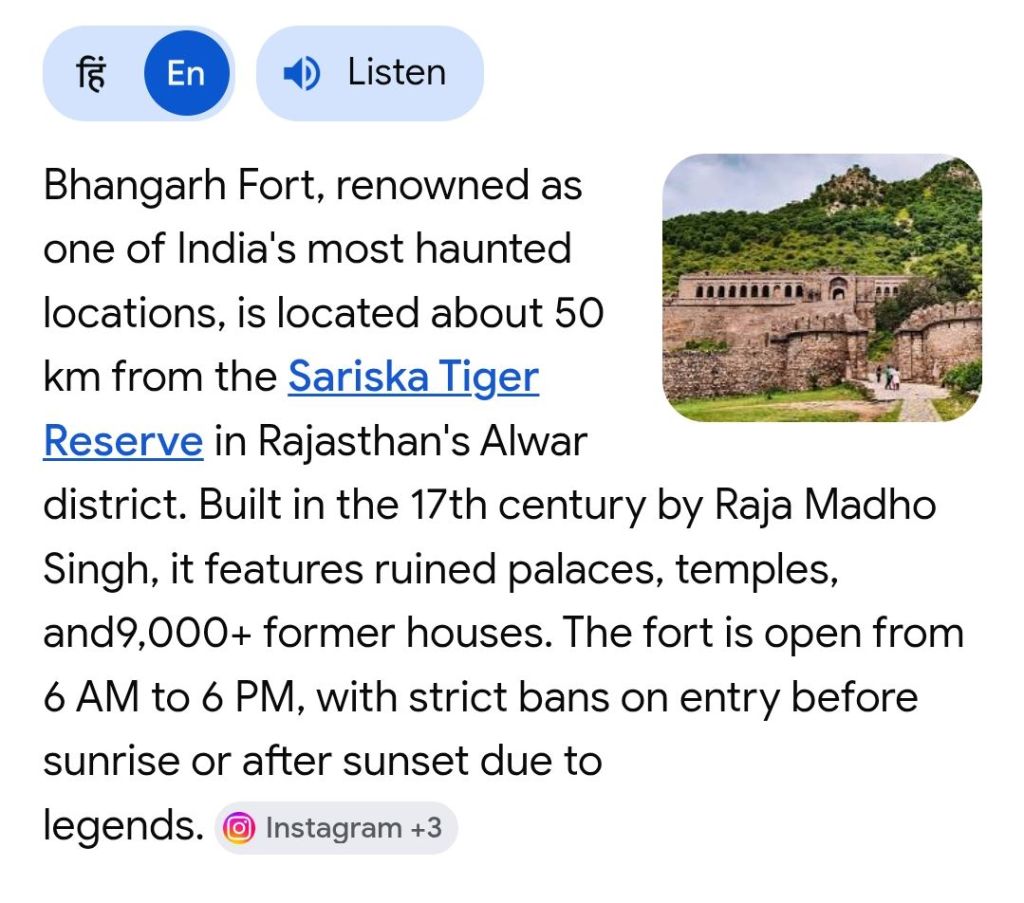
This short story is inspired by a trip to Bhangarh Fort, Sariska, Rajasthan, which is famously haunted. The Board of Archaeological Survey of India at the entrance of the Fort has written instructions for all the tourists to leave the premise before sunset.

Bhangarh Fort

#Wdsy

This is part of Blogchatter’s #WriteAPageADay Campaign.

This Too Shall Pass


How do we navigate through pain and grief ? Do we remember this is just a passing phase? Are we aware of the ephemerality of happiness on sunny days? We are supposed to smile through tears believing that bad days are transient. Are we supposed to become morose thinking today we are laughing but tomorrow it may not be so ?

No.

We are not to break down in the hardest of times because the waves that recede do come back to the shore. And in our carefree days when everything seems hunky dory we are not to forget that joy is short spanned too.

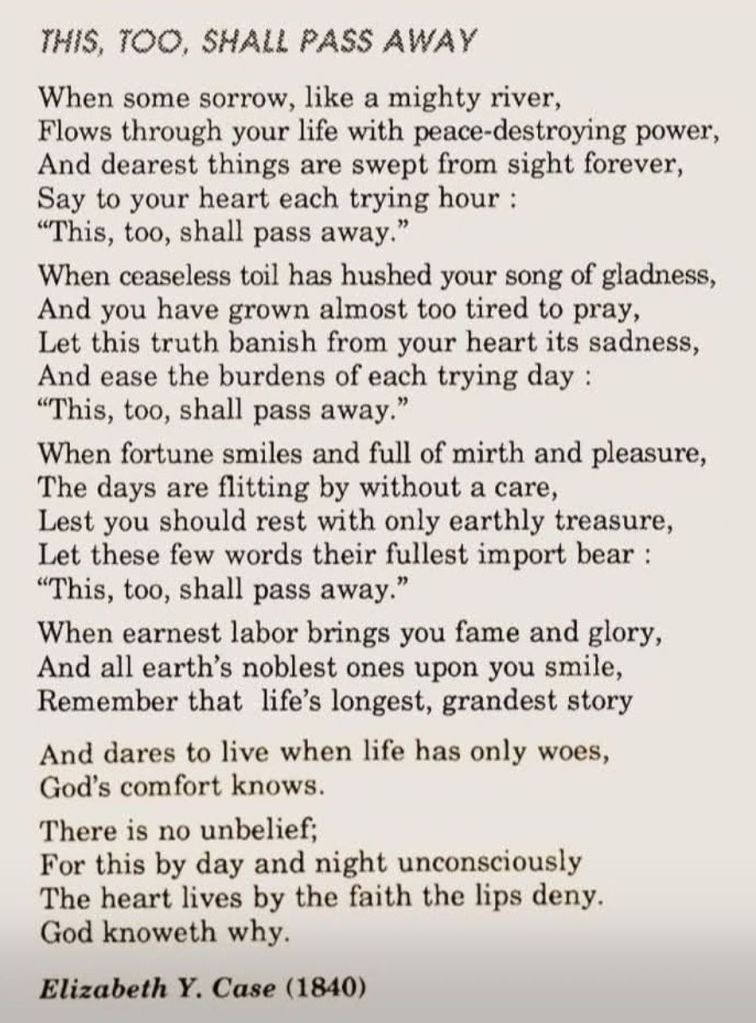
I think the title of the poem This, Too, Shall Pass Away tells us to be alert and prepared for what’s next to come so that we have faith when things are not in shape and enjoy the happy phases of life as much as we can knowing that nothing stays as it is for too long.

This constant change is life and creation. Nature has seasons. Civilizations have growth and then decay. Societies are constantly in flux. Economies strengthen and fall. The curvaceous nature of everything around teaches us to be resilient, tenacious and flexible. And that is survival.

Sadness as well as happiness both, are gifts of God. We should embrace them as precious. Both teach us to live fully and meaningfully. If we have only either of the two life will be static and stagnant. Pain rolling into pleasure rolling back into pain rolling back into pleasure is such a unique process lending movement or gati to our existence. If this cyclic order is not there we are lost.

All inventions and discoveries have taken place from human wants and needs. The sense of want is heightened in the absence of what we feel we require – things that we lack. The sense of lacking makes us miserable which, in turn, propels us to look for solutions… inventions. Inventions make us comfortable and give us a sense of fulfillment. We acquire them and enjoy life till such time there is another upsurge of wants…another vacuum which makes us miserable again.

In short, in grief we grow. In joy we enjoy that growth. But human nature is restless. It does not know contentment. We have to acquire the skill to be content as we realise that there is no end to wanting and so no end to misery. Somewhere we have to stop and turn inward to find that true place which does not make us wander and gives sthiti or thahraav or anchor to our wanderlust.

In this entire process of breaking and making the mantra of moving on is this too shall pass away.

If the entire cosmos is in a continuum of in and out flux in time humans cannot remain rigid, inflexible and inadaptable.

The beauty of the poem lies in affirmatively reinforcing the most pragmatic philosophy of worthy living condensing it into a quick and easy to remember aphorism of life.

***

Elizabeth Y. Case (known also as Elizabeth York Case) was a 19th-century American poet. Her most notable work is a poem that retells the classic fable of a Persian King seeking a sentence that would remain true in all situations, concluding with the truism “This, too, shall pass away”.

While sometimes confused with other poets of the era (such as Elizabeth Barrett Browning or Theodore Tilton, who wrote a similar poem called “The King’s Ring” or “Even This Shall Pass Away”), Elizabeth Y. Case is credited in several 19th-century Anthologies and modern Best Poetry” Compilations for her eponymous version.

The poem This, Too, Shall Pass Away is courtesy Facebook

This article is part of Blogchatter’s #WtiteAPageADay Campaign

Family


With the advent of nuclear family the definition of family underwent a change not only in society but also in the books of the law makers (read government). Family  meant husband, wife and children. In some cases it was also the parents of the husbands if they happened to stay under the same roof. But not the parents of the wives even if they were dependent on her financially and otherwise.

In many cases, a girl would not disclose her entire salary to her parents-in-law and even husband because she spent some part of it secretly to support her parents.

When I was working, I was not entitled to many perks because my mother was not officially considered my family though she was solely dependent on me in every respect. Some of my relatives as well as  colleagues told me quite blatantly that since I was not married I didn’t have a family by their definition.

Many times my senior colleagues told me to stay back in Office and work a few extended hours saying, “What will you do back home. You don’t have a family.” For them the personal life of a female colleague revolved around either taking care of the husband or their children.

It took a lot of patience on my part to make my female colleagues understand that household chores did not only mean preparing food for the family or helping the children do their homework. Paying bills , getting odd repair jobs done, buying groceries, seeing that the household functioned without any hindrance while I was in the office also fell within the ambit of house management – areas that their husbands most probably looked after. It took a lot of time for them to acknowledge that the division of labour they were used to being married was not available to me.

Then there was the (older) generation who opened a conversation with questions like :

Aapke husband kya karte hain?

(What does your husband do)

Aapke bacchey kitney hain ?

(How many children you have got)

Aapke bacchey kya karte hain?

(What do your children do ? Are they studying, working or have you married them off)

It was hard for me to reply that I was not married to which the questioner always put on a woebegone look and said sorry. Why sorry? What was there to be so sympathetic about? It was my life choice. I thought I was saving a life from perpetual misery – this statement invariably fell on an audience  non-receptive to the ingrained humour.

In our society inquisitiveness is not taken as discourtesy but as an accepted reflection of genuineness and warmth. So the next question would inevitably be why did I choose this difficult path which was almost akin to renunciation. It was an insane proposition to make them believe that my decision was by preference and not by any compulsion.

Did the same principles apply to the other half of the population? I heard many mothers worry who would look after their sons if they were not married off at the right age. Marriage for them was getting a socially sanctioned caretaker for their sons. For a woman, choosing to stay unmarried, was the end of life.

I am participating in Blogchatter’s #WriteAPageADay Campaign

I Wrote A Poem


I wrote a poem on Monday

It did not make sense

So I tore off the page

And threw it in the bin

I wrote a poem on Tuesday

But I wanted to rewrite

It still lies in wait

In the folds of my mind

I wrote a poem on Wednesday

A good day to ink words

But it was cold outside

And it froze all my thoughts

I wrote a poem on Thursday

But got confused mid way

So I let it sit for a while

Till I forgot what to say

I wrote a poem on Friday

But Friday’s child is unlucky

So I thought it’s just okay

To let just pass the day

I wrote a poem on Saturday

But got carried away

The melting pain and

Loneliness took my breath away

I wrote a poem on Sunday

I mean today….but again

Let the poem stay

In the memory of my pen

I wrote a poem on all seven days

Some made sense some not

Some remained half done

Some I left to rot

And tomorrow by the way

It’s going to be Monday again

When I will write a poem

And bid it goodbye in vain

(Inspired by fun rhymes of childhood)

I’m getting confused with words

I am participating in Blogchatter’s #WriteAPageADay Campaign

Tattered Jeans (Revised and Reposted)


My senior colleague advised me to take a break and pamper myself a bit. He suggested a Five Star treat.  I shook my head as I remembered my maiden visit to a Five Star Hotel.

I was posted in Kolkata, (then Calcutta), at that time. In those days, I used to travel in over-crowded buses reaching Office crushed and crumpled. On that day when I got down I found that my saree had a hideous tear right on the top fold. The repair  could be done only after reaching my desk. 

However, as soon as I stepped in I was told I had to accompany the Executive Director to a Five Star venue where he had to approve certain VIP arrangements for a high profile conference.  Before I could blink my eyes, I found myself sitting in his car.

ED was a thorough gentleman. If he was aware of my discomfort he did not show and a casual conversation continued till we reached the hotel.

I could feel the doorman’s contemptuous stare at my attire and cringed perceptibly.

The manager who was showing us around was too busy impressing the ED. I could not make out whether he had noticed the tear or not but I for my part was unable to concentrate on his enthusiastic prattle. I exhaled deep and long when the time came for us to leave.

Ironically, thirteen years managing the hospitality section , visiting Five Star Hotels soon became as commonplace as eating Daal Chawal for lunch and dinner.

While discharging my duty I had to inspect all those quarters which stripped the premise of its glitter and glamour. The kitchen where the chef and his assistants sweated it out preparing expensive mouthwatering delicacies, the housekeeping section where promising interns from reputed institutes did menial jobs, the front office which steamed under the pressure of providing accommodation in peak seasons and the stark banquet halls before being decorated with chipped props carefully wrapped in snow white satins and matching pink sashes.

To me all hotels looked alike and its staff uniformly stilted in mannerisms. The only exception was Hotel Imperial which not only boasted of  history and heritage but also a priceless collection of original sketches and paintings dating back to the pre-independence time said to have been recovered by a waiter from a heap of junk about to be discarded by the Hotel Management.

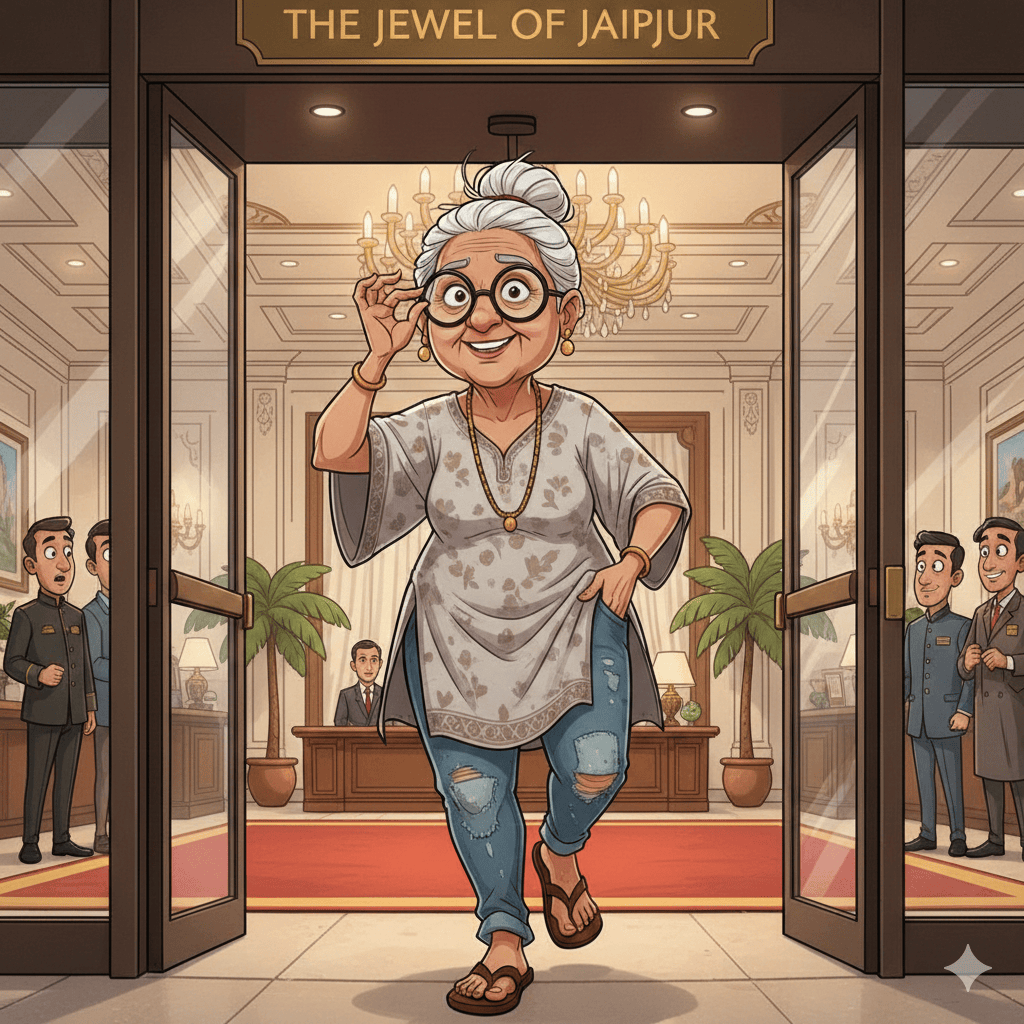
Now having seen and experienced it all,  I feel a torn saree, a pair of tattered jeans or muddy chappals are too obscure a reason to mar human worth under any circumstances.

(This post was written when tattered jeans were not in fashion)

I am participating in Blogchatter’s #WriteAPageADay Campaign

Faces Are Misleading


In our culture we don’t address our seniors by their first name. That is considered disrespectful.  Being in the habit of establishing relationships even strangers are addressed as uncle or aunty based on their respective gender.

In Bengal the address is more specific, personal and intense. 😂😂 It is not a plain- fitting-all-and-sundry aunt, it’s either mashima (mother’s sister) or pishima (father’s sister) or kakima (father’s younger brother’s wife) or jethima (father’s elder brother’s wife) or mamima (mother’s brother’s wife) or didima (maternal grandmother) or thakuma (paternal grandmother). Likewise it is meshomoshai (mother’s sister’s husband) or pishemoshai  (father’s sister’s husband) or kakamoshai (father’s younger brother) or jethamoshai (father’s elder brother) or mama (mother’s brother) or dadu (maternal grandfather) or thakurda (paternal grandfather).

As I write I get how complicated this must be to those who are not conversant with our social norms Interestingly and amusingly, there are no steadfast rules governing these addresses. It’s just the vibe you get meeting a person (given their age) or a relationship that you hold dear.

Even amongst equals we suffix a ji to their name to show respect. To address somebody in public it will either be bhaiyya (younger brother) or bhaisahab (elder brother). Vice versa, for a man addressing a woman it will be behanjee (sister). Young girls and kids are often endearingly addressed as gudiya (implying a plaything or a doll to be loved and cared for).

These addresses also reflect our social and cultural mindsets. A young girl/unmarried woman will always be addressed as didi (elder sister) and for married girls/women it will be bhabhiji (brother’s wife) or boudi (in Bangla). Thus, the Chief Minister or State Head  of West Bengal is referred to as Mamta di. The Nightingale of India, Lata Mangeshkar, as Lata di. Asha Bhonsle, Lata di’s sister, another iconic voice, as Asha Tai (elder sister in Marathi). However, for men, irrespective of their marital status, the address is dada!

Decades back I had become the universal auntie. Some even addressed me as mummy ji which made me laugh. Perhaps it’s the grey in my hair which I never hid. Irrespective of the silver streak there is an odd social habit of prefixing a ‘Mrs.’ to a lady’s name without asking. I have stopped correcting them because it’s too often now. And I really don’t think that prefix defines me. As long as they are respectful and well meaning I can overlook that lapse.

But what bothers me is when the cab driver immediately switches on a devotional song as soon as I take a seat implying without saying as much that given my age I should only be interested in spiritual thoughts and music.

Up North, a position of command automatically presupposes male presence or identity. So for my chemist or pharmacist I am ‘Chatterjee Sahab’. For my rickshaw driver I am ‘Sahib’ or ‘Janaab’. Both male addresses.

Another funny reaction that I get is when one look at my face and  people start talking to me in English whereas I would be equally, if not more, comfortable with Hindi or Bengali.

One of my regular handymen was given to addressing me as bhabhiji. At that time my mother’s caretaker was a very conservative elderly lady. This offended her sense of propriety as I was not married and I believe she chastised him once or twice for it. But incorrigible that he was, he refused to switch over to the socially accepted ‘didi‘ even after all that regular admonitions.

If you ask me, my funda is simple. As long as it is respectful, I don’t much bother about what they address me as.

I am participating in Blogchatter’s #WriteAPageADay Campaign)