Culture Shock!!


Once, when I was posted in Kolkata, my colleague and best buddy (an Anglo-Indian) invited me to a weekend gathering in her house. I was excited to attend a ‘party’ – an experience completely new for me.

As the evening progressed and the guests settled down, music was put on and suddenly a middle aged couple got up and started dancing. Imagine the shock because being a true blue Bong my idea of a social gathering, or partying for that matter, boiled down to a singular entertainment (call it enterprise) , that is, adda.

Adda is one of those untranslatable words whose dynamics cannot be narrowed down to a single parameter. It’s a dialogic exchange between two or more participants which can continue endlessly ranging from the most trivial to the most intellectually uplifting. For example, it can start with the acute disappointment with the local grocery store to the most happening  next door romance or a suspected extra marital fling bordering on the scandalous  to a detailed analysis on how Saurabh Ganguly’s cricket captaincy is a notch up than that of Virat Kohli’s to the more esoteric conversation on the deeper tenets of Karl Marx’s dialectic materialism and so on and so forth.

It doesn’t take much for a Bong to zigzag through discussions on varied topics which can,  at times, be the cause of  heated arguments (personal aspersions not excluded) and even resulting in  temporary or permanent relational turbulences. After all, it’s the Portuguese blood which got somewhere coagulated into the local stream centuries back catalysing hot headed, passionate, partisan interactions!**!

Anyway, coming back to socializing, I guess it has different connotations for different social groups and is definitely country and culture specific. I learnt from a podcast that in South Korea for a couple dating means taking part in activities together like painting or reading together. In one of the Kdramas, the hero gifted his lover a set of colouring  books and puzzles (supposed to be stress busters) as she was going through a distressful phase in life. No roses, chocolates or diamond rings – not that I am a believer of the tagline “nothing can express subliminal love better than diamonds” yet….

Cut two –  the local para (neighbourhood). A boy and girl unnecessarily going round and round the serpentine gullies in a miasma of obnoxious odour rising out of the open drains by the side, with a perpetually dreamy look in their eyes – that’s the ideal , intense, ultimate, romantic courtship of a Baangali (Bong).

At least, that’s what it used to be in my hey days …. Ahem. As I am a self declared dinosaur I really don’t have any idea how millennials courted or the Gen Z initiated a relationship. I presume it would be more direct and ‘lets get to the brass tacks” type since it’s the age of speed. Given the pluralist society of India, I believe, every community and region, must be having their own norms of social exchanges. I don’t know either if adda has been overtaken by hip-hops or salsa with the globally attuned Bong crowd now. 

In the North, adda is easily replaceable by dhandha (money making). Long time back North Indians looked up to Bengalis as the quintessential intelligentsia. In sharp contrast , in the 90s, my colleagues considered me as part of a community of losers who did not have adequate  business acumen or money making sense.

Here, people seldom have conversations but only sharing of information on long and short term gains in investments, share market, kitties and committees (financial pools with neighbours or acquaintances), regrets on losses incurred in business (dhandha abhi manda hai) and the so called ‘profitable’ jobs on which an (illegal) income (called the upari)  other than the salary can be earned. Point to be noted that when dhandha is not manda is never disclosed or talked about.  I have all along felt at a loss in  company of people where the mainstay of a conversation is the number of gold, platinum and other precious credit cards flaunted by an individual.

Down South, it’s again very subtle. The conservative, nose-up-in-the-air undertones are unmistakable. In between pleasantries, they’d very politely enquire about and form opinion on your socio-economic status – not how loaded you are or how huge your purchasing power is but what positions your forefathers have held in the royal courts or at the Nizam’s , how many qualified engineers and doctors are there in the close and extended family, preferably settled abroad, whether you have visited such and such landmarks in the state or city like the hospital or school which stands on land donated by one of their ancestors etc.

Of course, I write strictly on the basis of my personal experiences and interactions. No generalization here. Coming back to where I began and to cut it short, as dancing does not come naturally to me I’d prefer a slow opening up of meaningful (outside the mercenary) discourse anytime than tapping or clicking heels on the floor. And by the way, that’s purely my drawback. There’s nothing wrong in waltzing through a “knowing each other” evening in case you like it that way.

Wordy


Cleaning cupboards and book shelves is always rewarding because I always come across some serendipitous find – neatly pressed sarees and suits worn only once or twice but forgotten that I still had them in my possession, nicely wrapped books I intended to read but never did, documents efficiently punched in forgotten files which could make or break life etc.

This time though I did not get what I was looking for, I discovered a print-out of 20 Awesomely Untranslatable Words From Around The World.

Sharing them here :

Toska (Russian) – A great spiritual anguish often  without any specific cause…a longing with nothing to long for.

Mamihlapinatapei (Yagan) – The wordless yet meaningful look shared by two people who both desire to initiate something but are both reluctant to start.

Jayus (Indonesian) – A joke so unfunny and poorly told that one cannot help but laugh.

Iktsuarpok (Inuit) – To go outside to check if anyone is coming.

Litost (Czech) – A state of agony and torment created by the sudden sight of one’s own misery.

Kyoikumama (Japanese) – A mother who relentlessly pushes her children towards academic achievement.

Tartle (Scottish) – The act of hesitating while introducing someone because the introducer has forgotten his/her name.

IIunga (Tshiluba – Southwest Congo) – Stature of a person who is ready to forgive and forget a first abuse, tolerate it the second time but never forgive or tolerate  the third time.

Prozvonit (Czech) – To call a mobile phone and let it ring once so that the other person will call back saving the first caller money.

Cafune (Brazilian Portuguese) – The act of tenderly running one’s fingers through someone’s hair.

Schadenfreude ( German) – The feeling of pleasure derived by seeing other’s misfortune.

Torschlusspanik (German) – The fear of diminishing opportunities as one ages.

Wabi-Sabi (Japanese) – Finding beauty in imperfections.

Depaysement (French) – The feeling that comes from not being in one’s home country.

Tingo ( Pascuense – Easter Island) – The act of taking objects one desires from the house of a friend by gradually borrowing all of them.

Hyggelig (Danish) – An experience which causes the feelings of  warmth, friendliness and coziness.

L’ appel du vide (French) – Call of the void or the instinctive urge to jump from high places.

Ya’ aburnee (Arabic) – A declaration of a hope to die before another person because of how difficult it would be life without him/her.

Duende (Spanish) – The mysterious power that a work of art has to deeply move a person.

Saudade (Portuguese) – The feeling of longing for something or someone one loves but has lost.

Honestly, I don’t remember from where I downloaded this information. I also cannot vouchsafe the authenticity of these words and their given meanings (which are not exact but  claim to be the closest). Google has slightly different versions of them. However, some of the words like Wabi Sabi and Saudade are now being frequently used and recognised in English vocabulary. But it was such fun reading them that I could not help but share. If anyone, knowing the particular language, finds some anomaly in the definitions, may please feel free to correct.

While we have many parents who are driven by the Kyoikumama complex in our society, we majorly thrive on Prozvonit. Well, Torschlusspanik and Schadenfreude are feelings not uncommon too but God forbid if we have a friend or acquaintance with a Tingo. However, among these, my favourite is duende, which I have often experienced looking at a painting or a photograph, listening to a particular song and so many times reading a book, a post or a write up.

Which one of these are your favourites?

Let me know…

Pinku And Onky


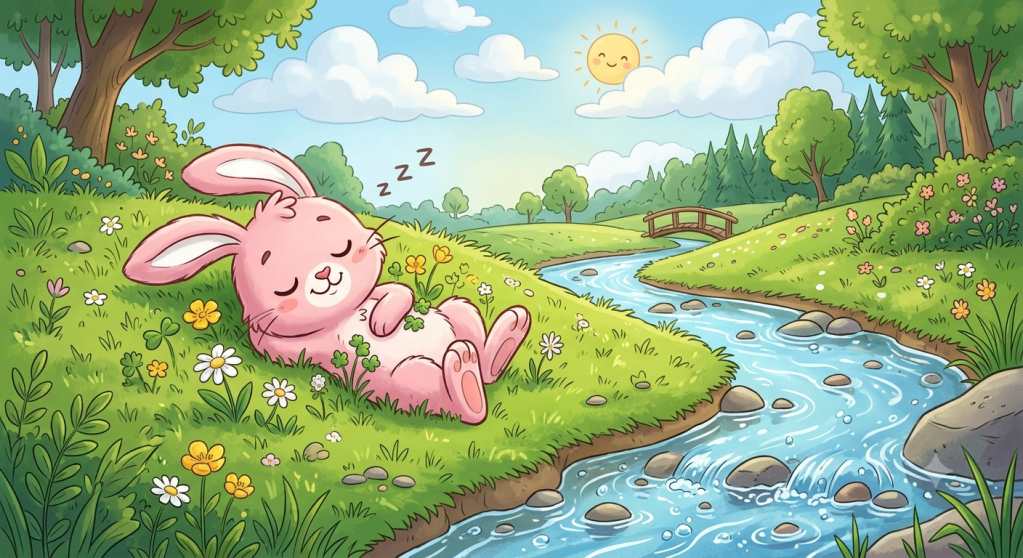
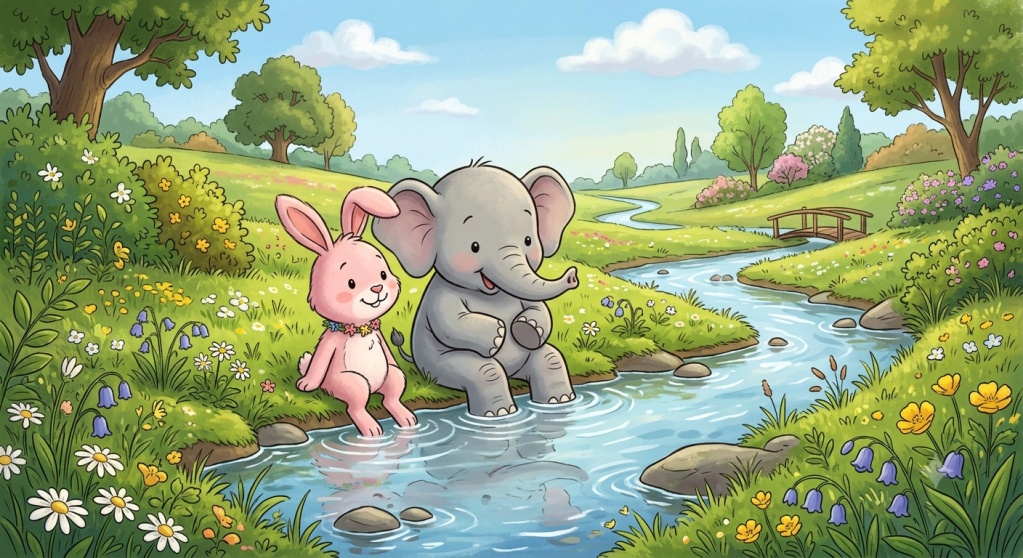
Once upon a time there was a pink little rabbit. His name was Pinku. He lived in a lush, green meadow by a singing brook. He loved to listen to the song of the water skipping over pebbles and stones and hum with the music of the silence all around. He played by the brook , read by the side of its lapping waters and almost spent the entire day counting its tiny ripples.

Pinku did not have any friends. But he was not unhappy with his aloneness. After the mother rabbit passed away he quietly accepted that he had to spend his life with himself. He came to love his own company, his own routine of the day and his own cute little hobbies.

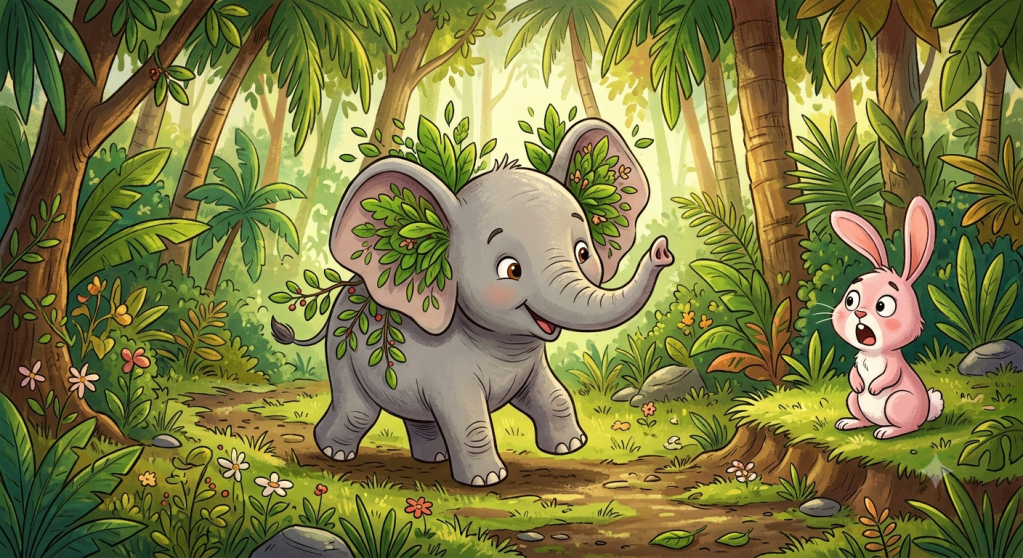
One desultory afternoon as Pinku was gazing at the sky lying on the velvety grass by the waters he heard a rustle of the leaves which soon became a rumble and then a soft grumble and then a loud , thunderous crunch. He got up and walked towards the grove of trees from where all the disturbing sounds emanated to find a chubby little elephant standing and grinning at him sheepishly. A long curly, leafy twig dangled by his neck while a few wanton leaves sprouted from his ears. 

He waved at Pinku happily and said, “Hi! You there! I am Onky. What’s your name little one?” Pinku hesitantly introduced himself. But it did not take two minutes for Onky to be by his side. He was a confident boy.

“What are you doing all by yourself by the brook?” He asked.

“I was watching the clouds”, replied Pinku.

“And what were you doing inside the grove?” Asked Pinku.

“Well, you see I was practising a few dance steps. We are going to have a party tonight. Why don’t you come over?” Invited Onky.

Pinku had never heard of a party. So Onky explained,” It’s when a group of merry making friends meet, eat, dance and play.”

Pinku was not quite sure he liked the idea but on Onky’s insistence agreed to join though a little reluctantly.

That night Onky introduced Pinku to all his friends. They were all very friendly and welcomed him to the group though Pinku secretly thought they were a bit rowdy. They had lots of delicious things to eat and played and danced all night. For Pinku the all night thing was a little worrisome because he was a very disciplined child who lived by the clock. But in spite of himself he enjoyed the merriment and the party and forgot all about the time.

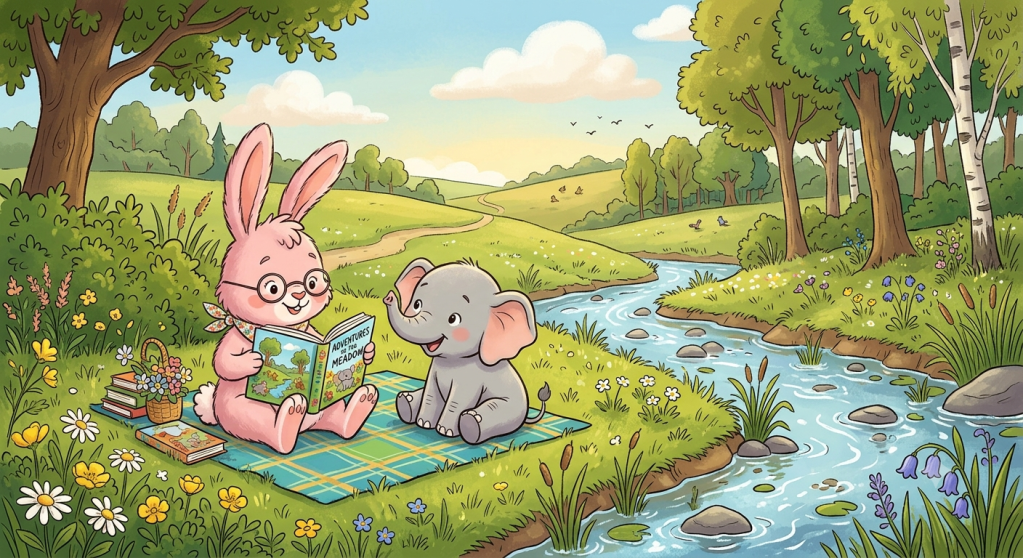
Soon Onky and Pinku became very close friends. Onky was quite an extrovert. A little over energetic. Pinku was calm and quiet who loved Nature, read voraciously, introspected a lot and dreamt for hours. While Onky taught a lot of games to Pinku, Pinku read out to Onky and told him stories about elves and fairies, princes and princesses, distant lands and gardens, thoughts and theories.

Many afternoons when Onky over exhausted himself Pinku held his hand,  took him to the brook and both dipped their legs in the cool,  prancing water for long hours. Pinku taught him to listen to the birds and the bees, gaze at the sky, smile at the clouds, talk to the stars, wave to the moon and breathe in deeply the fragrance of the breeze.

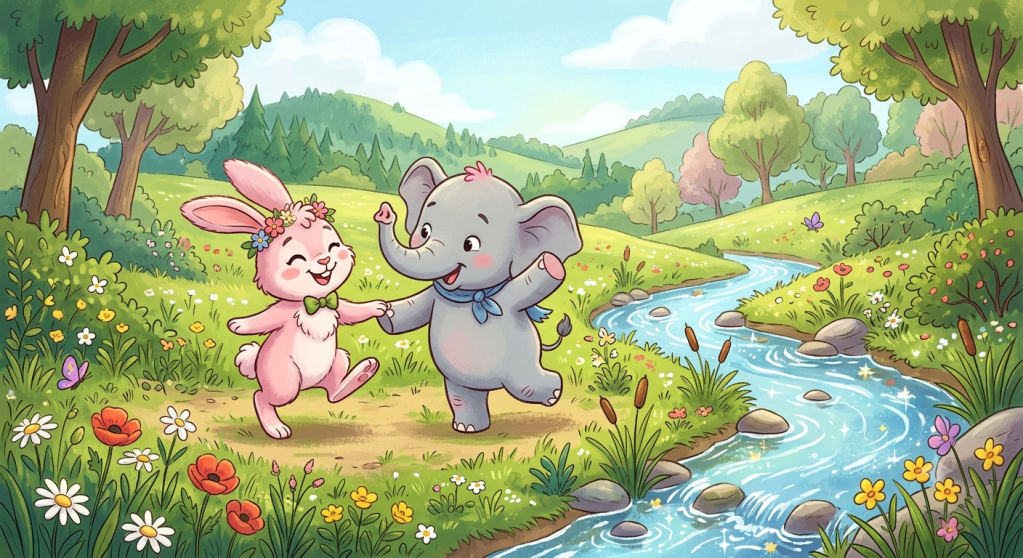
Onky danced and pranced holding Pinku’s hands. They rolled on the grass,  giggled a lot without any reason and threw all the care to the wind. Onky did funny steps, cracked jokes, whistled and sang and made all sorts of weird faces that Pinku found extremely funny. He rolled with laughter till his tummy ached. After a while catching their breaths they sat down together to eat berries and drink the sweet water from the brook.

But at the same time Pinku made Onky aware of the importance of routine and discipline – how the day should be spent in a balanced manner combining work with play, how healthy it is to chew food well before gulping, why go to bed early and rise early and how to be respectful and responsible to everyone especially the elders (as Onky at times tended to be a little brusque). Soon Onky learned to channelise his excess energy into prayerful listening and being in nature and be contemplative and reverent of all the little things gifted by life.

On the other hand, Onky made sure that Pinku stopped being reclusive. He often took him out to parties and gatherings. They played and danced all night and made a lot of noise.

And that is how Pinku learned that there is joy and laughter also in life. Making friends is as important as enjoying one’s aloneness. And sometimes it’s also necessary to take a break from the routine and let his hair down.

All pics AI generated

Untimely


With due permission, a fun take inspired by Kaushalji’s beautiful, heartwarming, romantic poem Never Alone.

I met him the other day

In the busy market place

He was buying groceries

And I was merely making haste

He looked at me through his glasses

And gave me a big, broad smile

I frowned at him irritated

Not quite ready to return the smile

That rainy day in the traffic jam

A car just pulled over by my side

There he was at the wheel

Ready to give me a lift unasked

Drenched as a crow I looked away

What? Take a lift from a stranger ?..No way

But as it was fated to be

I came to know a few days later

That bald , old guy with a toothy smile

Has become my next door neighbour !!

Now every morning I have to see his face

Return his greetings in a courteous way

Not only that ….rat….tat…tat…

He knocks on my door whenever he wants

For sugar or salt or a bowl of  milk

And what to say of his damned cheek

While departing he kills me by asking,

“Aaj shaam ek cup coffee ho jaaye?”

“Aaj shaam ek cup coffee ho jaaye?” means  “Let’s have a cup of coffee this evening?”

Trivia : Today at the bank there was an old, bald, affable gentleman who evidently whiled his time talking to the officer at the counter. Obviously, he seemed lonely with an urge to have a long conversation. He sounded a little nostalgic too remembering the old days and ways of life. Incidentally, it was pouring outside. So the officer courteously asked him to stay put. The old man happily accepted the invitation.

My work at the bank was taking time. In fact,  when one of the officers cracked a joke with me he too joined in and had a good laugh. I am an old customer of the bank. Like me this bank generally has retirees as Account holders who often seem to not only come for their regular banking needs but also to spend some time in the company of the bankers. Loneliness makes one find ways to pass time at odd places.

A poem takes birth inspired by cumulates of many such little incidents. Also, today (actually yesterday) is my school buddy’s birthday. So I wanted to send her a fun poem. Kaushalji’s sweet little poem was one of the triggers.

The Strike


This is in response to Sadje’s Weekly Photo Prompts on #Whatdoyousee.

We mingled noiselessly the way a soluble gets diffused in water seamlessly. Those rows and rows of men and women , almost a crowd, but so still and quiet… seemingly dead….lifeless. Their faces upturned towards the sky . Their eyes closed. A portraiture of unshakeable  faith. As though nothing could go amiss in their world of rooted belief. So complacent and comfortable in their make-beliefs.

We had, on the other hand , forgotten who we were because they told us who we should be. They with their unquenchable thirst for mayhem. Their blood lust made them all pervasive. They taught us how to encroach, infiltrate and invade. They instilled in us the insatiable quest for the macabre… the gruesome. They inculcated in us that overpowering hunger for annihilation which chillingly rose up our spines like the call of the heathen as soon as we saw goodness, kindness, calmness and beauteousness. That which bonded made us uneasy. That which broke gave us peace. We were the odd ones out. And that united us , made us unique, different, proud and formidable.

We loved our brutal weapons of venomous tongue and twisted blades. We loved when tears spilled and hearts tore. We loved holocaust. We loved when we were required to catastrophically act because we de-constructed myths and re-constructed doom in ways unthought of. We were the death eaters of the muggle(d) civilisation – the “Knight Templars” of “He Who Should Never Be Named”.

The clock struck the hour. It was time to strike. We stepped forward in unison when something stopped us … pulled us back. Turning around we saw a tiny being its petal like fingers clutching merely an inch of our flowing garb. Eyes drenched in innocence , agog with curiosity. Its soft lips moved ever so slightly and words trickled like dew drops, “Who are you?” It asked as if  it were that simple to piece in this puzzle.

In that prayerful silence the question rang like a loud, thunderous bell . Every eye closed till now had opened wide. Startled…woken to reality… suddenly alert. Hours stopped by and the music of time was strangled in mute defiance. All eyes bore down on us with the same question that swirled in air like the echo of a footfall  in an ancient, decrepit, sepulchral tomb. And that was one thing we dreaded ….disliked… disapproved the most – that was attention….awareness of our funereal presence!!! We took pride in striking unaware. The aftermath? We wore it like a medal.

We were not coached to converse. We were not trained to be courteous. We were skilled to either wreak havoc or swiftly escape…flight came to us as easily as a bird’s swoop and soar. And we did right that.

It was the most opportune moment to abscond…

#Wdsy

The Task


This is in response to Rochelle’s Weekly Photo Prompt for Friday Fictioneers.

Word Count: 100

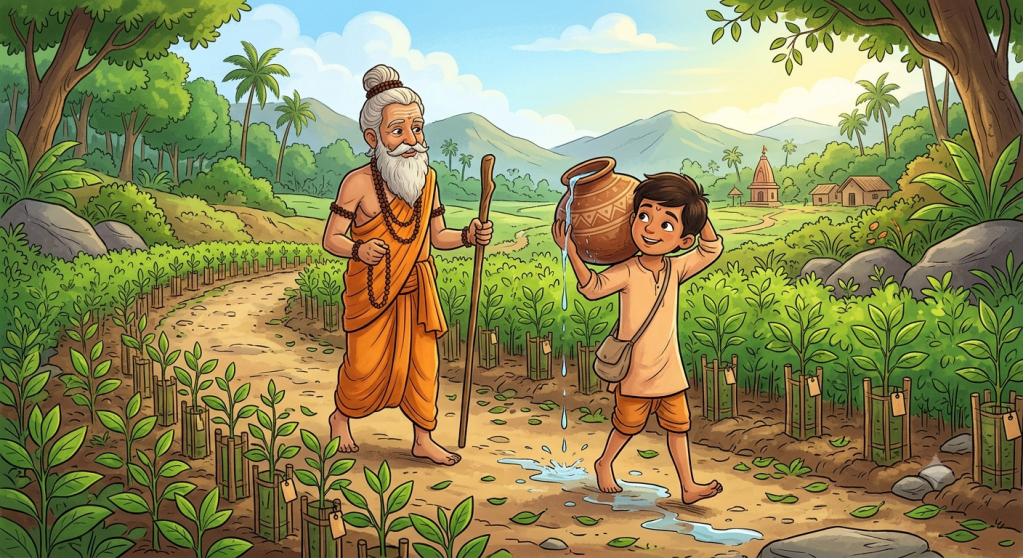
Once a sage asked his disciple to fill up a dried pond with water from a well farther away within a month’s time.

The disciple dutifully did as bidden but was unsuccessful in timely completing the task.

Remorseful he accepted his failure. But the sage said, “Look at the path down which you carried water everyday in the earthen pitcher that had a slim crack. Now that trail is lined with tiny saplings on either side.”

Moral of the story: failure and success are not absolute.

***

86 Words

You can read the other stories here.

Extroduction: I may have transgressed rules of the prompt write because this flash fiction is borrowed from one of  the ancient Indian folk tales. However, the lone flower, in all its gorgeousness, peeking out of a wooden fence, strongly reminded me of this inspirational story which was shared in one of the spiritual workshops I attended a long time ago. There might be various versions of this tale as these got transmitted orally from generation to generation. So are its interpretations. Unlike the modern teaching method, which is heavily dependent on visuals, in days of yore lessons were taught through arduous tasks and results thereof.

AI generated

June – A Wrap-Up


Juggling between
Undue blaze and
Nostalgia of spring
Everyday

I shared the above poem in response to Luisa’s invite to write an acrostic on June. It pretty much sums up the weather.

The month saw periodical visits to the eye surgeon. Heeding his advice to push boundaries I flew to Bangalore mid month to attend my grand niece’s First Rice Eating Ceremony. We call it Annaprashan.

The flight timings got changed as a result of which we ( I and Didi)  landed at Kempegowda Airport past midnight instead of midday as scheduled earlier. However, my nephew and B-I-L (who had reached two days before) were there to pick us up.

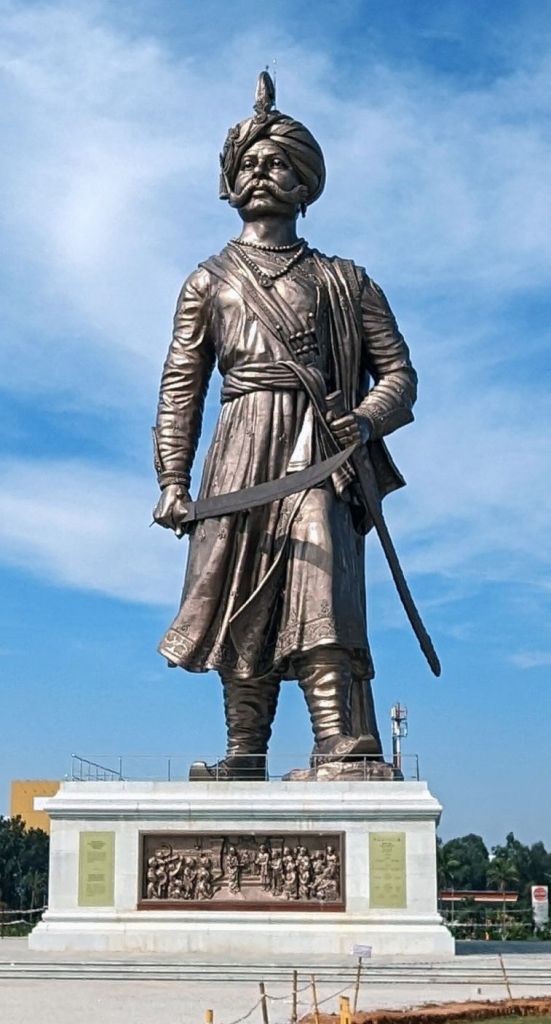
Did you know Kempe Gowda I  (1510 – 1569), locally venerated as Nadaprabhu Kempe Gowda, was a governor under the Vijayanagara Empire in early-modern India. He developed the city of Bengaluru or Bangalore, now a thriving Metro, in the 16th century. He  was noted for his societal reforms and contribution to building temples and water reservoirs in the city. He prohibited the custom of amputating the last two fingers of the left hand of unmarried women during “bandi devaru“, a late custom in the Morasu Vokkaliga community. (Source Wiki)

This is the posthumously built 108 foot tall bronze and steel statue of Kempe Gowda , right outside the Kempegowda Airport.

Coming back to the home front the Annaprashan was a gala event as expected. After the puja  a wee bit of rice kheer (pudding made by Didi) was touched to the baby’s lips who appeared to be super excited. This was followed by the placement of a tray containing a toy, a pen, the Shrimad Bhagawat Gita and a currency note right  before her. It is believed that out of these whichever the baby picks would indicate her choice of profession in life. Baby Taha first grabbed the toy and soon got bored with it. Then she took a fancy to the holy book – Gita and last of all money which she wouldn’t let go. The ritual got completed amidst a lot of cheers from the family members.

We are told, during our respective Annaprashans, I grabbed money while Didi caught the pen. She took up teaching as her profession whereas I adhered to a 9 to 5 job. However, in so far as financial acumen is concerned, my sister holds the prestigious position of  the Finance Advisor to the entire family and I, as you all know, is the un-savvy-est one in the department. 😂

During our week-long stay my nephew ensured we had all the cuisines the city had to offer which included quite a number of South Indian dishes, choicest Biryanis and a wide variety of soups and curries. Yet, a few other gourmet preparations still remained to be savoured. 😭

The trip was, undoubtedly, the best that could happen to me. My happiness index was at the highest. We had hearty chats interspersed with jokes and belly laughs. But the most that I enjoyed was the long evening walks the entire family took along with my grand niece.

We had a hopping flight on return – Mumbai being the short stopover. However, the pilot seemed to be in a mighty hurry and we landed at Mumbai airport forty minutes ahead of time. Imagining the various causes of his hurry we had a good laugh.

Back home we just missed an exhibition of photographs on the city of Delhi as seen through the eyes of our favourite columnist, Mayank Austen Sufi , whose column captioned Delhiwaale, in the Hindustan Times, me and Didi enjoy reading regularly. 😢

This is Mysore Pak, the deadliest and the most delicious sweet which my niece-in-law always packs for me in good quantity whenever I visit her or if anyone is coming over to Delhi. Delicious because it’s so creamy and melt-in -the-mouth and deadly because you cannot stop at one.  😆

Hee…Hee

Enjoy!! 😊😍😊

PS : Just thought of sharing this post with Natalie The Explorer on Wrap-Up for the month of June 2026.

June 2026 Highlights

A good afterthought…

In Between


In between some heavy reading I am back to audio stories – a few old classics and a few new ones. Interesting, engaging and most entertaining. The storylines in very brief :

Terotaar Ghonta (The Thirteenth Hour) by Dipannita Roy

Debol, grandson of the notorious zameendar Ramendra Narayan Choudhury,  returns to his ancestral property after twenty years to sell it off to a builder. But it’s amavasya (moonless night) when the curse on the Choudhury Mansion comes alive as the grandfather clock in the living room strikes the thirteenth hour exactly at midnight.

Gangtoke-e Gondogol (Trouble In Gangtok) by  Satyajit Ray

A peaceful staycation in the picturesque Gangtok turns into a messy affair for the Private Investigator, Pradosh C Mitter aka Feluda and his Watsonian cousin, Topshey , as he gets embroiled in the accidental death of the business tycoon, Mr. Shelvankar, who happens to carry an antique Tibetan idol called the Yamantak – the Destroyer Of Death.

Choudhury Barir Rahoshyo ( The Mystery Of The Choudhury Household) by Abhirup Sarkar

Mandakini Choudhury, the former film actress and the widow of Late Shubir Choudhury of Choudhury Enterprises, suspects that somebody wants her dead. She appoints Aditya Majumdar, a rookie private detective, to confirm whether her suspicions are correct.

Shamanyo Jhunki (A Slight Risk) by Aneesh Deb

Usha, a crime reporter in one of the dailies, is in charge of covering  the ongoing serial killings which is currently rocking North Calcutta. Usha has a strong hunch who the killer is. But she is in two minds whether  to divulge his identity.

Baksho Rahoshyo (The Mystery Of The Box) by Satyajit Ray

Dinanath Lahiri, travelling by train from Kalka to Calcutta, inadvertently picks up his fellow traveler’s  similar looking hand bag which  contains nothing but toiletries. He appoints Feluda to locate its rightful owner. But somebody is desperate to not let the bag be returned.

The Lifesavers


As God gives us days of pain He also sends relief in many forms. Having suffered traumatic phases of illnesses God also blessed me with remarkable physicians who pulled me through.

I have already written about my gastroenterologist surgeon whose cheerful ever smiling countenance can make any critically ill patient feel better.

My eye surgeon, whom I have been visiting for the past one month is not only an excellent, empathic and kind doctor but also a  philosopher who , on every visit, imparts some stimulating input which makes me think and facilitates healing in addition to the treatment.

Soon after the surgery he advised me to use the operated eye as much as possible. “Learn new things and keep yourself mentally agile” was his mantra.

On my second visit, when visual clarity seemed an issue, he told me to tell myself repeatedly that “I can see…” He also reminded me that dar ke aagey jeet hai … victory awaits if you overcome your fears.

On my third visit his advice was to be calm and collected in the face of apparent  hardship…to drop off the anxiety…there is no past or future….this present moment is the one you have …so live fully in the moment.

I did not ask for a spiritual guide but I have got a doctor and a mentor rolled into one. Didi, jokingly says, “He has got a good listener in you…”

A simple man who has a deceptively ordinary look about him belying a storehouse of knowledge, empathy and compassion.

But you know what his words are really healing not only my eyes but also the inhibitions inside.

Wishing good health to all…

To Guruji


I started learning Hindustani Classical Music very late, in my mid thirty, unlike the ideal  age of four, five or six. I opted for a six year graduation course to be followed by Masters for two years. The first four years of the course I had already repeated twice before from two different private institutions. Also I had opted for music  in middle and high school as well.

I had the good fortune of being under Guruji’s tutelage for almost four years of graduation. He worked in the Government and also taught music to very few privately. He had three kids – two sons and a daughter – all of them talented singers. His wife was a gentle soul. He lived in the neighbourhood a few blocks away – an easy commute for me.

Guruji was also a devout kali bhakt – a worshipper of Goddess Kali – which lent a spiritual dimension to his musical proficiency. A simple man with  an unassuming lifestyle never did I see him hankering after money or fame.

Guruji introduced me to the Taanpura, a Sitar-look-alike, but with fewer strings , used as a base instrument in classical music. Taanpura gave more freedom facilitating  scale, pitch and range. As per the conventional norms,  Guruji relied on oral transmission of knowledge. I had to hear him and pick up the notes which was not easy. He discouraged written notations.

The biggest lesson that I learnt from Guruji was the art of innovation which is central to Indian classical music. He would introduce me to the framework of a Raga and let me wander within its periphery without going overboard or against the rules. It was elevating and made me realise the vastness  of those seven (plus five flat) notes which could be woven into infinite patterns. It was amazingly creative.

I remember, the four of us would sit together – his three kids would be doing school work while I would be practising music. If any of us committed any mistake all four of us would get a scolding each. My class was for an hour on weekends but Guruji often forgot about the time and an hour would extend to another half an hour or more or till his wife reminded him of his other homely duties. But he never cared for time or asked me for extra fees.

At the end of the year was exam time. I was not worried about the Theory part – a written paper; but the Practical, which was performance based, made me sick with fear. Invariably I’d lose my voice which became a good pretext to avoid appearing for the exam. But Guruji would not hear a no. He had more confidence in me than I had in myself. Every year he would literally force me to go sing before very critical examiners. And every year,  I , to my surprise, passed with flying colours.

I was neither a good student nor a good singer but Guruji invested a lot in terms of his time, energy, technique and knowledge in me for which I will always remain immensely grateful.  In the middle of the fifth year Guruji changed base and shifted to another locality. It was not feasible for me to commute from one end of the city to the other to attend classes over the weekend. By this time I had also relocated and other priorities gradually overtook music.

Guruji did not believe in rote learning. He kindled my interest in the subject. He insisted that I listen to the maestros more than attempt to sing. That is how my ear for music got developed. He did encourage me for public performance. But I , diffident as ever, declined.

This post would be incomplete if I don’t mention Masterji – my tabla guru. In music melody is as important as beats. I was not very confident about the latter. I don’t remember how Masterji came to be my home tutor for tabla. He was from our school where he used to play the tabla in music classes. We could never  imagine the Music Room without him – he was always there even if the music teacher was not – in whose absence he would  make us practise with the beats. He ensured nobody bunked class. Since, we all sisters (cousins included) were from the same school Masterji was known to every one of us.

I came to know what a good human he was being when he came to teach me tabla at home. He never missed a class which was an additional source of income for him. But again he was not the sort to work only for money.  He would be disappointed if I skipped a class. He accompanied me to the examination hall every year where he would play the tabla for me – a big moral support !! After every practical test he would smile satisfiedly and say that I had done fairly well.

During the same time I and Guruji relocated he became seriously ill and was unable to continue to teach. I am sorry I could not pay a visit to him then. Many years later I tried to reconnect with Guruji. But it was not to be. I had heard that he had lost his wife and his eldest son untimely. He had once complained about an enlarged heart and was considering  a sabbatical from public performance. However, I still feel the warmth of his hand on my head when I would bow down to touch his feet in reverence.