Take Your Pick


I come back with a quick and short review of my recent watches. Not many though because a few are yet to be over before I can say what I have to say about them.

Beyond The Bar (Netflix)

A Korean limited episode drama about stiff inheritance and survival war in a Law Firm wherein the dynamic Attorney Yoon Seok hoon and his team fights civil and criminal litigations with a humanitarian approach alongside their personal battles. A captivating watch wherein every trial is a story of tribulations leaving something for the viewers to deeply ponder on.

One Friday Night (Jio Hotstar)

Its the story of a devoted wife, a gynaecologist by profession, discovering her critically injured husband with a much younger woman in their farmhouse. The girl is pregnant and happens to be one of her many young patients who wants an abortion. She advises the girl to come back for the next check up with the father of the child. Now that she knows that the child belongs to her husband will she be clinically as detached as she was earlier?

I have issues with stories revolving around extra marital affairs wherein invariably the feud is between the vindictive wife and the other woman whereas the husband is an equal partner in crime.

The Woman In Cabin No. 10 (Netflix)

A gritty story of a courageous investigative journalist, Laura Blacklock or Lo, who is invited to cover the gala fundraiser event to be held on a super luxury yacht, hosted by a Norwegian billionaire couple, Anne and Richard Bullmer. Lo is recovering from a previous trauma and thinks this yacht trip attended by a horde of super rich celebs will help take her mind off the traumatic experience. She is surprised to find her ex, Ben, a photo journalist, on the yacht too.

To avoid Ben she accidentally takes refuge in Cabin no. 10 which is occupied by another female guest.

That night Lo is woken by the sounds of a scuffle and a woman screaming. There is a bloody hand print on the deck too. But when she raises the alarm the crew and the hosts confirm that Cabin no. 10 was never occupied and none aboard is missing. The hand print on the wall is also no longer there.

This is an absolute edge of the seat watch.

While K-drama is back on the list I am at present hooked to three hugely watchable Pakistani Serials on YouTube.

Case No. 9 is about a rape victim who does not have adequate evidence to prove she has been assaulted. Nonetheless she decides to fight the case and bring the culprit to book.

A big shout out for the makers of this Serial which is very informative and educative about the law and loopholes of the crime. A must watch for women of all age groups.

Pamaal (Trodden underfoot)  is the story of a fatherless girl brought up by her mother in her maternal uncle’s house. She aspires to be a writer and falls in love with a man who claims to love her stories.

Till now this Serial seems to be watchable.

Sharpasand (Troublemaker) is the story of an urban  neighborhood where a mischief maker takes newcomers for a ride.

Extremely entertaining till now.

The Purpose To Live


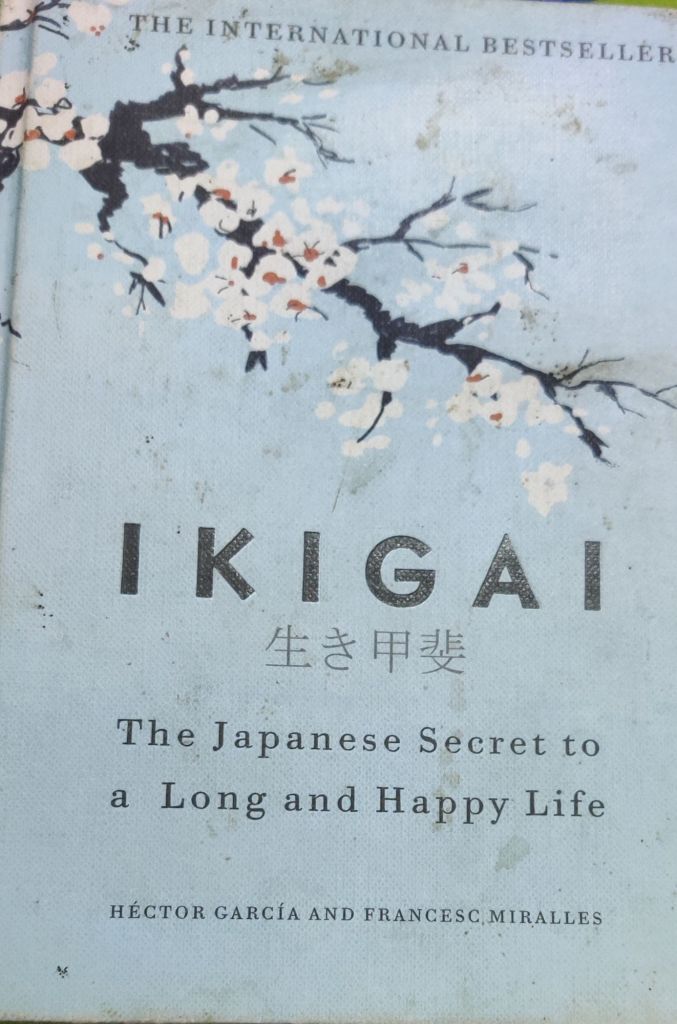
My reading graph has again dipped. I started reading two books at the same time but I finished Ikigai The Japanese Secret to a Long and Happy Life by Hector Garcia and Fransesc Miralles first.

If in the pic the book looks old there is a good reason for that. I got this book quite a few years back but couldn’t finish reading because of work pressure. But it was always in my TBR.

Recently in a conversation with my nephew a reference to this book came up. That made me pick it up and read this book again.

There are certain Blue Zones on earth where people live long, happy and healthy lives.

The net throws the following information about Blue Zones of the world:

“The Blue Zones are five regions with unusually high percentages of people living to 100 or beyond: Okinawa (Japan), Sardinia (Italy), Ikaria (Greece), Nicoya (Costa Rica), and Loma Linda (California, USA). These areas share common lifestyle traits, known as the Power 9, that promote longevity and lower rates of chronic disease and  include a plant-based diet, consistent movement, a sense of purpose, strong social connections, and stress reduction techniques.“

The key to the longevity of the inhabitants of Okinawa, an island in the south of Japan, is  healthful diet, simple living in the outdoors, green tea and the subtropical climate. In the North of Okinawa is a rural town called Ogimi with around three thousand inhabitants which boasts of the highest life expectancy in the world. Ogimi is nicknamed as the Village of Longevity.

Okinawa is also the Island of Longevity where shikuwasa – a lime like fruit packed with antioxidants – comes from. Could that be the secret of Ogimi’s high life expectancy? Or is it the purity of water in which moringa tea is brewed? Or is it Ikigai which drives the incredibly friendly populace of this island ?

Ikigai is a Japanese word. To put it simply, it means  the reason for which one gets up in the morning. It is the purpose for which one lives. Every individual has his or her own ikigai.

There are various therapies, like Logotherapy developed by Dr. Frankl of Vienna Polyclinic Hospital and Morita Therapy, developed by the Zen Buddhist Shoma Morita of Japan through which an individual who has lost purpose and meaning in life can find his/her ikigai. Both therapies are distinctly different from psychoanalysis. These therapies do not intend to resolve inner conflicts. They just help you find your ikigai or purpose to live. Both therapies have a spiritual dimension to them.

Ikigai need not be a very strenuous exercise or an uphill task. Nor should it be so easy that one becomes too complacent about it. Ikigai should involve flow so that one can lose one’s sense of self and time in it (almost like meditation) to become one with the purpose. For example any creative activity in which you can immerse completely. Even following daily rituals (microflow) can be your ikigai provided you enjoy doing these.

In Japanese vocabulary there is no word for retirement because in Japan no one retires. They just continue doing what they love to do. They take years to perfect their skills and take pleasure in the journey of learning. As a race, the Japanese are hardworking and do not tire of doing the same work again and again over a long period of time. That is why perhaps ikigai comes naturally to them.

Ikigai is an intriguing concept and a fascinating read. The book urges the readers to look inside and identify their own ikigai. While reading the book I asked myself many times what my ikigai is. Is it reading ? Is it writing? Is it the homely chores? Or is it simply the walks in the park ? Ikigai can be anything from the mundane to what we are passionate about.

However, a distinction needs to be made between ikigai and life’s goal. Ikigai is the process or everyday drive to reach that goal but not the goal itself. Once one reaches the goal or attains the distant dream there may be a loss of interest to continue with the zeal. Ikigai essentially means continuity – what one is doing here and now. So if you are into music your riyaaz or daily practice could be your ikigai. But not the public performance you are preparing for. For a painter it’s the everyday filling in the colours on the canvas not the completed painting. Unless the musician continues to do riyaaz and the painter picks up another blank canvas to fill their ikigai is lost.

Its relevant to mention the lifestyle of the supercentenarians (those who live beyond 100 years) of Ogimi.

In Ogimi there are no trains. The inhabitants either walk or cycle.

They remain happily busy engaged in many   activities but with a sense of calm.

They are early risers and early nighters.

They have a strong sense of community and active social life.

They have a low calorie diet with low salt (7 grams per day) and no sugar. Their diet consists of white rice, a variety of vegetables and fruits and fish (three times a week).

They practice hara hachi bu that is they stop eating when 80% of their stomach is full.

They do moderate exercises but do not pass time sitting for long hours: movement is essential to their lifestyle like spending time weeding in the garden, growing vegetables, visiting friends, dancing, being active in community work and gatherings etc.

Their prime source of  beverage is green tea (five cups a day).

Last but not the least,  the authors propagate mental, physical and emotional resilience in order to move forward or persevere with ikigai. Things that break under pressure are fragile while things that get better in adversities or under catastrophes are antifragile (a term coined by Nassim Nicholas Taleb). To discover and cherish beauty in imperfection or wabi sabi is another Japanese concept that creates a conducive atmosphere for practising ikigai – to understand, appreciate and accept the impermanence and ephemerality of life.

In brief the ten fundamentals of the residents of Ogimi are :

Stay active

Take it slow

Don’t fill your stomach

Be surrounded by good friends

Be in shape

Smile

Reconnect with Nature

Give thanks

Live in the moment

Follow your ikigai

I wholeheartedly recommend this book to those who wish to live a happy, healthy and long life and also to those who wish to be inspired to change their lifestyle for the better.

Cosmic Justice?


Dasamahavidya Rahasya or The Mystery Of The Ten Mahavidya is a murder mystery by Trinanjoy Bhattacharya. An audio story revolving around five murders in a span of more than a year across the city of Kolkata.

All the five victims are real estate agents but at the same time involved in other illegal activities too. Next to the body lies a blood splashed dupatta (long scarf) and a toy depicting the various avatars of Lord Krishna and a shloka written in Sanskrit in eulogy of  various manifestations of Shakti.

Inspector Ram Prasad Lahiri suspects a serial killer is at play. A few years back all the victims were associated with a  company founded by his cousin Shayantan Ghoshal. Ram Prasad is convinced that the killer’s next target will be Shayantan himself. Will he be able to save him? And why does his investigations again and again bring him back to the Officer In Charge of Jadavpore Police Station, the efficient Ms. Geeta Datta who has been instrumental in bringing down the crime rate of the locality considerably?

Trinanjoy’s super sleuth Ram Prasad has his own quirks. In between popping antacids, thriving on street side junks and dodging his wife’s astute enquiries, Ram Prasad or Ramu gingerly proceeds towards unveiling the dark secrets of the murderer.

The author pivots the plot around the “ten mahavidyas” (Great Wisdoms or Great Knowledge) significant to Tantric worship and Shaktism, representing the Divine Feminine as manifested in the deities Kali, Tara, Tripura Sundari, Bhuvaneshvari, Bhairavi, Chhinnamasta, Dhumavati, Bagalamukhi, Matangi, and Kamalatmika. Considered as powerful aspects of the goddess Mahadevi (or Adi Parashakti) they embody the fundamentals  of cosmic energies

According to some traditions, these intense, raw, profound forms manifested when the goddess Sati became enraged after her father insulted her and Shiva. (Source: Wiki)

Despite the intricacies of the context  the lapses in the narrative are glaring and the denouement too simplistic. It is fashionable to take the help of complex religious concepts, especially, in murder mysteries and suspense thrillers. However, it is not that easy to stitch the fabrics together.

Though nothing can substitute the pleasure of holding a book in hand and reading it, the audio story presents an engaging format. Much depends on the role of the narrator to hold the interest of the audience aided by apt sound design, background score and meticulous adherence to details to create the right atmosphere so that the listener can easily visualise the drama and assimilate the thematic essence of the narrative.

Snoopy


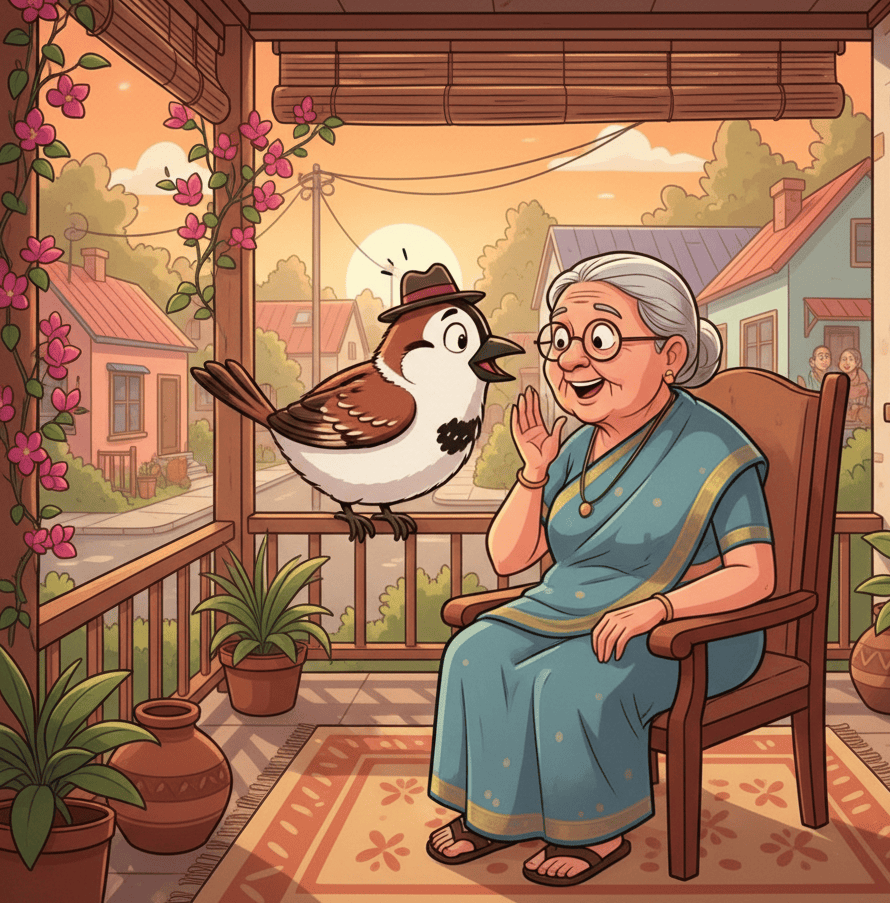
“So how’s life without wife?”

I asked Mr. A the other day

A sparrow told me very discreetly

His wife had left him on a whim

But Mr. A appeared quite gay

And answered me cheerfully

“Oh Ms G! This is life you see

No bully , no fear, no mess

Only freedom and joy no less

But I do miss though if I may say so

No…no not my wifey dearie 

but her delicious rajma curry”

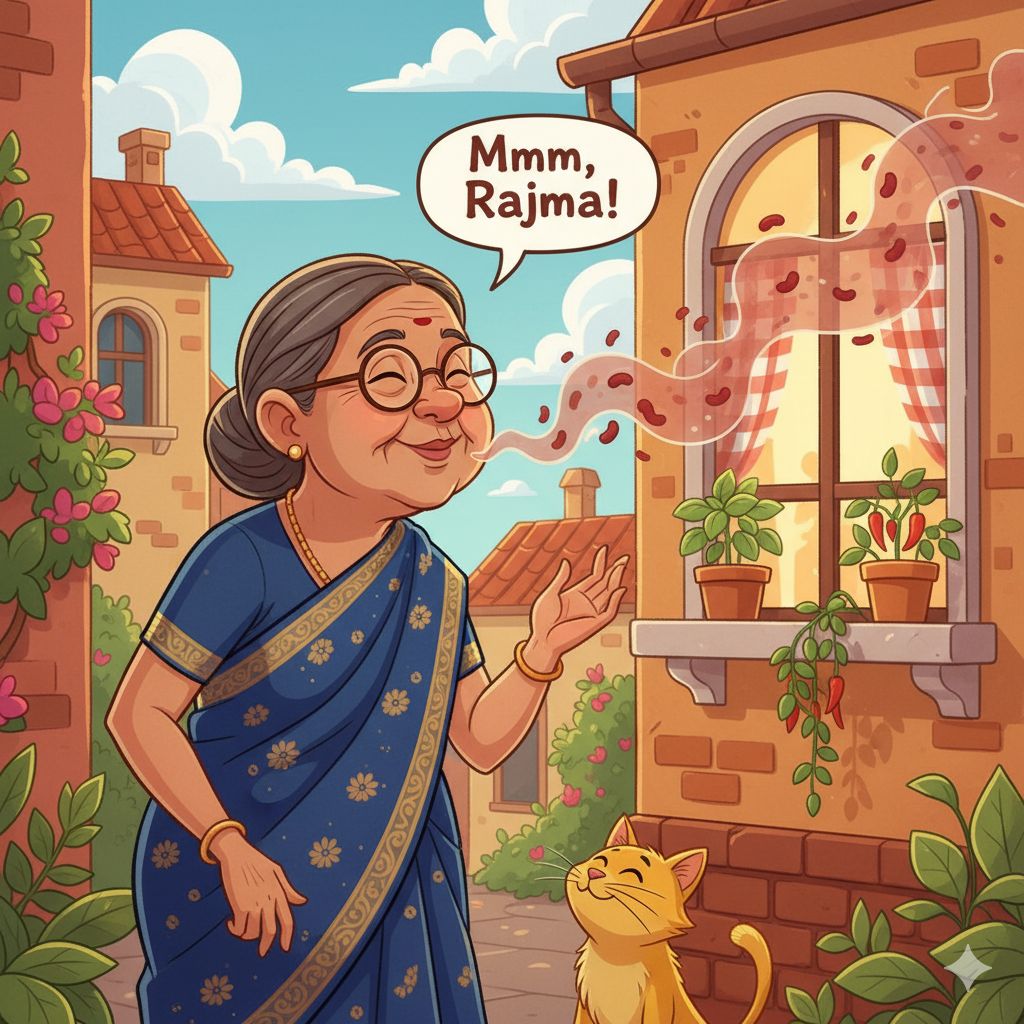
The snoopy birdie informed me this morning that Mrs. A has returned as unceremoniously as she had left and the whiff wafting through her kitchen window guarantees a lip smacking meal of spicy rajma curry with extra garnish.

This post is to do away with the Monday blues.

Enjoy!!

Footnote: Rajma is kidney beans. Rajma curry is a curry made of kidney beans which if prepared by the books can compete with any Indian hot and spicy non vegetarian dish and can be had with rice, naan, roti.

Thoughts


Have you ever figured why a particular thought gets triggered at a particular time ?

Let me tell you a story.

I often found scraps of  cloth and odd little objects lying at the front gate or tied to the plants in the garden. Earthen diyas or lamps lighted at the back door at midnight. Weird stuff shoved inside the milk basket. One day by mistake I brought such a packet inside the kitchen. It contained some kind of unwashed cottony stuff very peculiar to touch. I threw it away instantly.

You may call me superstitious but whenever such things appeared near my premise I or my mother would fall terribly sick.

When it became intolerable I asked the temple priest for a solution. He told me to tie a few spices in a red cloth on the front and backdoor. Driven to my wit’s end I did what he said. To prevent the miscreants from untying the knot I put two locks on it.

Believe it or not, the harassments stopped. However, after a while the backdoor which was made up of solid iron and well maintained started showing signs of rust.

This year it had to be replaced because its frame (inside the wall) broke due to seepage and resultant corrosion. A new iron door was erected.

My sister asked me whether I would again be tying the red knot on the new door. I said no. She sighed in relief, “It’s best not to battle with negative forces.” Her reply surprised me.

I had forgotten all about this exchange but for the sudden thought which woke me up in the middle of the night,“Did the backdoor cave in because of the red knot?”

Why did that thought come to me in the dead of the night? Is it because our imagination is most fertile when we are in sleep?

Is there an explanation?

A New Leaf


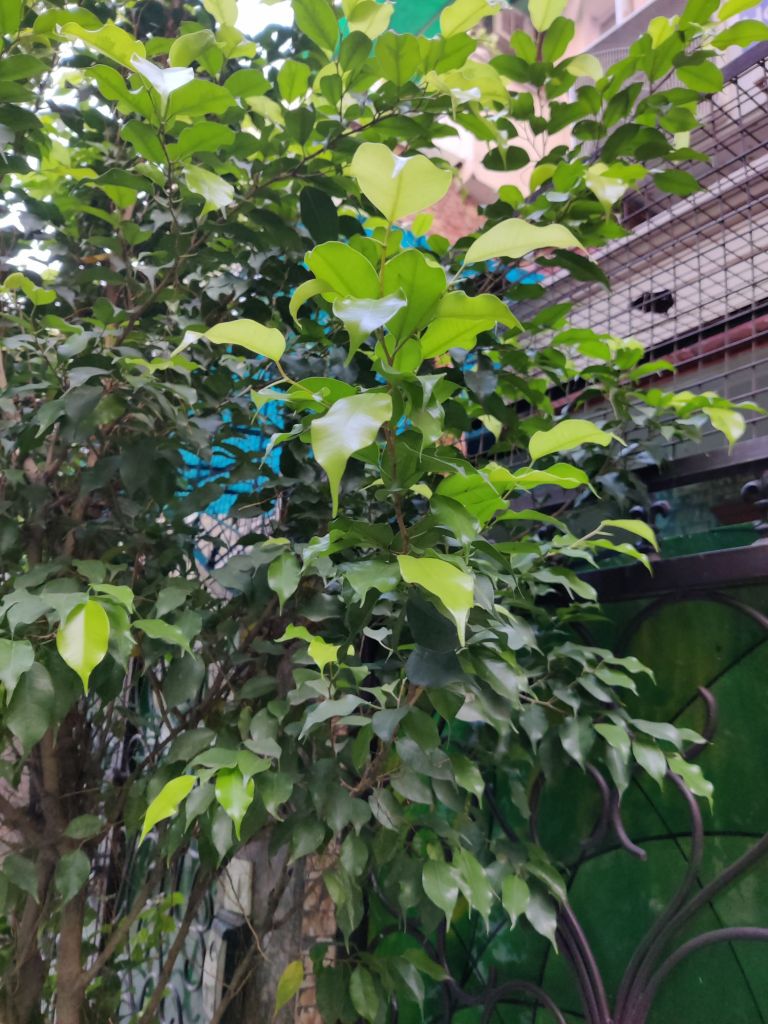
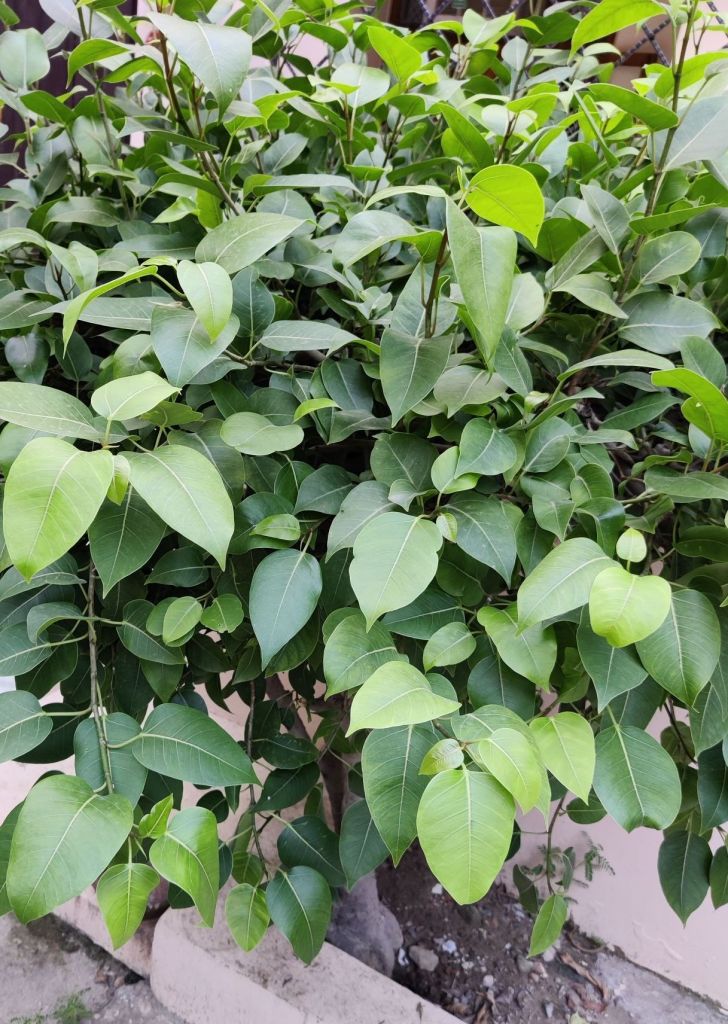
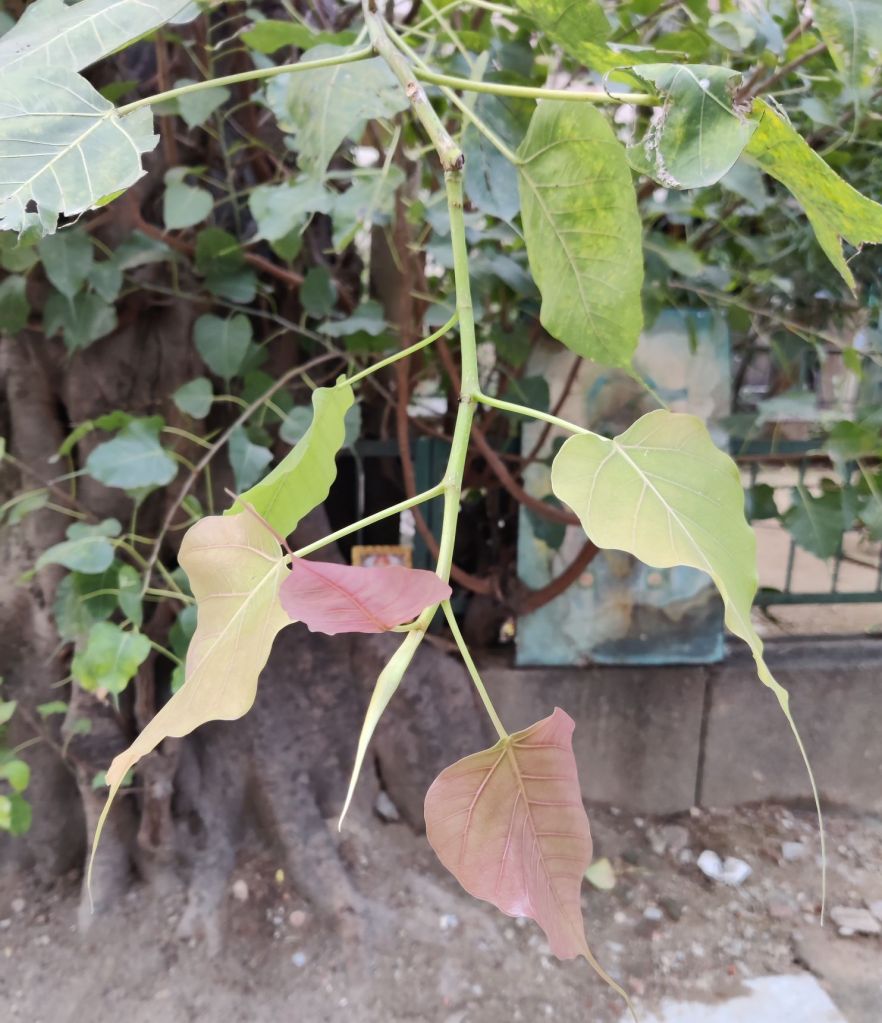
This evening during my walk I noticed different colours of leaves in a tree.

Some are young and new leaves and some are old. The colours therefore differ.

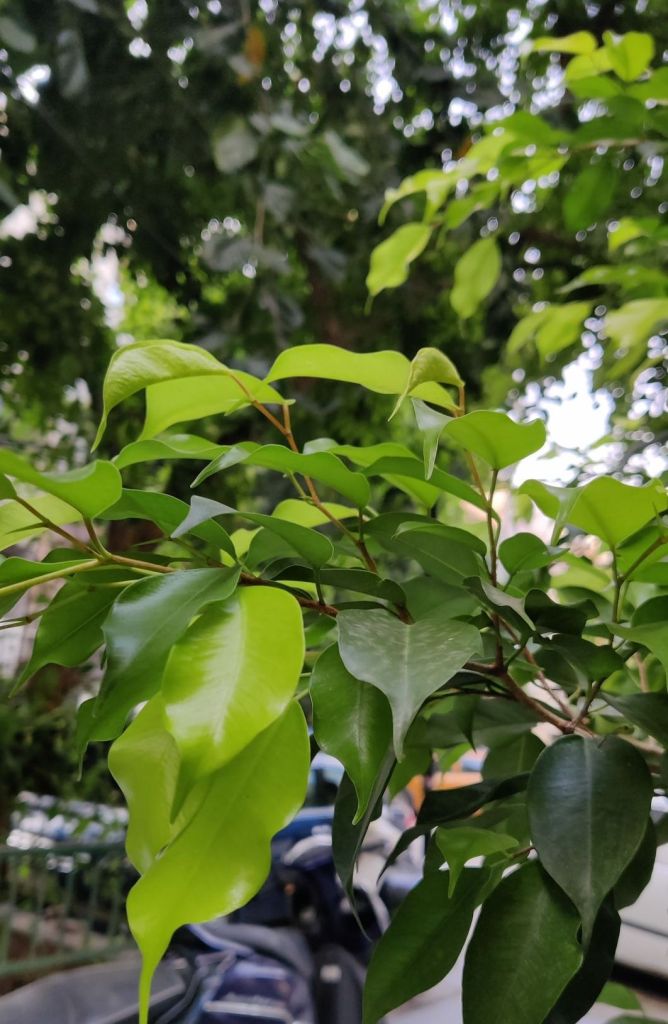
However, some trees have two different colours of leaves like the ficus that my neighbour has.

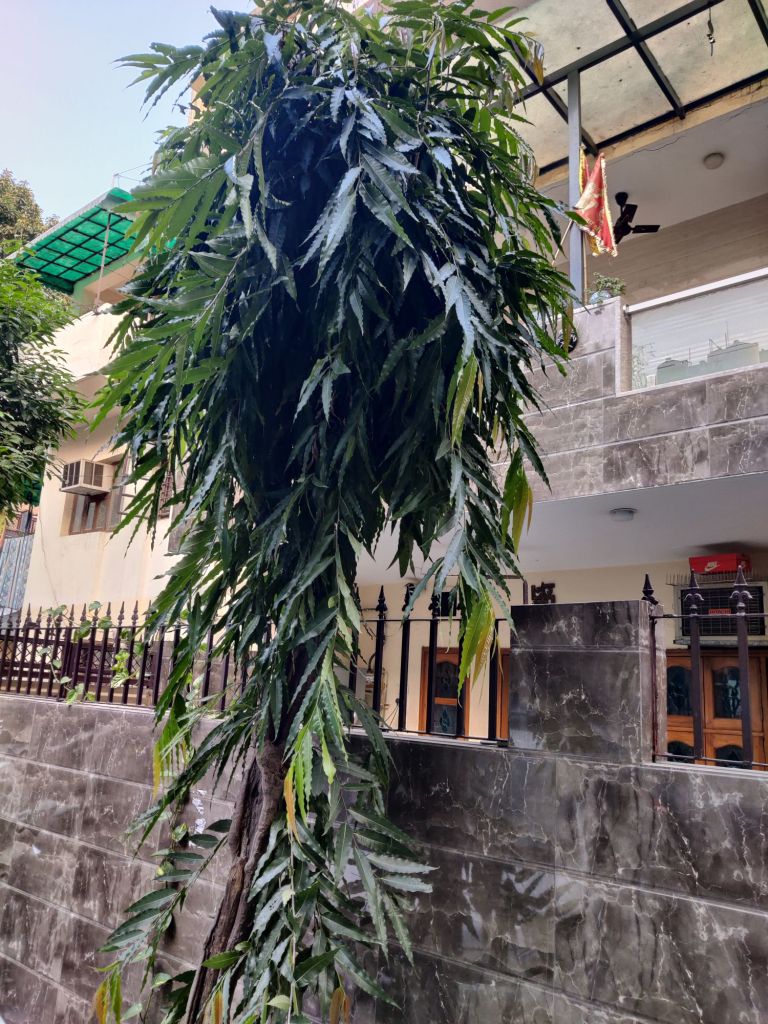
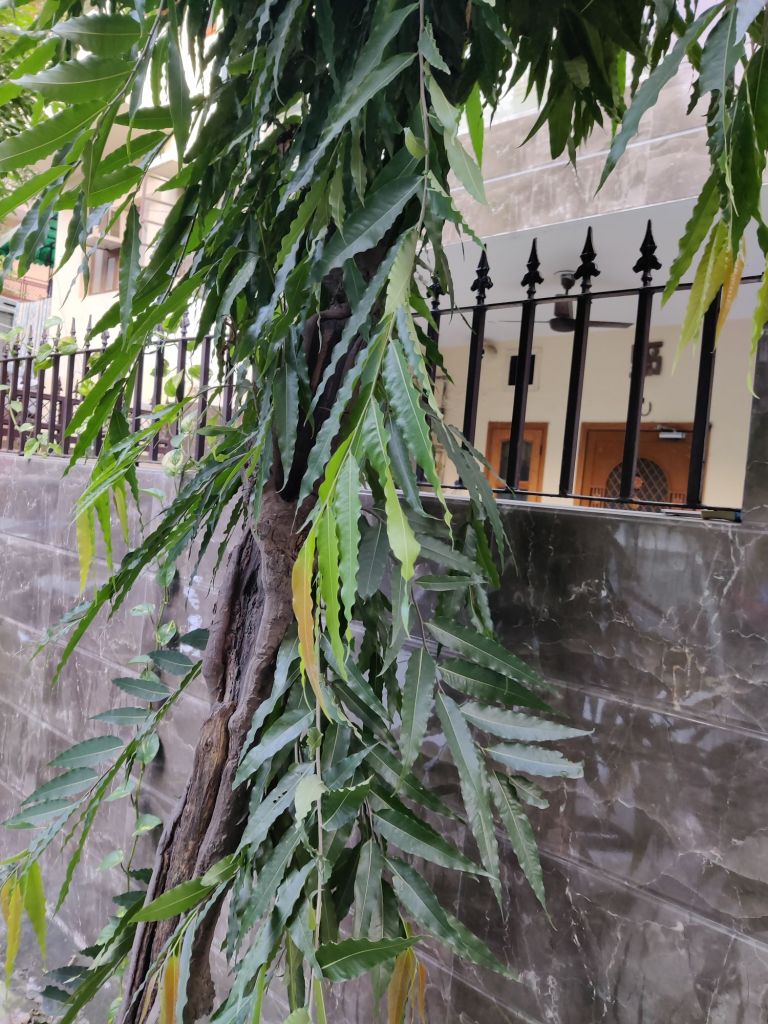
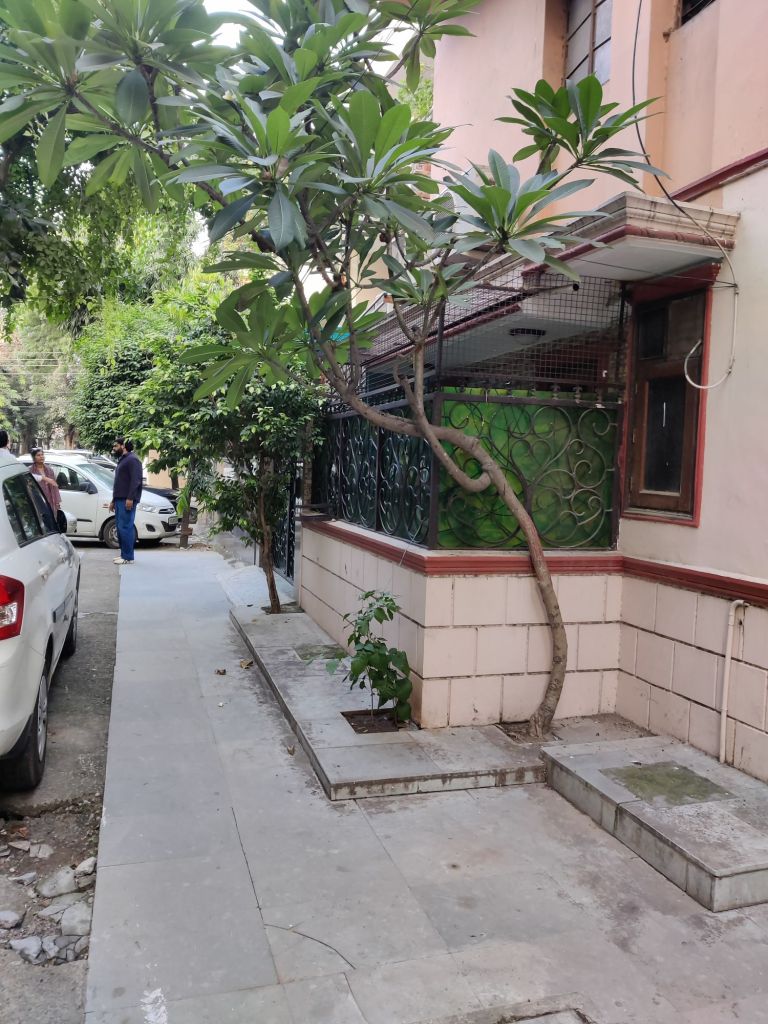
This is an Ashoka tree (Saraca Asoca) not very well maintained. Its been there for ages.

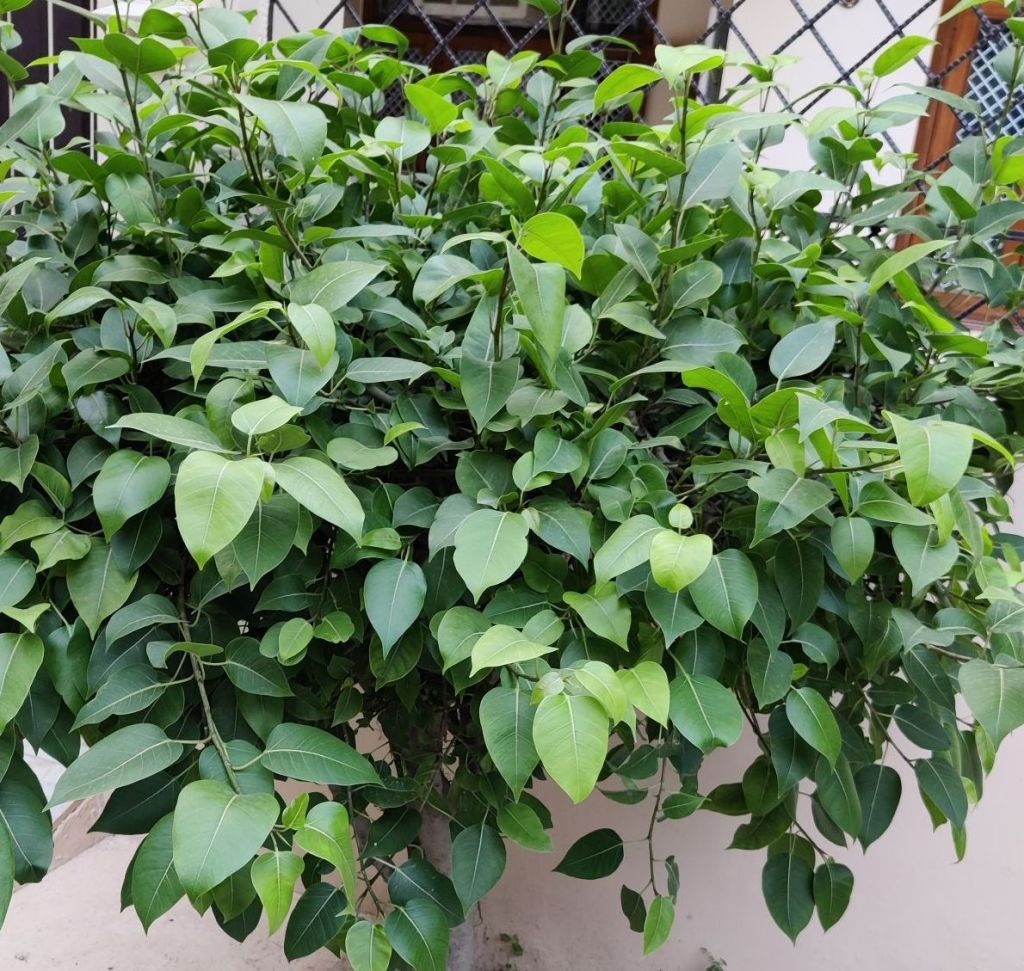
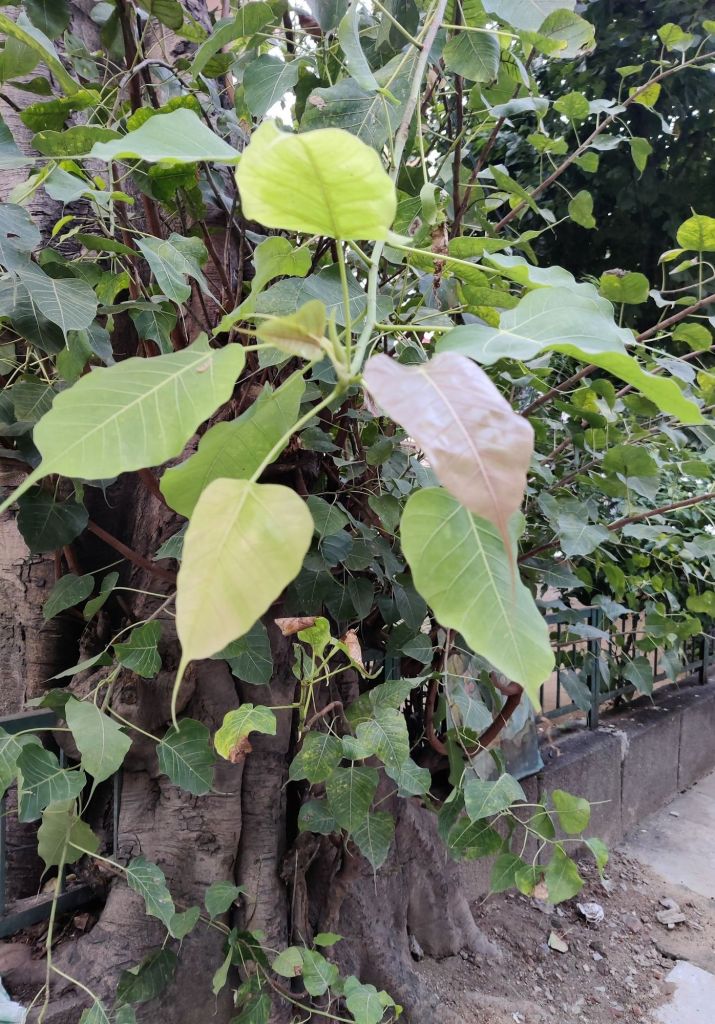
This is the Peepal or Ficus Religiosa tree which  does not let the sun come in. But  in this part of the world Peepal trees are considered holy and worshipped and never cut down.

The Horticulture Department has to be summoned once in a while  if the tree needs to be pruned. Its branches , at times extend inside the second floor balconies.

I have been taking walks for a few months now but I failed to notice the colours of the leaves which indicates lack of mindfulness.

Immersing in nature does not necessarily mean taking long walks through forests,  meadows gardens and fields. One can be with nature right outside home watching the trees in the neighborhood and listening to various sounds emanating from around.

Friction


I have a kind of friction with formats. You give me a format to work in I will after a while definitely veer out of it.

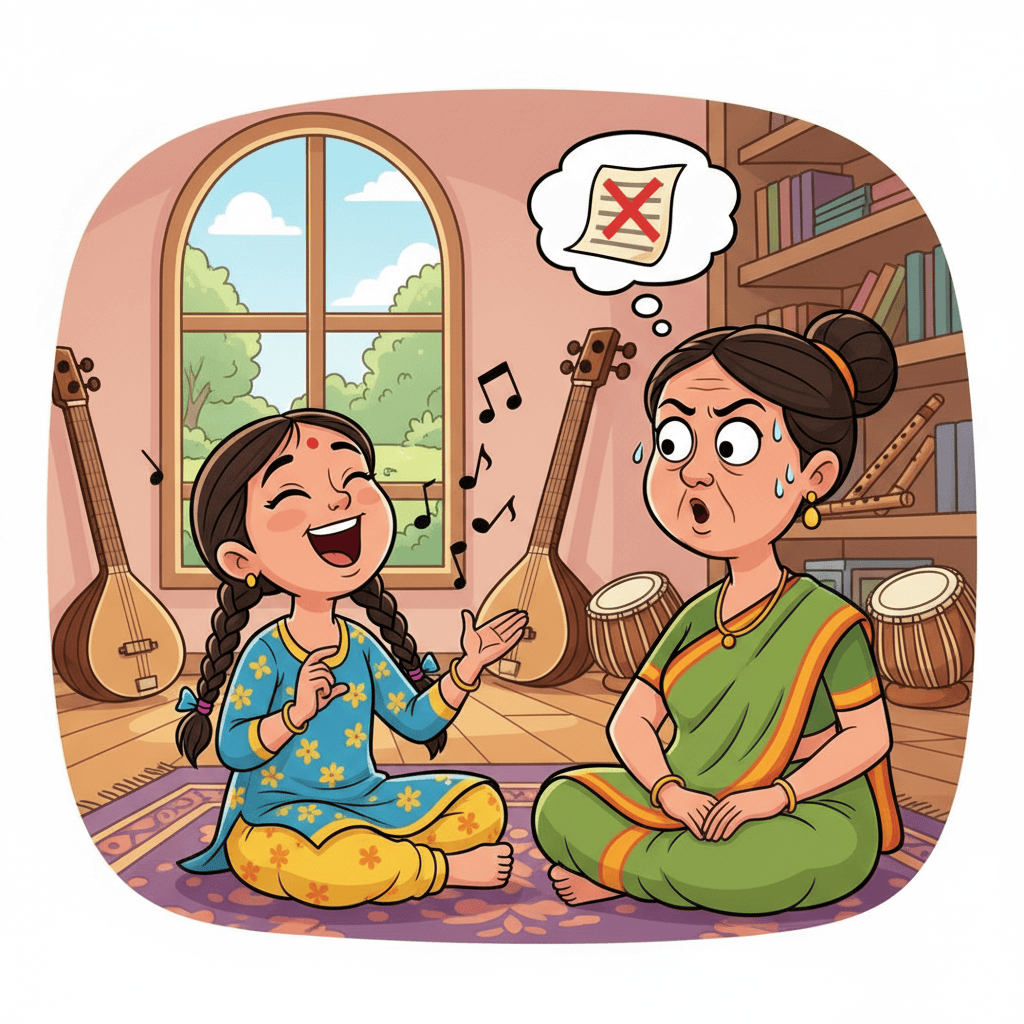
When I was learning Hindustani Classical Music I often broke the rules. Indian Classical Ragas are typically format based, however, with a lot of scope for innovation but within the format. Expertise lies in bringing out the beauty or personality of the raga innovatively playing with the notes within the stipulated format.

There are male ragas and female raginis. Obviously their personalities differ. Some are mild and malleable while others are strong and overbearing. Some are simple and straight and some are complex and tough. Each raga has a specified pair of notes on which the singer can halt during rendition – the vadi and the samavadi swars (notes). There is generally a difference of four or five notes between the vadi and the samavadi swar. Halting on the wrong note can alter or transform the raga completely.

There are notes excluded from the format of a raga which are known as vivadi swars as they can destroy the inherent nature of the raga. However, maestros have the expertise to apply these vivadi swars so cleverly that they more than enhance the mood of a raga.

And then there are varjit swars or notes which are completely prohibited from the matrix of a raga. It is relevant to mention that all ragas do not consist of all the seven notes. There are different permutations and combinations of notes – a minimum of five to maximum of seven – applicable in respective ragas.

Every raga has a stipulated time of singing. The twenty four hours of the day are divided into prahars. Every raga is sung in the prahar it is suited to. The samay chakra or time circle has ragas for dawn , morning, midday, afternoon, late noon, dusk, evening, night and late night. Then there are ragas which are seasonal – specific to  rain , spring, autumn,  so on and so forth.

Having said that Indian classical music is extremely scientific. As one proceeds to higher segments one realises it’s nothing but physics and mathematics. Not to say its effect on your physique, psyche and chemical constituents. It is said that raag darbari sung to perfection can cause a rise in blood pressure, raag malhar sung to exactitude can bring in rains, raag deepak by expert rendition has the capability to light a fire.

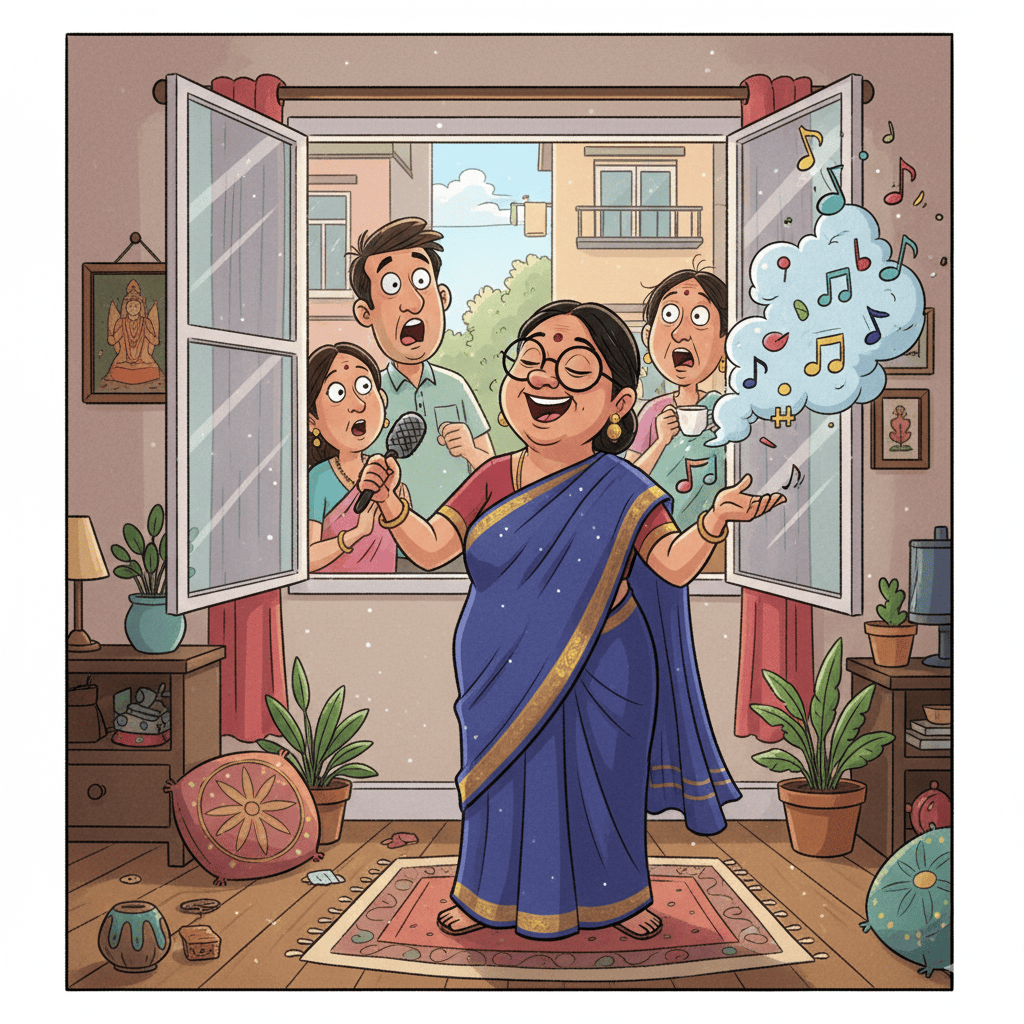
The effect of classical music on humans and animals is therapeutic. I remember my pet, Mr. Snow Boot, was unmanageable in his early years. He would romp about the house , bark wildly and create quite a chaos. The only way to quieten him down was to play classical music which would instantly calm him down and put him to sleep.

The best relaxant for an insomniac is the soothing strains of some mild classical melody. There are certain ragas which are sleep inducing. The vibration of a shepherd’s flute is said to have a wondrous effect on the growth of harvest. Classical music is an important part of Music Therapy for specially abled children.

It is noteworthy that Hindustani Classical Music is learnt orally. The Guru or teacher sings and the shishya or student picks up by hearing. The notes are never written down or mugged up. A raga sung wrongly is nothing less than an affront to the guru him/herself. It is said that if you don’t respect a raga you are liable to incur it’s wrath. As a result, the singer will remain deprived of mastering it.

So when a mischievous student applies a flat nishad (seventh note) in a raga wherein the note itself is mandatorily exempt the Guru’s exasperation is natural. But what if transgression is inbuilt into the flagrant learner’s genetic code ? Simple, he or she never learns.

A mind which is inclined to experiment and tires easily of boredom breaks the boundaries and wanders away into wilderness with ease whether permitted or not. It has to ensure freedom as its fodder for creativity.

When it comes to writing, similarly, I rather say in ten different ways (till saturation sets in) on a given topic than subscribe to the copy – paste method.

So if you feel boxed more than often like me break open out of it without guilt or fear. Let in the unconventional, play with words and go astray with notes, mix the wrong colours and get lost in a maze of ideas unthought of as long as they spurt out like mountain springs.

You are safe. You are in your rhythm. You are yourself. In the long run that is what counts. Therein lies your own truth in vibrant hues. Don’t let it get clotted in the quagmire of stringent rules and stiff boundaries. Set yourself free.

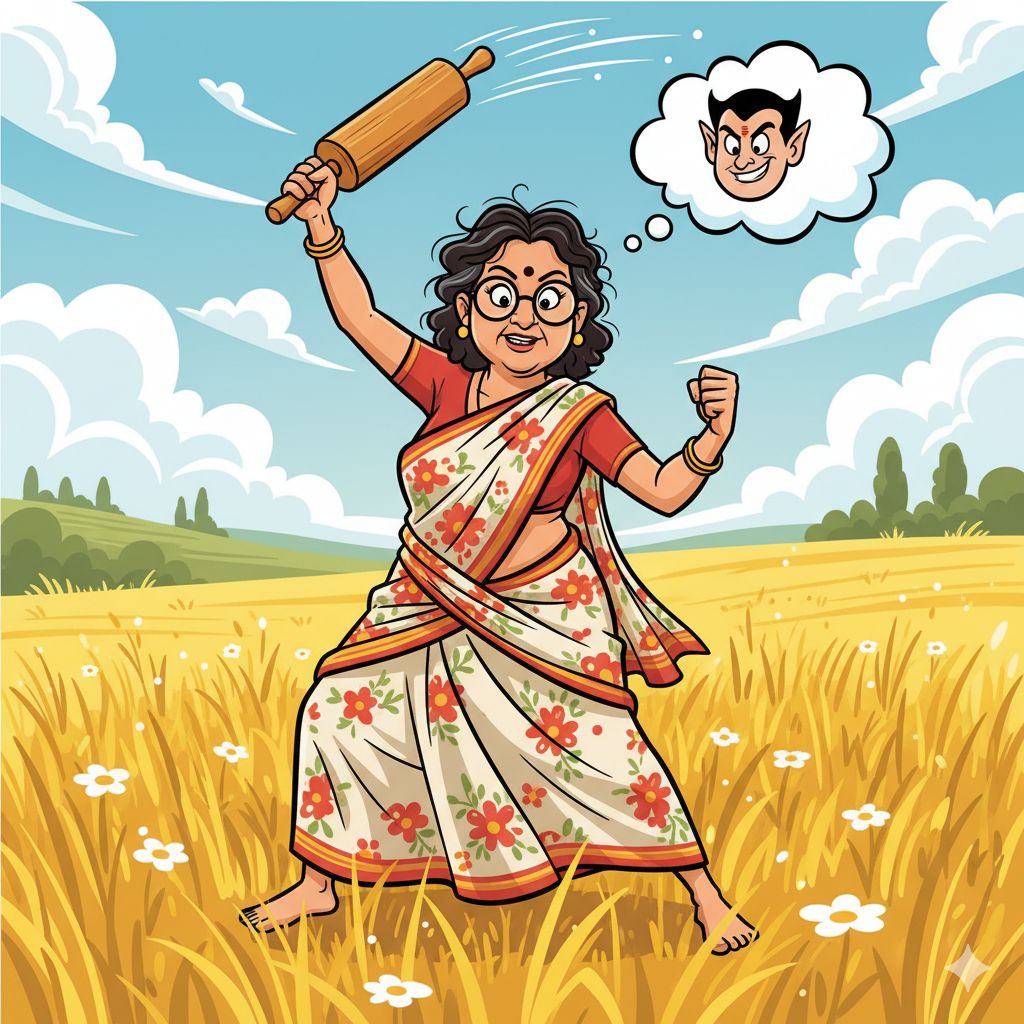
So what if you fail to become the master of the game. At least you have played the game by your own rules.

😂😂😂😂

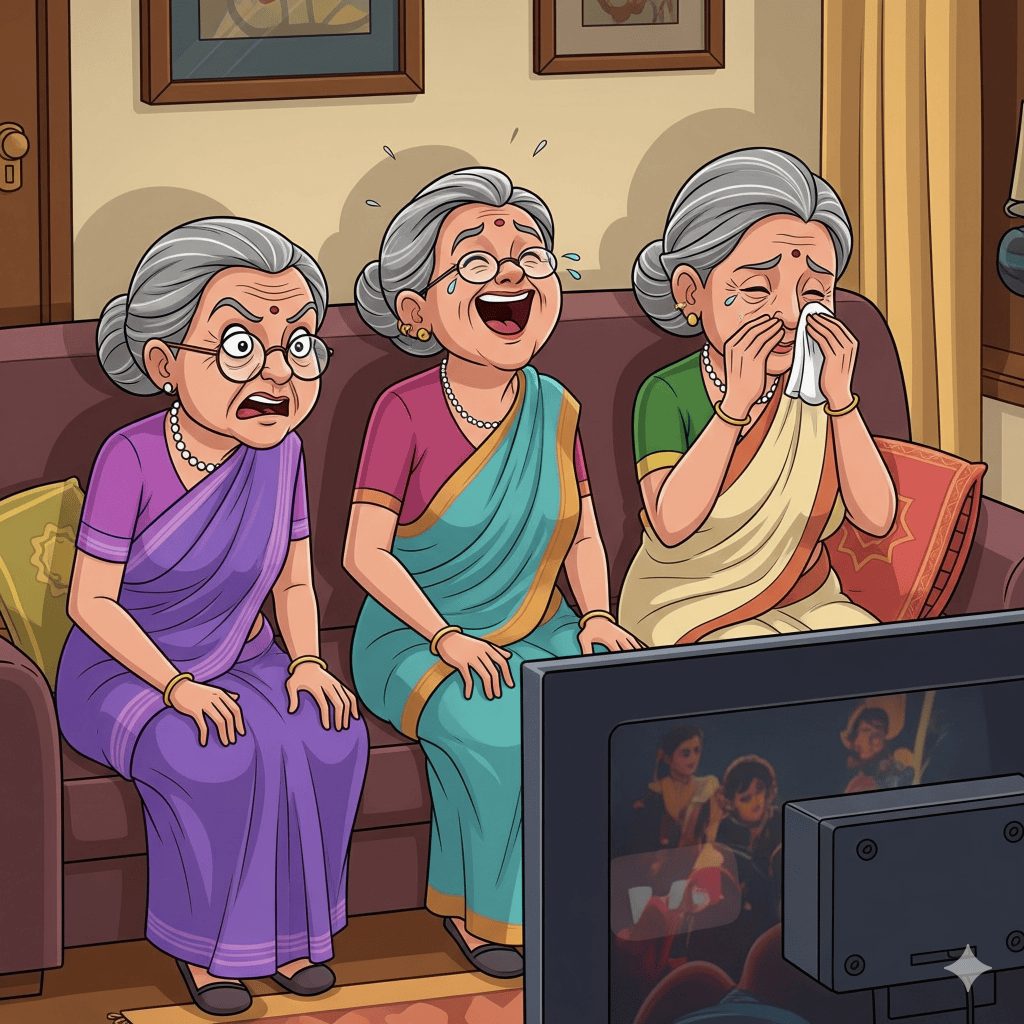
All pics AI generated

Rebels


There are various kinds of rebels.

The quiet ones who maintain a calm and composed exterior and a low profile. But when required can speak up with conviction and be very forthright.

Then there are the ones who are eloquent debaters and always put forth their view point with logic and reason. They take pride in being vocal even against age old norms, deeply sowed values and  well established systems.

And then there are those who accept fate  unquestioningly. They are obedient law abiders. They do not expect much from society. But they are the ones pushed to the wall so often.

And one fine day suddenly they turn around and attack with grim precision. They become warriors weaponising their grief, helplessness, and privations. Their solidarity is terrifying.  They learn to battle not out of choice but out of sheer hopelessness, fatigue and sense of betrayal.

I have made a few uncommon decisions. But those do not make me a rebel. I realised subsequently that those unconventional steps were preordained. I love my space. I am a quiet worker. But I do not put up with unnecessary encroachment.

I have learnt the hard way to protest against wrong. I may not be in a position to rectify or overhaul the system but to take a stand is my birthright. 

I believe in small changes which may in the long run add up to something big. I love my comfort zone way too much to shift orbits.

I am people centric but I seldom make the first move. I am approachable but not an extrovert. I am not a confrontationist either. Confrontations breed negativity. You carry it with you even after the word storm is over.

But sometimes I am hit by acute apathy. I don’t object, raise my voice or show anger even if the situation demands. I ignore. I let things pass. I recede into a shell. I endure giving the opponents a lot more opportunity to exploit than they deserve.

Then one fine day I wake up all charged up. Ready to combat. Prepared to strike. I realise I have been trampled and taken for granted. I lash out spewing venom. Of course, I win. But it leaves me drained … spent.

So what am I? A rebel?

I am a little confused.

What should be my war strategy? Should I always be up in arms? Or should I strike only when the iron is smouldering hot?

Should I give up? Or should I always be conscious and critical  of  pressures ?

Or should I forgive …

And forget…

Black Red And White


I was thinking of a verse

When baarish

Came…achanak…!

On a pleasant dopahari

Not too warm not too chilly

The sort which  dozes you off

But mausam, you know, is a puzzle

Changes colour like a chameleon

From grey to black to a hue darker

And then the silvery clatter

Pitter…Patter….Pitter…Patter

Without bidding adieu

The wind fiercely blew

They said it brought along

Strains of a wanton song

Evening walked in too

As usual…(untimely)…who knew?

It’s like those guests

Too early or too late

When you are in wait

Ishhhh….

But the sky was true

To the mood you see

Woo hoo…!!!

It dripped on tiptoes

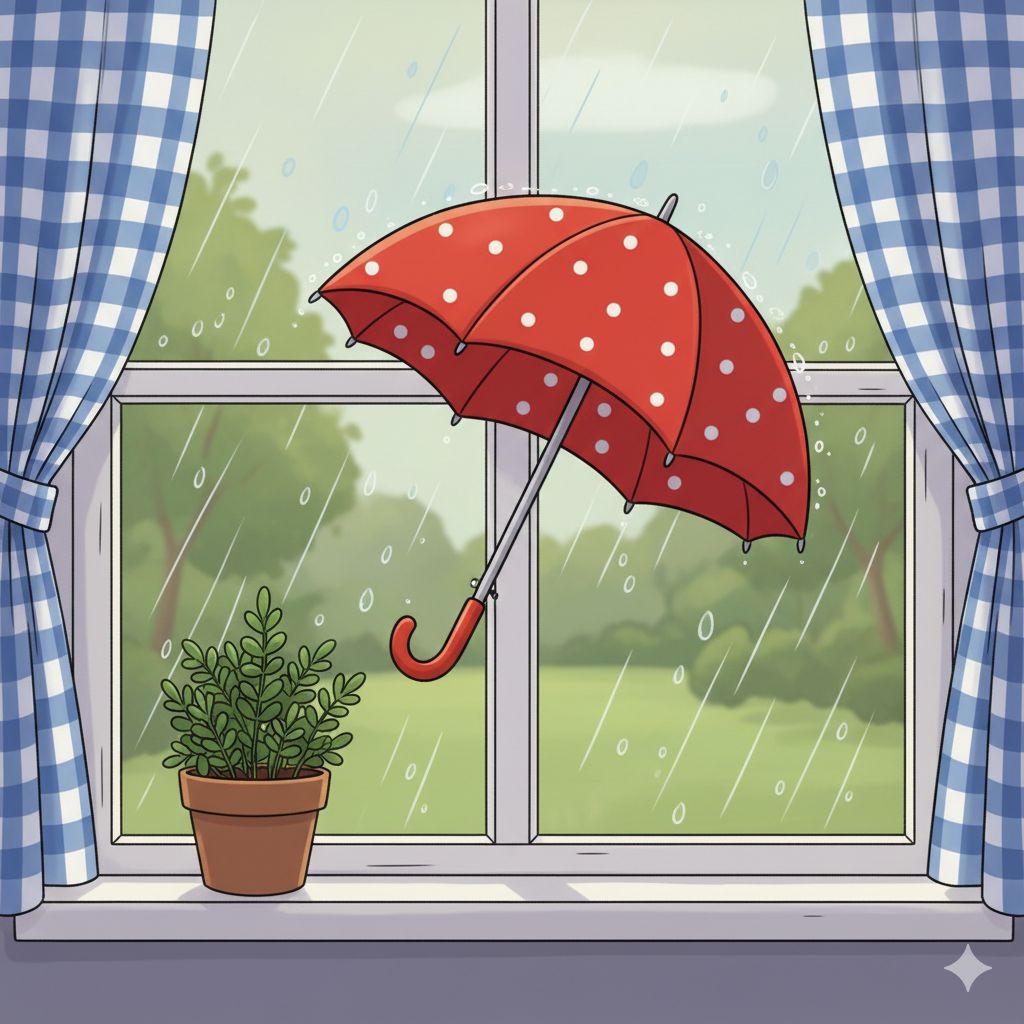
Till a red umbrella bobbed by

The kitchen window….I sighed

“Oh! How red it is….Look!!”

But it just waved and shook

A wild thought passed my mind

Even if it pours through the night

It will not be bleached white

And that gave me something to write

On baarish

Knocking in achanak

On a desultory dopahari

Oh! This mausam

Ishhh

***

Baarish – Rain

Achanak – Suddenly

Dopahari – Afternoon

Mausam – Weather

Ishhh – An ejaculatory sound

September Moon


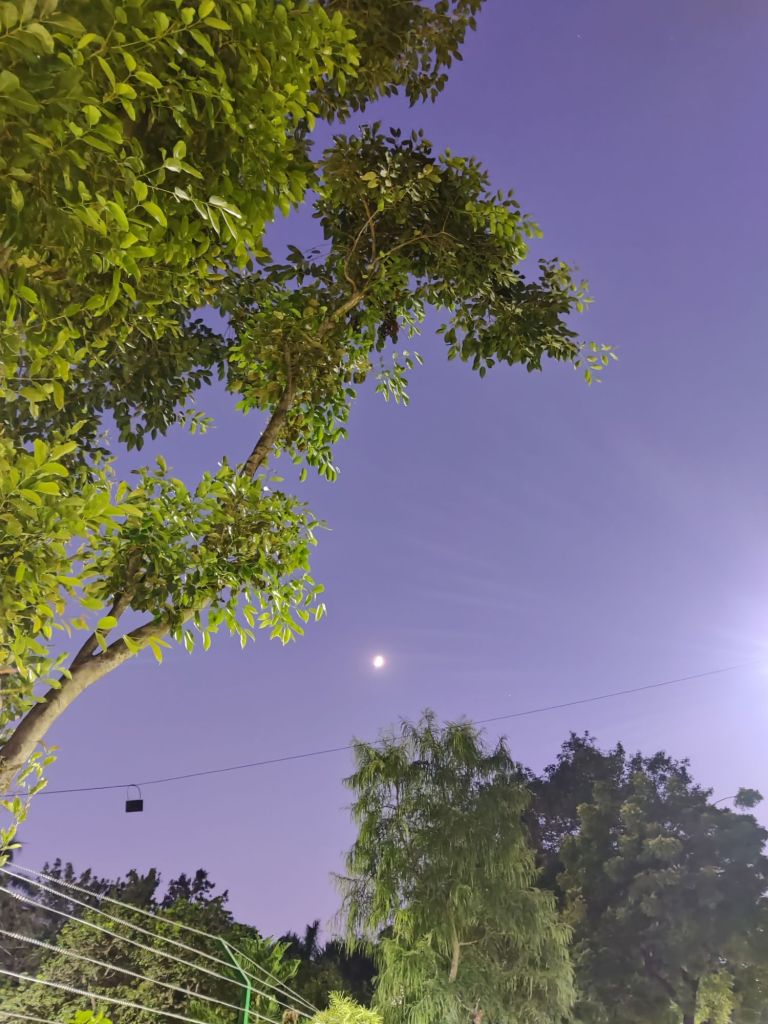
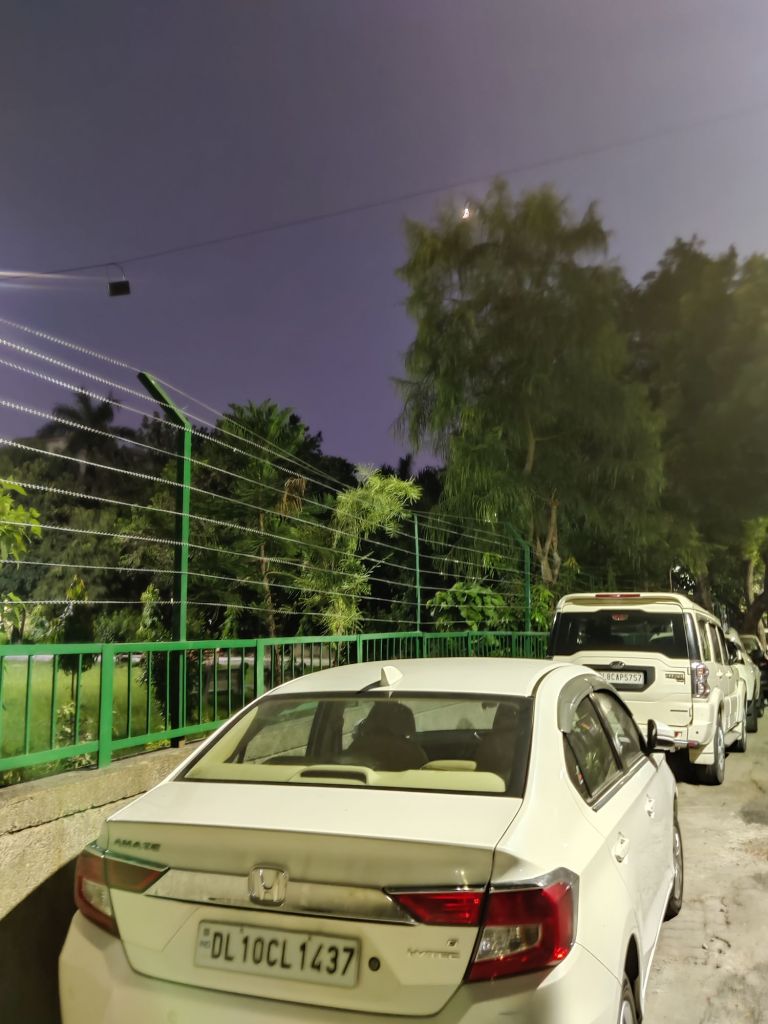
The weather is changing. By the time me and my sister return from our evening walk from the park it gets dark.

The moon is up. Enigmatic as ever. Smiling on earth. This is the end of September Moon. The slight haze around it could be due to pollution.

Over the barbed wires,  the maze of  cables , the rows of  cars parked, it graces the sky.

I am not a very good photographer if you call cell pics photography.

Still it’s a pleasure to click the moon.

Enjoy the moon-o-graphy.

🙏🙏