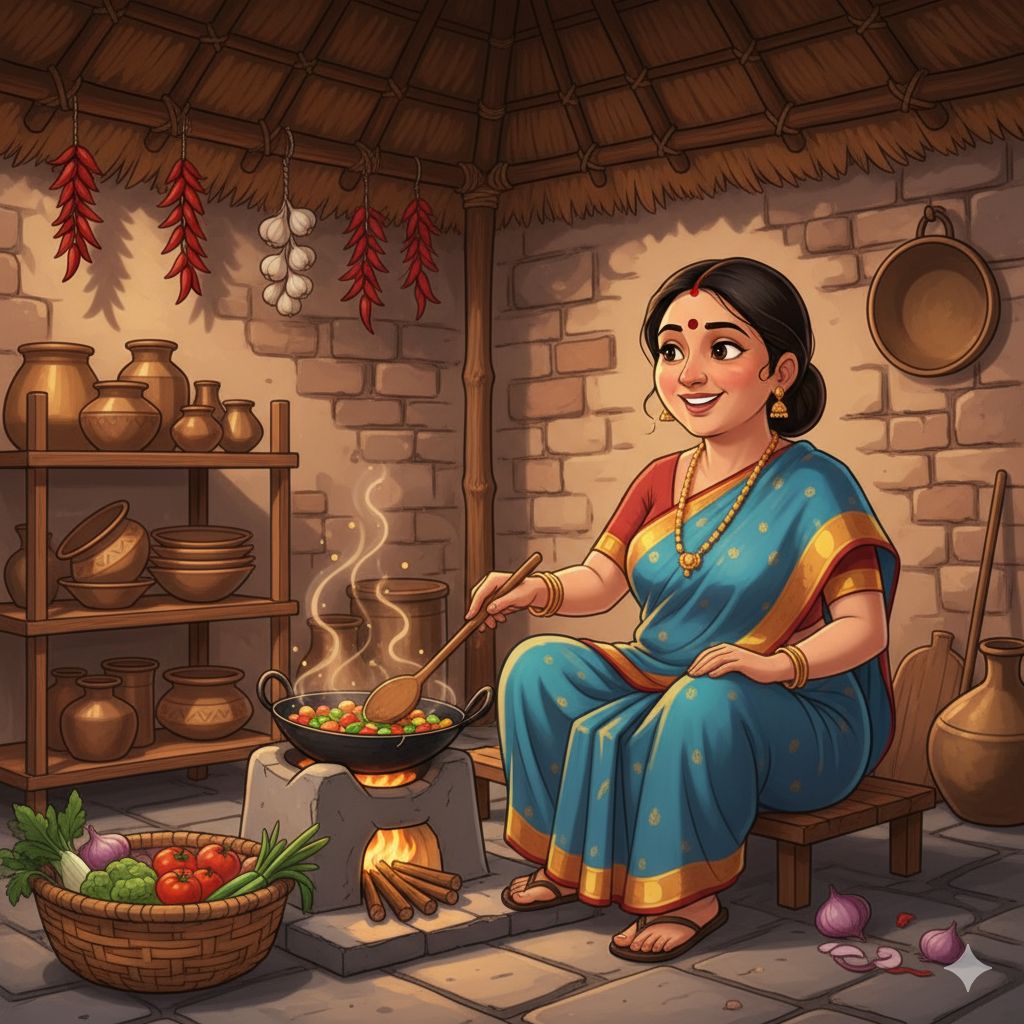
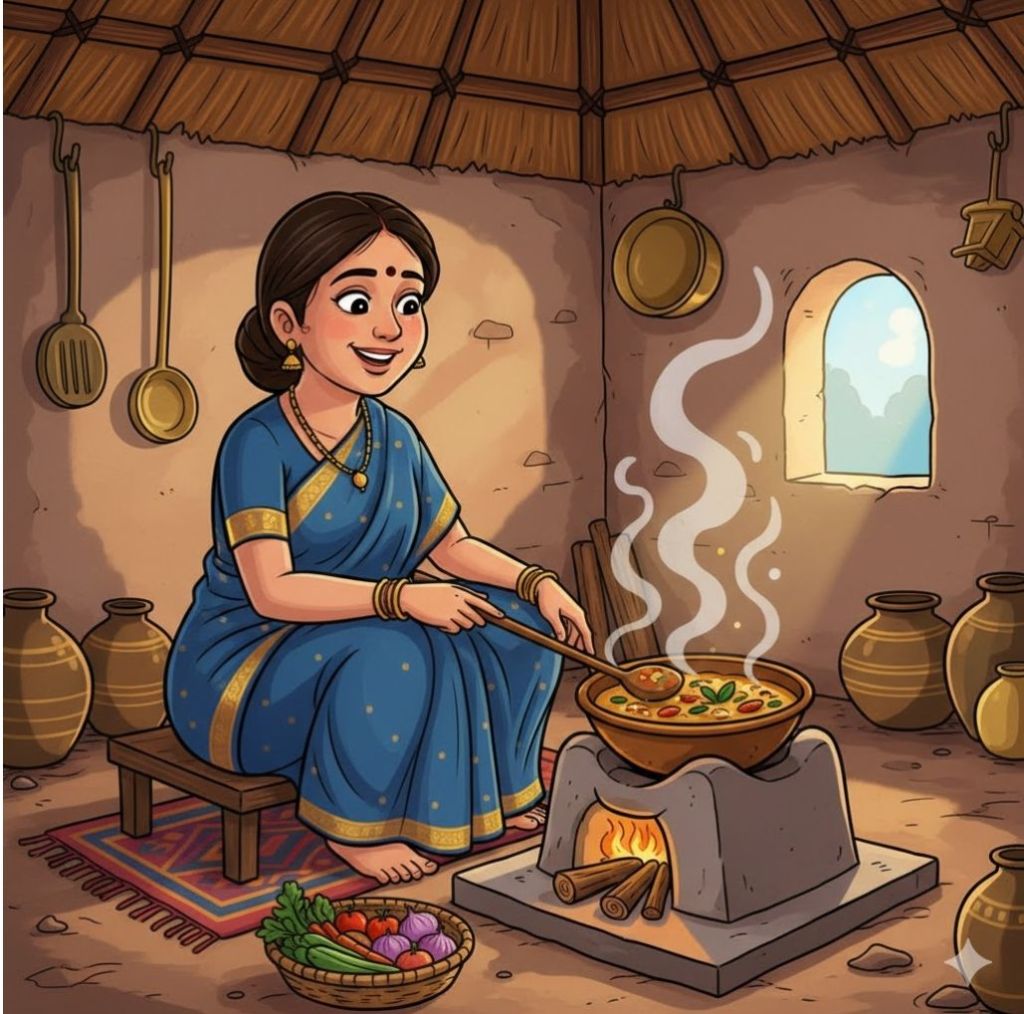
Sauted by ambitions Marinated in dreams Slow cooked by experience Spiced up by hope Cut and dried at times Chopped and churned often Bleached and blanched Fried on high flame of expectations Baked sometimes over baked Grilled and microwaved
My house help (let’s say her name is Reena) told me a very funny story, though she is not the gossipy kind. It was a personal rant about how she is being treated in one other household particularly where she works.
The lady of the house met with an untimely end during Covid. She left behind a grief stricken husband who did not have any inkling how the household was being run and a grown up son and daughter and aged parents-in-law.
The daughter subsequently got married and settled in the US of A. It was a love marriage. Recently, she came over to meet her father and the rest of the family. Reena was appalled to find that the girl did not take part in any household chores. Even her personal laundry was being done by the son-in-law.
Later, I believe the boy requested Reena to counsel the girl suitably on the score. I do not find that strange because Reena has been working for years in that household (also mine). She is extremely trustworthy and loyal. Also both the boy and Reena belong to the same part of the country and speak the same language. Having no communicable female figure in the house he must have found it comfortable to confide in her.
On hearing this story, my instant reaction was , “What did he find in her to have got married?’
Pat came Reena’s reply, “She is a beauty.’
Which made me think whether facial beauty was enough for a marriage to survive. I do not for once think housework is the sole duty of the woman. I believe both partners should share responsibilities. In any relationship both are required to grow and be happy. In this case, the boy did not seem happy with the situation.
Reena, of course did not take up the matter with the girl because, according to her, she was not the receptive kind. But what really is surprising for me is that since both knew each other before marriage, did they never have a conversation on how they would like to manage the domestic front post marriage?
My job in the second half of my career necessitated in-depth probe into nature and various forms of corruption. I was surprised to learn that in many countries corruption was considered to be embedded in their cultural practices. One of the examples given was the practice of exchange of gifts during Diwali within and outside family, more specifically, with business associates. The gifts could be as unpretentious as lavish depending on the recipient. If it is within the business circle the gifts manifest the level of obligation involved and the length of association.
But that’s not what I wish to write on today.
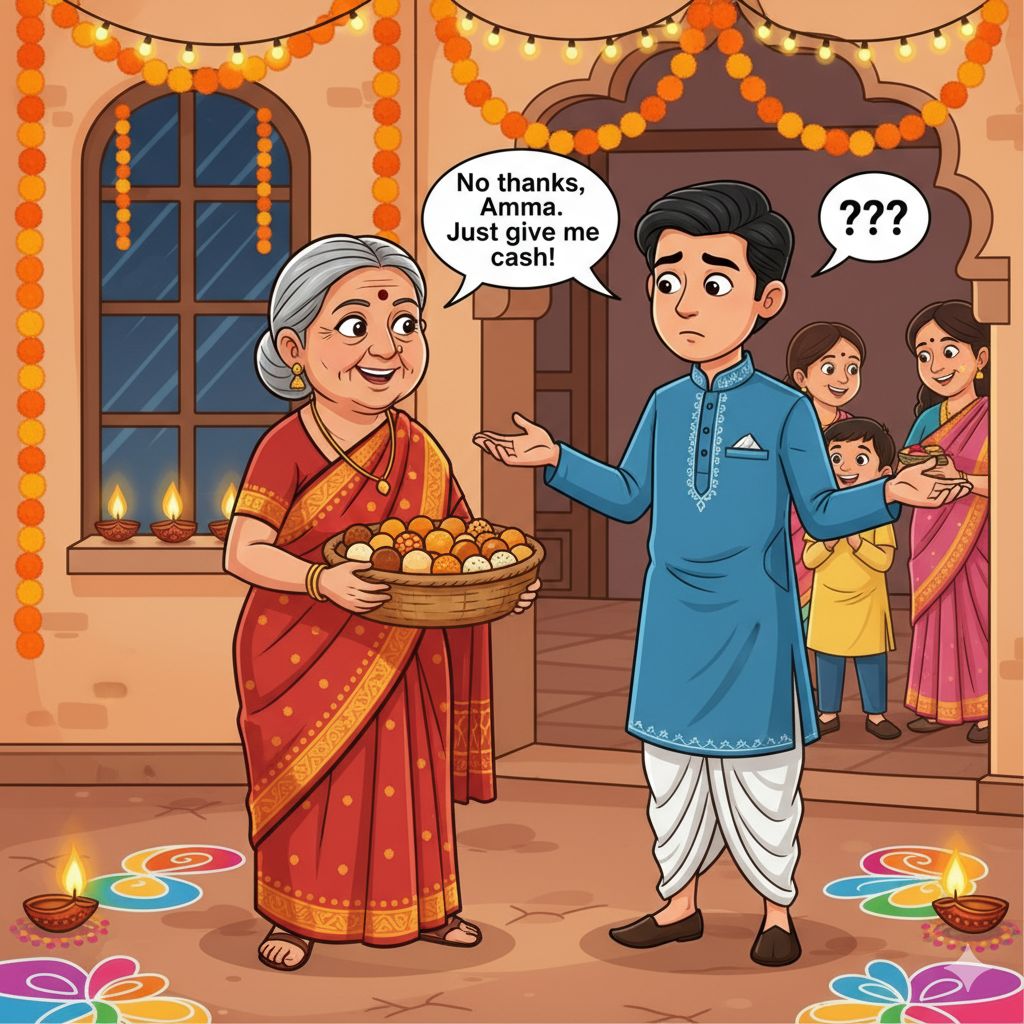
When we were small during Diwali it was a ritual to share happiness in the form of gifts with the house-helps. The gifts included eatables, sweets, clothes (new as well as not so new), kitchen items etc. Whoever came to the house did not leave empty handed. It was mandatory to see those who extended their services throughout the year benefit in some way from the householder during the festive season. It was a two way traffic because those who received the gifts showered blessings in return from the bottom of their hearts filled with gratitude and delight. The blessings were very important because these carried the weight of good vibes and thoughts and was a virtuous earning for the giver.
The recipients never made any demands and accepted whatever was offered to them with humility and a smile. It was the moral responsibility of the giver to ensure that the offerings were useful and made the receivers happy. My mother, as in many other families, stored items with care to distribute during the occasion. The idea was that none who laboured through the year should be deprived of the joy of the festive season.
Every tradition is well meaning till it degenerates and gets distorted.
This year, the day after Diwali, the doorbell kept ringing as the needy and the not so needy poured in for their Diwali gifts. What is most disappointing is that now the “Diwali” (read gifts) are no longer what they used to be. Most want money and the amount is expected to increase every year. As much as you give the receiver does not seem happy and satisfied enough because you now have to “meet their specific demands.” It irks the most because those who are keeping these demands have secured government jobs with a comfortable pay scale , landed property in their villages and often come to work in shining two or four wheelers.
Then why do they ask for Diwali? The answer is simple because their forefathers and fathers have been endowed with these gifts for ages. So they are continuing with the so-called tradition. Even after a remarkable change in their financial status they are not ready to let go the opportunity to earn a few bucks extra without making much effort. Since they are in a job they cannot officially have another source of income. So they outsource and hire private hands to do what is part of their job but usurp the Diwali depriving the labour who actually do the work throughout the year.
My erstwhile colleague had an amusing anecdote to share. At a traffic isle a lady used to beg for years. It was her only source of income by which she raised her family. However, after her sons got into suitable jobs she still couldn’t leave begging. Every morning her son would drop her to the traffic isle where she had been begging for years to continue doing so and pick her up on his two wheeler while returning from the office.
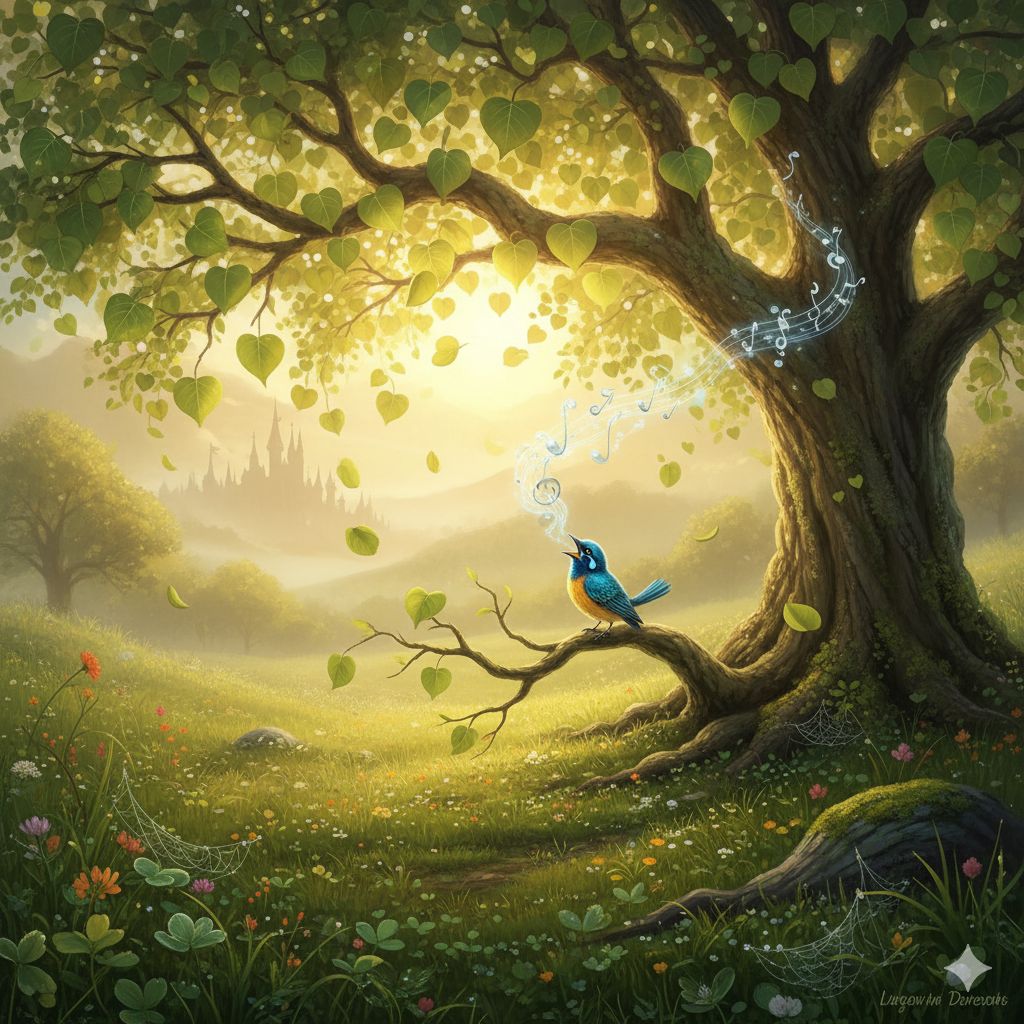
It’s wondrous how a post can trigger another post. Luisa Zambrotta’s post titled Autumnwhere she invited the readers to submit a haiku on the season made me think.
Though I gave my instant reply a bunch of haiku on the various shades of autumn played on my mind.
Since once a week and sometimes more I do post poems on my blog, I thought this time let it be haiku for a change – the wordless poem.
So here they are :
walking
by the garden
a touch of yellow
***
yellow leaves
preening
amidst the greens
autumn
***
enchanted
by the wardrobe
fall colours
***
stealing
all the colours
one by one
autumn wind
***
learning
to listen
yellowed silence
***
I am
not the only one
in silence
descending dusk
***
mending
my ways
with astick
still…not winter
***
how do you say
winter’s not here
autumn fest
***
It’s heartening to note that poets are talking and writing haiku more these days which almost a decade back was not so popular a form of poetry. Haiku is country specific and country sensitive too. A wave of innovations are seen the way haiku is written today. Some have soft kire or cut others are one sentence broken into three lines, some haiku are wave-like one line merging into another.
My bad I can only understand the traditional haiku with a strong or pronounced kire or cut – the Basho style. Kire being the lifeblood of haiku bestows that space which is unuttered and enigmatic. For me that space works.
I have followed the tradition here and also four liners which are rare in haiku.
I hope these haiku present your visual of autumn which may be different considering the part of the globe you are.
This morning was grey, dull, smoky, smog filled – an aftermath of Diwali. Yesterday night, as soon as the crackers started bursting, the atmosphere changed. The clear sky became obscure behind a veil of smoke. It became smoky even inside in spite of the doors and windows being tightly shut.
Today everyone is in mask.
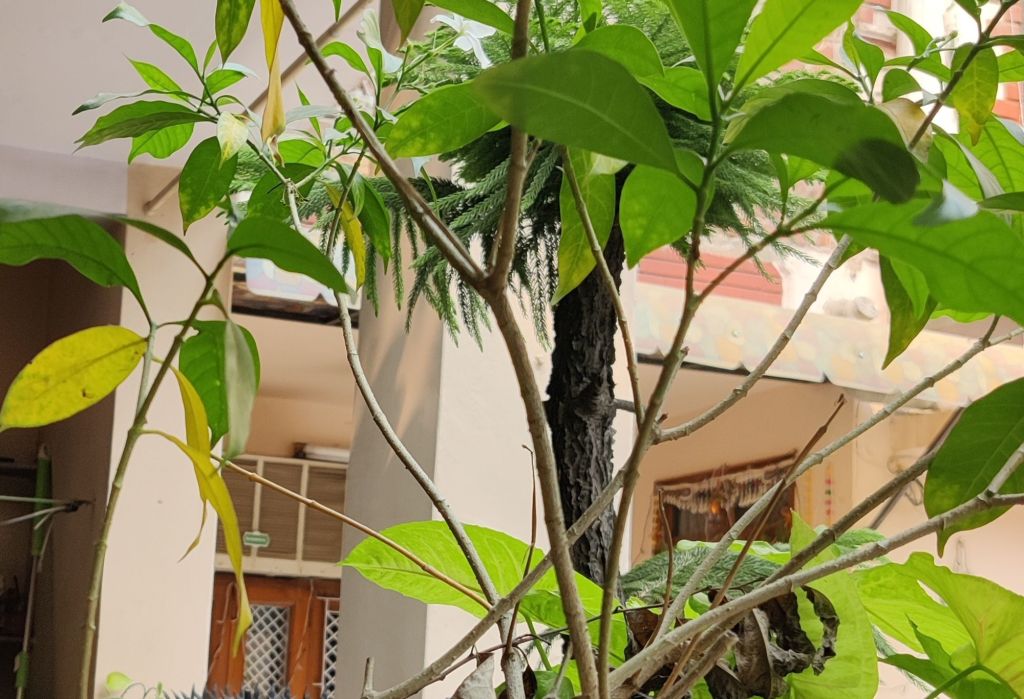
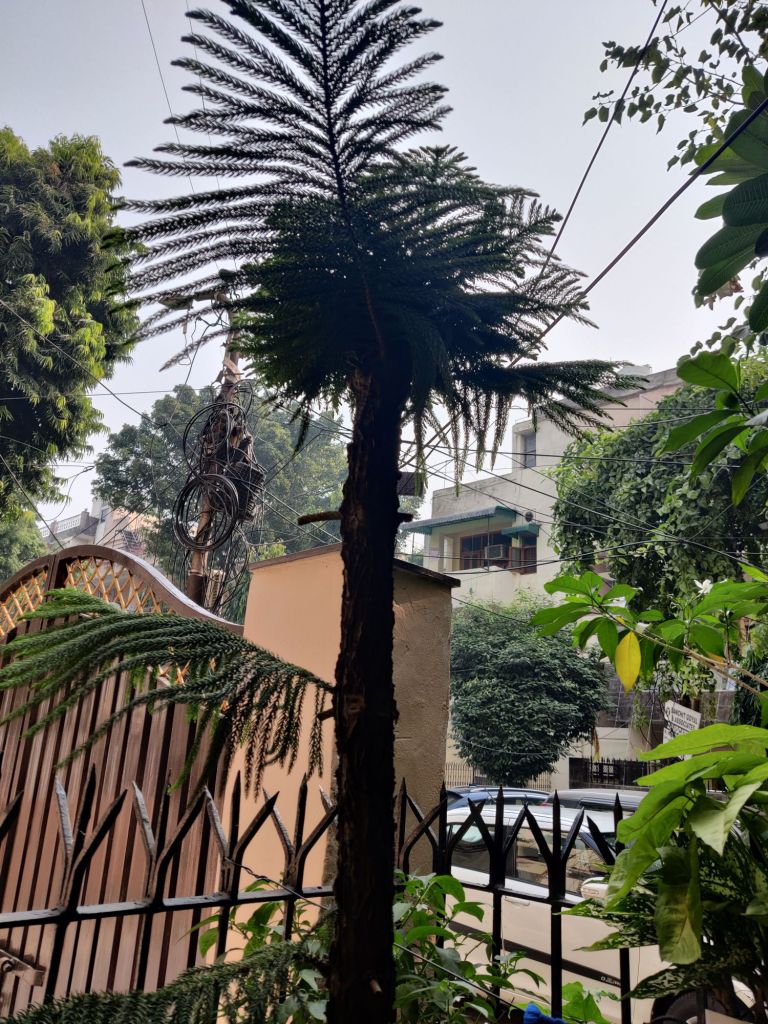
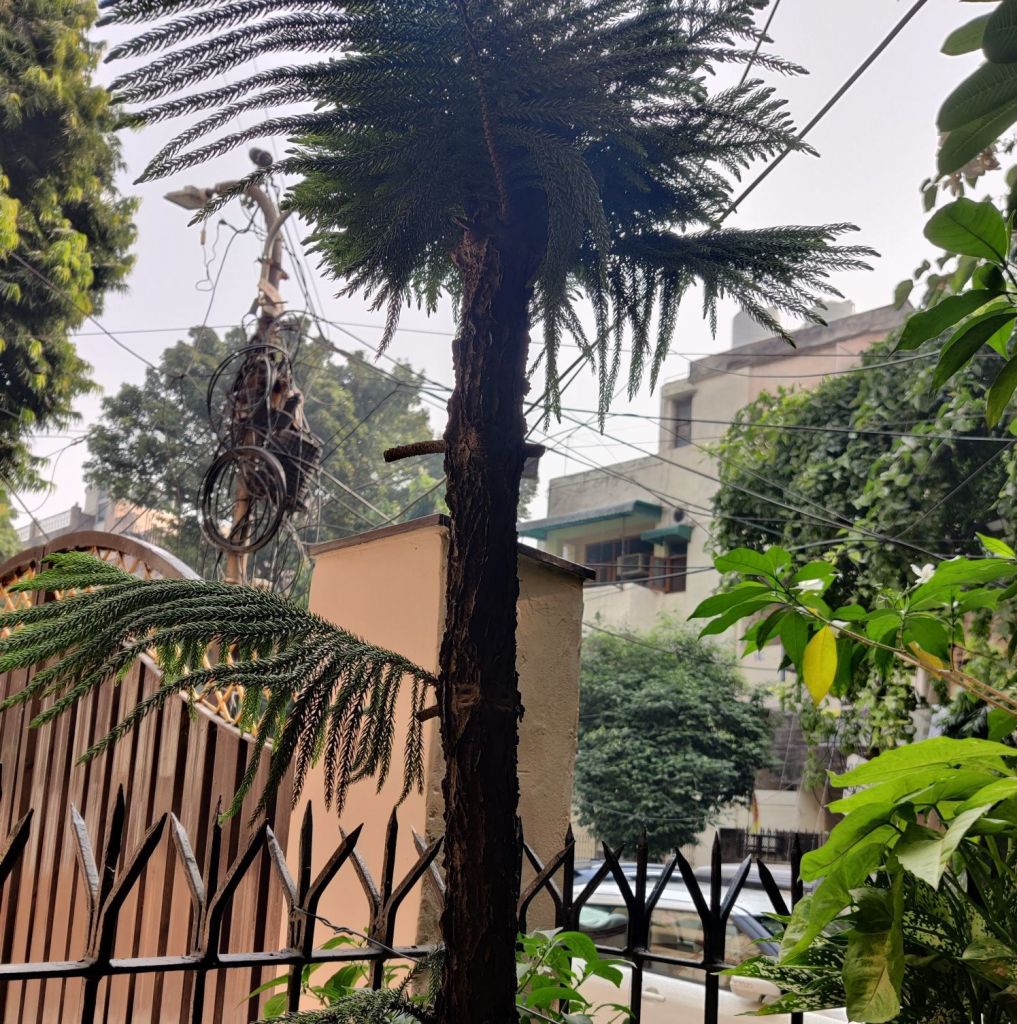
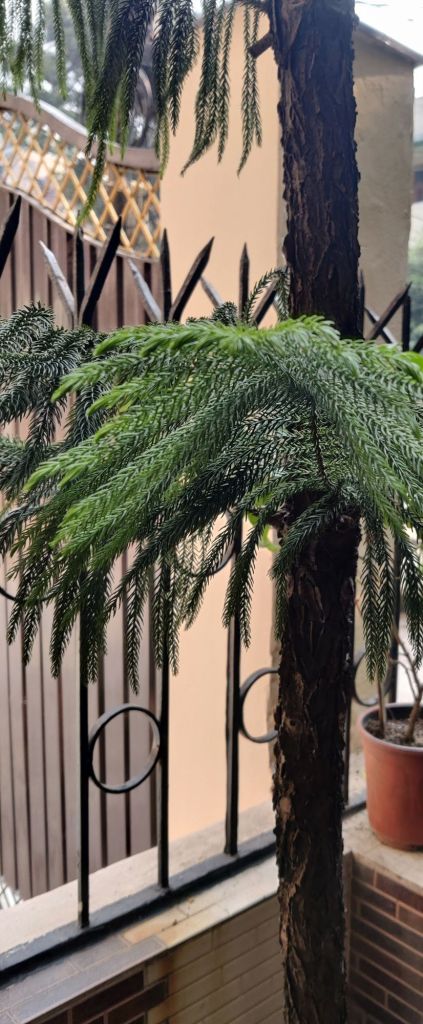
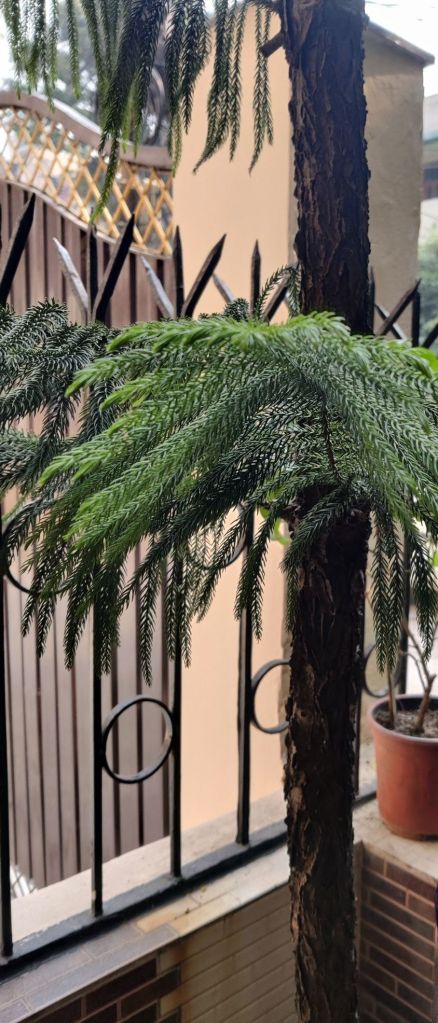
Only this Christmas tree seems rejuvenated. I had planted two Christmas trees a long time ago. One has died a natural death while this one was also wilting. But the gardener pruned it and cut the top branches.
As a result fresh green leaves have started sprouting again.
The overcast sky can be seen in the backdrop. It was mid morning though.
Leaves of the other plants have started yellowing.
A closer shot to capture the greenness. It’s actually emerald in colour. Shiny and bright.
I have been having dry cough and parched throat since morning. Night was spent with the air purifier on at full speed.
This will continue for sometime till the pollutants settle down by unexpected rains or get blown away by gusty wind like it happened last year.
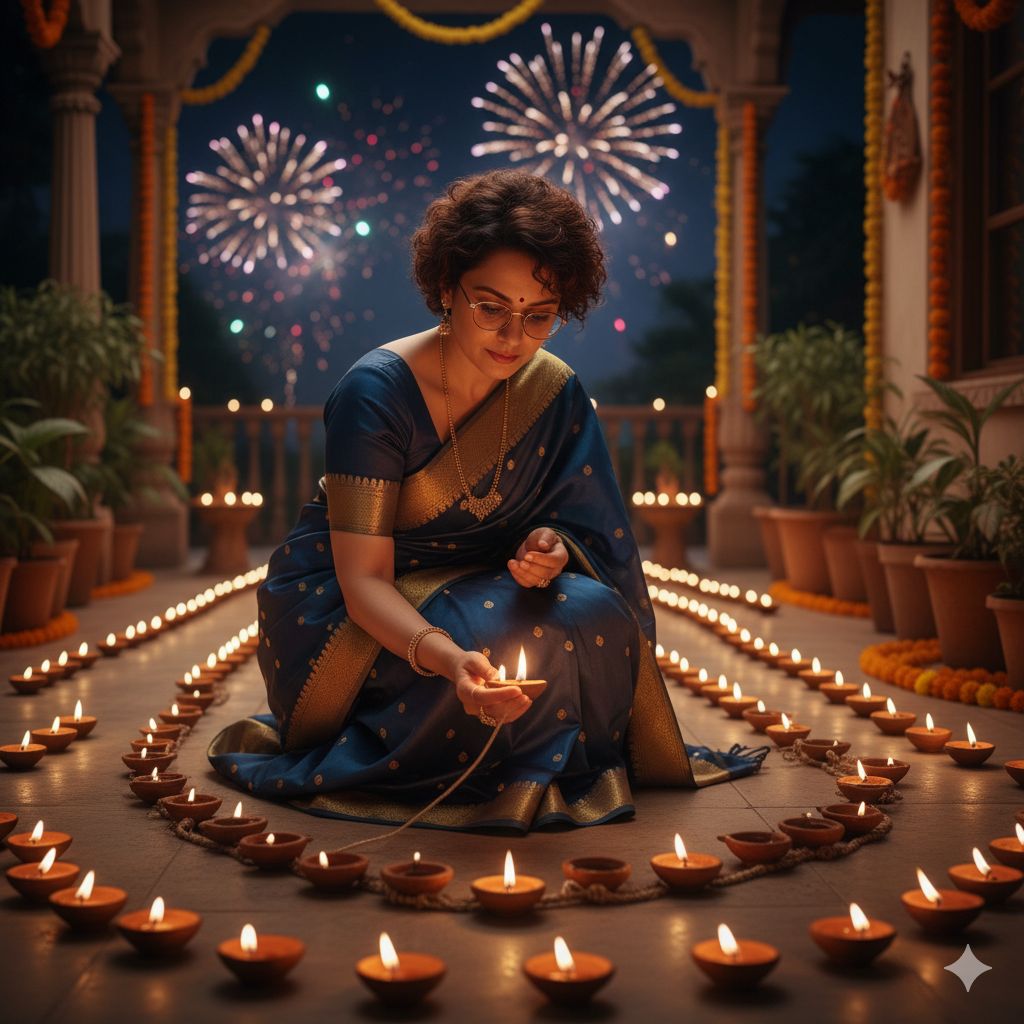
Today is chhoti Diwali. Tomorrow is badi Diwali – the Festival of Lights. It is on this day that Lord Ram returned to his kingdom, Ayodhya Nagari, after fourteen long years of exile and a fierce battle with the demon king, Ravana. The residents of Ayodhya welcomed him with the celebration of lights. The nightscape of the entire city transformed into glittering daylight. We continue the tradition till this day and celebrate Diwali with fan fare.
But come Diwali my mind gets wired around the same question: how much and how long do we hold on to tradition ?
Is tradition unchangeable ? Can we not modify traditional celebrations in accordance with the need of the hour ? Do we really go against our faith and religion if we do so ?
Every tradition has a scientific and historical base.
To go by the mythological story of the subjects of Ayodhya expressing their heartfelt joy on return of their beloved king was the truth of that moment. I am sure they must have lit thousands of earthen lamps around the city which did not cause any harm to the environment. They must have celebrated with fireworks which were not an auditory menace. People of that era had far more sense, scientific temper and care for Nature than we have now.
The spring cleaning which every household undertakes pre-Diwali is an exercise in decluttering and cleansing the homes of negative energies accumulated over a period of time.
This is also the time of seasonal change. I remember when we were small burning of fire crackers helped eliminate mosquitoes and other insects, (especially those that danced around lights), which invaded like locusts during this time of the year.
In current times, urban cities are lit up with electric or battery operated lights. The burning of oil in earthen lamps which used to purify the air is no longer in use. The fire crackers are still there and have become noisier and smokier. There was an endeavour to introduce green crackers in the markets which have not been very successful because consumers have stuck to non-eco-friendly crackers as per news reports.
Given the poor weather conditions and the continued stubble burning in the farmlands of the nearby states, the Air Quality Index or AQI has already deteriorated. It is anticipated that post Diwali the AQI will deteriorate further.
Most households have patients, elderly members and even younger members suffering from chronic ailments like cinositis, asthma, bronchial problems thanks to pollution. The rise in noise and air pollution, due to burning of crackers preceding and on Diwali night, will undoubtedly give rise to health issues and unavoidably inflated medical expenditure. Above all, the sensorial and psychological damage that our rowdy celebration inflicts on the animals!!
Then why can’t we think of celebrating the occasion keeping in mind the present environmental and health conditions than just continue with the age old traditional ways ? Why do we forget that the inception of these traditions occurred in way different situation and for way different purpose?
We are all knowledgeable sinners. We indulge in our vices knowingly furnishing a very innocent excuse as a cover up that “we shouldnot kick the others in the stomach” implying those who are making a livelihood out of this tradition should not be deprived of their earnings. It’s a fact that the enormous commercial aspect of any traditional celebration cannot be overlooked. But what we forget is that those who are profiteering from this ‘trade of tradition’ will still find ways to do so if we reform our ways of celebrations.
It is not sacrilegious if we adapt tradition to current necessities. Traditions are not intrinsically static and immutable. Haven’t so many deeply rooted traditions been done away with for the sake of social and religious reforms?
Let’s rewire our beliefs, thinkings and actions. Let our homes shimmer with lights, let the sky be adorned with noiseless fireworks, let’s welcome Lakshmiji , the Goddess of Prosperity, with reverence, let’s pray to Maa Kali, the Goddess of Empowerment, from our heart and soul, let’s distribute and savour sweets and delicacies, let’s extend a helping hand to the less privileged and make their Diwali as joyful as ours, let’s celebrate Diwali safely and with noble intent.
Satyajit Ray (1921 – 1992), the world renowned film director, was also a screen writer, author, lyricist, magazine editor, illustrator, calligrapher and composer. He is considered one of the biggest influences on children’s and young adults’ literature in Bengali.
He created many memorable characters in his stories uniquely embellished by their sketches drawn by him. One of his iconic creations is the detective, Pradosh Chandro Mittir or Felu Mittir , a balanced combination of brawn and brains, hailing from a middle class Bengali family and his Watsonian cousin, Tapesh Ranjan Mittir or Topshe. The third of the Three Musketeers is the most endearing persona of Laal Mohun Ganguly , the detective story writer with the pen name Jatayu , the mythical bird from the epic Ramayana. The threesome had many thrilling adventures and escapades together while Jatayu provided the comic relief in the tense and dramatic storytelling by Ray.
Feluda, where da is the short form of dada, the respectful address for an elder brother, is still a household name and will remain so forever. He became the role model for sleuths subsequently created by other Bengali writers. Feluda is a voracious reader and a knowledge gatherer. He maintains his physique by yoga. This perfect balance of a thinking man with physical agility was a wake up call to Bengali youths and to make them aware that sharpness of mind required physical as well as mental exercises.
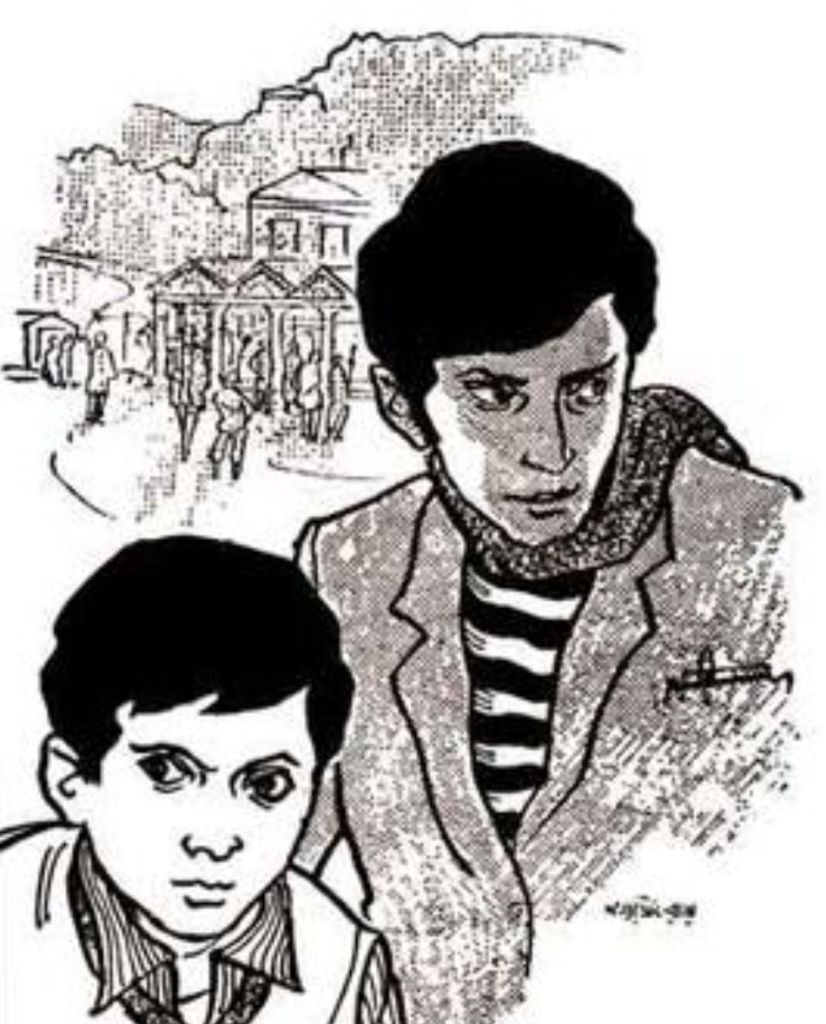
Topshe And Feluda (a pic from their first case)
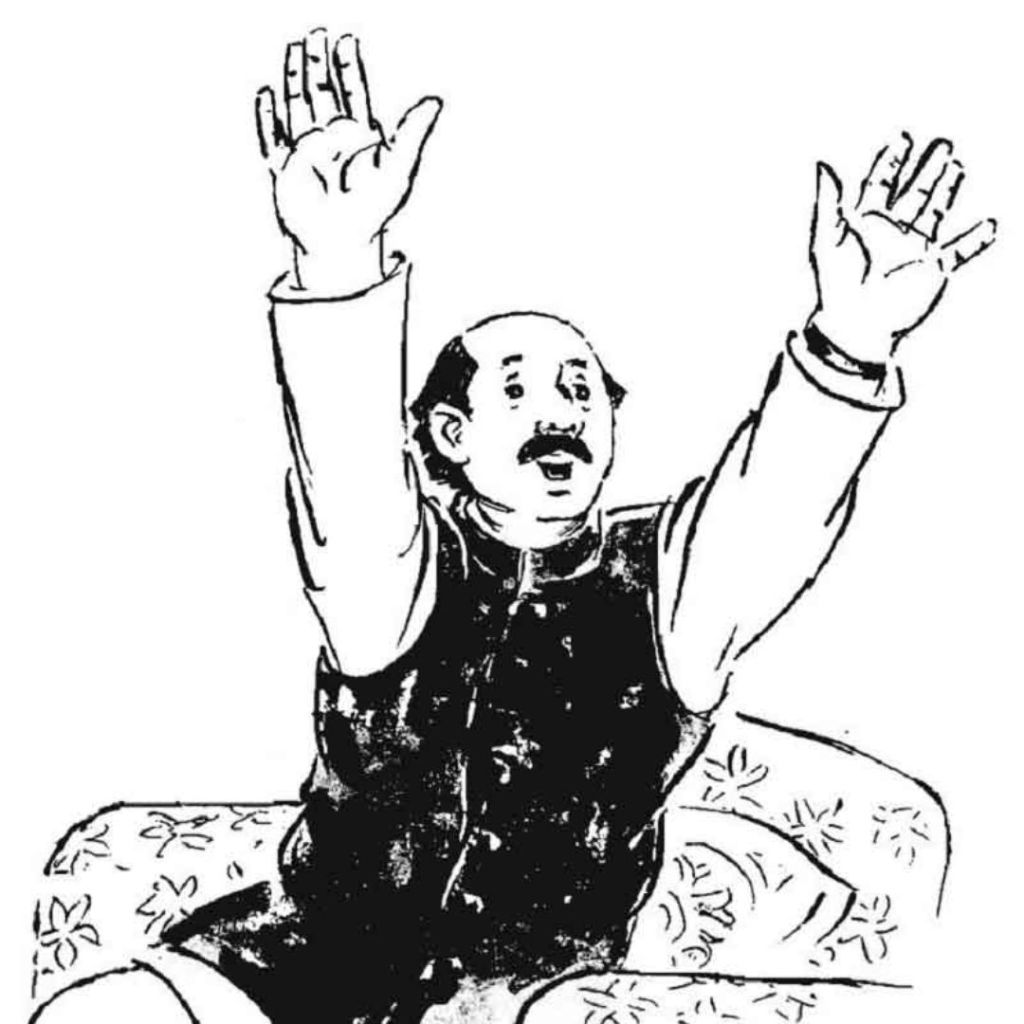
Jatayu
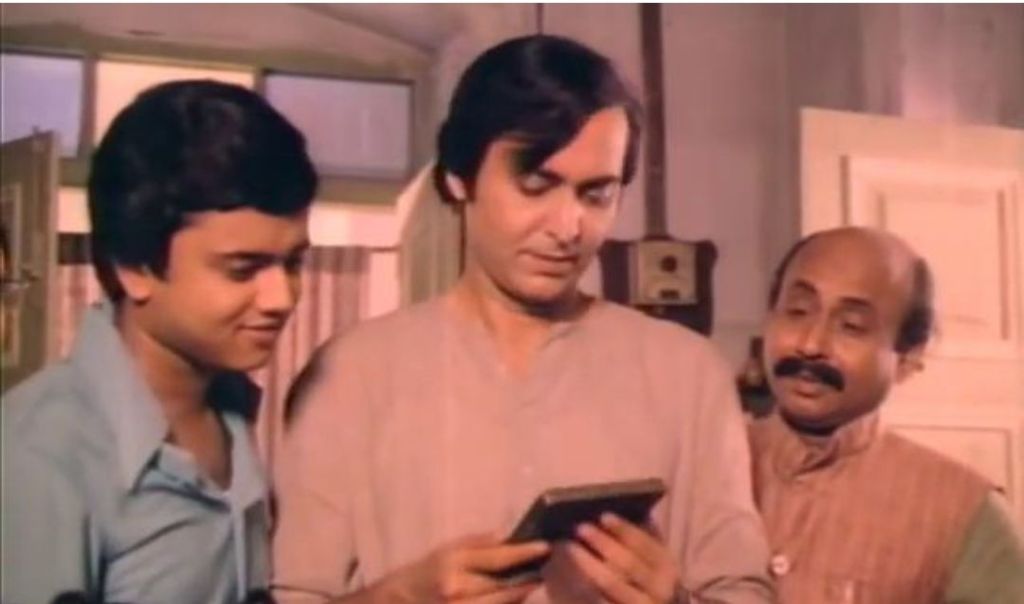
Later when Ray translated these stories on the silver screen the actors who immortalized these three characters seemed as though they had come alive out of his sketches.
The signature background score (composed by Ray), of these films are as immortal as his characters
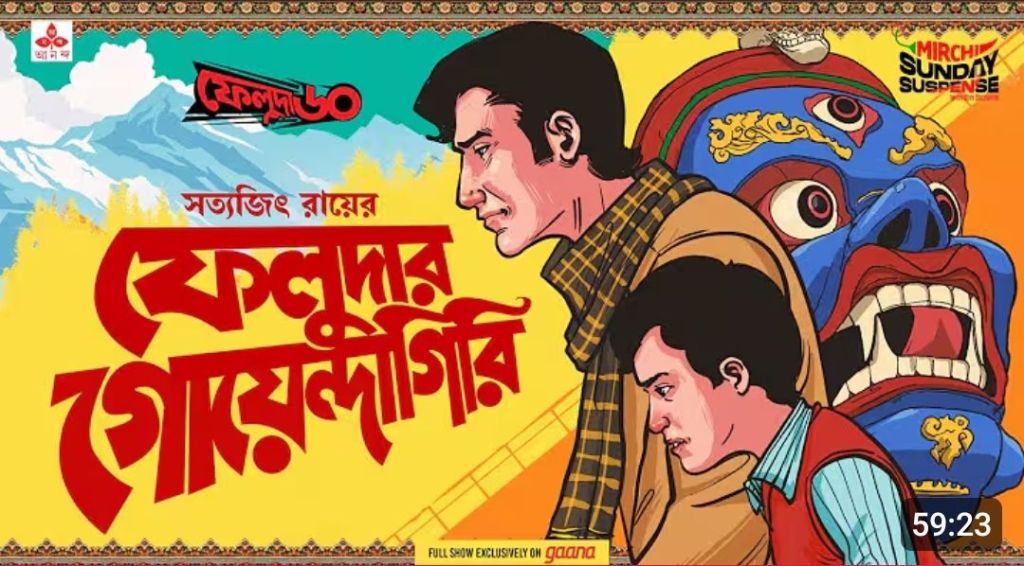
The cover photos of the video are of Ray himself and of the doyen of Bengali films, Soumitra Chatterjee, who was Ray’s muse (and later portrayed the character) when he visualised and drew Feluda’s profile.
Like James Bond, Feluda has been played by many actors. But the first two full fledged Feluda novels made into films by Ray himself had Soumitra Chatterjee essaying the role of the eponymous detective.
Footnote: This post is the first part of a twin post followed by
Feluda, as I have detailed in the introductory post, is the detective created by Satyajit Ray. Ray, as is well known, is considered the biggest influence in the history of cinema. Feluda (sleuth’s nickname) is the most idolized fictional character in Bengali literature and his fan base cuts across all age groups. Histeenage cousin, Topshe (again nickname), is his adorable sidekick and also, like Dr. Watson and Captain Hastings, is the narrator of all the adventure stories.
Feludar Goyendagiri (Feluda’s Espionage) is the first short story in the Feluda series. It was first published in the popular children’s magazine named Sandesh (started by Ray’s grandfather) in 1965 in three instalments, and became an instant hit. Readers started looking forward to Feluda’s next adventure with great expectations and curiosity. That is how the Feluda craze began.
***
Feluda, Topshe and Topshe’s father (Feluda’s paternal uncle) are vacationing in Darjeeling, a very charming and most visited hill station in the State of West Bengal. While wandering on the Mall Road, Topshe happens to be privy to an animated conversation between two elderly gentlemen, Rajen Mojumdar and Tinkori Mukherjee.
On his return, Topshe narrates to Feluda that Rajen Mojumdar is highly disturbed by the receipt of an anonymous threat letter. Curious, Feluda decides to pay him a visit. Topshe having earlier followed the gentleman and spotted his residence, accompanies Feluda.
To Topshe’s utter surprise, Feluda appears to have known Rajen Mojumdar from before. Having been a practising advocate, he happened to have helped Feluda’s father once. He is naturally very happy to meet Feluda and readily confides in him.
The threat letter has arrived by post having a postmark of Darjeeling. It is not handwritten, but printed words, cut from various books or magazines, have been pasted on paper. What is most puzzling is the content which says “Be prepared to pay for your misdeed.” Mr. Mojumdar is simply at sea because, according to him, he has never intentionally harmed or wronged anybody in his life.
Rajen Mojumdar, having retired from practice, now lives with his trusted Nepali servant. He is a widower and estranged from his only son, Probir, for many years. At present, Tinkori Mukherjee is staying with him as a paying guest. They know each other through a mutual acquaintance. The local doctor, Phoni Mittir, pays home visits off and on if Mr. Rajen is indisposed. Mr. Rajen’s hobby of collecting curios has brought him in contact with Aboni Mohun Ghoshal who also is an antique collector.
Feluda assures that he will look into the case and help out his father’s friend. While returning, Feluda is struck by a familiar face in the Mall.
As his investigations proceed, it comes to light that Tinkori Mukherjee is none other than the very popular detective story writer who has been writing under the pen name of Guptachar (The Spy). Feluda is totally enamored by this revelation (by Tinkori himself) as he is an avid reader of his books. Tinkori, it appears, does not only have flair for writing but also for sleuthing. In fact, he supplies many clues to Feluda regarding the mysterious letter like the source of the printed words, the glue used to paste them etc.
Feluda, in turn, tells him that Rajen Mojumdar’s son is also incidentally present in Darjeeling and both Aboni Ghoshal and Probir Mojumdar seem to be knowing each other very well.
Matter comes to peak when Rajen is startled awake by a masked intruder in the dead of the night who quickly escapes by the bedroom window. He is now sick with worry and fear and the peace of his sedentary life is completely shattered. What does this masquerador want? Who is threatening the old man? Is it Aboni Ghoshal who is after one of the antiques in Rajen’s possession? Does Rajen know the reason why his son is in Darjeeling? Is he the culprit? Does the local doctor, Phoni Mittir, whose practice is not exactly roaring, have an axe to grind?
The famous author, Ruskin Bond, has openly admitted that he is influenced by Ray’s writing style which is remarkable in its simplicity and crispness. Like Christie, Ray does never leave a loose end. Moreover the backdrop of his stories become a character in itself be it the lost treasure of the golden fortress (Shonaar Kella) in Jaisalmer (in Rajasthan) or the theft of the precious statuette in the ancient city of Varanasi or Benaras (Joy Baba Felunath).
I had read Feludar Goyendagiri a long time ago. I was refreshed by listening to its audio version superbly presented by Radio Mirchi in its Sunday Suspense Series wherein Feluda’s voiceover is none other than that of Sabyasachi Chakroborty who has played the character in many Feluda films under the direction of Ray’s son, Sandip Ray. Without being preachy, but having a marked serio- comic tone, the story underscores how an innocent childhood prank can leave a lifelong impact on the mind.
Ray’s books and stories have been widely translated in English by prominent translator, Gopa Mazumdar, wife of British diplomat , Ian Baker and also by other translators. Many English translations of his books are also available on Amazon.
It has been prevailed on us that money is a prerequisite of a good, happy, comfortable and secured life.
Money does give a sense of security, comfort and confidence. But the richest person on earth is not always the happiest. Leading a good life again depends more on intent than resources.
Security and happiness are mindsets which are unrelated to income. I have seen the daily earners to be more grounded and contented than the entitled class.
It is a common saying that a rich person suffers sleepless nights. A person who has less does not worry less either. So if you are moneyed or not you still have insecurities and sorrows.
But money is definitely an enabler and gives the cushion to explore, experiment and experience life. However, the amount of money required for contentment is relative. For some less is more and for others more is less.
Having said that money is a must for red letter days. It saves a lot of trouble to have money at your disposal during exigent circumstances. Money is also a perquisite we enjoy in old age. It enables us to have a life of choice post retirement.
However, the very nature of money is transactional. Movement is intrinsic to money – it comes and goes – and therefore needs to be handled with care.
We are taught to value money, the worth of habitual saving and the ethical means of earning and spending as it is as transient and elusive as any other attainment in life.
However, money is often misused as a differentiator and a social evaluator.
Money, in the final analysis, is necessary as it fulfills basic needs, helps in actualisation of higher aspirations and sustains in emergent situations. But it should not be considered a substitute for every other thing which makes our limited stay on this planet beautiful, memorable and worthwhile.