

My job in the second half of my career necessitated in-depth probe into nature and various forms of corruption. I was surprised to learn that in many countries corruption was considered to be embedded in their cultural practices. One of the examples given was the practice of exchange of gifts during Diwali within and outside family, more specifically, with business associates. The gifts could be as unpretentious as lavish depending on the recipient. If it is within the business circle the gifts manifest the level of obligation involved and the length of association.
But that’s not what I wish to write on today.
When we were small during Diwali it was a ritual to share happiness in the form of gifts with the house-helps. The gifts included eatables, sweets, clothes (new as well as not so new), kitchen items etc. Whoever came to the house did not leave empty handed. It was mandatory to see those who extended their services throughout the year benefit in some way from the householder during the festive season. It was a two way traffic because those who received the gifts showered blessings in return from the bottom of their hearts filled with gratitude and delight. The blessings were very important because these carried the weight of good vibes and thoughts and was a virtuous earning for the giver.
The recipients never made any demands and accepted whatever was offered to them with humility and a smile. It was the moral responsibility of the giver to ensure that the offerings were useful and made the receivers happy. My mother, as in many other families, stored items with care to distribute during the occasion. The idea was that none who laboured through the year should be deprived of the joy of the festive season.
Every tradition is well meaning till it degenerates and gets distorted.
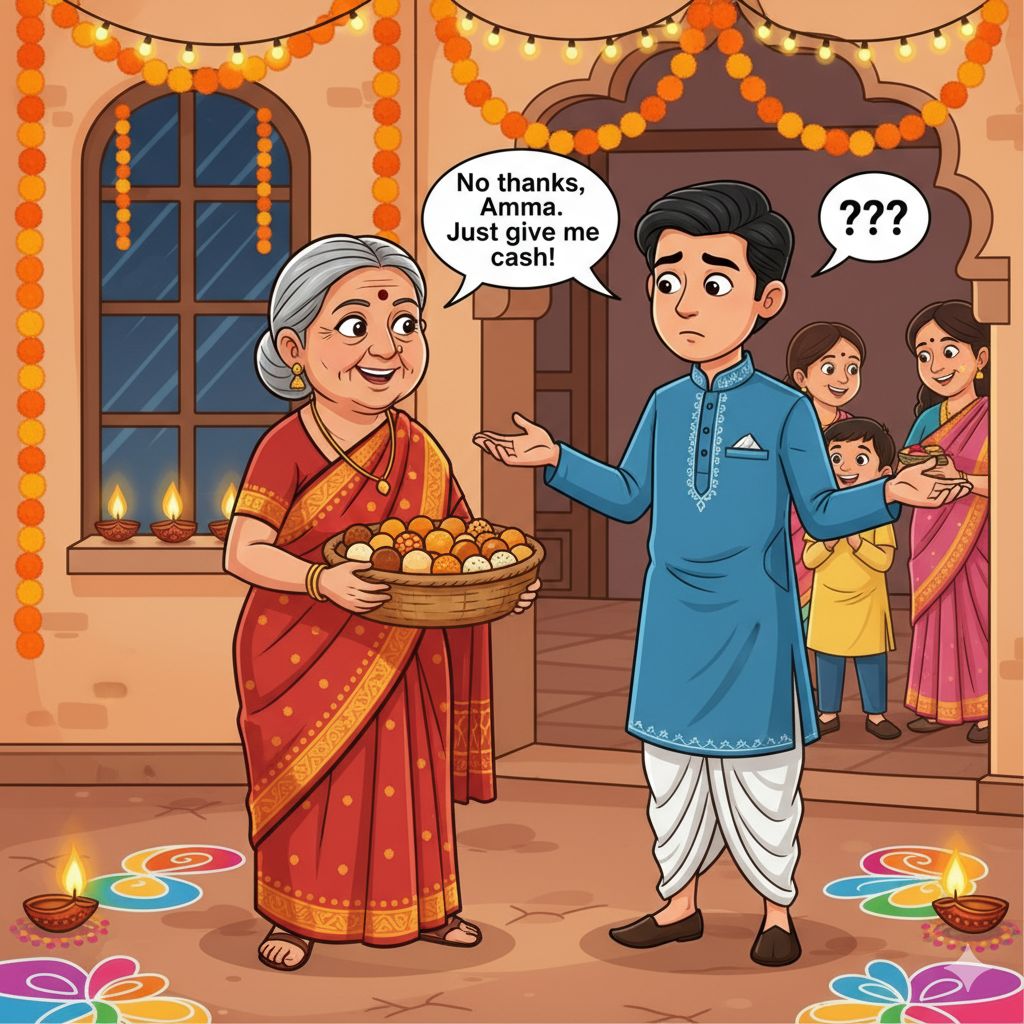
This year, the day after Diwali, the doorbell kept ringing as the needy and the not so needy poured in for their Diwali gifts. What is most disappointing is that now the “Diwali” (read gifts) are no longer what they used to be. Most want money and the amount is expected to increase every year. As much as you give the receiver does not seem happy and satisfied enough because you now have to “meet their specific demands.” It irks the most because those who are keeping these demands have secured government jobs with a comfortable pay scale , landed property in their villages and often come to work in shining two or four wheelers.
Then why do they ask for Diwali? The answer is simple because their forefathers and fathers have been endowed with these gifts for ages. So they are continuing with the so-called tradition. Even after a remarkable change in their financial status they are not ready to let go the opportunity to earn a few bucks extra without making much effort. Since they are in a job they cannot officially have another source of income. So they outsource and hire private hands to do what is part of their job but usurp the Diwali depriving the labour who actually do the work throughout the year.
My erstwhile colleague had an amusing anecdote to share. At a traffic isle a lady used to beg for years. It was her only source of income by which she raised her family. However, after her sons got into suitable jobs she still couldn’t leave begging. Every morning her son would drop her to the traffic isle where she had been begging for years to continue doing so and pick her up on his two wheeler while returning from the office.
Now what will you call that ?
Habit?
Tradition?
Or….





Thank you so much, Geeta, for this eye-opening post! It is interesting to those not sharing your homeland, although corruption in other forms is everywhere.
I love your images!
Joanna
LikeLiked by 1 person
Thank you Joanna
LikeLike
You are more than welcome, Geeta!
Joanna
LikeLiked by 1 person
So true, GC.
What once was a heartfelt tradition of sharing joy and blessings has slowly lost its shine.
Today, Diwali gifts have turned into a ritual of expectation, where habit and inherited practice overshadow gratitude.
Eentitlement is quietly destroying the warmth the festival is famous for.
LikeLiked by 1 person
You have put it so well Mr. P. Truly the meaningful practice of giving gifts has become a caricature now.
LikeLiked by 1 person
Indeed, GC.
Thank you.
LikeLiked by 1 person
We want to be generous but the expectation of gifts is uncomfortable.
LikeLiked by 1 person
Thank you Mary so much
LikeLiked by 1 person
⭐⭐⭐⭐⭐ 👏 Great 💯
LikeLike
I am born and raised in a salaried home and in my childhood the word “bonus” and “arrears” were heard during Diwali.
I don’t know about other places but in Maharashtra the househelps/maids get one month salary in Diwali as bonus and in exchange they work extra hours before Diwali.
LikeLiked by 1 person
I am talking of a time which was way before. In the North the system was then different. It was kind and not money. And they did work a little extra but not many. There was no concept of bonus. Years later the system of giving one month’s salary started in affluent parts of the city. That said even the practice that I am stating here is arbitrary.
LikeLike
Nicely shared GC. ❤️
LikeLiked by 1 person
Thank you Tina
LikeLiked by 1 person
You’re welcome.
LikeLiked by 1 person
A dreadful distortion
LikeLiked by 1 person
It’s a combination of habit and inflation
LikeLiked by 1 person
Bad habit which is not cured of even after elevation financially and socially. Its more of a negotiation than festive spirit where you bargain for the best consideration.
LikeLiked by 1 person
I know. It happens here too on Eid
LikeLiked by 1 person
I have come to understand from various posts that all social aberrations of modern society are global. It’s the only consolation. 😆😆
LikeLike
It is sad when traditions turn around like this, expectations of money and expensive gifts.
For me its the being together that matters most, get together with family or friends, share food, drink, maybe music and a dance.
Those are the memories to cherish, that is what you will talk about in the years to come . . .material items fade away.
LikeLiked by 1 person