That Stunning Prompt!


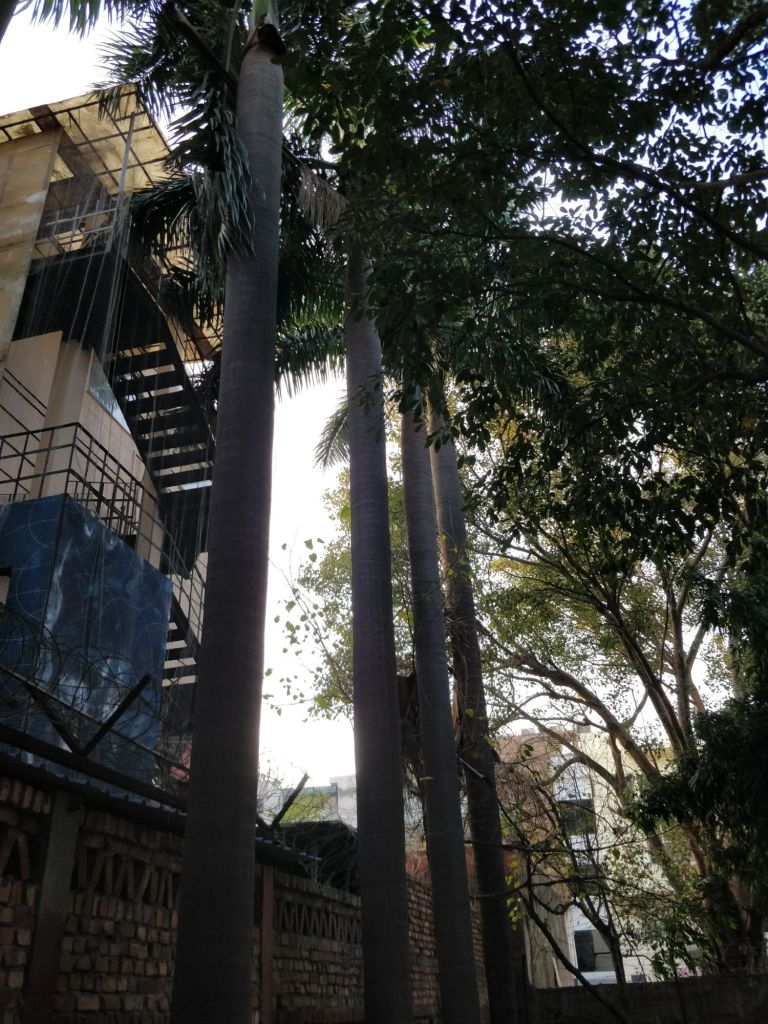
This is in response to Rochelle’s Weekly Photo Prompt for Friday Fictioneers.

Word Count: 100

Oh! This stunning view! I can’t take my eyes off .

The sky burning on its own accord!

A soft knock at the door.

“Aah! Come in dear friend.“

“I can’t remember anything to write on,” I complained.

“In just 100 words. It’s too stiff.”

“I know.”

“Will you increase the word count?“

“No.”

“Well then…“

“The prompt reminds me of the night in the forest you went missing.”

Questions swam in her eyes.

“Oh! That! But that won’t fit into the word count.“

“Never mind…tell me.”

“You want to know ? Really?”

“Yesss….“

So, I began…

96 Words

You can read the other stories here.

Author’s Note :

Wrote this in one of my quirky moods on a fine springy day taking a cue from Rochelle’s “zoning out” flash fiction in response to the prompt. That stiff word count is actually very challenging teaching how to convey a story in a very concise manner leaving gaps which can prompt varied interpretations from readers – a test in itself – and an open end for tickling curious speculations!! 😂

And the prompt is really startlingly beautiful leaving me bereft of words and thoughts…reminding me of a flaming forest…the night I lost my way and never came back, in the truest sense, to myself.

Howzzzat? For a change…. 😃😃😃😃

Women And Finance


In our culture there is a common belief that the man of the house earns whereas the woman of the house only knows how to spend it. Even when a woman works to sustain her family, give financial support to her spouse (with insufficient income) or to meet the rising inflation, I have heard the male colleagues say that she is earning just to meet her personal expenses or to maintain a lavish lifestyle.

Seldom women are given the credit of being equal financial partners to meet the standard living costs of a household or astute investors or wealth generators. Mostly they are considered financially non savvy because of their cautious and conservative approach towards investment (preferring assured returns) and high risk aversion.

However, history speaks otherwise.

There were women lenders, treasurers and estate managers across centuries and around the world. Chola and Vijayanagara temple inscriptions from South India show that women managed endowments and lent jewels. “In Tamil Nadu, Chettiar wives and mothers ran the domestic ledgers of sophisticated private banking networks while the menfolk were abroad. In Varanasi and Bengal widows lent to landlords and traders.”

Bullions and jewellery, a woman’s primary assets, have traditionally functioned as household venture capital to start or to sustain business and even sold during hardships. During India’s freedom struggle, jewellery donated by women facilitated the movements.

Women’s savings, though at rates comparable to men, are prioritised around security and liquidity. They’d rather depend on savings accounts, fixed deposits, Post Office schemes and insurance linked products than on high risk high yield equity, businesses and real estates.

Women default less. They manage the liquidity assets of the household (cash, fixed deposits, insurance, gold) while men invest in growth assets like equity, property and business capital. Even in case of modern entrepreneurship, the founders have been able to pursue high-risk high-reward ventures because often the wife has continued to provide financial backing to the household through their stable income. Research also finds that while men trade more frequently or aggressively women prefer instruments of long term growth and are less likely to panic-sell during a market crash.

Modern financial products are designed on the assumptions of  continuous employment, uninterrupted career arc and predictable growth in terms of earnings, assets and net worth. However, women’s economics lives can be discontinuous with career breaks for caregiving and phases of part-time work thereby resulting in income volatility. Hence, the gender disparity in financial behaviour – men are likely to show over confidence whereas women are likely to prefer sound saving with narrower margins for error.

(Source: Sunday Hindustan Times Wknd/Lifestyle dated 11.01 2026)

Boredom


Boredom is a mindset.

I guess I have said that before in some other previous post as WP App says I have already replied to the prompt : “What bores you?”

However, having made that lofty statement I have to admit that I do get bored and that too very often to the point which is self-detrimental.

Well, on a more superficial level, I get bored with books which are not my type, movies and series where I do not find anything which makes me think, conversations which prove to be just blabbering and nothing more than that and so on and so forth.

Being a restless soul, I cannot cling to a particular chore or job or hobby for long. When I was saddled with the same desk work for thirteen long years I kept asking for a change. In response, my ‘thoughtful’ superiors, burdened me with more tasks along with the one I already had.

While learning classical music, the strain of rigorous riyaaz put me off as a result I stopped pursuing the (six year) course just one and a half years short of completion.

On the rebound I took to writing , participated in contests and won some,  compiled a bunch of short stories, got it published. But the process of publication was too long and arduous to my liking and the attitude of the publishers highhanded to say the least. So, I have given up on short stories and the dream of getting published again.

Following the zig zag course of my mood, now whenever I get into a new venture my sister asks me when am I going to leave it ?

Jokes apart, I am always on the lookout for something new… something adventurous… something mind stimulating!!

But again not for long…

Now that I am into blogging I wonder what  will make me lose interest in it ? Murderous, won’t that be?

Well, given my constitution, I may take a sudden U turn…

Go back to riyaaz…

Go back to short stories…

Go back to publishing…

You never know.

But the long and short of the discourse is boredom can be messy and not always as inventive, innovative or creative, as I am wont to believe.

Lightening And Sunflower


This is in response to Sadje’s Weekly Photo Prompts on #Whatdoyousee

speed of lightening is

not fast enough

to reach

you

the sunflower

merely raises its

head and blessings pour

never have I asked

for the sky

but the

rainbow,

yes, let

it spread on

my window and shine

#Wdsy

Sunset


Two days back the evening walk culminated in capturing the sunset on my mobile.

I have been admiring it for quite a few days but forgot to click.

Funnily, had it been a few years back looking at the setting sun I would have exclaimed, “Oh! The sun has set so early. I still have so much to do.”

But now I just thought, “Oh! Look at the gorgeous purple sky getting scorched in its own flames!!”

And just then the crescent moon came “on live” and winked to me, “Abhi to party bas shuru Hui hai mere dost!”

The party has just begun my friend!!!

😂😂😂😂


Taskaree Versus Kohraa2


Netflix has given us two limited episodes Web Series – Taskaree and Kohraa Season 2. Both draw attention for different reasons.

Taskaree (smuggling) is a Neeraj Pandey production about how the Customs Officers work day and night to bust the smugglers’ web at the Mumbai International Airport. The Series tries to show that the way the Customs nab the “couriers” who smuggle in gold and other expensive items into the country, as part of an elaborate network, is almost at par with that of undercover agents. They have their inside informers and moles and how even the retired officers of the Department remain active in serving the nation.

The drama that unfolds is interesting with the usual twists and turns and love angles to boot. But what actually and sadly it brings forth is how corrupt even the most idealists are. How easy it is to get to the kingpin who is in fact a-good-guy-turned-into-a-mafia-don if you have a handful of bravehearts amidst a compromised system. 

However, while watching the series the only word which comes to mind is plastic. Everything is so make-believe that it fails to thrill and keep the viewers glued.

I am a Neeraj Pandey fan from his  oh-so-thought-provoking  “A Wednesday” days but now that he has become a wholesaler of spy thrillers the oft-repeated cheap thrill gimmick is what is robbing the charm and seriousness of his productions.

In contrast is Kohraa (fog) Season 2,   a gritty, gripping and very much rooted in the soil of the Punjab Series. SI Dhanwant Kaur of Dalerpura PS, assisted by ASI Amarpal Jasjit Garundi, is given charge of investigating the murder of a woman in her brother’s barn. In spite of remaining suspended from work for a year her Departmental Head is sympathetic towards Dhanwant and hands her the case so that she can make a comeback of sorts.

Gunjit Chopra, the writer of the Series, shows how difficult it is for the police to work at a stretch for ungodly hours despite having to deal with their troubled pasts, dysfunctional family relations and personal losses. It also presents a harrowing picture of what it is to be poor in a society still very much in the holds of feaudalism and what it is to hold your ground as a woman in a system steeped in patriarchy. This Series is madly understated in its evocation of and response to emotional turmoil. But at the same time it makes the viewers wince with the sharpness of pain and anguish of a mother who is grieving the tragic and untimely death of her young son and the dilemma of a husband who is unable to confess his past intimacy to his wife whom he loves dearly.

Though the climax is a little simplistic and even somewhat didactic, the Series in Punjabi, can be watched with the help of subtitles.

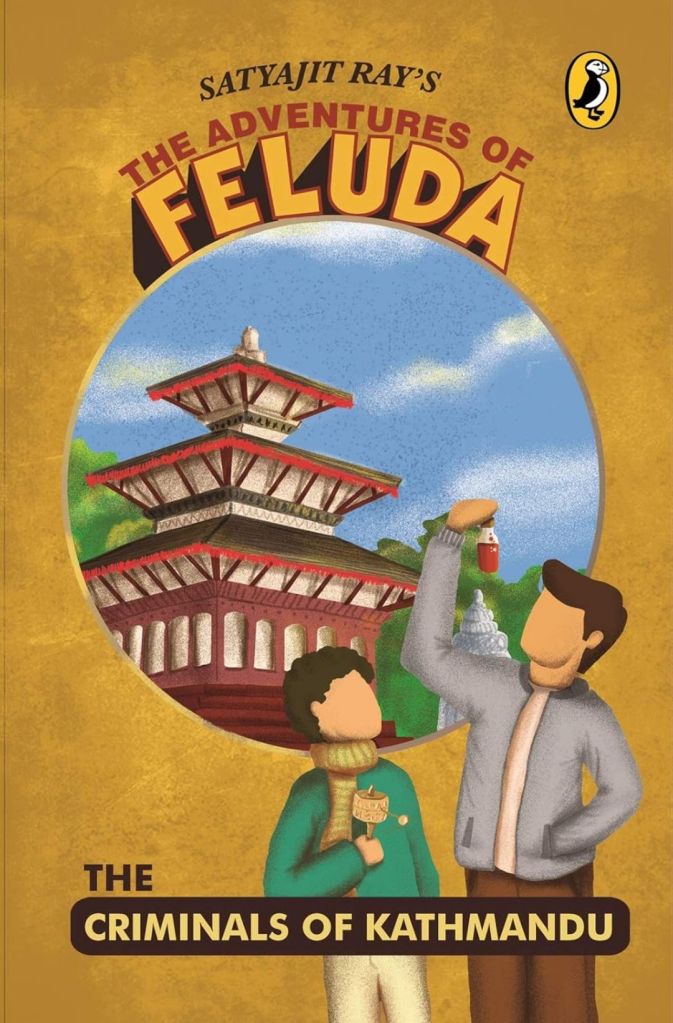
The Kathmandu Killers


If you look beyond the utter chaos of New Market or Sir Stuart Hogg Market or Hogg Shaheber Market, as the Kolkattans know it, you will find history and also some rare and renowned shops withstanding the ravages of time.

There is Nahoum & Sons, established in 1902, by Nahoum Israel Mordecai, a Baghdadi Jew, 26 years after New Market came into existence. With its original mahogany cabinetry , marble counters and assortment of Rich Fruit Cake,  brownies, marzipan, macaroons and many other authentic mouthwatering savouries, Nahoum is truly historic.

It’s here that our homegrown Private Investigator, Pradosh C Mitter aka Feluda with his Watsonian cousin Tapesh or Topshe and writer friend, Lalmohan Ganguly, happen to meet Mr. Anil Kumar Batra, a Travel & Tour Agency PRO from Kathmandu. Mr. Batra wants to consult Feluda on a personal matter. Feluda asks him to come to his home the next day.

After a while, as the threesom are strolling through the crowded market, they see Mr. Batra again in a totally different outfit smoking a cigarette and walking past them as though they have never met before.

The very same evening, Feluda receives a call from one Mr. Anikendra Shom requesting an appointment to discuss something urgent. Feluda agrees to meet him the next day too.

The next day Batra, as prearranged, arrives at Feluda’s and narrates a strange story.  At the Grand Hotel, where Mr Batra is putting up, the Manager of the Curio Shop asks him to pay again for a Nepali Kukri earlier bought by him. The Manager says the currency, previously paid  by Mr. Batra, has turned out to be fake. This comes as a shock to the respectable Mr. Batra because he has neither purchased a Kukri before nor has anything to do with fake currency.

Feluda has an inkling who may have purchased it – Batra’s look alike, who they have seen last evening at New Market. Feluda advises Batra that he can at the best lodge a complaint with Kolkata Police as there’s nothing much that he can do about this case.

After Batra it’s Anikendra Shom’s turn. However, instead of  Shom showing up as per appointment Feluda receives a call from Kolkata Police informing him of a murder that has taken place in a hotel and the person with whom the victim has last spoken from his mobile is Feluda.

It does not take long for Feluda to figure that the murdered person is none other than Anikendra Shom. But the surprise does not end here. When Feluda arrives at the crime spot the Police reveals that the weapon with which Shom has been killed is a Nepali Kukri bearing the label of the Curio Shop in Grand Hotel – the one which Batra has paid for!

On investigation it further comes to light that Shom had come from Kathmandu to meet Feluda.  Batra also hails from Kathmandu. Two separate incidents with a common connection – Kathmandu! Though Shom was unable to keep the appointment his murder indicates that he solicited Feluda’s help on a matter of gravity. Feluda considers it his moral duty to investigate the case on his own and find out who the culprit is and what is the motive behind the murder.

So the threesom proceed to Kathmandu whereupon after checking in to the Hotel they meet an old Bengali Professor whose family has been residing in Kathmandu for the past 300 years. Intrigued they sit down to have a chat.

But unfortunately, the gentleman is still grieving the tragic and sudden death of his younger son, Himadri, who collapsed after being injected with an anti-Tetanus vaccine. His family may have taken his death as a freak accident but not Himadri’s close friend who is convinced that there is a bigger trans-border racket, peddling in fake drugs at play, behind Himadri’s death. He has therefore gone to Kolkata to investigate the matter further.

Does Feluda need a second guessing at who the friend is ? It is Anikendra Shom who has himself met with a fatal end. Now Feluda has not one but two mysterious deaths on hand to solve and uncover the mastermind behind the heinous crime of marketing spurious life saving medicines. But little does he know that  in peeling the layers off the traffickers operating across borders he has to once again accost his arch nemesis – the unscrupulous Marwari business tycoon – Maganlal Meghraj.

Based on Satyajit Ray’s gripping novel, Jawto Kando Kathmandute (All Trouble In Kathmandu), Srijit Mukherjee’s eponymous web series takes the viewers from Kolkata’s iconic New Market to Kathmandu’s famous Pashupati Nathji temple to its vibrant local markets to the verdant Tarai Region in between throwing in glimpses of the incredibly majestic peaks of Gauri Shankar and Mt. Everest.

I have read the book and seen its varied adaptations (movie/serial/web series) countless times. And every time it has seemed more thrilling and exciting. A true classic never stops to spellbind the reader!

Originally in Bengali, the book has also been translated in English by Gopa Majumdar and is available on Amazon.

Walk In The Evening


This is in response to Esther’s Weekly Word Prompt.

This week’s prompt: Memory

Walk In The Evening

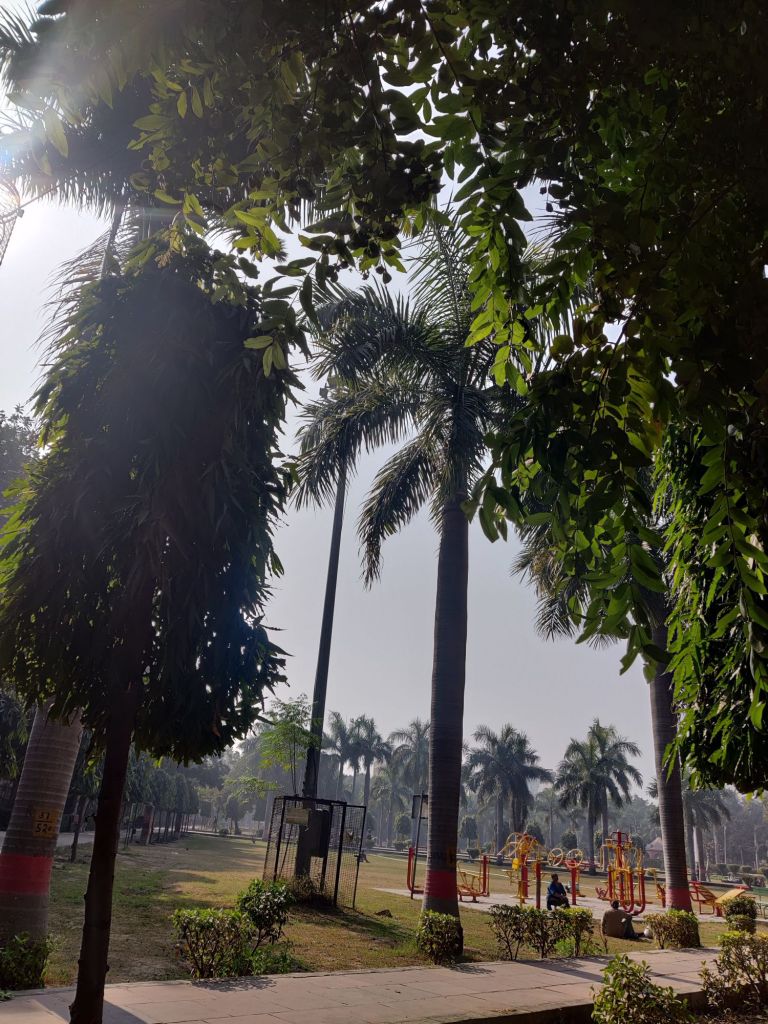
The park looks different in the evenings.

Children playing.

Dogs walking with their masters/mistresses.

Senior citizens, men and women, taking walks in groups or alone.

Young men jogging…sweating out the day’s stress.

Young women laughing , chatting , teasing each other. A few sharing secrets.

In one corner, the enthusiasts have put up a net and lights and playing badminton. Their cries of joy of playing well, disappointments at a bad or failed shot, shout outs, pulling each other’s legs, giving instructions to partners…hollering at an acquaintance.

***

After one round and a half I sit down on my favourite bench.

A few known faces wish me. Neighbours.

There are couples who stay all by themselves. Their children settled elsewhere in the country or abroad.

Dutt Sir walks with his nephew. His tricycle trailing behind.

Beenu Mausi takes her niece along. She asks questions incessantly. She replies back patiently.

Toddlers giggle learning to walk…flop down….and walk again uncertainly…

I hear loud discussions on politics, investments, failed policies, family reunion.

***

Then there is she.

I know her.

A widow.

Her husband died of cancer.

The joint family, she was a part of, has now fragmented. Some stay abroad. Some in other cities.

Her daughter was my nephew’s classmate – they were good friends. She was a brilliant student. Now married and settled in another Metro.

The mother stays all by herself.

In a smaller flat.

Their sprawling ancestral property has been sold off.

I see her smiling face.

A regular evening walker.

She has her timings. Sometimes she is off to the market after the walk. Sometimes she heads back home for an early dinner and her favourite TV show.

I try to peer through the fine lines on her face.

Are there remnants of dark memories there ?

Suffering? Agony ? Pain ?

Her eyes crinkle when she smiles.

Her grey hair in a tight bun shines in the moonlight.

She sometimes carries a tote bag… sometimes comes empty handed.

Where does she hide her emptiness ?

Or life teaches everyone to move on just like that packing up the past and shoving it in at the back of some old cupboard.

Did she let the cupboard stay ?

Or

Did she sell it off with countless other useless junk?

Sometimes even memories outlive their utility.

I sigh deeply and get up to go back home.

***

I must also bundle up my memories and dispose them off… Somewhere remote perhaps.

So that a smile may lurk in the mesh of deep wrinkles etched around my vacant eyes.

Pics : From Personal Album

The Rendezvous


This is in response to Rochelle’s Weekly Photo Prompt for Friday Fictioneers.

Word Count: 100

The cryptic note read “Meet me at Shelly’s”.

Taken aback,  I thought why could it not be the University? Library? Staff room? Auditorium?

I was cautioned about his “reputation” before.

But a renowned scholar himself offering to be my guide and mentor- I was overjoyed.

Despite all the misgivings, I arrived on time well prepared with notes, references, drafts and queries…

And waited…till it did not make sense any longer.

I knew his excuse would be undebatable.

And of course I‘d understand

At the expense of my Phd thesis.

90 Words

You can read the other stories here.

Author’s Note:

The flash fiction is based on experiences shared by Phd students who complained of the unnecessary delay in completion of their theses on account of whimsical mentors.

However, a sweeping  generalization in this regard would also be inexcusable because there are many who are extremely cooperative, helpful and sincere in guiding their students.

The Art Of Making Conversation


My father used to say making conversation is an art. A little surprising for a person who himself was very reticent and reserved.

A conversation can be educative, enriching and empowering. It can also be, unfortunately, a cause of distaste and disgust.

During my hospitalization, early last year, I was in a twin sharing room. During the visiting hours friends and relatives of patients would flock around as though it were party time. They would yap, laugh and joke loudly which could be entertaining or relaxing for the patient whom they were visiting but a nuisance for the one who was sharing the room.

People forget that  every conversation has its suitability and time.

And then there is another breed who are intent on making you depressed and sad.

When my sister met with an accident we’d be regularly getting visitors in the evening. It was then an accepted and almost mandatory social custom. If you did not visit your friends and relatives in times of distress you were considered unsocial. Even perhaps today the norm is the same only the ways of interaction and communication have changed.

On those home visits some made cheerful conversation while others embarked on citing very shocking incidents where the ailing or the  injured were either in graver physical conditions or had succumbed to their ailments or injuries. These anecdotes made my sister more miserable as she was completely bedridden and obviously in a lot of pain and agony – both physical as well as mental.

Understandably, pessimistic visitors agonized her more. At that time she earnestly needed moral strength and mental release. An appropriate conversation could have given her both, but alas, for some it was the time to make her realise how pathetic and hopeless a state she was in.

These incidents were coming to my mind because of a few specific interactions of late where the common query was how hard it was for me to spend time as I was now retired. To which I honestly replied that I hardly had any time to realise that I was not working or that I didn’t have a regular preoccupation. From the querists’ facial expression I got a funny feeling that they were not satisfied with my reply or perhaps didn’t believe me at all.

Those who ask such questions either want to give me a lot of gyaan (advice) on how to lead my (retired or otherwise) life or condole or console me on the state that I am in. Since I don’t give them the opportunity for either they quickly excuse themselves and disappear from the scene all together.

Both ways suit me fine because neither do I want to include snoopies nor uncalled for advisors in my social circle.

Period.