
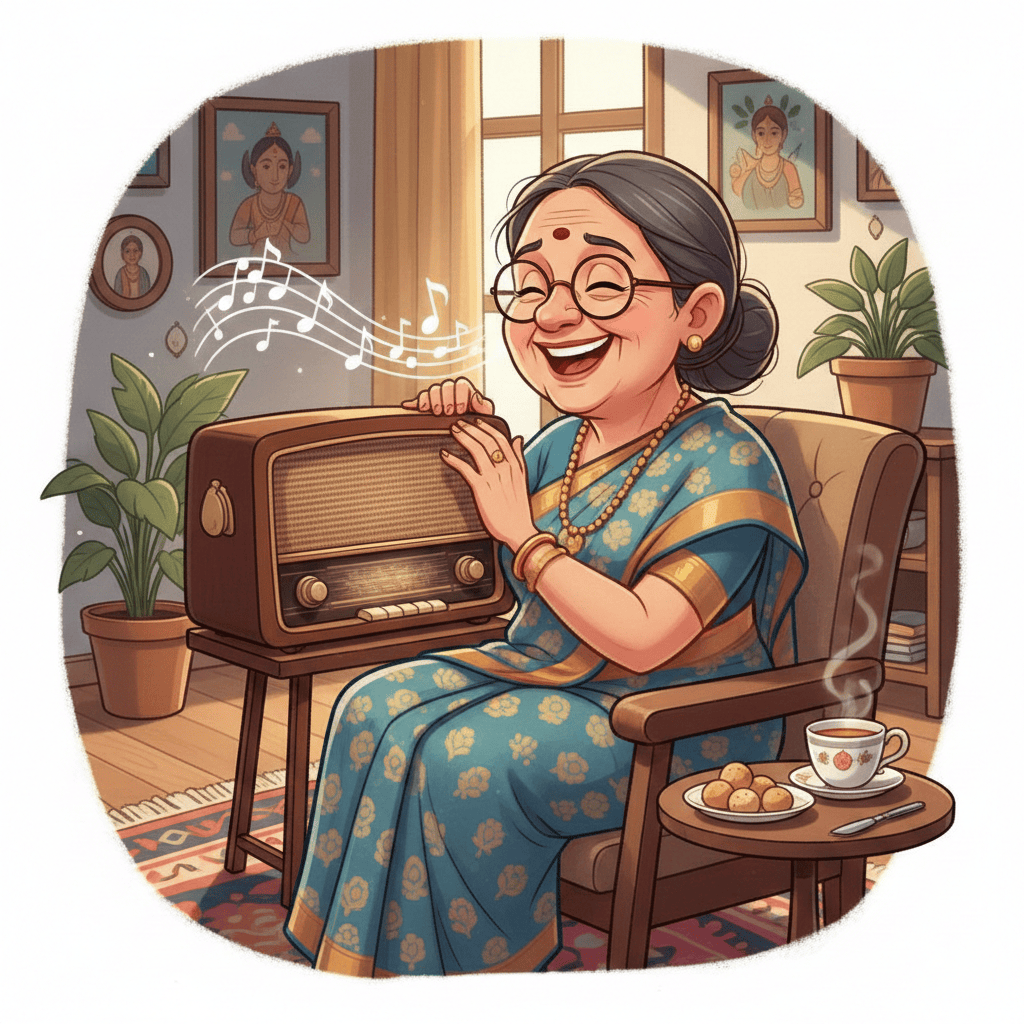
In my younger days there were very few avenues of entertainment. Sometimes if we were lucky we went to the Cinema Hall to watch a movie or attend a music concert. During Durga Puja Festival part of the excitement was to watch the homegrown theatre groups perform on makeshift stage. The colonies of well to do people at times brought the famous theatre groups from Calcutta to stage shows. These were all free of any entry fee.
However, at home it was either books or the radio. We had a good collection of Bengali books in the local library. For English books there was Gopal’s Circulatory Library in the local market. I don’t know whether Gopal himself read books but he always suggested good ones to my sister or got the ones which my sister or others wanted to read.
Night time radio was a staple. Though we listened to it in the afternoons and other times too. Good programmes were timed when the family would get together and listen. As now we have teasers and promos, in those days we had sponsored programmes on radio which gave us glimpses of new releases of films – the outline of the screenplay with snatches of dialogues and songs. The production banner and the entire crew , especially, the lead actors and actresses, were all announced in these programmes. The programme lasted for about fifteen minutes. Before these went on air their scheduled day and time of broadcast were made known through advertisements on the radio itself.
Much depended on the compere of the programmes. I remember Ameen Sayani was a hot favourite – his style of presentation made the programmes all the more interesting. His brother Hameed Sayani conducted the Bournvita Quiz Contest – a weekly broadcast – till his untimely death.
There were other programmes too like Hawa Mahal which broadcasted Hindi stories and plays written by well known and upcoming writers. Inspector Eagle was another of the favourites. I have forgotten whose voice over it was for the lead role in this suspense based series but he always introduced himself as Inspaictor Eagal laying a good amount of highly accented stress on these two words. There was another one where a lorry driver and his assistant got into trouble wherever they took their supplies. The programme ended with the both of them resolving the mysterious issues before moving on to another thrilling adventurous journey.
In those days there was the now extinct breed of radio announcers who inflamed our romantic imaginations with their deep, sonorous voices. Contrarily, their looks did not always complement their attractive intonations, however, they were the “influencers” of those times who compelled us to include an impactful resonance of conversational tone in our playbook of imaginary romance.
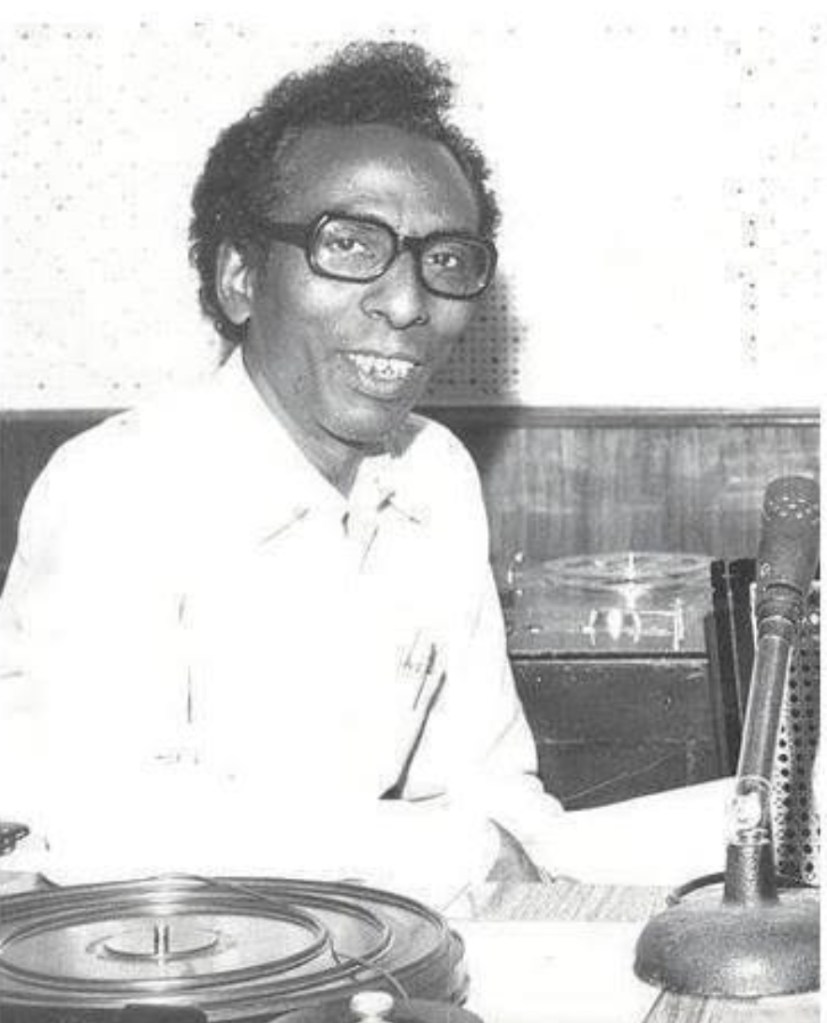
Now who could forget that soulful “aap sabko Qabban Mirza ka adaab,” – the opening line of the nightly musical programme Chhaya Geet – infusing a kind of mystical charm to the show. Qabban Mirza was not only a known announcer he also dabbled in singing in private gatherings. During those times Kamaal Amrohi, one of the finest film directors of Bollywood, was making his last period movie Razia Sultan, the Warrior Queen. Legend has it that Yaqoob, a black war prisoner enslaved by Razia fell in love with her.
The timeless music of the film was being composed by ace music director, Khayyam Sahab. While the female voice to the haunting scores was being lent by none other than the Nightingale of India, Lata Mangeshkar, for the male voice for just two songs Khayyam was looking for a grainy, sonorous texture befitting Yaqoob’s foreign antecedents – a far cry from the those-days’ reigning silky romanticism of Mohammad Rafi and Kishore Kumar or the dolefulness of Mukesh.
Somebody named Qabban Mirza. Khayyam called him over, heard him sing, decided that this was it, recorded the songs and the rest is history. Out of the two songs, khuda khair kare catapulted Mirza to famedom. His typical Urdu diction , the musical drawl over certain chosen phrases of the wistfully romantic Ghazal and above all his booming rendition which was un-Ghazal like but at the same time passionately evocative was what defined the charismatic enigma of unrequited love.
However, Mirza could not savour his popularity for long. Soon after he was diagnosed with cancer and in no time left for heavenly abode leaving behind two songs in his mellifluously granular, time defying voice.
Listen to the song…





Such a warm, nostalgic journey… it feels like sitting beside the radio and living those moments again 🤍✨ Beautifully written Geeta ji simple, real, and full of heart.🤍✨
LikeLiked by 2 people
Thank you so much Rajeshwari for patiently reading and relating to the post.
LikeLiked by 1 person
Such a different age
LikeLiked by 1 person
Thank you so much Derrrick 🙏. Thanks for reading. Yes, those were the days.
LikeLiked by 1 person
जाने यह कौन मेरी रूह को छू कर गुज़रा
एक क़यामत हुई बेदार,खुदा खैर करे
आप के पोस्ट ने मेरी रूह को छू लिया
मुझे फख्र हे में ने रेडियो का साथ नहीं छोड़ा,आज भी बेहतरीन प्रोग्राम्स आते हे,आकाशवाणी श्रीनगर और विविध भारती मेरे पसंदीदा स्टेशन हे.हवा महल,जय माला,भूले बिसरे गीत आज भी ब्रॉडकास्ट होते हे
रजिया सुल्तान एक हिस्टोरिकल फिल्म थी और हमें अपने स्कूल ने यह फिल्म देखने के लिए सिनेमा लिया था.
क़ब्बन मिर्ज़ा के बारे में पड़ कर बहुत अच्छा लगा
आप लिखते रहिए हम पड़ते रहें गे
LikeLiked by 1 person
बहुत बहुत धन्यवाद नुसरत। मुझे लगा कि इन बिती बातों को दोहराए जाने वाले पोस्ट को कोई नहीं पढ़ेगा। पर आप ने पढ़ा और सराहा उसके लिए दिल से शुक्रिया। आपने जिन जिन प्रोग्रामों का ज़िक्र किया है वे सब मेरे भी बहुत पसंदीदा थे। कब्बन मिर्ज़ा के बारे में शायद बहुत कम लोग जानते हैं और आजके दौर में तो शायद कोई भी नहीं जानता होगा। उनकी गाई हुई एक ग़ज़ल हिंदी फिल्म संगीत और गायकी को कहां से कहा पहुंचा दिया। और खय्याम साहब का बेजोड़ मौसिकी के तो क्या कहने। फिर से नुसरत मेरे साथ रेडियो के दिनों को याद करने के लिए तहे दिल से शुक्रिया।
LikeLike
गीता जी,रेडियो के दीवाने आज भी मौजूद हे, आपके पोस्ट से जाग गये तो जरूर कमेंट करें गे
LikeLiked by 1 person
I remember listening to Indian songs on radio at night when I was in FSc.
LikeLiked by 1 person
Could you catch Indian stations ? Or the songs were broadcast from Pakistan Radio?
LikeLiked by 1 person
No we could listen to Indian station. And also watch Indian tv with a tall antenna in the 70’s from Lahore
LikeLiked by 1 person
Oh! Ok… But I think TV came perhaps in the late 70’s. I am not sure…
LikeLiked by 1 person
No we could watch Indian tv – chitar haar in early 70’s too.
LikeLiked by 1 person
beautiful and heartwarming sentiments …🤍
LikeLiked by 2 people
Thank you very much Destiny
LikeLiked by 1 person
my pleasure…🤍
LikeLiked by 1 person
What a fantastic blog. I really enjoyed reading it and finding out about books and radio in your younger days. Thank you 🙏
LikeLike
Thank you very much. Sorry I missed your comment.
LikeLiked by 1 person
Nothing can match the nostalgia that All India Radio can evoke. The Vividh Bharati Tune was part of our lives.
LikeLiked by 1 person
Yes, bringing back sweet memories 😉
LikeLiked by 1 person
Surendranath Ghosh, popularly known as Dani Babu, remains one of the most enduring figures in the history of Bengali theatre. Born in 1868 in Bengal, he emerged during a transformative period for Indian performing arts when Calcutta, now Kolkata, served as the cultural centre of theatrical innovation and literary expression. https://www.indianetzone.com/surendranath_ghosh
LikeLiked by 1 person