
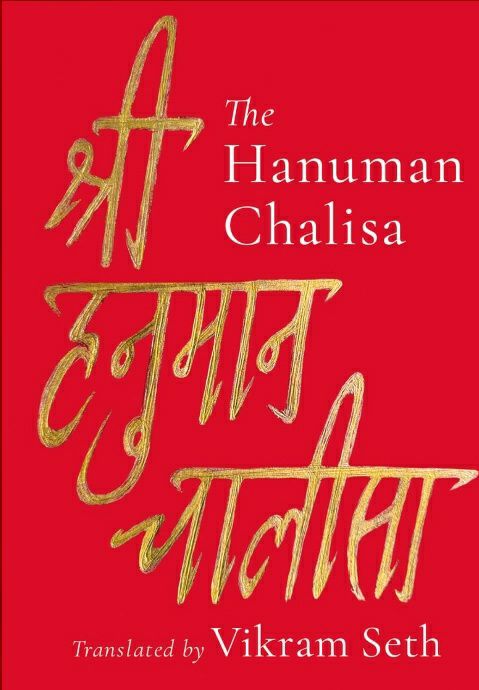
Shri Hanumanji is worshipped in the whole of North India by tens of millions of people. Tuesday is His day when devotees throng the temples, give offerings and recite the Hanuman Chalisa or the fortyverser in praise of the monkey God’s (Hanumanji’s) courage and devotion to Lord Rama.
There is hardly any devotee in this part of the country (Northern India) who does not know by heart the most loved and chanted verse or the Shri Hanuman Chalisa, written by poet Tulsidas in 16th Century Awadhi, a dialect of Hindi, spoken in some parts of Uttar Pradesh, the biggest State in North India in so far as electoral seats in State Legislative Assembly and Council of States are concerned.
Shri Hanuman is the son of Anjana (mother) and Kesari (father). He is also known as Vayu Putra or Pawan Suta , i.e. the son of God of Wind. He is the descendent of Lord Shiva (the God of destruction or de-construction). He is also said to be the incarnate of Lord Shiva himself.
Shri Hanuman is known for his courage and valour. He is the epitome of bhakti rasa or devotion to Lord Rama. When Ravana, the demon king, kidnaps Mother Sita , wife of Lord Rama, it is Hanumanji who transforms himself into sukhma shareer or subtle form to get access to where Mother Sita is kept as a prisoner. In his fury, he adopts the vikata rupa or enormously formidable form and burns down Lanka , the Capital of Ravana’s kingdom.
During the ongoing battle between Lord Rama and demon king Ravana, Lakshman, Lord Rama’s brother, loses consciousness. Seeing Lakshman in such a state, Lord Rama is heartbroken and loses the spirit to fight on. It is Shri Hanuman who flies like wind to bring Sanjeevani Booti , the antidotal medicine, to treat Lakshman. However, nearing the mountain, where the medicine is to be found, Hanumanji cannot identify the exact location of the antidote. In his eagerness to help Lakshman regain consciousness he picks up the entire mountain in both his hands and brings it as it is to Lakshman’s sickbed.
These and many other instances of indomitable spirit to serve his Master, Lord Rama, are cited in the fortyverser or Chalisa which comprises of Dohas or couplets and Chaupai or quadruplet. The language of the verse is lyrical and has a unique cadence. Irrespective of its length, the verses tend to fit into memory and roll out of tongue so easily like the fall of a mountain spring. The beauty of the poem lies in its simplicity. Tulsidas was a devout poet. He wrote the entire epic of Ramayana, known as Ram Charit Manas, in magical lyrical form, in such poetic measure that chanting its verses, fill the body mind and soul with a rhythmic sensation which is uplifting as well as calming, pleasure inducing as well as elevating.
I have described the poem and the legends surrounding Shri Hanuman at great length to make home the literary worth and spiritual value of this epic poem. It will be befitting to mention that Lord Rama, himself, extols Shri Hanumanji’s devotion and courage. He embraces Hanumanji and acknowledges him as no less than his younger brother, Bharat. Such is the greatness of this monkey God, Shri Hanumanji.
Internationally acclaimed Indian poet, Vikram Seth, who writes in English, took up the daunting task of translating the Hanuman Chalisa in English years back. It was a labour of love without any inclination to publish. It was only recently that he was coaxed to put to print this magnificent work of art and incalculable value.
Seth, in the introduction of the book, says that this translation is an endeavour to transmit the joy and magic of the most loved and chanted verse to those who do not understand Hindi or Awadhi. In doing so, he has made use of phonetic transliteration, however, with certain limitations. The alliterations, syncopations, retroflex sound, lyrical rhythm, meter, cadence, musical beat and incantatory pleasure of the original are beyond the scope of the language it has been translated in. Every language has its own limitations or sphere of expressions. What is intrinsically possible in Awadhi is not achievable in English. This, however, is not meant to demean or deprecate any language. English is as rich a language as any other. It’s only that the expanse of expressions in different lingual forms are inherently unmatchable. That is why, in translation, the beauty of the original is somewhat minimalized, if not lost.
To this, I take the liberty to add that certain words used in the original Awadhi has larger connotation than just it’s literal meaning. Seth has, perhaps deliberately, made omission or simplified these while fitting in the rhyme. For example, the phrase “charana saroj raja” literally means dust of the lotus (like) feet. Seth, while translating has only mentioned “dust of the feet”. The word “buddhiheen” has been translated as “shallow learning” whereas it has a larger connotation. Literally it can be translated as brainless. However, Tulsidas, by “buddhiheen” has implied the foolish pride that we humans take in being called intelligent or wise. It is actually illusory as we know not the bigger truths of life however learned and intellectual and “thinking animal” we may consider ourselves to be. True, it is difficult to accomodate the meaning in its entirety in one word. Similarly, the words “pratap” or “paratap” is just not “light” but luminosity indicative of a power which is blinding in its gloriousness, “bikram” is just not “courage” it is something more than valour and “vidyavaan” is not just virtuously learned but a combination of talent, wisdom and enlightenment.
One can go on and on nitpicking. The fact remains that Tulsidas’s quill was powered by extreme devotion. The magnificent verses are a burning example of songs of glory versified by a poet who himself was immersed in the ocean of bhakti rasa or devotion.
Seth has dedicated his work to Bhaskar, the protagonist of his first novel, A Suitable Boy, who knew the Chalisa by heart at a very young age and went on to fight against religious chauvinism in his adult years. Seth hopes that “the self aggrandisement and wilful cruelty” vulgarly obvious in today’s ethos will be replaced by the expansiveness, inclusivity and humanism innate in the verses of Shri Hanuman Chalisa. In its translated version, the best loved poem will reach out blurring the lingual barrier and touching chords in the hearts of millions more who have remained deprived of the musical lyricism of the fortyverser till now.
Undoubtedly, it is a book to be read, re-read and re-read even by those who are familiar with the original incantated version.
It is said that the one who chants the verse hundred times over is freed from all demons and shackles of births and rebirths. I have chanted the verse countless times. It has given me strength and support in times of need. Sometimes I have chanted the verse over and over again in a day. It keeps on playing in the back of my mind and is somewhere embedded in my memory unerasably. As soon as I step out of my house the verse rolls out silently from my tongue like a prayer.
Seth’s, I won’t say flawless translation, has made me once again aware of the ingrained strength, joy, magic and beauty of the original fortyverser thousand times over. That is what can happen best for a reader. In imperfections lie perfection. In “The Hanuman Chalisa”, may the readers find solace, tranquility, joy and spiritual transcendence.
Jai Shri Hanuman





A fascinating story. Given that Vikram Seth himself has written a novel in verse I am intrigued that he translated this book
LikeLiked by 1 person
Yes. His writings are beautiful.
LikeLiked by 1 person
He once wrote me a letter complimenting me on one of my advanced cryptic crosswords for The Times
LikeLiked by 1 person
Oh! That’s great!! Have you read his novels ?
LikeLike
Just A Suitable Boy
LikeLiked by 1 person
The literary worth of the epic poem is immense. It’s popularity is huge. The original provides such incantatory pleasure that is indescribable. It’s rhythmic cadence restores the cadence of body, mind and soul which is so necessary for physical, mental and spiritual alignment. Those who chant the poem in its original language may find the translation a bit downplayed but nevertheless it will be a great read for those who do not know the original language.
LikeLiked by 1 person
I had students in Delhi who used to recite the chalisa especially when exams approached. It’s nice to know that Vikram Seth has translated it.
LikeLiked by 1 person
Yes, whether you believe it or not it does give you courage to face life. Something to do with its lyrical cadence, I believe.
LikeLike
The North Indian languages, shaped by historical evolution, have made significant contributions to Indian literature and culture. From ancient Sanskrit to the modern vernaculars like Hindi, Punjabi, and Urdu, these languages continue to preserve the region’s cultural richness and diversity. Their literature and cultural significance remain integral to the identity and heritage of North India.
https://www.indianetzone.com/39/north_indian_languages.htm
LikeLike