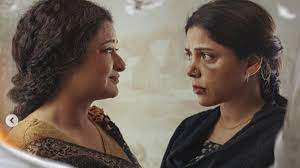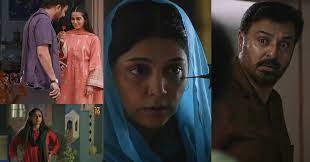
Homebound……..At Last!!


My latest posts are on a very somber subject – about life during the COVID-19 related Pandemic and Lockdown – which is actually taking a toll on me as I am reliving those moments while reminiscing and writing. For the sake of sanity, I just thought of digressing a little and talk about my experience almost a decade earlier. If anybody had then told what was going to befall on us in the form of Corona, we might have taken that as a crude joke and laughed a little. More pressing need of those times was commuting to and fro office. I was posted in NOIDA which is in the state of Uttar Pradesh (UP) and resided in Delhi. Under the then Administrative regime, offices and commercial hubs were getting decentralized. Many shifted to NOIDA and Gurgaon (in the State of Haryana). Crossing borders was the call of the day. But with the decentralization, development of means of transport did not coincide. The UP Administration was imposing kind of entry tax on vehicles at the borders which gradually stopped the Chartered Buses by which most of the office goers commuted to and fro. The proposal to connect the States through Metro was only on papers. The only option was to drive up and down by car which was pretty expensive. Car pools and later Pool Vans became the order of the day.

We (three of us) pooled in with one of my senior colleagues who was eccentric by nature to say the least and a chaotic driver. Often he sat late in office pretending to be busy (without work) which delayed our return home. We could not afford to annoy him as we desperately depended on his car (not him, mind you). This arrangement, though not very convenient, continued for more than a year, till I shifted to a van pool and that sorted a number of problems. However, that one year was bothersome to say the least. The gentleman is no more so I can safely record that once he had the audacity to propose me for a ride to Connaught Place (CP) with him. I, obviously, refused politely but firmly. I could not make out whether he was upset or angry on account of my refusal but he never came up with any odd proposals thereafter. I felt awkward for quite sometime in his company as I did not know how to place him after this unexpected turn of event. He was my neighbour. He was my colleague. More importantly, his car was the only mode of transport I had for commuting to office and back.

It was also the time when I had started writing short stories. The ideas, crazy enough, came from the varied experiences I had to face in me-life including the aforementioned one. This post will be a little longish as I wish to recount the anecdotal story. I had earlier published it in my other blog on blogspot.com (link inserted). I call it a spooklet though I don’t know whether there is any word like that in English language but the coinage sounds impressive and implies to be a humorous combination of a spooky tale and an account based on facts. But more intriguing to me now is what prompted me to write such a story then … Was I trying to get back at my colleague in this manner?

Read on and let me know what you all think about it…(I have deliberately used only first initials of the names to maintain anonymity of the characters)

The Story :

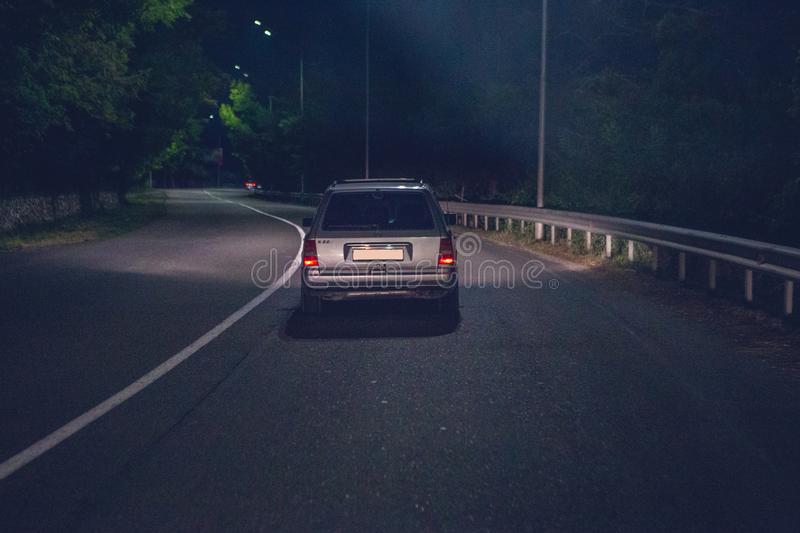
I do not know why Mr. R always takes the wrong turn and loses his way at Gyaraah Murthy. It’s late and the roads are almost empty except a few cars zooming past. Not a single passer-by whom we can ask the route or the right direction.

Its mid-December. Bitterly cold. Sitting late in the office is not my choice-work-culture but Mr. R, in whose car we all pool in, leaves us with no other choice as he loves to pretend hard work after office hours. Alternate transport is next to nil. Result – stuck up at Gyaraah Murthy, hungry, angry and late.

K sleeps peacefully. It’s cozy inside the car. The windows are pulled up. We are five of us in a Maruti 800 including Mr. R who myopically scans the desolate landscape and suddenly asks “Isko Gyaraah Murthy kyon kahate hain?” (“Why do they call it Gyaraah Murthy”)

What difference does it make Mr. R whether it is Gyaraah Murthy or Teen Murthy once you have lost your way!!! I curse the Government silently and its decision to decentralize the commercial and office areas of the city without sufficient transport network connecting to the residential suburbs.

Mr. R rotates the steering wheel indecisively. A, his secretary, tries to guide him to the right direction. A futile exercise as he is as knowledgeable as our driver is. I, who is famous for losing my way home, do not want to enlighten Mr. R with my superior road sense.

A few more minutes pass by in indecision. Mr. R takes a turn. We move on in the darkness knowing not whether it is the right way. I try to lighten the atmosphere with an “amusing anecdote”.

Another desolate, winter night. A long, winding stretch of dark road. An autowallah (auto driver) is returning home when he is stopped by a beautiful girl dressed in bridal attire. She flaunts a cascade of long mane rippling down to her waist and a beatific smile to compliment her breath taking looks. She requests the auto driver to drop her home a short distance away as her car has suddenly broken down and the thoughtful driver has toed the vehicle away to the Workshop leaving her waiting in the darkness. She is scared and pleads help. The driver takes pity and agrees to drop her.

Although it’s a short run, the journey seems interminably long and the end of the
road progressively distant. It is odd the way the young girl is left alone on the dark, discarded road and the driver disappearing with the car before finding her a suitable transport. The drivers, nowadays, are irresponsible and do not have any sense of propriety, muses the autowallah.

It is also surprising the way the girl is dressed. Her adornments twinkle in the dark interiors of the auto. Is she running away from her home? Or planning to elope with somebody who has failed to turn up at the last moment? Disheartened the girl has decided to return home to her parents….or perhaps……something else…..something more ordinary, mundane, least exciting. The autowallah races on as does his mind. Whatever the reasons may be he feels sorry for her. He has a daughter too. A young girl of her age. The girl seems upset and perhaps uneasy too. There is a kind of restrained remorse about her. As though she is in mourning.

The auto-driver tries to pick up a conversation with her to alleviate her uneasiness. But the girl seems reluctant to talk and replies only in monosyllables. The driver still carries on. A kind of soliloquy. At least the journey will come to an end faster if a dialogue, nay a monologue, is struck, so thinks the autowallah.

He talks of the latest price hike…. the rising price of vegetables…. the survival of the poor is at stake…. the Government is doing nothing……the politicians are just making money and filling up their pockets…..and then the disparities……look at the way people squander money!!!!!!!!!…….the film stars, the politicians……the rich and the famous…………and of course these serials………….spoiling the children……he has bought a new TV on installments……but now he feels it’s a mistake……the children only want to watch serials and refuse to study…..and what serials, mem’saab…..the other night they show a girl stopping a car in the dead of the night…she beguiles the driver to give her a lift…………..and takes him away to a jungle and suddenly vanishes into thin air………….but before the disappearing act as she picks up her long dress to disembark from the vehicle her feet are visible ………………”woh chudail this uske paaon ulte the!………(she was a witch with upturned feet!)”

At this juncture of this one-sided conversation, the young girl suddenly puts forward her feet. and asks “jaise mere hain?(like mine?”………………………The auto takes a sudden wild turn, lurches forward and almost does a vault on its rear wheels and then blank…..nothingness……… Regaining consciousness the driver finds himself at the ridge in the other end of the city, lying spreadeagled on the rugged terrain hidden by a cluster of thorny bush, his uniform torn and his wallet gone; his auto lies at a distance upturned, the front wheel of the three wheeler almost stuck into a scraggy tree.

Mr. R, who has been listening to the story intently, is unusually quiet. He turns a bend and almost rams into a lone figure standing in the middle of the road. He jams on the brakes. A girl frantically gesturing for a lift. Her long hair sways in serpentine coils against the backdrop of the night sky inadequately lit by the distant stars. Her face is almost invisible in the half light. Mr. R swears under his breath and swerves the car to the left with a jerk. A fraction of a second. The girl is missed by an inch of a space. Narrow escape!! K jolts up with a start and asks where we are. We fill her in. She responds quickly and points the right direction. Mr. R takes a screeching U turn and accelerates. We speed up at last homeward.

Post Script: Mr. R. is avoiding Gyaraah Murthy since then and we are leaving office an hour early now.

You will also read this story on pratilipi.com
Trivia :

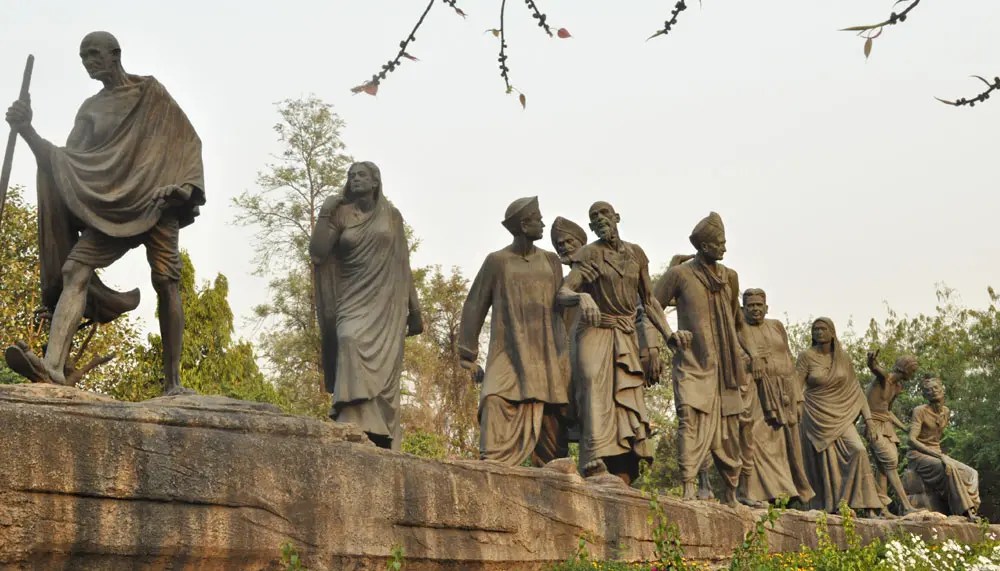
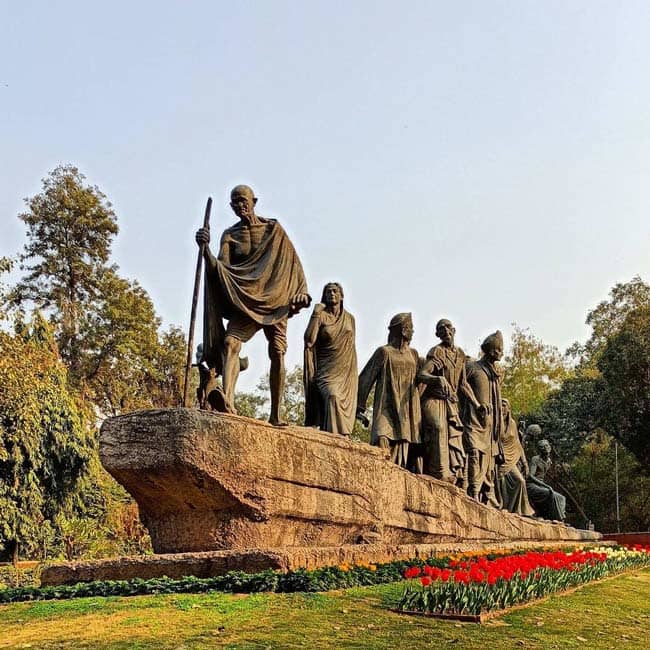
Gyaraah Murthy – “The massive, glistening black sculpture depicting Gandhi’s iconic Dandi March of 1931 stands proudly in the heart of the city, easily visible on the Sardar Patel Marg, near Willingdon Crescent. This poetic sculpture by veteran artist and sculptor Devi Prasad Roy Chowdhury shows ten Indian people following Gandhi on his path-breaking Civil Disobedience protest, hence the name – ‘Gyaraah Murthy”
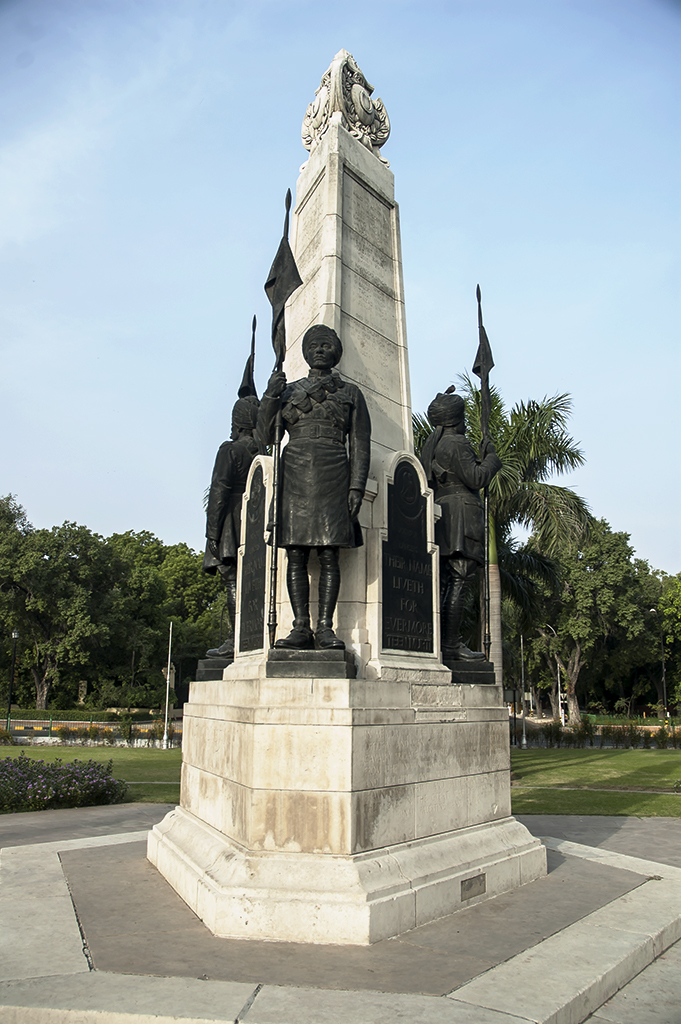
 Teen Murthy – “Teen Murti House; formerly known as Flagstaff House is the former residence in New Delhi of the first Prime Minister of India, Jawaharlal Nehru. He stayed there for 16 years until his death on 27 May 1964. It was designed by Robert Tor Russell, the British architect.

The house is named after the Teen Murti (literally “three statues”). The memorial comprises life-size statues of three soldiers, and was built in 1922 in the memory of the Indian regiments who participated in World War I with the British 15th Imperial Service Cavalry Brigade in Haifa, which was then part of the Ottoman Empire.”
Curse Of Corona – Part III


Part – I can be read here

Part – II can be read here

In the beginning of the year 2021, my mother got hospitalized with multiple infections. Considering her age (late eighties/early nineties). doctors were not very hopeful that she would be able to make it. But with God’s blessings, she survived. But her health was frail and immune system was very weak. Soon after, she was afflicted with Corona. The diagonosis was moderately severe – an ideal case for clinical isolation, i.e., re-hospitalization. However, her attending physician knew that she being in advanced stage of dementia, total isolation would have more negative than positive impact on her. Dementia patients do not take kindly to any change of scene. They need those who they are used to seeing every day. So, though professionally speaking, hospitalization (complete seclusion) was required, however, as a necessary deviation (specific to her case), under physician’s advice she was retained at home but her room was practically converted into a hospital ward to provide all the needful treatment and ensure the requisite safety measures.

This was the most difficult period that I went through during Corona. It was a time when the immediately required medicines were not available/was in shortfall in the market. There was one particular shop alone in the whole area which had the anti-virals. I remember standing in queue in the heat of the Capital’s peak summer afternoon to procure the tablets. Later, I heard the experiences of my colleagues which were worse and more disturbing. As the number of patients peaked, these tablets became more and more hard to get. One of my senior colleagues, whose husband was afflicted with the disease, had to get it couriered from Chennai as all the local shops denied availability. However, she also received telephone calls from anonymous callers who confirmed that they could deliver the said medicines at a certain price!!

My mother’s physician was a COVID-warrior. Yes, that was the term given to all those who, despite the challenges of the deadly disease, did not hesitate to provide essential commodities and services to general public. Doctors, nurses, medical staff and attendants, security staff of hospitals, Diagonostic Centre workers who collected samples and swabs from COVID afflicted homes. The regiment also included those who delivered LPG Cylinders (Cooking Gas) to homes, Tank Truckers who supplied fuels (Petrol/Diesel/CNG) to the Pumps and Stations and Defense bases, the Paramedics, the Ambulance Service Providers and many more. These men and women put their lives at risk to provide urgent facilities to those who were at risk or could be at risk of contacting the disease.

These were the times when the concept of teleconsultation and consultation through video calling became in vogue. Both the physicians who attended my mother were available, even at the oddest hours, to provide consultation over telephone/video calling knowing that my mother’s was a critical case. God bless them both. Not only them, but one of the Doctor’s wife (who is a dentist) actually gave me the address of the shop where I could find the much needed medicines when all the shops refused to provide the same.

As a gesture of acknowledgment of their services, five star hotels, which were going without business at peak Corona period, opened their hospitality (charge free) to the nearest hospital staff who were quarantined there at intervals taking breaks from their onerous duty. I find every reason to chronicle the good and the bad of the formidable times that the world encountered as a reminder of the great deeds humans are capable of during worst periods of history and probably it is this virtue that pulls along mankind towards survival and progression in the face of near extinction.

We Indians have this weird sense of almost obtuse fatalism which at times proves to be something akin to, may I say, a positive driver. I often scolded my vegetable seller for not properly tying the mask which would be dangling from either ears or failed to cover his nose fully. In reply, he would flare up his nostrils and say, “Didi! Gareeb ko Corona nahin hota” (Corona does not happen to the poor). To which I would retort, “Can Corona differentiate between the rich and the poor?” He did not have any answer to that but was not convinced either.

During mother’s hospitalization, my nephew asked one of the hospital guards how he tackled with his personal safety and health issues. The guard also had a similar stance like that of my vegetable seller which was something like “Who says humans can infect each other with Corona. It is for God to decide…” which stupefied my nephew and he could only shake his head in utter astonishment.

But the incident that touched me the most was when I fell sick in the cab by which I was commuting to office one fine day post lifting of lockdown. Just before that I had had a mild altercation with the driver. I don’t remember the exact cause. However, midway I had to request him to pull over as I was feeling hopelessly sick. He quietly did so and waited till I was well enough to continue the journey. Neither did he object nor was he terrified. He just told me to unmask my face. I was horrified and told him it would not be okay for either of us. To which he replied, “Don’t worry ma’am. I have carried many a Corona patients, my relatives and neighbours, in this car to the hospital and nothing has ever happened to me. You pull down your mask and breathe deeply it will make you feel good.”

Paying heed to his “ancient wisdom” I thanked and blessed him silently.

….to be continued/-

Curse Of Corona – Part II


Those who have not read Part – I can read it here.

The worst hit was education. All schools and colleges were shut down indefinitely. I remember, one of the cabbies lamented the lack of discipline at home. “There is no control over my children. They play all day long. When schools were open they would attend classes regularly and had a routine. Now, you cannot tell them anything.” I was surprised how concerned he was, more so, because generally, the milieu he belonged, did not spare much time or resources on educating their offspring. It was, in a way, heartening to know that now they too understood and valued the necessity and goodness of education.

Subsequently, the concept of online classes evolved. Students of families having an atmosphere of learning at home managed. But those who were first generation students had problems in understanding and pick-up. One big issue was these classes could only be attended on smart phone and many could not afford one or more than one.

If the man of the house owned a smart phone, he could not spare it for his child as he had to take it with him to work . A tailor needed the phone to view samples and specifications shared on Whatsapp according to which he had to cut the cloth. The style of working was also changing with change in time and everyone had to adapt to it fast. However, if working hours coincided with class times then either the bread earner or the children had to forgo their medium of earning or learning. Tough choice!

Pre-COVID days I was an on-store purchaser because I thought I had more choice and would be able to take informed decision looking around the rows and rows of goods. Lockdown compelled people like me to shop online. Gradually, the idea stuck as I realized it was a great time saver. However, choices were few online and prices higher at times. “Kam mein zyada” implying “to be contented in less” became the dictum of the day. We per force simplified our lives which was much needed anyway. I still continue with that as it suits me and is part of the process of de-cluttering which was direly wanting in me-life.

There were other blessings in disguise too. The bees and the birds came back. The sky became a shade of detergent-washed blue. With nil vehicular traffic on road pollution decreased. Air became breathable which meant less of pulmonary issues except those induced by Corona. But these were shortlived. With the lifting of lockdown and restoration of ‘normalcy’, traffic has become worse taking a greater toll on the environment.

Pre-COVID, “Work From Home” or WFH was a concept familiar to the Private Sector only. For us, working in the arms of the Government, this was a totally new and challenging concept. With the sudden imposition of the lockdown, we, at first, sat home clueless. We were not in the habit of keeping back-ups of office work at home. Little that we could do was just through e-mails. Remote access to our office PCs was only available to a few because of technical constraints. Ours is a Fortune 500 Company dealing with essential commodities and services. Work could not stop. But unfortunately, the infrastructure required to work from home was not up-to-date and delivering the job became difficult. Many got used to it even later and would happily WFH while I still prefer to go to office and work as it reinforces my age-old routine and gives me certain regulated hours to singlemindedly focus on my work. During Corona times, the exigencies at home always took priority and was a deterrent to continuity in work.

During the first lockdown, our Organization very thoughtfully and creatively made it mandatory for all of us to self-study online. We have an e-portal for upgrading our knowledge set through various short courses. Spread far and wide with global footprints, a lot of developments, innovations, researches and experiments are always ongoing in our Company. Every Department is a Specialized Unit where one is not conversant with the functioning of the other. Learning about the workings of the various Departments and their specialized skillsets, when we did not have anything else to do but worry about the next day, was fun, educative and a positive distraction. At the end of each course, we would share our assessment results with our HOD (one of the participants) on WhatsApp and a friendly camaraderie pulled us along as we happily competed with each other within the Department on how many courses could one complete in a day. Gradually, our performance time stretched beyond the stipulated working hours and became flexible.

To be continued…/-

My First Podcast


Hail Motherland – POETRY READING

A song written by famous litterateur Shri Bankim Chandra Chattopadhyay to pay homage to motherland on this Republic Day of India.
  1. Hail Motherland
  2. Rhyme Fir Children
  3. Poetry – Inheritance by Ankita Sharma
  4. An Introduction
  5. MY INTRO TO PODCAST – MY FIRST PODCAST

Flash Fiction …..


Curse Of Corona – Part I


Even in the beginning of 2019 we did not know what lay in store for us by the end of the year and beginning of 2020. In March 2020, when the COVID-19 related pandemic resulted in total lockdown in the National Capital Region (at first on voluntary basis for a few hours and then indefinitely) followed by other states and cities one after the other, we did not know that we were witnessing history.

We phoned our housemaids not to come till it was allowed by the Administration. My mother’s night attendant, Manju, got stuck with us as no one was allowed to travel. Also, there was no means of transportation available on road. Heavy police patrolling continued everywhere. As our block is situated on one of the busy National Highways, it was unusual for the traffic-ridden road to bear a totally deserted look barring the patrollers and one or two private vehicles which were on-road due to some emergency. The only noise that tore the silence was the siren of the ambulances rushing past. The hooting never seemed to stop. It was frightening.

Manju continued to stay with us for two and a half months which was at that time a great relief. My mother is a bed ridden patient suffering from many chronic ailments and complex medical history. It would have been very difficult for me to manage her alone in those days of crisis. The only means of communication Manju had with her family was through mobile. However, her family was not too worried as they knew she was safe with us and had a source of income while many were rendered jobless.

Factories, shops, malls, mandis (wholesale markets), retail stores, medical clinics, therapy centers, schools, colleges, institutes, offices – all closed down – where men and women worked either on daily wages, fortnightly payments or monthly salary. Workers and their families living in rented tenements had to vacate the premises being unable to pay the rent. Many stayed in their work premises but when these shut down they were compelled to leave as they did not have money to sustain themselves for indefinite periods of curfew and lockdown. For once we were made aware of the plight of the daily wage earners who survived on what they earned working each day – the labourers, the construction workers, the dhaba (road side eateries) workers, the street food vendors, the vegetable and fruit sellers, the cart and rickshaw pullers, electric or battery rickshaw drivers, the bus/truck drivers, cleaners, helpers, cabbies and many others.

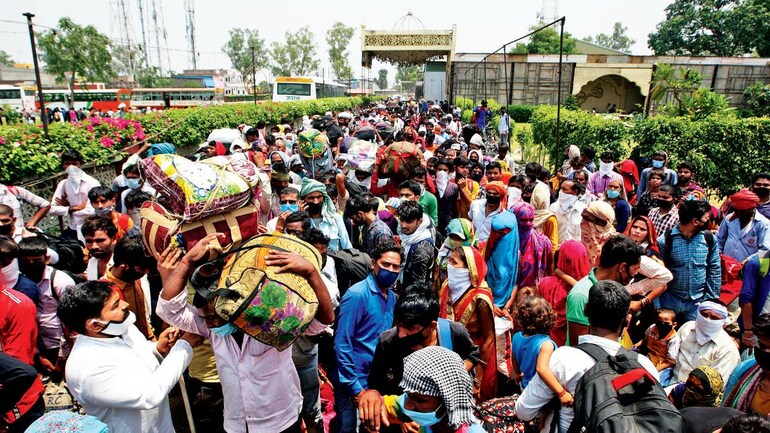
One evening I was walking my dog outside the Block on the service lane when I heard this flip-flop sound behind. Turning around I saw a middle aged couple walking quietly down the road. The man had a loaded bag on his shoulder and the woman carried a child. The sound of their chappals (foot wear) echoed on the asphalt. I wondered where they were off to not realizing that I was witnessing one of the many families fleeing the city – the historic exodus of migrant workers which hit global headlines.

Soon the TV Channels started telecasting about thousands and thousands of labourers migrating from the Capital to their home towns and villages. But they got stranded at the Bus Depots and Train Stations as no transport was allowed to ply. They waited for days together for some means of carriage without proper food and shelter. Subsequently, how these families traveled home on carts, tempos, tricycles, overloaded trucks and containers defying the norms of social distancing were telecast on every news channel. A teenage factory worker covered a distance of more than thousand kilometers on his bicycle to go to his village. He cycled during the day and rested at night. Strangers came to his aid. Gave him shelter to sleep and food to eat. He crossed jungles and rivers and several towns and villages before he arrived at his own village Police Station where he was quarantined for a fortnight. His only lament was that he never accosted any ghostly figure, he had heard of, while riding through forests after dusk!! His story was in the papers and everyone marveled at his grit and courage.

And then there were people who just walked miles after miles, penniless and empty stomach, carrying children on their backs, shoulders and laps. They had sore feet, were dehydrated and starved for days. But more important is that even after restoration of normalcy, these men and women have not come back to the Capital to this day. We colloquially refer our country as a ”jugaad” nation. ”Jugaad” is quite an untranslatable word which can be best described as fishing out or cooking up an unthinkable alternative or option where exists none. When nothing seems to be working we say, “Bhai! Ab kuchh jugaad lagao” which means “Bro! Now cook up some alternative.” So, we often wonder what “jugaad” these migrant workers must have deployed so as to obviate the neccessity of returning to the city to work anymore.

Thus, there is a dearth of handymen, house helps and such other workers whom we used to take for granted in the pre-COVID times and now feel the pinch of their absence. Such humungous crowd populated the city but did not belong here! It is an eye opener. There has also been a conspicuous change in the work pattern of those few who are based in the city and never left. House helps earlier working in four or five households now prefer to work in one or two where they have been working for long. Perhaps it makes them feel safer job-wise. Also, many families have untimely lost either the lady or the man of the house to COVID. These families also feel more comfortable with their old maids and house assistance.

In short, lives in the cities post COVID are not the same any longer.

More later…..

To be continued…/-

O! Fistful Of Dust


Sipping an over sweetened cup of coffee, I once again wonder whether religious differences can be a cause of marital rift in our society. Rather, atheism! Can it be a good enough reason to place a marriage on the rocks? Perhaps, in our society, it may not be a major issue. I have not seen married couples bickering over religious beliefs. I have seen many inter-religion marriages sustain the ravages of times. I have seen many couples having rigid religious differences yet they have pulled along. The woman of the house, especially, quietly tolerating the loud and crass denunciation of existence of God by the patriarch while she has diligently gone about her daily religious rituals.

We Hindus are, by nature, all encompassing in so far as different religions are concerned. We give space to divergent religious ethos. We embrace the various practices of other religions. Not only that, given the vastness of the sub-continent, amongst ourselves we have wide ritualistic differences pertaining to different geographical and demographical areas – East, West, North and South. We may not even be aware of many religious practices followed by other communities, tribes, lingual groups, castes and creeds. They are so varied! But what we have always been taught is to respect the beliefs of others even if they are diverse and different from ours. All said and done, there are incidents too of intolerance and irreverence perpetrated by certain sections of society motivated by hidden agenda, political conflicts, personal/communal sense of injustice/honour and marginalization. There are advantages and disadvantages of being part of a pluralist society.

However, atheism in itself is not being against God. An atheist may have a different concept of God. He/she may believe in some other form of power which governs the universe. An atheist can also be a person of values. He/she can be a person of good character. Being an atheist does not essentially mean a person of vices and atheism itself is not a punishable act. In Hinduism itself there is a sect which does not believe in idol worship. They believe in a formless benefactor orchestrating our lives for our own good and towards a greater good. This sect is known as Brahmo Samaj (in the East) and Arya Samaj(in the West). What I am driving at is religious pluralism is how one’s society accepts and attunes its members to it.

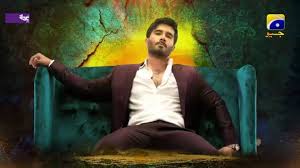
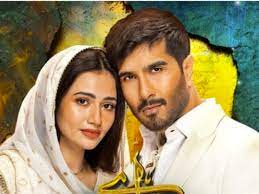
This long discourse is a preface to again a Pakistani drama I am watching now – Ai Musht-e-khaak which literally means “O! Fistful Of Dust”. No brownie points for guessing that the epitaph is for us flawed humans. The drama is drawing towards its end and one may say shall be quite predictable in its closure. But uniquely, its not.

A Pakistani boy, Mustjabuddin Ahmed aka Bobby (Feroze Khan) is taken by his father and brought up in the West (US of A) from childhood. His mother remains in Pakistan. Later the father leaves him or dies is not quite clear. But the boy settles down away from his country, gets educated, imbibes Western culture (particularly the negatives) grows up to handle the family business which is seemingly large and is being considered the most eligible catch for any young girl since he is well to do and good looking. He returns to Pakistan and to his mother for a short visit and supposedly falls in love with a beautiful, homely and down to earth girl, Dua (Sana Javed) whose whole being is deeply entrenched in Islam. In fact, she is doing her Masters in Islamic Studies under the mentorship of an Imam who has renounced all material pleasures, wealth and luxuries (he is also a wealthy man in his own right) in his quest for spiritual elevation. Dua has a twin brother, Dayaan (Assad Siddiqui) and their whole family is religious and God fearing.

Dua at first rejects Mustjab’s proposal because she feels that they are poles apart which is a fact. He is arrogant, egoistic, so called “liberal minded” and self-centered. He takes it as a challenge to woo Dua as she is the only girl who has had the gumption to refuse him. His mother, who is also Dua’s mother’s cousin and friend, wants her son to marry Dua because she feels that Dua is the only girl who can bring her wayward son on the right path. Mustjab charms Dua into marrying him but gradually Dua learns that her marriage is based on a pack of lies. Mustjab, who is so sure of himself, meticulously plans every move in life and has a go-getter attitude, is a non-believer and does not follow the daily rituals of obeisance to God. In addition, he misbehaves and mocks all those, including the reverent Imam Sahib, who believe in God and religious rituals of prayers and thanksgiving.

In comes Mustjab’s ex-girl friend to spoil the remnants of marital bliss which is already diminishing each passing day. So a day comes when Dua asks for divorce and separates from Mustjab. Mustjab is not broken hearted but furious. He decides to bring her back in his life by hook or by crook. On the other hand, Dua, though separated from Mustjab, cannot get over him. This I fail to understand. Is it attraction of the opposites? How can anyone be so besotted with an over possessive, toxic lover? Anyhow, many twists and turns later, it is to bring back Dua from the clutches of death that Mustjab finally bows down to God for forgiveness and atonement. But God’s engineerings are unbeknownst to humans and Mustjab has to pay a very heavy price for his undoings.

Here I am reminded of another Tele Serial Shehr-e-Zaat with a similar story line where a rich and beautiful girl compels a handsome boy to marry her. However, she fails to get the kind of attention she desires from her husband after marriage. By and by she comes to know that her husband is having an affair with one of his factory workers who is poor, ugly and scheming. She is heartbroken and her self- confidence crumbles as throughout her life she is used to getting what she has wanted. Her grandmother who has always spoken to her about the power of prayer and kindly deeds draws her towards religion. The rich girl goes to the mosque for the first time to pray. As per ritual she has to do wazoo i.e. a process of purification wherein the devotee has to wash his/her face, hands and feet before sitting down to pray. But the act of purification or the way wazoo is to be performed is something which is learnt from childhood. The rich girl has never learnt to do wazoo. A little girl, watching her performing wazoo, tells her that she is doing it all wrong and teaches her the right way to do it. Embarrassed and frustrated the rich girl comes back home and accuses her mother for not teaching her the right way to do wazoo and pray. “Why did you not teach me how to pray ? Why did you not tell me how to perform wazoo? Do you know how lonely you have made me?” She cries. I found this statement extremely powerful. I have seen many take to wrong means to cope in times of adversity. But it is only a strong spiritual leaning which actually helps you to survive prolonged periods of sufferings. Without this spiritual backing one is completely on his/her own – weak and failing.

More than lack of faith, Mustjab appears to be lacking in values and ethics. He is anchorless. Blinded by his own stubborn will he does not realize how insensitive and callous he is to the feelings of others or the ones he professes to love more than himself. This anchorless waywardness is borne out of his lack of grace and humility. He forgets he is just a weakling of a human being and not God.

Ai Musht-e-khaak is a highly recommendable drama not because it is preachy or didactic but because it deals with a very strong subject. The differences between Mustjab and Dua can be narrowed down to religious issue or signify a larger connotation – that of cultural barrier. Both come from diametrically diverse familial backgrounds and upbringing and adhere to polar opposite ideologies. I have seen many marriages falling apart because of cultural differences. Unfortunately, it is very difficult for our society to appreciate the irreparable and irreconcilable damages that these differences do to a relationship. How difficult it is to stay put if man and woman do not understand and respect each other’s thoughts and feelings and beliefs, It is easy to understand a marriage breaking apart due to domestic violence or dowry issues because these have tangible and perceivable impacts. But the divisiveness borne out of mental incompatibility cannot be shown, seen or quantified.

I will sign off with my pet lament. Why for God’s sake such meaningful serials are not made for Indian Television? Do we have dearth of issues? No. We don’t. But we either circumvent these or overdo so much that they become unpalatable and difficult to watch through.
Alas…

Going Ga Ga


This is on my esteemed co-blogger J.Mathur's expressed wish that I am converting one of my FB posts into a blog post.

For all those who are going gaga over the film Gehraayian (released on Amazon Prime), I don’t wish to police over what it was all about (infidelity, dishonesty, duplicity etc. etc.), rather I want to enlist my supreme take-aways from this two and a half hour ordeal (though I was wise enough to watch it in bits and pieces…..)

(1)

Blame your parents for whatever goes wrong in your life because they are the easiest scapegoats.

(2)

Keep on revisiting your miserable past to make it pretty impossible for yourself to move on.

(3)

If you are stagnating in your live-in relationship (paying all the bills and doing the chores while your other half is desperately (not) trying to get over his mind block) look for the nearest opportunity to jump into a torrid affair with anyone who is game for it.

(4)

While fooling around with the ‘other guy’ conveniently forget about contraceptives and other health precautions because you are (brain dead in love) born to complicate your life by suddenly realizing you are carrying an illegitimate off spring.

(5)

To further entangle your already ‘knotty’ life, the secret love of your life has to be your cousin’s fiancé whom you are meeting for the very first time and who how conveniently suffers from chronic (?) back problem which cannot be cured by any orthopaedic in the world but for yourself because you are the most awesome yoga teacher.

(6)

So you give him honorary lessons on all the complex postures starting on the yoga mat to wiggling onto his yacht deck to wherever he and you can remain prostrated for ungodly hours in ungodly….

(7)

This tall, not-so-dark, handsome (to some) and smugly rich fellow knows all the tricks of the trade about how to become a millionaire overnight and does not think twice before rushing into a business alliance without checking on his JV (Joint Venture) Partner’s corporate antecedents.

(8)

And oh! He flaunts a yacht to lure investors to believe in his (not his Company’s) potentials.

(9)

When in financial crisis…..I mean real CRISIS… work out all the weird proposals from hoodwinking your fiancé to abandoning your ‘confidential’ lover because you only know how to become super rich but not how to sustain your net worth.

(10)

And when nothing works out and you know you have really f…..ked up your life, draw out elaborate plans to get rid of all your supposedly near and dear ones (fiancé/ lover/girlfriend etc. etc.) who idiotically swear by your love, loyalty, longitude, latitude and everything beginning with the letter L.

(11)

Thank your Premier for propagating yoga and how indispensable it is for your sustenance because when the Greek God of your life turns into a monstrous Frankenstein you know how breezily you can topple him over into the sea since your muscles are all wired up for the occasion with the daily dose of Anulome Vilome.

(12)

In the process be ready to be blackmailed by your lover’s ‘wakeful’ partner and some godforsaken snoopy octogenarian “Ms. Marple” whom you had unexpectedly bumped into at your ex’s reception and who remembers seeing you with your dead lover at the nick of the moment when you are innocently making up with your cousin whose fiancé you had misappropriated, mis-utilized and manhandled without batting an eyelid.

(13)

And last but not the least when your blameworthy parent suddenly turns out to be the sacrificial goat you unabashedly vouch to take care of him (or whatever’s left of his days on mother earth) coolly overlooking how you mistreated him throughout and quickly forgive yourself for doing so coz you are, after all, still the self loving, half-knowing maasoom baccha.

In the final analysis, of all the above, my most fav is the eleventh commandment as I am proposing to join the early morning free of cost do-good-to-others yoga sessions in the MCD park asap with the hope that someday I gain the desired muscular mobility to dunk some of my chosen foes (mind it I have a loooong hit list) into the Pacific.

Lastly I sign off with the fourteenth commandment

Switch over to skimpier outfits (ignoring all the emma chhi chhis of the well meaning neighborhood aunties) as you stumble from one karmic deficiency to the other, from one gaping wormhole to the other and from one breathtaking (literally) soul stealer to the other.

Just to sprinkle a bit more spice to the already over-spiced gravy, use the F word nth time in quarter of a sentence to prove all and sundry that you indeed are a desi-umrican having evolved your own extra-ordinary sanskaar of self-respect, dignity, decorum and decency.

Disclaimer : This is no way an (un)conventional review of an orbit shifting block bluster.

Shakun Batra how could you…..?

My Tryst With Trust


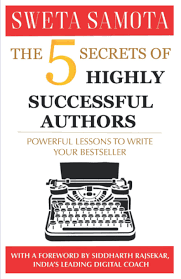
Recently I did a five day whatsapp course with author and book coach Sweta Samota. The topic of the course was “How To Become The Most Trusted Author” which actually meant “How To Become A Best Selling Author”. The course charge was nominal. The timings suited me. The first and fifth day were live one hour interactive session whereas the three days in between were recorded sessions for an hour each. Sweta is a good communicator and can hold her audience well. What she taught was not absolutely new – some were known and much (to my surprise) unknown. This was a preliminary course followed by a month’s online mentorship to write a best seller (?) which I did not join because of my tight schedule.

The course also included receiving her e-book on the subject as well as the paper back version which came a few days later. I have started reading the book and hope to finish it soon. Her writing has a flow and it does not take much effort to understand what she is driving at. The content of the course and the book is the same. So, reading the book is like refreshing what has already been conveyed during the course. However, my thoughts are a bit different on some of the issues, as usual.

Nonetheless, I will confess that I learnt a lot these five days. When I say a lot it means a lot about the business of writing books, or should I say, bestsellers – the trends, the modules, the modes of marketing and the various ways an author (a bestseller) mints money through one and many of his/her writings. In short, how they churn out more than one book out of the first book they write. This was news to me. How they accessorize their books so that apart from their writings they have parallel sources of earnings flowing from the main source, i.e., the book. How brands are created even in book writing. How franchises are made out of a series of books so on and so forth. In short, how an author becomes materially successful overnight, a name who is talked about and an opinion builder or influencer who is seen, heard and believed or followed by his/her fans in millions. All these and many more are not the outcome of his/her sole skillset of writing. Lots go into it – meticulous planning, market survey, floating the product and last but not the least keeping the product alive for a long, long time for the buyers in today’s age of barrage of information, every moment availability of new eye-ball grabbers and short retention span of readership.

When I first started writing (I began with poetry), one of my co-poets (virtual) advised me to be a disciplined writer and allot a few hours every day as writing time. (He also told me to read, read and read.) Practice makes one perfect. Honing your skill is very important. I have also heard that many great writers follow this schedule. Though they write out of passion and love (for writing), they have converted their passion and love into a daily routine – a habit without which they feel incomplete. This holds good not only for writers but for all who are into creative or any other kind of activities. Sweta also told us to devote at least an hour each day to write so that we are able to finish our books (that we intend to write) on time. Unfortunately, at this point of life I am unable to do so. That is why pre-fixing a deadline for my book and pre-selling it was a bad idea.

She also told us not to procrastinate. There are some authors who take a lifetime to write one book which may or may not be super hit. But if we start writing a book and leave it in between to restart/finish later the exercise never seems to happen and be over. with I agree. I also have some stories which are half done and I have not got time again to finish them. Also, we move on in life. So does our thought process and writing style. The way I had visualized and narrated the story I don’t know whether I will be able to pick up the threads and complete the narrative in the same flow. I realize my writing style has also undergone change with time. And today I am not that confident that I will be able to go back in time and write the way I had written it earlier. Which is again a pity because it was a very unusual style and would have done the story and myself (the writer) a whole lot of good (in terms of creative satisfaction) if I had finished writing the whole story at that time.

Sweta also told us not to do research while writing, specifically, in case of non-fiction as both require different sets of mental faculties. It is always beneficial to do the research first before beginning to write or later after the writing is complete. Same goes with editing. She said not to edit your work simultaneously while writing. I have this bad habit and will surely try to refrain from it.

I will now come to the points of difference that I have with the course coach :

Warming Up The Audience/Readers – Much before even starting to write the book, the authors nowadays, sell the idea of the book in the readers’ market. The book cover is designed through various apps available free of cost on play store/online and put up on the author’s social network sites with a brief about the purpose or main theme/content and a tentative deadline of the release of the book. The readers are asked to pre-order the book. The response of the readers provides a clue how the book will be received in the market. I believe well-known authors make huge sums through pre-order sale, even before writing the book, let alone, publishing.

As part of the course, we had to do this exercise (which I immediately regretted after doing). Many participants received positive response. I received a lot of best wishes and greetings and a few showed inclination of reading the book. No one pre-ordered (although it was on book-now-pay-later-basis). What do I make of it? Do I stop writing the book?

According to our coach, this exercise not only makes the reader curious about the author’s upcoming work but also lets the author gauge the reader’s mind about what sort of book he/she wants to read. I am fine with that.

I will not disagree that this is a good way of announcing your book. But perhaps this should be done only when the book is under print or the writer is half way through the book. Not like this! What if the writer is not able to keep to his/her deadline because of some genuine reason? How does he repay back the readers who are anxiously waiting for the book and even spent money ordering it?

Understanding Readers’ Psychology – Which actually means you write what readers want to read. As in a consumerist society like ours, commercial interest of all ventures become prime consideration, even in case of authoring a book, the same holds good. You have to see the market or your target audience nee readers. Generally, the trend is to lure the youth between the age of 18 and 35 years for everything that is new or trendsetting. Given our current system of education, which lays emphasis on technical and professional training, most of the current crop of young adults are non-readers. To lure non-readers into becoming readers, you have to write about subjects which grab their attention/interest or are easy for them to relate to. That gives me very limited scope and I may have to land up authoring mushy romances or motivational help books. I am not into either. So who is my reader? I want to write for all thinking people who will read, introspect and talk about my book. Sweta says, and I agree, that everyone cannot be my reader. I have to find my niche.

Using Simple Language: Today’s readers don’t want Shashi Tharoor-esq language, says Shweta. But I have also read today’s authors who just cannot hold my attention barring a few because of the language they use. Writing with simplicity and yet retaining the beauty of expression is a tough task. Tharoor has his own glamour. His mastery over English is unquestionable. I have not read him but I am sure I will like it. In stark contrast is my favourite author Ruskin Bond who speaks in simple language but is still able to create vibrant visuals. I am inspired and influenced by his writing. Neither simplicity nor beauty of expression can be sacrificed or compromised for each other.

Marketing The Product: Last but not the least is selling your commodity. In this case it is your book, your words, your thoughts, your writings, your freedom of speech and expression. Yet they are saleable. They are just products.

Sweta says self publishing is the best. I wholeheartedly agree. Big Publishing Houses are not bothered about first timers or lesser known writers. Though they accept unsolicited writings yet these just rot in the slush pile. To approach these Big Publications you have to route through Literary Agents. Again, these Literary Agents will take their own sweet time to read your book (if you are lucky enough) and decide whether you are publishable or not which implies that they will gauge your commercial viability and not writing capability. Therefore, it is best to go for self publishing.

Self publishing means self marketing also. Sweta says its best to invest in marketing – arrange book launches and readings, publicizing your book through various media so that people notice and take interest. I remember once Ruskin Bond had said (most probably when he was awarded the Padma Bhushan) that there are so many writers who keep on writing just for the sake of writing without aspiring for any honours or accolades. I think they are the true writers.

I have never heard Mr. Bond ever required a book launch. His rise was also not meteoric. But he waited. He struggled to meet both ends. Gradually the royalty cheques started coming in and became steady. Leading a quiet life in the hills of Mussoorie, he has devoted his entire life to writing short stories, novels, poems, essays, articles. He has also edited many books. He is publicity shy and has never tried any other means to make wealth apart from writing. His love for this country spills out of his books.

I’d rather follow him. I’d rather spend whatever is left of my life pouring out my thoughts. I’d feel lucky if somebody in some corner of the globe reads it, finds meaning in it, ponders over it and rereads till it ushers in some positive change in his/her outlook or life. That’s me. Perhaps I am outdated and may never make it. But its better to be me rather than somebody else.

With that thought…..

Au Revoire

To My Rival


I wanted to write this post long, long back but you know how life takes over and you are stranded in the warp of time constrained, confused and chaotic.

But before embarking on the main topic, I want to dwell upon the ambit of literature which has expanded with time and encompassed a lot more than just literary narratives – be it novels, poems, dramas, plays, cinema. I was compelled to rethink when in one of the Bangla chat shows, a renowned singer(?) commented why Tagore’s lyrics should be included in school and college syllabi as subjects of study and analysis for students of literature. Thereon perhaps I too started closely listening to Tagore’s songs with a new perspective. A song is just not the musical score but also the words woven into it. Similarly, Tagore’s dance dramas or Nritya Natikas already form a unique part of Bengali literary legacy transcending passage of time and societal evolution. When we talk of today’s time, we are no more contained within the aforementioned periphery. Now we additionally have media like television (serials) and web (series) to narrate stories. Should we also count them within the definition of literature. Do they really have literary value of any means?

I remember the erstwhile tele serials of black and white TV era – Hum Log, Buniyaad, Nukkad, Wagle Ki Duniya. Hum Log and Buniyaad were scripted by well known Hindi novelists. They had strong story lines, spoke about common people and made families laugh and cry together. They were also directed by ace directors. The characters were made immortal by outstanding performances. Yes, they dragged a bit but never mind. These were introductions to Hindi Soap Operas. Then came Ramayana and Mahabharata – epics in episodic narrative.

Thereafter, TV was taken over by big Production Houses like Balajee Telefilms and TV serials became ever running glamour galore. TV productions meant investment as they grossed TRPs and raged on expensive advertisements. These Production Houses hired pulp fiction writers to create episodes. Story flew out of the window. Scripts were now stunt and gimmick based, emotional runners and vamp-centric. The serials ran on endless villainy. The vamp was as (and even more) glamorous as the female protagonist. Narratives concentrated on how much wrong can one woman (or man) do to the other.

I don’t know much about today’s teles as I lost interest in Hindi as well as Bangla serials. All are the same.

And then Zindagi happened. I mean Zindagi Channel which aired well received Pakistani Dramas or Tele Serials which were made available on Indian television. Zindagi was an endeavour to improve Indo-Pak relation through cultural exchange. Unexpectedly Indian viewers were gifted with a bouquet of classy, stylishly presented, well directed, limited episode serials which spoke of social issues and taboos similar to ours. Needless to say, they were highly relatable. Who can forget serials like Zindagi Gulzar Hai (Life Is A Bed Of Blossoms) and Humsafar(My Co-traveller)? But as a breath of fresh air soothes the body and soul and flows by Zindagi came and went as soon as political relationship between the two countries soured. Viewers were suddenly left wanting for more.

This was a lengthy preface to prove a point. As I started watching serial after serial on Zindagi, I realised I was not only being entertained but there were messages here to ponder upon, stories, to think over, characters to remember. These had literary worth , were timeless in their narration and classics on their own merit.

My colleagues, however, told me that there were plenty of such serials on YouTube. I, understandably veered towards them once again.

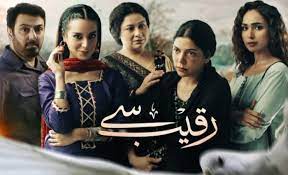
COVID-19 gave furthermore leisure hours to pursue this new found interest. Having given a long prologue, I come to the main discourse. In 2021, a Pakistani Serial got released – Raqeeb Se which literally meant To My Rival (In Love). It was a Momina Duraid Production under the banner of HumTV. It was directed by one of the renowned Directors of Pakistani Television – Kashif Nisar and written and scripted by again a very controversial writer, Bee Gul. In one of her interviews, Bee Gul (or Bee Bee Gul) said Raqeeb Se was a simple love story of complex characters. And how true it was!

In the dead of one winter night, Maqsood Sahib (Noman Ejaz) receives two unexpected guests – Sakina (Hadiqa Kiani) his ex-lover and her daughter Ameera (Iqra Raza) by Sakina’s marriage to Rafique (Saqib Sameer). A knock on the door opens the floodgates of an ill-fated love affair of two decades back. Maqsood Sahib is now middle aged and is married to Hajra(Sania Saeed) and has a daughter, Insha(Faryal Mehmood). Hereon starts the heart-wrenching story of five people who are brought together by a stroke of impulsive decision and compelled to share the same roof till they find meaning to their existence.

Unexpectedly, Hajra accepts Sakina, takes care of her and her child while Insha, her own daughter feels neglected at times. Again as a surprise-twist, Hajra and Insha are not unaware of the tragic love story of Maqsood Sahib. They not only have it by heart but also unequivocally feel that ishq ho to Maqsood Sahib ke jaisi ho (romance has to be like that of Maqsood Sahib or else not). But did they in their wildest of dreams have ever thought that the heroine of that fairy tale will land up one freezing night at their door step with her daughter? When seen in flesh and blood will the euphoria of bygone romance remain as it was before?

Oddly enough Hajra and Sakina bond with each other. Hajra has always felt that she has ruined Maqsood Sahib’s life by marrying him. He should belong to Sakina. Sakina is guilty of coming back to her lover after twenty odd years, battered and bruised, to save her daughter from the violence that she is subjected to by her over-possessive husband. She has nowhere to go. So she has come back to Maqsood Sahib. But she does not want to be known as a home breaker.

For Ameera, Maqsood Sahib, is the ideal lover ( she is also aware of her mother’s past affair). He is the exact opposite of what her biological father is – rough, jealous, scheming and distrusting of his wife. Understandably, Ameera is drawn towards her mother’s lover. A reserved, composed, sophisticated man and a dutiful husband and father. It is admiration which gives way to childish pranks to draw his unwavering attention and thereafter incorrigible infatuation of a persona which is larger than life to her. Insha observes Ameera quietly. She is educated (a doctor) and a highly intelligent and sensitive person who has always felt that her father, though has been the sincere provider of the family, has not loved her the way a father should. She craves for that attachment but remains quiet, sometimes, vocalizing her thoughts which questions the status quo.

In this incredibly unreal situation, one fine morning drops in the villain of the piece – Rafique – who does not have one bit of qualm that her wife is staying with her ex-lover but is only worried about his prestige in the eyes of the villager. Also, he has other axes to grind. In lieu of giving his wife a divorce he wants the land adjacent to his which belongs to Maqsood Sahib.

And then there is Masood Sahib, Maqsood Sahib’s elder brother and his wife, Aatika (Saba Faizal). Masood Sahib is a politician who is preparing to fight the next election. He wants Maqsood Sahib to wed Sakina in a bid to take revenge of of his younger brother’s death whom Sakina’s brother had killed twenty years back.

Unbelievable, though it may sound, Hajra is ready to give away her husband to Sakina. Insha feels that her father is doing injustice to her mother whose life pivots around him. Yet in this crazily complex relational matrix, the four women bond together. It is sometimes pure guilt and sympathy on Hajra’s part mixed with an aching heart who cannot make out whether her husband actually wishes to leave her for Sakina. Sakina, on the other hand, hates to be the apple of discord. She is distraught and clueless what to do with her life. It is a kind of sibling jealousy between Insha and Ameera although Insha, inspite of herself, cannot come to hate Ameera and surprisingly understands her plight – the obsession of a deprived child. Amidst this kaleidoscope of variant emotions, it is the overwhelming reticence of Maqsood Sahib which dominates the lives of all these four women.

When I recommended this serial to my esteemed co blogger Shri J Mathur, after watching a few episodes, commented that he was quite irritated with Sakina always being in the weeping mode. True, even I had the same reaction. But then I thought but why not? A rustic, illiterate, subjugated woman who has nowhere to go, no future to look forward to, no ability to stand on her two feet, will she not feel cowered and over burdened by the turns of circumstances which were not in her favour?

Yet, these women turn the table on their own. Sakina realizes that she should be able to take decisions about her own life. Ameera, after a tragic and sudden twist in tale, learns to absorb pain. Insha marches out of an exploitative relationship. And Hajra finds her footing on her own merits. Here is a tale of astounding empowerment of four women who stand tall in the face of grief, deprivation, dark pasts and averts doom to the extent that the men in their lives become ‘The Others’.

Why have I written such a long post on a serial which has not even grossed the kind of viewership which it should have considering the content, performance, direction and narrative? It is just to underscore the point that even tele-dramas can be a notch above. It can have layers and layers of meaning. It can toil with contemporary issues with aesthetic aplomb. It can have that quintessential quality of being timeless that all classics are made up of.

The writer, Bee Gul, in one of the interviews, once said that she does not sketch out her stories beforehand. There is no pre-decided outline. No characterization. No possible story line. It just flows and perhaps in the process she finds herself face to face with the characters. When a knock on the door wakes up Maqsood Sahib’s family in the middle of the night the writer herself is not sure who these people are at the door. Who could they be? She asks herself. Though hard to assimilate that being an author myself I give in to the conclusion that every writer probably has his/her own way of discovering their narrative.

Having said that…truly To My Rival or Raqeeb Se is a journey, an explorer’s delight, a serendipitous find, a quest beyond all quests. I remember watching Roman Holiday in the cinema hall. When the film came to an end I felt extremely sad not because the story had an unhappy ending but just because the film had come to an end. And I kept on wondering how the princess will gear back to her regal life and how the commoner (a reporter) will find peace having fallen in love with someone who is unachievable.

As Raqeeb Se came to its finale, I suffered from the same kind of wistfulness. Will Sakina find true happiness ever in her life? Will Ameera be a continuance of Sakina’s story? Will Insha find her place in Maqsood Sahib’s heart? Will Hajra rewrite a romance of her own?

A romantic by heart, I think I will have to remain satisfied toying with the answers in all their permutations and combinations.

Till then….