Ideal Is Utopia


Describe your ideal week.

😁😁😁😁

I am laughing because my life is so chequered, like a zigzag graph, that nothing fits into the slot called ideal. There is always some exigency standing in the doorway. Some boundary management to be done. Something amiss. Something not really happening the way it should. Taking cognizance of all these factors perhaps it’s a bit difficult to imagine an ideal week as no two days are similar, in general, as well as specifically in my case.

Nevertheless, I would say when the following take place for consecutively seven days, that’s the ideal week for me :

Getting proper rest and sleep at night

I suffer from sleep disorder and taking into account my mother’s medical instability, a proper sleep (seven to eight hours at a stretch) at night is a blessing.

Waking up early and exercise

As it’s not always possible for me to maintain a routine, doing regular exercise, however important, does not always happen. I miss it too. The day I am able to the feel good factor is high.

Doing meditation morning and evening

Meditation is a peace of mind restorer and only possible to get incorporated in my daily routine when I have slept well at night and woken up early. Early morning meditation or pranayam is advisable. So is meditation before going to bed which induces positivity and deep sleep.

Mother maintaining good health and stability

Again all the above are connected to my mother’s health. If she keeps fine I am fine and in peace. However, ultimately it’s in the hands of God. We can only pray.

Completing all household chores timely

I don’t like to keep any work pending, at home or in office. So, if I am able to do away with backlogs, if any, I am the happiest.

Seamless working in office

Work never gets over on a daily basis. And it should not. If no work remains for tomorrow then how to stimulate your mind the day next? But more than work, there should not be any disruption and friction in workplace as we tend to carry that and spoil the vibes at home too.

Enjoying ample leisure time

Even a workaholic like me needs some boosts in the form of qualitative me-time. Nothing like getting time to read a good book or watch an interesting series/movie.

Writing/Blogging each day

Writing and blogging have become part of my daily schedule. If that schedule is disturbed I get upset. So, an undisturbed time slot for writing or blogging. I have some unfinished writings too. Nothing better than the inspiration to complete those writes.

Cooking to my heart’s content

I cook daily. Simple but tasty meals. However, sometimes I do prepare some exotic ones if time and mood permit. In case, those dishes turn out perfectly my creative side gets satiated.

Keeping good health

Though I believe age is just a number it does catch up on you. Therefore, to fulfill all the daily duties one needs to keep up good health. Days I am without aches and pains are the best.

In fact, so is true for my pet who also has age related issues. The days I don’t have to run to the vet and she is pain-free I thank God wholeheartedly.

Enjoying a bonus off day

Mid week if there is a holiday or an unexpected off day (like we got recently due to G20), it’s heavenly because it facilitates rescheduling/offloading appointments and engagements kept for the weekend, thereby allowing the weekend routine to be light and restful.

It is noteworthy that for an ideal week all the conditions enlisted above are interconnected. If I and my family keep good health, peace resides at home and office work is done without stress. The daily routine does not get hindered in any way and no backlog is created. There is enough time for leisure and creative activities also.

Again isn’t it just impossible to have all the pieces of a jigsaw puzzle right in one attempt? Likewise, life is a bafflement and it’s twists and turns and bends are unbeknownst. If everything falls in place then who will remember God (as my mother used to say)? Selfish that we humans are, however sinful it may be, we seldom thank Him for what he has given or not given to us – both should make us happy and contented. Everything is for the best. Even writing a post on the prompt of an ideal week knowing very well that ideal is a Utopia. Still… what’s wrong in being an optimistic dreamer???

Dabbling


How do you relax?

As I have said earlier I am a born dabbler. I have varied interests and hobbies but I can stick to none for long. I get bored very quickly. So, by nature I am Jack of all trades master of none ! Perhaps I am not even the Jack. However, when I get into an activity I give my hundred percent to it even if it is for a very short while.

Lately, I have acknowledged my restless energy. I like to do a lot of things in a day. Earlier I used to think it was my shortcoming. But no more now. As I love my own company the most dabbling in so many things keep me constructively busy apart from my work.

It is difficult for me to relax because I want to stuff in so much in my daily routine. I like to do household chores. Cleaning is therapeutic for me. I am in the habit of cooking daily for myself and family. I do, therefore, watch cookery shows on YouTube a lot to get ideas of cooking the same dish in different ways.

Nowadays, I am devoting a major chunk of my leisure on reading and writing. So less time binging on OTT. Tending to plants and trees in my little garden should be a regular affair. But I don’t get that much time in hand and often depend on the gardener. But I like watering my babies on holidays and weekends.

I am desperately trying to fit in some exercises in my schedule. From next year I hope to make it a daily regime.

I envy those who can paint. I can’t. But I love doodling and colouring. I guess I have to give some more time to perfect it.

Even while writing, I don’t stick to a particular style or genre. I have a half written story and a novella waiting to be completed. I write in three different languages. Every language has a different template requiring different skillset. Writing runs parallel with learning as well.

The one thing I am not at all comfortable with is dancing. But I wish to get over my inhibitions in future. Perhaps post retirement…

When we were small playstations, video and computer games were non-existent. Evenings were for outdoor games and long days of summer vacations were for indoor games like cards, carrom, Ludo, Chinese Checker. Now these have been substituted by Wordle, Waffle, Squaredle and the likes. These tend to be addictive and more of a stress inducer. When I get stuck I leave it. Idea is not to prove my expertise but to be engaged meaningfully for a while.

My ex-boss tells me to include traveling and getting together also as part of post retirement plan! I do wish to travel to selective places and bonding with like minded people is a must.

There is one activity which has lately got excluded from my timetable totally – Music! When I was learning classical vocal much time was spent on listening to the Maestros. I have to pick up the threads as without melody life is mere cacophony.

Being the godmother of all the strays in the Block, I spend time not only feeding and caring them but also conversing with them. Sounds weird? But I do have a knack of talking to the birds and the bees. In this case, the squirrels and crows and canines. And of course! My Rinky gets, rather demands, all my attention.

At intervals I do require spa time for maintaining health and relaxation. Since I have extended screen time my shoulders have to bear the brunt of it. With the onset of pre-migrain headaches and vertigo a good head and shoulder massage becomes imperative.

A little chit chat with my family off and on keeps me posted on what’s happening around. It can be my aunt in Kolkata, my bestie in Gurgaon or my elder sister at home. The conversation generally verges on the esoteric. Gossips can also be great stress busters. My upstairs neighbour fills me in with the latest in the block.

Weekends I keep for my mother. Though she has very limited working memory left but it’s pure fun to be around her – making one sided conversation or watching TV together.

As I said, I am a restless soul. I like to intercept serious work with some casual or leisure activities. It refreshes the mind and keeps me going. Putting away all leisure activity for a specific day is not me.

My commuting time is pretty long. It serves as my blogging and social networking time.

Afternoons on weekends and holidays are for an hour or two of siesta. I avoid noon time engagements.

Somedays I just laze around. Those are the days for sky gazing or just staring out the window at the greenery outside. 😊😊

Oh! But I never told you about my shopaholism! But let’s keep that for some other time …🤦🤦🤦

I have a habit of picking up newer hobbies. Notwithstanding the list above if I have to write for the prompt again the post may contain things entirely different.

Well! For that matter I am seriously thinking about restarting my podcast….😉😉😉

Thanks to the prompt I have now got so much more to dabble in …..😆😆😆

Myth, Magic, Mystique


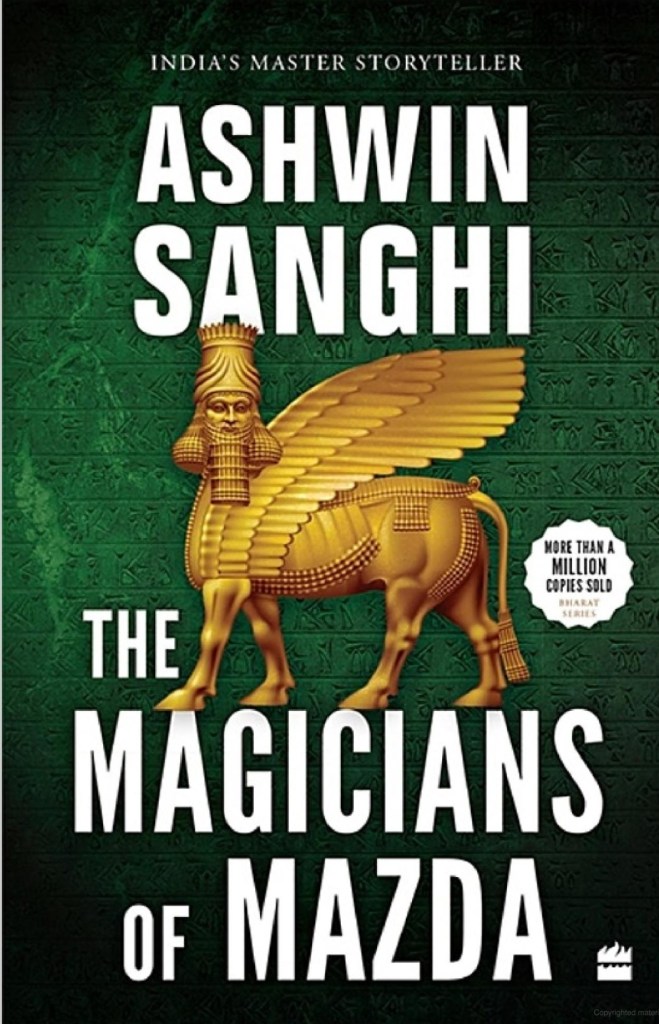
With due respect to one of my favourite authors, I finished his latest book The Magicians Of Mazda with great difficulty.

In fact, I got stuck so badly that neither could I switch over to another nor could I proceed with this one.

In the meantime, I had purchased more which I was itching to read. So, yesterday mid morning when I at last laid it down I was surged with relief. There was also a teeny bit of sense of achievement of finishing a job against an overpowering feeling of discontinuation.

With all its flipsides, Sanghi is quite a puller. But this one somehow failed to take me along. Why? I will give the reasons one by one :

Thin Storyline

Jim or Jamshed Dastoor is a Parsi Scientist settled in America with his scholarly wife Linda. Jimmy has been handed over a mystical substance in a closed box by his father. The box with its content is a kind of inheritance which, as per family trend, goes to the rebellious one in the next generation. Here rebellious means the one who does not take interest or part in the family business and chooses a path of his own.

Now, here is the gap. Jim has never set eyes on what is inside the box. But he has heard a lot about it from his French grandmother. He is researching on this magical substance called Hamzaa Dura (HD) as a cure for all human ailments. The name has been given by his much smarter wife – an anagram of Ahura Mazda which means The Wise Lord (in Avestan).

When the kingpins of pharmaceutical industries come to know of HD they are not only curious but also hanker after it. Finally, Jim is abducted along with his prized possession. Soon the CIA, Mossad and R&AW jump into the foray for Jim’s safety which is seemingly a highly sensitive international intelligence issue transcending geographical borders.

Linda willingly and actively participates in the search along with Dan, Jim’s Partner. They secretly enter Iran with the help of a local driver and reach out to Jim through a man called Tariq Hydari and a rebel Parsi named Soroushpur. However, unknown to Linda, Soroushpur is also after HD which he thinks is the mysterious Athravan Star! Dan too has an axe to grind of his own.

In the middle of ‘Find Jim’ Operation, Abbasi, a Mossad agent, inches into the Party and later proves to be quite indispensable..

The Party goes globetrotting from fleeing Iran with the help of a Baluchi mafia lord, entering Afghanistan, getting caught by the Talibans, paying them off for their freedom, reaching the evacuated American Air Base and thereon to Delhi and later Kashmir and ultimately to US of A. Inbetween they narrowly escape several coups to terminate them. Quite a journey for novices!!

Although HD is kind of a family secret but it seems all the crooks, political activists, persecuted Parsis in Iran, know about it and want to possess it.

History Overload

Ashwin Sanghi’s fetish for history is well known. Whatever, research he does is regurgitated in his books resulting in information overload.

The narrative is intercepted by chapters charting the exodus of persecuted Parsis from Persia after the Muslims took over to reign on the land. Those Parsis who fled carrying with them their sacred fire of worship – the Iranshah – landed first jn the island of Diu and subsequently settled in Sanjan and later in Navsari (both in Gujarat).

Dastoor’s family is said to have played a major role in transporting the sacred fire from Persia to India. Those who stayed back in Iran had a hell of a tortuous time as they refused to be forcibly converted to Islam. Force gives birth to rebels. The rebellious Parsis considered what belongs to their community should stay with them – the Iranshah and the Athravan Star.

The book also traces the path Zarathustra preaching the tenets of Zorastrianism – the religion of the Parsis.

Sanghi’s unnecessary focus on the effects of fundamentalism on world history – Islamization of Iran , Talibanization of Afghanistan, the ostracization of the nomadic Balochs and other jehadi factionalism gives the book a motivated purpose.

Stretching the roots of Zorastrianism back to the Vedas and rewriting history by the conquerors of Iran are nothing novel as it’s a known fact that (i) Hinduism is the mother of many religions world over and (ii) conquests have always resulted in tarnishing history.

To establish that Parsis came back to their roots from where the journey of their religion started is an attempt at trivialization. Though a close and diminutive community, Parsis have a distinctively rich culture and astute business acumen. India has a lot of respect for them. They have not only strengthened our economy but also paid back in various ways to the country which sheltered them.

Glitches

Sanghi always leaves issues open-ended. Does he wish his readers to carry on with the trail ?

What is Athravan Star?

Why is everyone after it?

What is Hamzaa Dura ?

Will the course of history be changed if these are found?

Ashwin Sanghi claims that he is more a fiction writer than a historian which is a safe bait because most part of his work is conjectural and not factual.

There is less gore which is a cause for kudos to him.

Retention of so much history is difficult. It should be toned down and expertly woven into the storyline.

A fiction should read like fiction and not like a docu series.

So Mr. Sanghi points to ponder upon before embarking on your next ambitious writing project. Right?

Also read on Goodread

Also shared on Mouthshut.com

The Beauty Of Words


If you had to give up one word that you use regularly, what would it be?

Legend has that mankind learnt to speak various languages from the Tower of Babel. Thereafter, on the basis of languages spoken people broke into many lingual groups and came to occupy different geographical territories.

Language bonded them as well as became the most important means of communication and expression. Later, it also divided them with the passage of time.

As the process of refinement took place, languages bifurcated into colloquial dialects and literary speeches. Languages are made up of words and words are made up of letters or alphabets.

Those who have love for languages can vouch that there is nothing more beautiful than words. Words have been woven into beatific poetry and prose. We have got timeless classics through written words. Who would like to go without words or erase them from their vocabulary?

But going deeper into the meaning implied in the prompt, I believe by word it is implied the action or thought or feeling related to it which may be having a detrimental impact on our philosophy of life.

Since I am not in the habit of using expletives I would rather give up those words indicating certain characteristics which are negative in their extreme sense. For me one such word is procrastination. Again erasing the word totally is not advisable because that would mean underscoring impulsive behaviour.

While one must think twice before leaping forward, the act of cogitation should not be stretched interminably. Procrastination often imply indecisiveness. Taking decision, right or wrong, is a must. Not taking any decision or stand in a matter is complete no-no. Inability to take decision is a shortcoming. Avoiding decision in a matter can be at times strategically correct but being habitual of tarrying decision is a sign of poor strategist.

In my case, it’s the opposite. I am proactive and jump into boundary management before the need arises. It’s preemptive in a positive sense. On the negative side, it is stressful because you have to be always on your toes to be ready to plunge into action whether there is an actual requirement for it or it is your overactive mind which perceives or predicts trouble much ahead and lunges forward to let it not come nearer or at all.

There has to be a midway between procrastination and proactiveness. I guess it should be a wise combination of prudence, pragmatism and programming.

You have to condition yourself not to think too much ahead of time. That is programming your approach to life Have to apply a big dose of prudence to determine what action to be taken in the face of imminent problem. And a bigger dose of pragmatism to figure out whether it is actually necessary to take any step whatsoever even if an issue is pressing the door bell.

I have learnt this from many of my superiors to let problem resolve on its own. Ladling too much is not always good for the soup. However, these are nuggets of wisdom picked up on hindsight. By nature I am a person who is built to act and clearing the road before the congestion occurs. In a way it’s good. In a way it’s bad because there is no end to policing the traffic.

Having said all that, there are certain words which I wish were made extinct or obsolete in all dictionaries, like

War

Jealousy

Hatred

Racism

Discrimination

Disparity

Fascism

Fundamentalism

Fanaticism

And all others which are intrinsically divisive by nature, derrogates humankind and defeats the quality of humaneness

Please note I am not talking here of complete erasion because these will always be part of our tarnished history and we shall remain accursed not to forget it.

However, I pray an overall spiritual upliftment of mankind shall render the usage of such terminologies and their inherent manifestations defunct.

Hatred – A Driving Force ???


Are you holding a grudge? About?

It’s not good to hold grudge against anybody. Easy said than done.

However, it is killing to hold grudges. Mostly it is not against the others but against our own self. Yes, it is often like that! But not easily discernible. So it seems to be against the others – the wrong doers. However, the hate is actually directed to our own selves. And it is this enmity with one’s own self which becomes the veritable cause of low self esteem.

I realised this a lot later. Throughout my life hatred has been a driving force. Hatred against those who deprecated or disparaged me at various phases of life.

Hatred for them moved me forward in life to prove myself that I was no less. That one day I shall be on equal footing and tell them off. But life never takes a U-turn. Those I wished to kick in the butt never turned up in life again. Rather I made newer enemies whom I did not know how to deal with.

The grudge I held germinated from the resentment that I could not pay back my foes the same way they coerced me. I was naive. They were seemingly strong. I did not know how to put them in their place. Fear of imminent danger and the overwhelming despair of not knowing how to mend the situation were prime deterrents.

Even if my enemies were on a weaker front and their acts originated from their desperation it was not fathomable to me because the suddenness of attack left me dumbfounded and panic overpowered rationale.

What I intend to stress here is we never see the whole picture from a single lens and analyse it threadbare in our hurry to react to the adversary.

The questions that petrify are:

How could they do this to me?

Why did they do this to me?

How do I give them a fitting reply?

What will happen if I am not able to stand up to them ?

What effect this is going to have on my present and future life?

Is it my past karma?

How do I do away with the ill effects of misdeeds in the previous birth?

The questions we never ask are :

What are the actual causes behind the defamatory actions?

Does such an action originate from some limitations?

What are those limitations?

How do I show them their limitations?

What are the rectifying factors in the situation?

How the rectification can take place with least damage to my own self?

Feelings of betrayal, insult, shame and disgust prevent application of conventional wisdom. The inability to do so results in grudges against the perpetrators. But it is actually against our own selves for cowering down and not handling the imperative properly.

Grudges are accumulated baggage. I used to think hatred is strengthening me. No, it made me feel inferior inside. That is why the constant urge to push forward. Anger and hatred are debilitating. They give you an outward guise of being brave and courageous. But they actually breed vulnerabilities within.

When we talk of past karma and previous birth again the pointer is held towards us. Do we know what those karmas were? If not, there is no question of repairing them. So, let’s talk of now.

The antidote, as recommended by wise ones, is forgiveness. You are told to forgive the one whom you consider the sinner. But what we do not realize is that we have to forgive ourselves for failing to gear up to the what we were subjected to. Less we blame ourselves stronger we emerge.

However, it does not mean supplying lame excuses for not doing what was actionable and within our reach. It means if we were pushed to the wall and could not retaliate appropriately at the given time we should not hold it against ourselves. It is human to err but it is foolish to repeat the same mistakes. One has to know how to distinguish the thin line of demarcation of being a fool and being fooled. In either scenario you are not totally blameable. There may be several other factors contributing to it. Either we have been blind or blinded.

Again I guess we have to give ourselves time to stop smarting from the freshly inflicted wound and think straight. Once settled we have to re-enact the scenes and reflect with positive overtones setting aside the self castigations. If we were blind to certain stimuli, let’s figure out why it was so. If we were blinded then what persuaded us to be so.

Coming to definitive conclusions takes time. But after an impartial evaluation and enlightenment one has to equip oneself not to be put in the same trap again. I believe this is the process of forgiveness. It is more scientific and logical than a subliminal elevation to some unscalable level.

I once held grudges against everyone including my life itself. Today I seem to have a lofty sense of achievement that both the good and the bad have taught me so much that I am able to see through the foggy mirror, know my limits and strengths and write this post for all with hopefully some extractable thought overs.

Quote from Pinterest

The Pilgrimage


Share a story about the furthest you’ve ever traveled from home.

I like to read travelogues. I wish to write a few. But nowadays I dont get many opportunities to travel.

Around four decades back, soon after my elder sister’s marriage, my brother-in-law had planned a trip to Vaishno Devi which is an important pilgrimage for Hindus. It’s customary to visit places of worship before and after an auspicious occasion in the family. It can be marriage, child birth, new job or business, the beginning should be with divine blessings.

I remember this journey, though years back, as it turned out to be quite an adventure.

The Legend

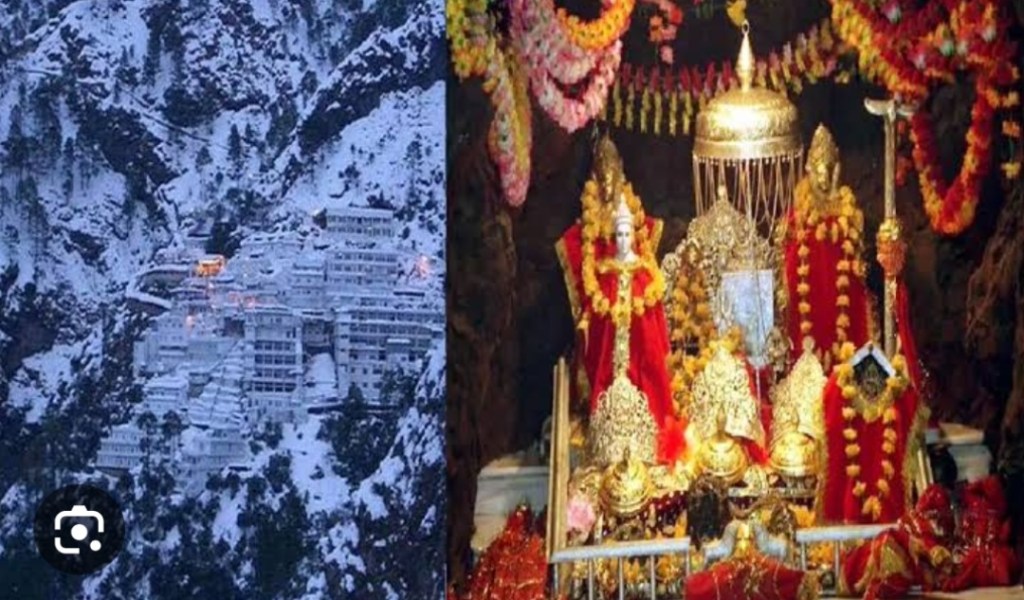
Mata Vaishno Devi is reincarnation of Mahakali. Around nine hundred years back she appeared as a young girl in the village of Katra in Jammu which is a part of Jammu and Kashmir. She was lusted after by a wicked Tantric named Bhairavnath. In order to protect herself from Bhairavnath’s unholy advances, Vaishno Devi fled up the Trikut Parvat, leaving her trail at various points in the mountain.

These landmarks are Baan Ganga where the Ganges erupted from the arrow shot by Vaishno Devi, Charan Paduka (converted into a Temple) from where she looked back at Bhairavnath leaving her foot prints embedded on a rock, Ardh Kumari or Kunwari -a very tiny cave said to be in the form of a woman’s womb wherein she lay in a foetal position for nine months to pray and lastly the Bhavan where she ultimately punished Bhairavnath by beheading him and throwing his head up in the mountain. Now she rests in the form of three pindikas or rocks in the Bhavan.

Bhairavnath realized his mistake in the long run and asked for salvation. Mata, being mother of all, forgave him and declared that the pilgrimage will not be complete if her devotees fail to visit the Bhairavnath Temple (where Bhairavnath’s head fell) after getting her darshan in the Bhavan.

Mata Vaishno Devi is also known as Sheraanwali Mata or the mother riding on a lion.

Our Journey

We took the night train Jammu Tawi Express to Katra Village. Tawi was the last station of Indian Railways at that time. The rail tracks terminated at Tawi.

We reached early morning at Katra which is a buzzing village at the foothills of Trikut mountain. The shopkeepers at Katra are said to close shutters at night, walk uphill for darshan and open shutters early next morning. They are so adept at making the journey up and down the hill The journey to Bhavan is 14 to 15 kms approximately one way. You had to walk it or take the ponies.

At Katra there are dhabas where you can have hot tandoori roti (bread baked in tandoor) and rajma (red kidney beans). The best rajma you get is in J&K. You can also buy various items for Pooja or worship and hire coolie to carry your bags and baggage and ponies for elderly persons to carry them up and down the hill.

At present Vaishno Devi is well connected with rail, road and helicopter. The roads are better now. The shrine has been shifted to another cave and renovated.

The time we visited the uphill walk was a task as the roads were very steep, unpaved and difficult to cover for those like us who were first timers. Handing over our luggage to a coolie we started our climb uphill.

We washed our feet at Baan Ganga. Vaishno Mata said to have brought down the pious river to Trikut to quench Lord Hanuman’s thirst who was on guard at the mouth of the rock to preempt any advances by Bhairavnath while Mata prayed inside at Ardh Kumari. The water at Baan Ganga was crystal clear. We could see the rocky bed and fishes swimming underneath the waters. We were surprised to see the river change colour to a deep rusty brown while coming down carrying in its flowing bosom the gifts of the mountains.

At Hatthi Mattha, from where the peak of the mountain looks like the head of an elephant, we rested awhile and had tea. At Charan paduka we bowed and prayed. At Ardh Kumari the ritual was to enter the slender cave chanting Vaishno Mata’s name. The cave was dark inside with rocky walls jutting in and so narrow that one had to crawl in and out like a baby. Entry was one after the other. Inside you could only hear your own breath hissing and limbs floundering for the exit. You just had to pray hard that you could come out unhurt. Legend is that though dreadful the holy chant prevents you from all ills inside and you actually come out in one piece safe and sound. So did we.

The Bhavan

We reached the Bhavan well into the evening. Spent the night in a Dharamshala which was kind of a big hall where groups of pilgrims made their beds on the floor with the rough blankets provided by the owner, chanted mother’s name loudly, before sleeping through the night to wake up early next morning with only one wish that to have a good darshan. The energy inside was so charged that we didn’t feel the teeth chattering cold outside.

Next morning we saw the peaks getting capped with snow. The localities advised us to hurry for darshan and leave before it was too late. We had a sort of communal bath. Sister was already suffering from swollen feet. Padded with layers of clothes we queued outside the Bhavan for our turn for darshan.

The Bhavan was almost thousand years old ready to cave in. The pilgrims were warned again and again not to chant too loudly so as to prevent a sudden avalanche. I hear the Bhavan has been relocated now. After a long wait our turn came to enter the sacro sanctum. It was another and smaller cave inside the slightly bigger one where we had to squat in. The height of the cave was too low to stand. Noone was allowed to spent more than a minute inside. The exit was from the other side through another cave where a stream was flowing through. To our tired feet the water felt warm, though the temperature would not have been more than zero degrees.

Journey Downhill

We were the last to take the journey downhill. The snow had started falling at a steady pace. Silence reigned. We followed the footsteps of the travelers before us. The slim and slimy mountainous roads were unfenced. If we slipped it would have been a drop of around 15 kms. Halfway down, the snow turned into torrential downpour. We found a naked boy climbing down shivering like a leaf and chanting. The one who was right ahead of us was a thin old lady with a stick who kind of battled with the wind as she stepped down the snow covered tracks. Her only strength being the chants. We were drenched to the core. So was our luggage. More disaster awaited at Katra. Not a single room available for the night as pilgrims were stranded at the foothill not allowed to take the uphill journey in such a treacherous climate. So were the ones at the Bhavan. We were the only exceptions.

The Nighstay

Somehow a room could be arranged for the night. Our train was next day noon. But we were so cramped with cold and rain that changing clothes became an arduous task. So was eating as we couldn’t put the food inside our mouth straight. As we warmed ourselves up around the angithi or the cooking burner smoke started rising up from our bodies.

The next day we left for home. By the time weather had changed and sun was shining bright. The last that I recall was reaching the station before time and drying out clothes on the empty platform.

Even after a safe return many nights I woke up sweating. The dreams were vivid. We had lost our way in the snowing pouring mountain with noone to guide us home.

Epilogue

It is said that no ill befalls at the shrine. The chants work as shields protecting the devouts.

Somewhere in the hills we had taken a few minutes rest at a ramshackle tea stall where a man covered in an old blanket hummed a tune in Miyan Ki Malhaar – the Raga of the rains!

His mellifluous notes still haunt me. The only regret I could not see his face.

And of course our pilgrim is still incomplete as we failed to have darshan of Bhairavnath.

Jai Mata Di

(Glory To The Mother)

Home Sweet Home


What does your ideal home look like?

When I was young and inexperienced my concept of ideal home was the one seen on the glossy pages of home decor magazines. Growing older I realized homes should be more functional than showy.

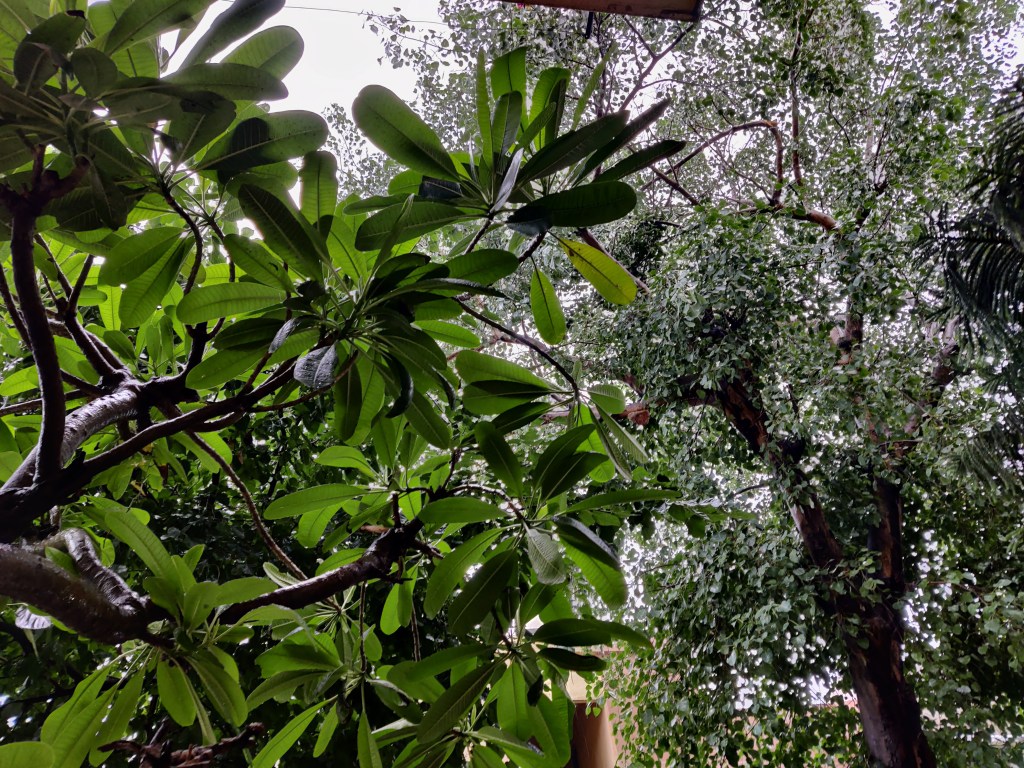
At present, I own a small ground floor flat fronted by an extended ‘green’ space which I love to call my garden. The garden came into existence to protect my privacy as my neighbours did not think it inappropriate to park their bikes and scooters close to my windows. In order to obviate the scope of breach of security I potted a few plants and grew some trees and fenced off the space.

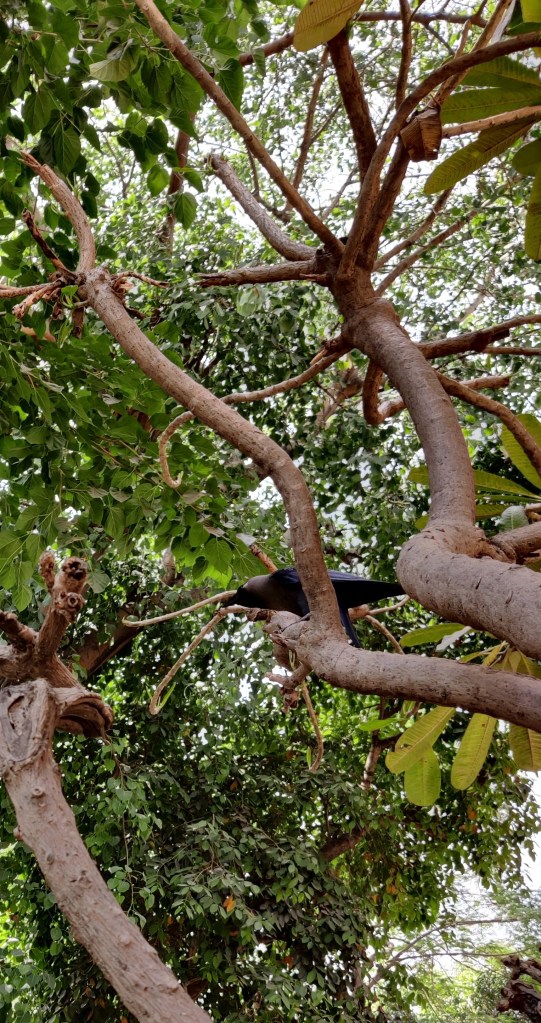
The balcony is a home to a bunch of strays. The tree branches are the playgrounds of a litter of mischievous squirrels who are fond of chewing off the air conditioner and broadband wires. The afternoon guests caw away to glory whereas mornings and evenings are chirpy and carry the fragrance of abundant greenery.

I believe in simplicity so the drawing cum dining hall boasts of a large window overlooking the adjacent park. The drawing space is practically the living room while meal time is more than often a relaxed affair on the couch.

My mother’s room again has a wide window covering one whole wall for proper ventilation. The room literally resembles a hospital ward cramped with life saving machines like the oxygen concentrator, suction machine and sometimes the BIPAP too.

My dream room is home to a queen size bed. My summers are spent on cool bedspreads and winters folded in fluffy quilts and rajais. Rinky alternately sprawls on the cold floor and a huge sleepwell mattress covered with thick coverlets as per seasonal requirement.

The utility room was once the backyard. Now it opens up to a strip of light through a huge steel framed glass door. The room changed contours too often in the past two and a half decades from a family room to a study. Now it has an eclectic mix of large immovable cabinets, trolley, a roof touching book shelf with writing desk, mother’s rocking chair, an unsmart TV pinned to the wall and a horde of electrical appliances. This uncharacteristic spacious store is separated from the rest by rollable bamboo curtains.

The tiled kitchen has managed to survive the onslaughts of time. A small passage by the side opens on to the stairs to the upper floors.

The flat is well planned and wears a lived in look. My friend who owns a palatial house finds it cozy and comfy and very livable. The furniture is an assortment of very large and very small pieces from a copied Victorian straight back with ottoman to a huge inclinable hospital bed to a miniscule chest to a cute little Jaipuri side table to a medium sized box divan.

The floor is of mosaic and not marbled. There is no artificial false ceilings or hidden light fixtures. I am fond of various types of lamps but. And the overall feel is one of the olden times of comfort and not opulent luxury quite opposite to the ethos embraced by this city and its predominant culture.

Cleanliness is my prior concern as I am allergic to dust. However, in this city to be dust free is an impossibility. I am an extremely housebound person. My house is my burrow. I know it’s not perfect but I identify with it’s character. I am also extremely superstitious. I hardly invite anybody home lest they spoil the vibes of my sacro sanctum. Only people with whom I am extremely comfortable can enter my den. That’s idiyosincratic!!

The other name for this city is snobbery. People living here have a set idea how a home should look – POPed ceilings, plastic painted or glazed tiled walls, ornate chandeliers hanging down, over sized intricately designed dining table with cushioned chairs, sliding fiber doors, french style windows opening onto extended verandas, steel framed grilled doors, home theatres, open kitchens with granite slabs – the whole facade oozing pots of money from source unknown.

Multi storeyed buildings change hands frequently and torn down and rebuilt. Flats are renovated to look like kothis or fashionable houses with spiralling iron staircases connecting the floors. Grandeur and opulence strewn everywhere in the midst of which my humble dwelling with unaltered archaic infrastructure stands testament to a bygone era which went by understated elegance as it’s hallmark.

I have a few compulsive behaviours though. I guess it’s genetically transmitted. You may find a whole lot of things scattered around but they are placed in a symmetry of their own indicating a method to madness. Like the clothes stand has to stand straight in the balcony. The planter at a particular angle. The cobweb brush should not slant over the inverter so on and so forth. My aunt (father’s younger sister) has always been my role model so far as housekeeping is concerned. She is the duster lady of the family moping and dusting and shining and rubbing. Her house is spic and span. Even the toilet brush looks newly bought all the time. Whenever I catch up with her over phone her first query is whether I have tidied my flat. 😲😲

But my flat represents me the owner – scatterbrained, confused, always in dilemma, trying to bring order to disorder and failing miserably and accepting in the long run that coexistence with chaos is the rule of Nature.

Last but not the least my Puja corner or the place of worship is a cute little dismantleable shelf right at the Ishaan Kon or North-east side as per Vastu and our family priest. Our family deity graces my domain with her presence and keeps an eye on our health, safety (I won’t say wealth because there’s none) and wisdom. Rest is immaterial and inconsequential.

Lachrymose


What brings a tear of joy to your eye?

The caption is misleading.

Lachrymose means given to weeping which I am not.

Everytime I want to cry, the pain becomes a tight knot inside my stomach and settles like a stone within reluctant to leave me in peace.

I can’t remember when I cried last.

Actually the problem lies with my lachrymal glands which have stopped secreting the liquid called tears. In this city’s dry and dusty weather and work demanding prolonged sitting on the computer are the reasons. Also, I used contact lenses for a decade which worked fine with me till I was based in a place with moist climate. As soon as I returned to my home town the lenses had to be dispensed off and I had to switch over to glasses. Reason – dryness of eyes which still continues. On the aside, lenses work the best in moisty eyes.

But surprisingly dryness suddenly turns into fountains as soon as I come across

A beautiful painting

A wistful song

A touching poem

A moving prose

A heartrending story

A tragic movie

A motivational speech

A patriotic oration

A cute little puppy

A newly born baby

A blushing bloom

A surprise gift

A sorrowful narration (the narrator can be anyone)

A funeral ceremony

Someone crying in my presence

I know all the situations do not fit into the prompt. I also don’t know if the moistened eyes are tears of joy. Of course, noone is gleefully tearful in a funeral unless he/ she hates the diseased beyond redemption and wishes him dead from the core of his/her being.

I also don’t understand the science of it. How come the glandular activity is suddenly over functional whereas the urge to cry is defeated on ‘normal’ occasions. I believe I can call it that – it’s normal to feel like crying.

I once had a colleague who could easily convert her eyes into running taps as and when required. I secretly felt it was a whole lot of melodrama. Anyhow…it served her purpose.

Coming back to my sporadic teary state I was told it runs in the family. My grandfather had a habit of sniffing and sobbing over passages of Shakespearean Tragedies which led my grandmother snigger and say, ” The man does not have any sympathy for humans around him but has so much concern for fictional characters.”

My father, who was the most introverted person, also had the same habit of going lachrymose over beautiful poetry and prose.

So did my aunt (father’s sister) who was a tartar in real life.

However, having rambled on so far, the last I recall my lachrymal glands became over active, nay functional, when Rinky came in my life. She was just forty five days old straight from Patiala packed in a puppy basket travelling the distance in a speeding bike straight on to my lap – a present from my elder sister who wanted to wrench me out of a state of self imposed mourning over Mr. Snow Boot who departed to doggy heaven unexpectedly , untimely.

My cheeks were flooded with saline water as I cuddled Rinky. She, of course, found a lot of solace in my plumpy arms being separated from her mother and siblings so early in life.

Those saline droplets were joyous tears or tearful joy or may be both. I don’t know. But those successfully initiated a rare phase of happiness and celebration in me life.

Unfortunately I have lost Rinky ‘s puppy pics. This one is from Pinterest very close to the real one.

My Sanity


I guess I have answered this prompt partially in my post on why I write. However, in furtherance to the thoughts expressed earlier, this comes as a post script.

Why do you blog?

My mother has been critically ill for the past one decade. I have written about her profound dementia. Her body is severely infected. While she is under constant medical support of her excellent physician yet the infections keep coming back (being bed ridden) enervating her a little more each day. She has almost become resistant to common low dosed antibiotics. Being over ninety and suffering from an incurable mental state, she has lost coherence of thought and speech. She is in and out of hospital year after year. I pray every day that she is not required to be hospitalized anymore and able to spend the last leg of her journey away from pain and discomfort. However, it is God’s will. I guess we should not complaint but only surrender to His divine ordainment.

However, my mother is a fighter. She has been one throughout her life. It’s a pity when she was well I never asked her from where she got her indomitable courage, power of stoic acceptance of tragedies, the strength to cope with setbacks and carry on with life as usual. I should have. It would have been a lifetime lesson to imbibe.

As it goes, I am her sole caregiver. According to medical experts, it’s important for those who look after dementia patients to maintain their physical and mental health. Every time I visit them they first ask me how I am coping because if I fail to take care of myself I cannot properly take care of my mother.

Humans cannot be infallible. I too succumb to stress and depression at times although I try hard to keep my spirits up. Only medicines cannot cure these symptoms. One needs ventilations of some other sorts as coping mechanisms.

For me, blogging is the elixir. It keeps me going. Preserve my sanity under the constant threat of the inevitable end looming large, the slow decay that I witness every day and the fear of being left alone in this world. To put in one word, mildly at that, it’s scary.

Blogging comes as a respite. Takes me away from the hard hitting realities. Assures me there is still something in life I can hold on to. Facilitates honing of my writing skill as I spend some time out of the day’s hectic schedule on a regular basis to exercise my mind in something other than the pressurising routine. A gainful distraction!!

Blogging is just not about me writing. It is also networking with co-bloggers. To enter into their domains and realize that there is another world out there which is different from mine. A world where there is peace and normalcy. Believe me it is hope generating, mind calming and something to earnestly look forward to.

I don’t know whether this post comes as a disappointment to the readers. But this is the ultimate truth. In short, blogging is a friendly activity , a solace provider and a soothing balm to a haggard soul. One can say it’s another form of medication to a diseased mind which has gotten into worrying non stop.

I am sure my co-bloggers cum virtual friends have better reasons of blogging. I wish them all well and also take this opportunity to thank them from the bottom of my heart for enduring me and being with me for so many years.

Over A Virtual Cup Of Coffee With Ashish Narain


Interview someone — a friend, another blogger, your mother, the mailman — and write a post based on their responses.

Those who have not read my earlier posts on Over A Virtual Cup Of Coffee Series can read them here

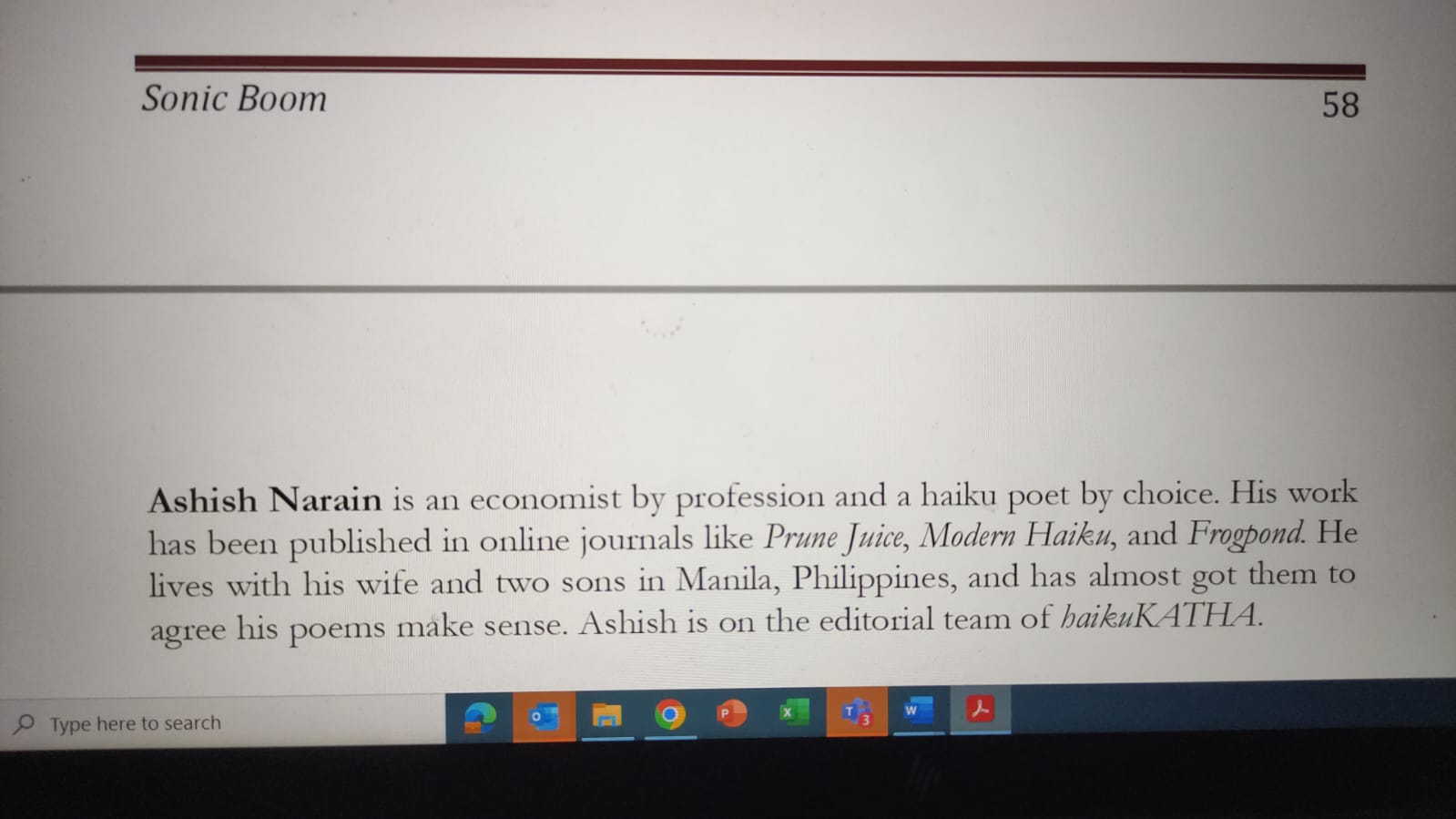
Many years back I was introduced to haiku in an online journal. I was instantly hooked. I tried to write and share a few with poet friends, But those unfortunately did not fall within the ambit of haiku. I was advised to join the annual workshops in Pune conducted by the one and only, internationally acclaimed haiku poet, Kala Ramesh. I had the good fortune of workshopping with her years later in Delhi. Ashish was my co-workshopper, the only difference being, he has made haiku is life mantra and a mark as a haiku poet, whereas I am still trying to learn the ropes. A prolific haiku writer who has got published in well known journals, like Prune Juice, Frogpond, Modern Haiku, Ashish is also on the editorial team of HaikuKATHA. He lives with his wife and daughter in Manila, Philippines.

For quite sometime I was thinking of having a chat with Ashish over a cup of steaming hot coffee on this genre. Before we embark on a stimulating conversation a little bit about haiku.

Haiku is an ancient Japanese art form of writing poetry in minimum words. Simplicity and brevity are its hall mark. The thumb rule of haiku is : to show and not tell.

In that sense, haiku are vibrant visuals carrying the sensory experiences of the poet belying revealing truths. All haiku have their aha moment which is epiphanic pointedly unveiling the contras overlooked in the frenzy of day to day existence. It requires a Zen like observance and awareness to bring them forth.

Over to Ashish :

Me : Tell us about yourself. Your journey as a haikuist.


Ashish : I am an economist by profession, and a parent by choice. In 2015, I wrote a poem. and my friend commented that it was almost haiku. I had to look up what a haiku was but then I was smitten. I attended a workshop by Kala Ramesh in 2016 and have been writing ever since.

Me: How do you see haiku as a perspective changing form of poetry?


Ashish : What haiku has taught me is to slow down and be more mindful of all that is happening around me. There is wonder and immense beauty in even the simplest of things.

Me : Explain the wordlessness of haiku with a few examples.

Haiku is often called an unfinished poem because it is completed by the poet and the reader jointly. A good haiku leaves space for the reader to “enter” and understand the poem based on their own experience. Therefore the fewer words, more allusion and less definition, the better the poem. For e. g.,

harvest moon
two fallow farms
lie side by side
-Geetanjali Rajan

Me : The best haiku is the one which showcases more than one sensory perceptions. Give examples.

Ashish : Consider

sea mist
the scent of the night
it spent in the pines

-Michael McClintok

This poem combines the coolness of mist (touch) with the sense of smell.

gunshot
every pine needle
pointing at something
-Gregory Hopkins

This combines sound (gunshot) with sight (pointing needles).

Me : How do you underscore the silence or white space in your haiku? Give examples.

Ashish : Terseness and incompleteness I find are good ways of creating white space in haiku.

Consider for e. g.,

he leans on the gate going staying
-Marlene Mountain

One imagines two people appraising each other silently. The location is not specified, but in my mind its set somewhere in the deep, quiet countryside.

open grassland
a stray sheep on the horizon
almost a cloud

-Adjei Agyei-Baah

One can feel the deep quiet without the poet explicitly saying it.

Me : What was life before you took to haiku.


Ashish : Life was hectic and rushed, as I imagine it is for most of us. Haiku offers a quiet space in the midst of all this.

Me : How do you see haiku facilitating de-cluttering in life and resolving dilemmas within?

Ashish : As I said before, haiku offers a space to reflect and be mindful. That can help declutter and de-stress. In the midst of movement, it allows one to be still and just observe.

Me : How do you see haiku ten years hence with so many innovations taking place even in deviation of its classic parameters?

Ashish : Art of any kind is by definition creative, innovative – a constant testing of limits. I see haiku retaining it’s essential features – quietness, incompleteness and juxtaposing of images, but moving away from it’s current fixation on structures and rules.

Me : Where do you see yourself as a haiku poet a decade hence? What innovations you would prefer to bring in to make this ancient form of art more popular and acceptable to poetry lovers who are not into haiku at present?

Ashish : I have been trying to stop writing haiku for the past few years, and have failed. I see myself in very much the same boat. My driving passion is a need to express what I see and what I feel, in a s simple a way as I can. If this goes against an orthodox view of haiku, that’s OK with me. I feel that a poem which comes from the heart, which is not driven by a need to showcase one’s intelligence or cleverness, or to imitate others, is bound to be accessible to anyone.

Me : Who is your favourite haiku poet(s). A few haiku by them.

Ashish : Apart from the masters, Basho, Buson and Issa, among more current authors my favorite poets are Shloka Shanker, Geetanjali Rajan, Johannes Berg and Michael Dylan Welch to name just a few. Last but not least, Kala Ramesh, who introduced me to the form.

incomplete beings
you and i
complete the city
-Kala Ramesh

fitting my body into a yawn
-Shloka Shanker

in this world
we walk on the roof of hell,
gazing at flowers

-Issa translated by Richard Haas

Though a hurried interview but I guess Ashish has explained haiku as a genre in a very precise and compact manner.

Even in his crisp replies loads of depth and meaning are unraveled yet in brevity and simplicity. Again the hallmark of a masterful haiku poet.

Before signing off a little bit about the author – an extract from a renowned haiku journal Sonic Boom