Lyrics Of A Poem


Gulzaar Sahab is a poet whose lyrics and poems are evergreen. The tone of his poetry is conversational and casual. Lately, he has even used colloquial and English words in his songs to give it a contemporary flavour. In his ripe old age he is young at heart. His super hit songs  appeal to the youth which bust the myth of generational time warp.

It’s difficult to imitate his flavour. It is hard to translate his poems and lyrics. In the film “Ijaazat” which is also directed by him, he has penned the lyrics of a beautiful, romantic song which speaks of unrequited love. The song is actually an open verse.

R. D. Burman, famous for his phenomenal music, in the beginning, refused to compose the tune for this song because of its unconventional meter. The lyrics did not rhyme. It’s like a one sided  conversation of an estranged lover.

However, once the song was composed it bagged the highest honour of the country.  The National Award for the Best Female Playback Singer went to Asha Bhonsaleji for her soulful rendition of this song.

Translating a poem from its original language is an impossible task. Without the approval of the poet more so. It will be relevant to mention that the world poet, Kobiguru Rabindranath Tagore, translated his own poems into English. It’s the poet who knows best how to transliterate his poems in any other language.

I give the original song in Hindi along with its You Tube link/clip (for those who wish to hear it)

For those who are not conversant with Hindi I have tried to present the essence of the song in English. It’s not a word to word or line by line transliteration. I am no poet. I am no translator either. I only wish to bring forth its uniqueness so that the lyricised verse can be fully appreciated. I hope  my lack of competency will be excused keeping in view the intent behind my humble attempt. If it’s considered inappropriate and inexact, my version may be taken as just “inspired”.

मेरा कुछ सामान तुम्हारे पास पड़ा है

सावन के कुछ भीगे भीगे दिन रक्खे हैं

और मेरे इक खत में लिपटी रात पड़ी है

वह रात बुझा दो मेरा वो सामान लौटा दो

पतझड़ है कुछ, हैं न?

पतझड़ में कुछ पत्तों की

गिरने की आहट

कानों में एकबार पहन के लौट आई थी

पत्तों की वो शाख अभी तक काँप रहीं है

वोह शाख गिरा दो

मेरा वो सामान लौटा दो

इक अकेली छतरी में जब आधे आधे भीग रहे थे

आधे सूखे आधे गिले सूखा तो मैं ले आई थी

गिला मन शायद बिस्तर के पास पड़ा है

वह भिजवा दो

मेरा वो सामान लौटा दो

एक सो सोलह चांद की रातें एक तुम्हारे कांधे का तिल

गीली मेंहदी की खुशबू झूठमूठ के शिकवे कुछ

झूठमूठ के वादे भी सब याद करा दूं

सब भिजवा दो

मेरा वो सामान लौटा दो

एक इजाजत देदो मुझको जब इनको दफनाऊंगी

मैं भी वहीं सो जाऊंगी मैं भी वहीं सो जाऊंगी

A few of my belongings

Are still with you

A few wet days of rain and

A night in a letter woven

Blow off that night

Return what belonged to mine

Isn’t this the season of fallen leaves

I had adorned once it’s drift

Shivers still that autumnal twig

Pull it down

Return what belonged to mine

You and I when under a single shade

Half dried and half wet

The dried bit I’d brought along

The drenched  heart yet remains

By the bedside

Return what belonged to mine

One hundred and sixteen moon nights

And that single mole on your shoulder blade

The wet henna and it’s fresh scent

The pet peeves and the fake complaints

And also those fake promises

Let me remind

Return what belonged to mine

Permit me to fall asleep

The place where I bury these

Permit to fall asleep

The beauty of the song lies in its simplicity and also the  abruptness. Though the verse in English somewhat assumes a rhyming cadence, the original song does not. Interestingly, when the lyrics were first read out by the poet to the music composer, the latter mistook it as part of the script.

Though sad yet there is no trace of malice in the song. The poet says  togetherness in a relationship is sharing life’s mundane moments which leaves indelible imprints  behind. Humans may part ways but shared moments cannot be slotted and separated. By asking for those intimate  moments back the  poet actually contradicts as well as underscores  their indivisibility and irreversibility.

Today is a shade of dark grey. It’s been drizzling since this afternoon. This song is playing on a loop in my mind. So I thought of sharing it with you all.

I cannot resist tagging this post in response to Sadje’s photo prompt which goes perfectly with the colour of the day and mood of the song. I hope I have not broken any rules. If yes, Sadje is fully authorised to exclude this post from the list.

#WDSY

#Whatdoyousee

https://youtube.com/watch?v=OlvXDGJAMT0&si=K8kLHxQHBCHmbpC4
Right Next Door


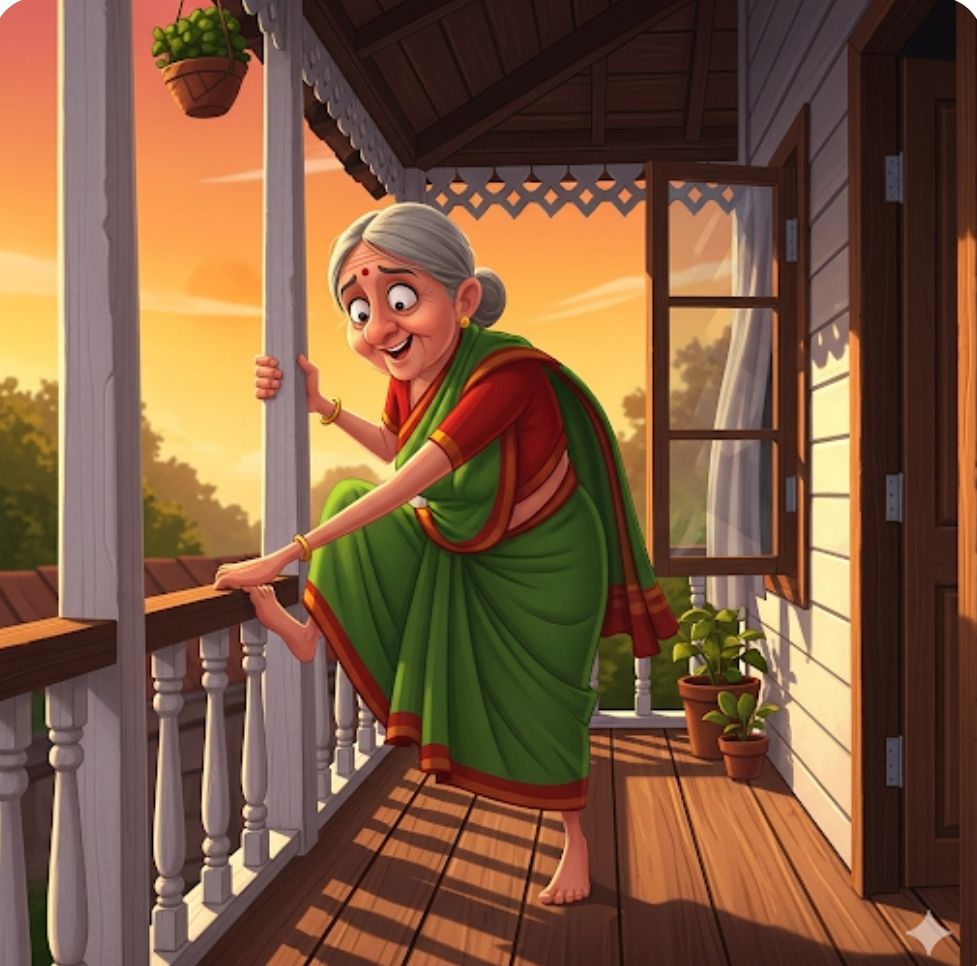
They live right next door. A wall of moderate thickness and medium height separates both the ground floor flats – mine and theirs. The wall has railings. If I scramble over I’ll land on their extended verandah. But I have never dared to do that.

Not that we are too pally. Now and then we engage in polite conversation. “Hi! How are you? Doing well?” Such like. I often see the lady of the house drying clothes on the clothesline. It’s kind of a reminder to me that I also have a pile in the washing machine.

Her house help comes in the afternoon. Between twelve and one. I hear the main gate opening. Then the splash of water. She cleans the verandah regularly.

These everyday noises ensure that life is going on. Like clockwork. There’s something very comforting about that.

***

At night locking the main gate my eyes involuntarily stray towards their door. The iron door is closed but the wooden door is ajar. Even I have the same arrangement in my flat. A grilled iron door opening on the outside and a wooden door opening on the inside. Two sturdy doors. For security.

Through the iron door I can see a portion of their sitting room. The lights are on. Snatches of  conversation spill out. There’s something very reassuring about that.

***

Lately I am not seeing the lady of the house around. She suffers from pulmonary infection. The bouts of cough are not audible either. The iron door is also closed. So is the wooden one.

Perhaps she has gone to her daughter’s place for a few days. Or to her son’s in Australia. She was not comfortable with her daughter-in-law though I heard. But distance makes hearts grow fonder. She must be missing her granddaughter.

The house help comes everyday. I hear the gate being unlatched. The lady must have left an extra pair of keys with her.  The maid is an old hand …. trustworthy.

I sigh deeply.

***

There’s an odd kind of wistfulness in the air. Journey abroad means long absence. I don’t sit on the balcony any longer. It’s awkward. 

Though we were not very close but their quiet presence was a big part of my daily routine. I realise it now. As dusk deepens the silence deepens too. The whole neighborhood seems unusually quiet. Even the smallest sound amplifies. It’s ominous.

I am thinking of going out for a few days. Friend’s. Or relative’s. But everyone is so busy. Everyone so short of time.

***

Yesterday afternoon I heard the sound of their main gate opening. Must be the house help. I listened intently. It seemed somebody unlocked the door from inside. Didn’t hear the turning of the key from outside.

I came out to find the girl cleaning the verandah. On a sudden impulse I thought of asking her. But on second thought I stopped. What if she took it the wrong way.

After a while I heard the door being latched from inside. Did that mean someone’s there?

***

This morning I heard the lady talking to her husband. They were having their morning tea in the verandah. The door to their flat was also ajar. I could see it from my balcony.

The house help came in the afternoon as usual. I heard her chatting with the lady about myriad household chores.

I was to pay my aunt a visit for a week or so. But now I guess I am going to phone and tell her that I won’t be coming anytime soon.

The hands of time are again moving in a cadence of their own.

***

I wrote this story in Bangla first. The English post is not exactly a transliteration. Both languages have  unique turn of phrases. So those who can read Bangla will find the difference. The link to the post is given below.

http://vanderloost.blogspot.com/2025/08/blog-post_31.html?m=1

The Curse – Poem On Prompt


Every Friday, Poets and Storytellers United gives its member poets optional prompts to write a poem or prose in 369 words excluding the title. This time the prompt was unique. The participants had to weave in the following words in their posts : delulu, lewk and broligarchy.

Delulu means believing something which is false

Lewk is the GenZ version of the word look or attire or outfit

Broligarchy (Bro+Oligarchy) is a group of few people from the fields of technology and finance who weild a lot of po)er undermining democratic institutions.

My contribution in response to the prompt is here.

Just click on the link to read:

https://mindspeak-vanderloost.blogspot.com/2025/08/the-curse.html?m=1#comment-form

Don’t Be So Serious


I am the sort of person who takes life very seriously sometimes to my own detriment. I have, accordingly, accepted my age and the associated aches, pains and botherations for granted. Soon after my mother passed away I had this overwhelming feeling that my utility on earth was over and that I should also prepare myself for the passage to eternity.

However, God had other plans and I was stuck at a Super Speciality Hospital undergoing surgeries after surgeries for dear life while all the time scratching my brains as to why at all was I surviving all this menace.

Once you take yourself for granted you cannot look beyond. Perhaps God wants you to do that exactly. I mean look beyond. How does he tell you? He sends signals, messengers and moments of revelations that just happen to get you an alternate perspective.

Well, God did not exactly tell me to go watch Netflix but my epiphanic moments came through these two 2025 movies :

Nonnas

Based on Italian-American restaurateur, Joe Scaravella’s life, this movie is about how the protagonist puts everything at stake to open a restaurant on Staten Island, New York , serving home made meals by real nonnas or grandmothers as chefs who bring their family culinary heirlooms/native cuisines to the table to provide a soulful experience to the customers. The Italian restaurant, Enoteca Maria, named after Joe’s beloved mother, has grandmothers from all over the world as chefs on rotation.

The Thursday Murder Club

Elizabeth Best, a retired spy (?), Ron Ritchie, a former trade unionist, Ibrahim Arif, a retired psychiatrist and Joyce Meadowcroft, an ex-nurse are pensioners living in a  luxurious retirement village called Cooper’s Chase, near the imaginary seaside village of Fairhaven in Kent. They also form the Thursday Murder Club solving  cold cases over tea and biscuits. Investigating the death of Angela Hughes whose boyfriend and sole witness to her supposed suicide, Peter Mercer, goes missing, the Club suspects foul play. While still on the case, they land up being mixed up with the actual murder of a property developer, named Tony Currence, who is the co-owner/investor of Cooper’s Chase. Murder after murder follows till the oldies get to catch the real culprits with the help of the very sharp  female Constable, Donna De Freitas.

“Age is just a number” we mumble often to soothe a croaking compatriot. However, the actual import of the saying dawned on me while watching the nonnas cook up delicious meals and the pensioners getting into the vortex of very messy business. If they can why can’t I?

Now, now that doesn’t mean I am venturing into a blood curdling murder cracking spree  or donning the MasterChef’s cap. I am a temperamental cook who can miraculously manage to dish out barely edible items. Yeah! I do have a snoopy nose and am good at putting two and two together but I’ll keep that to myself.

What I intend to say is life has got immense possibilities. Being past your prime does not mean you cannot experiment with yourself. But hey! Don’t forget to be judicious.  Know your limits. Know your core competencies as well. And put to good use your faculties in amalgamation of both.

Rest is what is destined to be.

Me And The King


This is a lighthearted response to Sadje’s Weekly Photo Prompt

#WDYS

The other day I lost my way

And found myself face to face

With the king of the wild. He gave me a smile,

“I knew it’s you…” I replied,

“How did you?” He chuckled,

“It’s your fragrance Rose? … Lavender?

What’s it’s name? ” “No you silly

It’s Lily” I said with a scoff

Did he for a sec looked off ?

I asked him with a thumping heart

“Now what of me ? Your lunch ? Dinner?

Or breakfast?” He looked away

Disinterestedly, “Now it will never be.

Why did you change your fragrance ?

It sure will give me indigestion”

With that he walked away with a kingly swag

And a regal sway. As I scampered out

Of the wild What did I hear

Quite aloud

Rut tut tut tut-tut-a-tut

As I looked up

On the roof was a pigeon

Giving me a knowing look

“This time you were lucky pal

But don’t think it’s the end of it all

You see the king is on diet for a month

Taking care of his calories

But if you wish to stay alive

Don’t you change your deo ever

To Rose or to Lavender”

With that he turned his back to me

And flew up on the chimney

#Whatdoyousee

Unwanted Guests


A few days back I had two very unwelcome, self invited guests – a slimy lizard and a big, fat rat. Over the years I have seen rats make it to my house around Ganesh Chaturthi. You know rat is the vehicle of the elephant headed Lord Ganesha – the God of prosperity. Even then there’s no reason to let it in.

And a lizard? Simply no no. They have that despicable tendency to suddenly fall on your shoulder. Fable has it that if it falls on your right side it brings good luck. Or is it left? Anyways, once it fell on my head and did a jig but no luck came with it.

Both are now hiding in some cozy nook giving me the jitters. The rat makes it a point to make unexpected appearances as per its own whim and fancy. I laid out the trap – not the iron one with a clasp but now it’s a book with paste. The rat  gets stuck on it unable to move. You just have to throw the whole contraption out hoping the mischief monger will somehow find a way to wrench itself out of the glue.

With the lizard it was a different story. The first time I realised its presence inside, I made all sorts of noise to scare it out – from clapping to shaking the chik (bamboo blind) on which it was lazing  to brandishing a broom accompanied by war cries. But it just looked the other way. Wicked! Then it disappeared. After a while I found it all over the wall in a journey of happy discoveries. Then it made a point to play hide and seek.

The other night when I was retiring to bed I found it on the lower side of the  wall mirror staring fixedly at some invisible insect on the floor. I was all alone. Therefore, more scared. I unlocked the front door, got the broom and attacked it. It dropped on the floor and then crawled up the almirah. I beat it again with the broom. It jumped, fell to the ground and vanished.

Since then it’s not to be seen. But that has not alleviated my fears because every time I dust a corner, draw the curtains, make the bed I dread it will reappear like a jack-in-a-box. Even after my first-in-a-lifetime-fierce-battle with a reptile I am none the braver.

Last night I heard imaginary footsteps all over the house though lizards are not supposed to walk around in shoes. And that indolent rat? I don’t know what mess it’s up to and where. As I switch off the lights at night I feel cold sweat trickling down my back with spine chilling music in the background.

I pray Lord Ganesha will put his vehicle to good use. As for that godforsaken lizard I hope Bappa instills some good sense into its non-existent brain so that it makes a dignified exit out my house.

Ganapati Bappa Moreya

Agle Baras Too Jaldi Aa

(O Lord Ganesha please come soon next year)

But please not with that evil looking rat and  the dreaded lizard!!!

FF : Lovers


Thanks to Rochelle for this week’s Photo Prompt for Friday Fictioneers.

Word Count : 100

My response to the Prompt:

Lovers

As the candles melted and the half empty glass of wine toppled and dripped they gazed silently at the star filled sky holding hands. This was their last night together. They wanted the parting to be memorable.

She had cooked all the dishes he liked. He brought her the perfume she loved. They laughed and joked and reminisced about how they had met the first time.

Every beginning has an end.

Every end is a new beginning.

They agreed to live by that and had signed on the dotted lines with a smile.

The divorce was by mutual consent.

(99 Words)

You can read the other posts here.

Murdered To Perfection


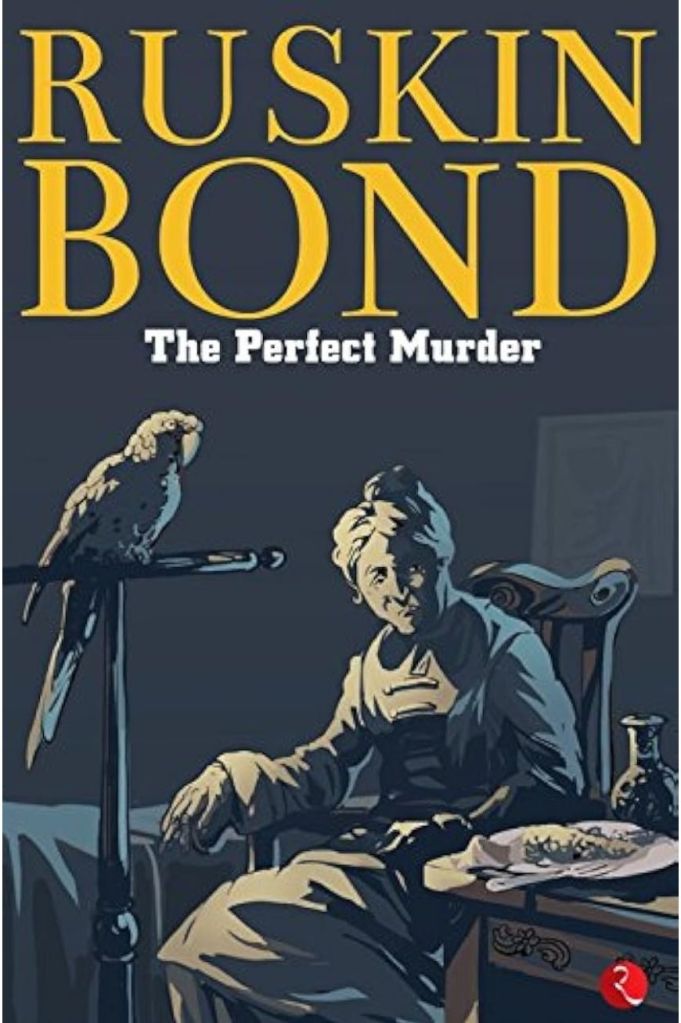
“Is there anything called the Perfect Murder?” Asks the renowned and one of my favourite authors, Ruskin Bond, in the Introduction of this collection of eight short stories by eminent writers, edited by him.

Is murder just a heinous crime or an art by itself, as the Dame of Murder Mysteries, Agatha Christie would say. In quest of a satisfying answer, I poured through this engrossing collection of short stories. The title of the book not only indicated commission as well as contemplation of the act but also what it results in – ignominy or success.

A brief outline of the stories:

The Perfect Murder by Stacie Aumonier (1922)

Paul and Henri, two good for nothing siblings, carried out a plan to murder their aunt, Mrs. Taillandier, by whose death, both would immensely benefit financially. According to them, it’s the most flawless plan with zero chance of suspicion let alone getting caught. Were they successful?

The Red Headed League by Sir Arthur Conan Doyle (1891)

Sherlock Holmes’ extraordinary power of detection was put to test when his red headed client Jabez Wilson, a mediocre pawn broker, recounted his strange employment in the office of the Red Headed League where he had to just copy the Encyclopedia Brittanica, everyday, for four hours from ten to two in lieu of a payment of four pounds a week. Was it just an innocent occupation or a facade behind which plot of a bigger crime was being hatched ?

He Said It With Arsenic by Ruskin Bond (1970)

William Jones was considered the most kind and compassionate nurse till people close to him were mysteriously found dead.

The Interruption by W. W. Jacobs (1926)

Goddard at last tasted the freedom, that he had longed for, after his wife’s death. Soon after the funeral he might have felt lighter and more relaxed had the cook not started obliquely hinting that she knew the actual cause of the death of the lady of the house.

When Al Capone Was Ambushed by Jack Bilbo

The author was recruited as one of  Al Capone’s personal body guards. He narrated how Al Capone was attacked by unknown assailants while going to the hospital to see one of his wounded gunmen. In spite of the sudden attack Capone visited the injured henchman and was saddened by his death.

The Lodger by Marie Belloc Lowndes (1911)

Mr. and Mrs. Bunting were very comfortably placed by their lodger, Mr. Sleuth, till Mrs. Bunting started having grave doubts that he was the serial killer rocking the city of London by the monstrously committed murders every night.

The Duel by Wilkie Collins

The author accompanied his friend, Mr. Romayne, to bring back his ailing aunt from Boulogne. However, the trip was fated to end in a bloody duel.

The Cask Of Amontillado by Edgar Allen Poe (1846)

Two friends but one wanted to neatly remove the other  from this life. Would he be successful?

I have mentioned the first date of publication of these stories wherever possible. As is evident the stories belong to a period when the style of narration was way different from today. Though all the stories do not do justice to the title of the book but a common thread of wilful murder does bind them together.

A Little About Mr. Bond

Ruskin Bond is an author and poet. He was born in 1934 in Kasauli in the Punjab States Agency, British India. He has written more than 500 short stories, essays, and novels including around 69 books for children. He was awarded the country’s highest honours Padma Shree (1999) and Padma Bhushan (2014). He lives in Mussoorie with his adopted family.

TV Time


What TV shows did you watch as a kid?

We did not have TV at home. Father thought it would hamper studies , create distraction and have a bad influence on me and my sister. Honestly, we couldn’t afford it either. It was the era of black and white TV and only a few households had one.

Sunday evening was movie (Hindi) time. A number of families, including ours, got together in one of our neighbour’s  house to watch it. The movie had an intermission too when the news was telecast.

Mid week there was a half an hour program called Chitrahaar which only telecast the song sequences of hit movies. But we (me and my sister) never got permission to watch it. Oh yes! We had to ask our parents for permission beforehand to go watch TV in our neighbour’s house.

Sunday midday was the time when all the interesting serials were telecast. Amongst them the most riveting was Star Trek. We made it a point to watch it. On one of the weekdays there was another fun show –  I Love Lucy.

When Adventures Of Sherlock Holmes starring Jeremy Brett started showing we had to obtain special permission from parents to watch it.

There were others too but we were not lucky  to watch them regularly. Then came the era of Soap Opera. Hum Log was the first Hindi soap to have a successful run. It was about the aspirations of the Middle Class. The ensemble of the cast was from the theatres. It was a runaway hit.

Hum Log was followed by many such soaps. But the one that made history was Buniyaad – a love story during partition.

Then came the era of Ramayan and Mahabharat, serials based on the two mythological epics, telecast on Sunday morning. Streets and markets would be deserted during these shows. These were the first blockbuster hits.

The one series that took the fancy of a murder mystery addict like me was Jasoos Karamchand , the eccentric detective munching carrots and his ‘dumb’ secretary, Kitty.

It’s hard to describe the joy and excitement of watching these serials when options were limited. We used to wait for the clock to strike the time, gain permission and run to the neighbour’s to watch.

Those days people were of different mentality too. I remember the neighbour  whose house we regularly visited for movies and a few other shows would be very offended if we missed even one day. It was like a community gathering.

Today surfing OTTs we often reminisce about those days. Somehow the pleasure of viewership in those times seems far greater than today watching alone in Home theatres or on Smart TVs with huge screens.

What The Fuss


Every language has its own particular expressions which are at times untranslatable because of the layered usage.

In Hindi and Bangla/Bengali there are three different addresses. Aap in Hindi or aapni in Bengali to address elders and seniors respectfully. Tum in Hindi or tumi in Bengali for friends, colleagues and peers. Tu in Hindi or tui in Bengali for juniors and close friends. In certain culture groups aap is used for all irrespective of age. The grammar also changes with the change in address. However, aap is also used in a sarcastic manner when one wishes to be deeply courteous to an unworthy person. Similarly, tu is used as an address to show blatant disrespect.

Bengalis are an emotional lot and their expressions are likewise dramatic. For something awesome and impressive they will say faatafaati with gusto. The word is close to smashing. To express disdain it will be nyaaka said with a grimace for someone who is being overly coy or putting on an act of being super innocent. Bengalis are also fond of lyadh or being supremely lazy. The word shaanghaatik (khatarnak in Hindi) has a double meaning. It literally means dangerous but if uttered with raised eyebrows and rolling eyes the word implies awe and appreciation of another level. It is also used as an exclamation over an intrepid action  which has the seed of blowing up into something unimaginably big. These words and many other, I feel, are very intrinsic to what Bengalis stand for.

In Hindi there is an oft used expression panga lena which is equivalent to messing up with someone. In Mumbai an expression very commonly used is lafda ho gaya which is similar to getting unnecessarily embroiled in a messy situation or a fiasco. This is tapori Hindi or Hindi used in the streets. It is said with a lot of  shrugs and swaggers. Likewise, bhidu is synonymous to ‘bro’ but is typically used by street cronies.

How a language is spoken changes from place to place. In certain parts of Uttar Pradesh like Kanpur the word bey is frequently used in colloquial conversation. However, it may not be considered proper or polite in certain other parts of the same State where chaste lingual expression is upheld as a hallmark of a well spoken person.

Once a colleague wanted me to do a cut paste job in a note. He showed me the relevant portion and said, “Isse chep dena.” The phrase chep dena which means to paste or glue, is slang and not generally used in official communication. It can also mean unnecessary imposition. Among boys another phrase boastfully used is maine usse pel diya – pel dena  means gaining an upper hand on the opponent either physically or verbally.

Indians are fussy about language. You can get duped if it becomes clear by your diction that you don’t belong to a particular region. You can make friends easily if you are quick in adapting to the local lingo. In sharp contrast, a wrong choice of word can lead to a massive showdown where vocab assumes more significance than the actual context.

In a multilingual country with as many dialects language is simply not words. It is a whole gamut of emotions, implications and interpretation. I am sure other languages too have such unique phrases, words and expressions. Do tell me about them in the comment section.