The Boat


In response to Rochelle’s Weekly Photo Prompt for Friday Fictioneers.

Word Count: 100

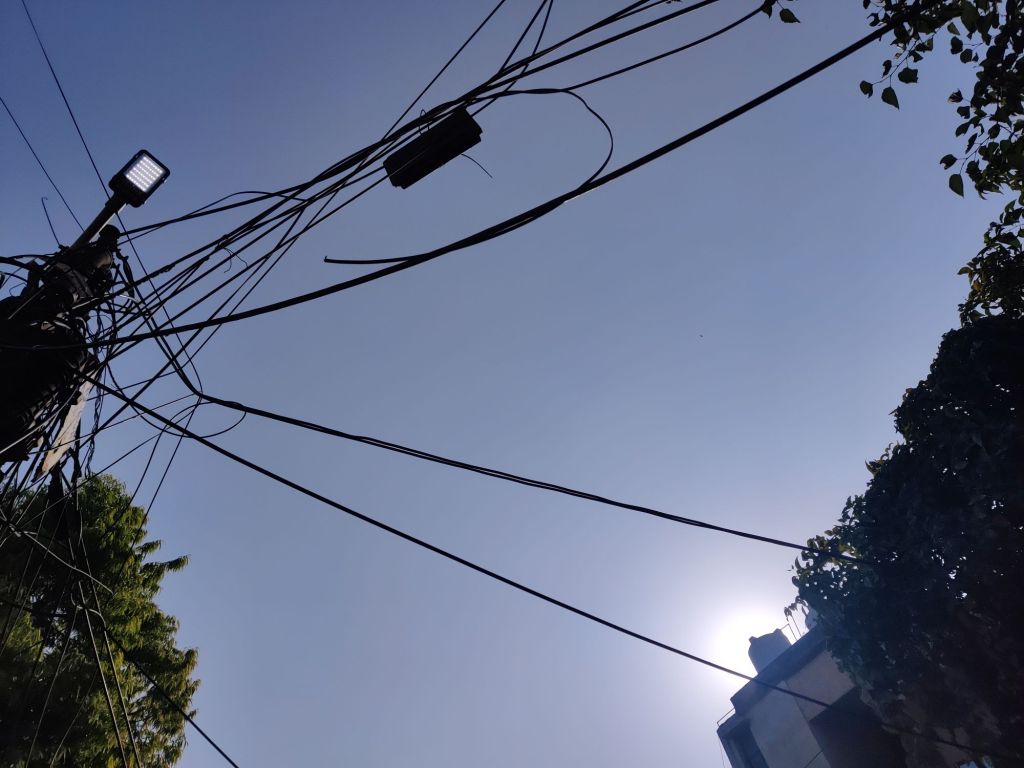
The boat moored at the harbour brought in exotic spices, ivory, gold, fancy fabrics and precious stones.

I looked around searching …opening the tightly packed caskets and packages... impatiently.

It was the shrill alarm of the clock which woke me up.

“Why do you look so woebegone?” Asked Rani.

I told her about the dream…my frantic search…and utter failure.

“But what were you looking for?”

“Oil for my car and gas for my stove.”

***

Word Count: 76

You can read the other stories here.

Postscript: I could only think of the Strait of Hormuz looking at the prompt.

Over A Virtual Cup Of Coffee  – With Trishikh Dasgupta


Trishikh Dasgupta is a polymath – an adventurer, philosopher, writer, painter, photographer, craftsman, innovator and now a published author. His website “Weekend Stories By Trishikh” has a huge and dedicated readership.

A Graduate in Fine Arts and a Diploma holder in Computer Graphics and Multimedia, his wide range of hobbies include photography, videography, graphics, adventure motorcycling, carpentry and playing musical instruments.

However, he says it took him forty years to find his ‘ikigai’ i.e. story telling. Trishikh has written 149 short stories to date, published four books in just the last three months and now converting his written stories into audio formats.

Having recently read his book “Lives Between The Dates”, I was really excited to have a conversation with him over a steaming cup of coffee.

Here it is:

Me : How did storytelling through blogs happen?

T : I have always loved writing and reading. But short stories have attracted me the most. Reading the stalwarts I thought why not write like them.

In 2006, I was introduced to the world of blogging. In 2020 I wrote and shared my first story with the world.

Me: Do you think an essentially Indian content is suitable for a global audience?

T : The more rooted a story is the farther it travels. Human emotion does not carry a passport. The mistake is to dilute cultural specificity in a bid to be “global.”

Me:  How do you propose to protect your timeline from AI Intrusion?

T : AI can replicate structure, even mimic tone. But it cannot live a life The more personal, observed, and lived my stories are the more irreplaceable they become.

Me: The perception that short story format is restrictive. Do you agree?

T: I disagree. Short story is not restrictive. It is exacting, demands precision and cuts sharper. The arc is not smaller but compressed which makes it more intense.

Me: Are your stories exempt from character development since they revolve around towering historical personalities?

T: No. My attempt is to step away from the monument and move closer to the moment to find the human beneath the history. Character development, in my stories, is often subtle and transformative

Me: Why the choice of an unconventional format that does not follow the beginning-middle-end order?

T : As life does not unfold in a neat chronology, sometimes a story begins at the end, finds its beginning later and sometimes it circles a moment allowing the reader to participate, assemble, interpret and feel the story rather than just consume it.

Me: Tell us a little more about your skillful alignment of the protagonist and his  landscape?

T: For me landscape is a character. It breathes, reacts and remembers. The protagonists do not exist independently of the space they inhabit. The two shape each other constantly.

Me:  Audio narration or written story telling? Which one do you enjoy the most?

T : They are two different rhythms of the same heartbeat. Written storytelling is intimate and intense. Audio, on the other hand, is immediate. It reaches those who are differently abled or those who may never sit down to read but will listen.

I enjoy writing more. But I deeply value audio because it gives the story another life, audience and dimension.

Me: Over 26 years in the field of communication has it facilitated you as a short story writer?

T: Immensely. Communication taught me discipline,  audience awareness, clarity of thought and the power of structure. But more importantly, it exposed me to people, stories, and realities across sectors and geographies.

Me: As many bloggers aspire to be published authors a little about KDP.

T: KDP has democratized publishing. For bloggers, it offers a natural transition from scattered pieces to a curated body of work. The key is not just to compile but to craft as well.  The responsibility of quality, editing, design and positioning is entirely on the author.

Me : How do you maintain work life balance in your busy schedule?

T : I don’t always succeed. But I have learned to integrate rather than separate. Balance, for me is the assurance that the things that matter are not neglected for too long.

Me: Do your various other passions enhance you as a short story writer?

T: Absolutely. Photography sharpens observation. Painting teaches composition and silence. Travel expands perspective.

Me: As we sip the last of our coffee the way forward as a blogger-writer?

T : More stories, perhaps novels. Expanding audio. Exploring translation. Reaching audiences beyond language and geography.

That’s looking at an enormous gamut of work but I am sure with your extraordinary skills, awe inspiring talent and positively driven energy you will not only achieve much more but also be a guiding star for others. All the best.


Is it…?


Sharing this with Esther’s Weekly Word Prompt: Vision.

I am reading Sijo, a Korean form of poetry, which has a unique construct and a strange similarity with haiku.

This open verse is not sijo..not haiku …but inspired by both…

Why do I always

Look up to the sky

And sigh…?

Is it’s limitlessness

That makes me

Feel small ?

Is it’s unfathomable depth

That makes me

Feel shallow ?

Is it’s sparkling blueness

That reminds me

Of my lack of colour?

Once again I sigh

Deeply…unable

To find the meaning

Of my sigh

The meaning of

My self

Teardrops And Moutain Flute


This is in response to Sadje’s Weekly Photo Prompts on #Whatdoyousee

old letters

teardrops printed

here and there

***

a lone eyelash

pressed inside the

frayed folds of an old letter

childhood crush

***

words

still fragnant

of wild flowers

an untrodden mountain track

recalls the cuckoo’s song

***

mountain flute

the rapt attention of

a wandering deer

***

unbidden path

climbing up the majestic peaks

a novice monk’s tired soles

in search of God

***

young shepherd

blows the notes

into his flute

the old flautist

catches the tune

midair

jugalbandi

#Wdsy

Jugalbandi refers to  a duet performance in Indian classical music or dance, featuring two soloists (vocalists or instrumentalists) performing in a playful competition, mutual dialogue, and melodic interplay in harmonious pairing where both artists are equals, challenging each other’s creativity.

A Different Depiction Of History


I have been following Trishikh Dasgupta’s short stories  for many years on Storynook. Somewhere between reading his posts and interacting  with him I had asked whether he contemplated getting published. So, when he finally did I had to grab a copy.

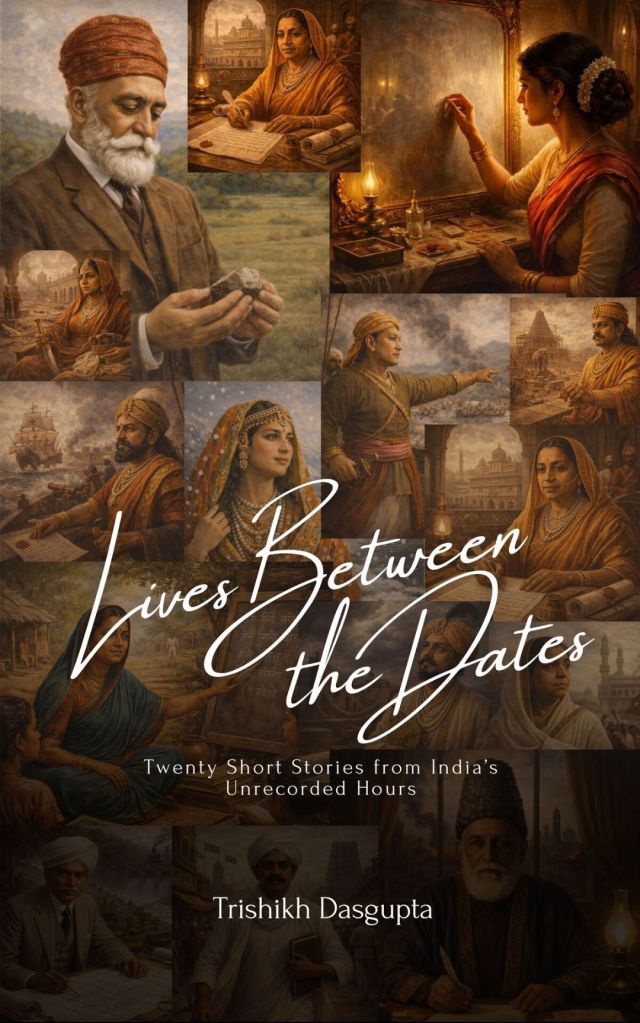
Lives Between The Dates is his third publication – a collection of  short stories weaved around twenty historical figures spanning centuries and regions.

However, these stories do not follow the conventional retelling of historical sagas. These stories magnify moments which have evaded clinical documentation – moments of indecision, uncertainty, apprehension and deliberations.

“These were not memories that announced themselves as history. They were domestic, insistent, intimate. They belonged to courtyards, not chronicles.“

Moments which were “…like a held breath that could be released at any moment.“

We have a quietly observant labour activist and social reformer – Anusuya Sarabhai , a pensive word weaver –  Sadat Hassan Manto ,  a precision passionate engineer – M Visvesvaraya, a quietly contemplative poetess and skilful orator – Sarojini Naidu, a reminiscent rebel leader – Begum Hazrat Mahal and such other towering history makers caught in their unchronicled hours of  vacillation and self introspection.

“The difference between mercy and indulgence, she knew, lay not in feeling but in proportion. Too much and the structure weakened. Too little and it hardened into cruelty. Administration required a hand steady enough to find the narrow passage between.“

In brief Trishikh humanises history. He compels readers to acknowledge that those who made history could also have momentary self doubt and trepidations necessitating self review and reconciliation.

“She had learned to recognize this pause, the thin space before conviction hardened into motion.“

“…one listens to a truth that does not require agreement. Resistance, he understood, was sustained not by constant fury, but by the stubborn insistence on returning to work.“

“Ambition liked to dress itself as inevitability. Responsibility was quieter. It arrived with questions.“

Trishikh’s distinctive narrating style originates from his unmistakable command over the language, in-depth knowledge of history and a remarkable intuitive alliance with the terrain, in which the stories are set, elevating it into a living, breathing character.

“The land did not yet know what it was meant to become. It lay open and undecided, grass bending unevenly where the wind found reason to pass, red earth showing through in patches that refused neatness. A line of trees stood at a distance, their shade unoffered, their patience untested. “

“He thought of the river again, of how it taught patience by refusing it, of how it punished certainty with silence. Vulnerability, he realised, was not the opposite of readiness. It was another form of it.“

“The sea breathed in and out, unconcerned with flags, its surface carrying both promise and refusal in equal measure.“

“A woman bargained for grain. A child stomped his feet in a tantrum only to recover after being ignored. A temple bell marked an hour that did not ask to be commemorated. The city trusted its small mechanisms.“

“Guwahati understood anticipation. It had learned how to hold itself before the moment arrived.“

“Its temples were built not only of stone, but of pauses repeated until they became tradition.“

“Charcoal smoke carrying the promise of kebabs turned slowly, patiently, as if time itself were an ingredient.“

“A bird hopped once and decided against entering. The city moved on, unconcerned with this particular decision, trusting that it would be made.“

“Its temples were built not only of stone, but of pauses repeated until they became tradition.“

—-

This book is not only for history buffs but also for lovers of language and discerners of human dilemmas preceding commitment, accountability and trueness of intent and purpose.

“He thought of reputation, the word used so easily by men who preferred surfaces. Reputation could be repaired, adjusted, managed. Conscience was less accommodating. It kept its own ledger.“

“He imagined the alternative, the small failure that would never quite explain itself. The choice settled.“

“At the threshold, he paused and looked back once, at the desk, the lamp, the open window. The office had kept his confidence. He returned it by leaving nothing unresolved.”

Sunshine Spills


I am thankful to Rajeshwari of Nishabd for nominating my blog space  Panaecea for the Sunshine Blogger Award.  She is one of my consistent readers and her comments on my posts are uniquely perceptive.

I have been blogging for fifteen years, at first inconsistently, but post retirement, regularly. Blogging is not separate from writing – only the platform is different of course with unlimited freedom to express and share. The instant acknowledgement of readers is most gratifying and the interaction with other versatile and erudite bloggers, across the globe, priceless.

Recognition through awards undoubtedly is enormously encouraging. However, when a reader comments, “I come back to your posts because I relate to them” is the true testimony of a blogger’s worth.

Now coming to the interesting set of questions put up by Rajeshwari for the nominees.

1. What is something small that makes you unexpectedly happy?

I am very happy to ‘find’ myself in the mundanity of life – the miniscule moments and the infinitesimal pauses in between.


2. Do you write more from feeling or from thought?

Both because thoughts and feelings are interconnected and at times even interchangeable as they blend into each other.

3. What does silence mean to you?

Silence is a marker of identification  facilitating limitless introspection and creativity.

4. A song you never skip — and why?

Songs are mood centric. Adhering to one particular is akin to negating a lot many which speak to me in various ways.

5. What is something you’ve outgrown but still carry within you?

I have outgrown myself. What I was I am not today. Having said so I still carry my old self with me which is now, with time and experience, more adaptive, inclusive and also self-acceptive.

6. Do you believe being “soft” is a strength?

“Soft” is quiet strength which outlives and outshines loud and noisy assertiveness.

7. What inspires you to keep creating?

Movements and shifts in perspective.

8. Are you more of a listener or a speaker?

I am more of a listener and observer. But I am also very vocal on issues close to my heart.

9. What is one feeling you find hard to explain?

When joy and grief intertwine.

10. What makes something feel real to you?

When experience becomes a voyage of true self discovery.

11. If your blog had a mood, what would it feel like?

The mood of my blog space is essentially reminiscent and reflective.

My nominations for this award :

  1. Seven Sisters
  2. J. Mathur
  3. Keep It Alive
  4. Maazepuran
  5. Special Mom’s Blog

Now, the questions

  1. If you had to describe your blogging journey in one word what would it be ?
  2. How have you evolved as a person through blogging?
  3. What is your ultimate aspiration as a blogger?
  4. Do you see blogging as a platform distinct from other social media ? Why?
  5. What is the one thing that bothers you as a blogger?
  6. What is the one thing you miss as a blogger ?
  7. Do you think blogging is a marker of social identity?
  8. Creative satisfaction or popularity ?
  9. How do you maintain blog-life balance?
  10. Share a comment which has stayed with you?
  11. What according to you facilitates or enhances blogging ?
  12. What advice would you give to new entrants to blogging ?

The Signal


This is in response to Esther’s Weekly Word Prompt.

This week’s word : Board

***

The Signal

It changed to red.

He stopped the vehicle just a few inches from the zebra crossing. Impatiently.

This traffic signal was long. He was trying so much to avoid the forced stop. Praying silently that it would be “go-ahead-green” so that he could just pass by.

Today the Company’s Board of Directors Meeting was to be held.

He was getting late.

But nothing could be done now.

He looked around.

This locality was known to him having spent his entire childhood and the most part of youth here.

To the left the road turned into a gully.

He knew that gully so well.

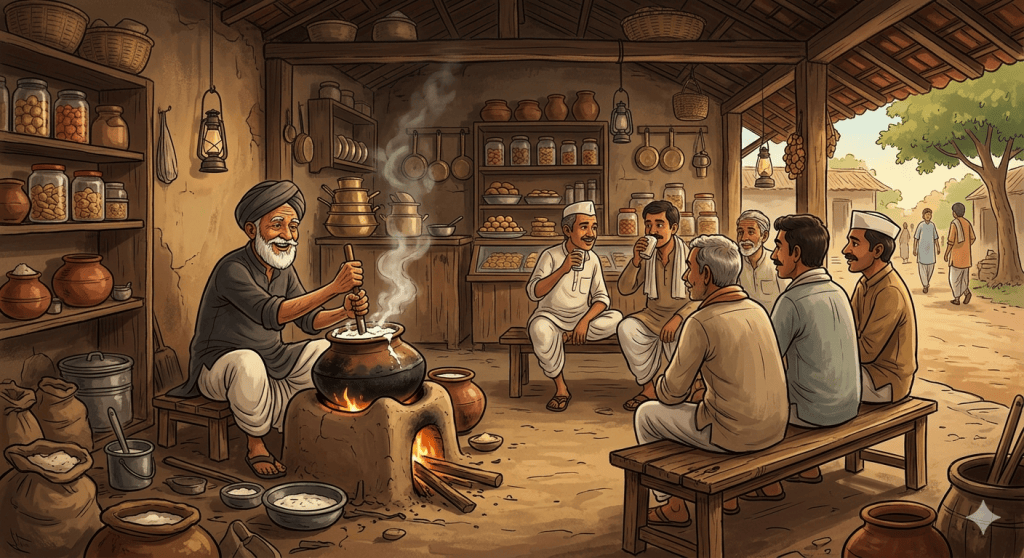
There was a mithai (sweet) shop in the corner right at the entrance where he and his friends savoured lassi for just a few paise per glass – a tall one made of steel shining in the sun.

In fact, there were two sweet shops next to each other owned by two brothers. But the one siding the gully did more business. The walls of the shop and the footpath on which it stood had blackened with soot, ash and lack of attention. However, the look of the shop did not matter much. What it sold did.

In front a few wooden benches would be  occupied by bulky bodies in shalwar kameez, the scrawny in lungi and dhoti, the better placed in churidar kurta or pyjama or shirt and trouser – the regular customers –  enjoying a cool drink before the start of the day or middle of work or in the evenings before going back home.

And that huge black kadhai (wok) in which simmered milk – its upper layer condensing slowly and thickening to a hard crust as the day progressed. It’s inviting freshness in the air! The wok was placed on a traditional earthen chulha (wood and coal stove) –  temperature well adjusted. At times a ladel with a long handle would be  dug in to give the milk a gentle swerve so as not to let it get burnt and the lower layers stuck at the bottom.

The curd was home made kept in an oval shaped utensil half covered. The lassi was handmade – a scoop of curd churned with ice and sugar in a stainless steel lota (pot) with a short, wooden baton, wet and slippery,  in constant touch with milk and curd and malai. After every churn the man wiped the baton with a well worn towel and whirled the liquid from the lota to the glass and back a number of times to give the lassi a frothy texture. He loved to watch the whirl and the swirl – like pure white waves cascading alternately from a high crest to a low trough and so forth  – the motion so well coordinated that not a single drop spilled out. Before serving, the mithaiwallah (sweet seller) would cut a small part of the malai (thick hard crust of milk) to top the lassi before placing the glass in the hands of the customers with a flourish.

In hot summer days the shopkeeper brandished a pankha (handheld small bamboo fan) like a wand to ward off the ubiquitous mosquitoes and flies hovering over the milk and mithais (sweets). Sometimes he covered half the milk wok too with a matching lid which opened and closed like a shutter. The sweets displayed on trays were covered with cloth covers. In winters the shop sold glasses of warm, malaidar (crusted) milk.

He suddenly realised that his mouth was watering and stomach growling. He had skipped his breakfast in a hurry to get to office on time.

On a spur of the moment he decided to step out and drink a glass of lassi with some hot, crunchy jalebis.

He manoeuvred his car slowly to the left and stopped right in front of the sweet shop.

The facade had changed. So had the owner – a young man with a dour face – the second or third generation most probably – the smiling, welcoming faces of his forefathers now replaced by furrowed brows and drooping lips.

On the outside a big neon signboard announced the presence of the “joint”. He couldn’t remember whether the one he remembered from his childhood days had a name. It was known by the quality of its products – the owner being the identifier – Bondey ki dukan (Bondey’s shop)!!

The interior now modernized was all shiny glass and aluminium. Tiled walls, artificially controlled temperature, refrigerated stuff, sweets and namkeens (tangy salty mixtures) attractively displayed in glass cases and formal, no-nonsense transactions. A digital  weighing machine sat in the middle of the counter top for the benefit of both the seller and the buyer.

The iron kadhai, in which boiled the milk in the open, was gone. Gone was the whirly- swirly cascade of  froth, the wooden bench, the informal air, the slurps forming creamy lines of moustaches on the upper lips, the tangy gossips, the loud guffaws, the exchange of coins, the jangle of the makeshift galla (where day’s earnings were stashed), the milk and curd smell mixed with hard earned sweat, the buzzing flies and the inadequate swish of the pankha.

He ordered a glass of  lassi.

The man presented him a digitised bill with hurried efficiency before getting him his order.

He couldn’t even remember the number of times he had drank lassi from the shop without paying. The shopkeeper kept an account in the name of the family. Baba paid the money and later when in college he cleared his outstandings at the end of the month.

He looked at the slip of paper in his hand now – ₹150/- per glass! He was not surprised. With the passage of time, the rising cost of production and maintaining a shop with uniformed  staff  in a prime location the inflated rate was a given.

He paid and waited. The staff went to a freezer kept on the right hand side opened it and took out a glass which resembled a miniature earthen pot but it was not. This was an era ruled by plastic and it’s variants.

And the lassi was not freshly prepared in front of the customer. It was “pre-manufactured”.

Jalebis were only available early mornings or evenings. So he did without them.

He took the first sip. The watery liquid coursed down his throat.

It was too light.

Too thin.

Too sweet.

And no malai.

He grimaced, gulped down the rest and dashed out of the shop.

The signal had turned green.

Learning English


For many years we stayed in a fully furnished house facing a big park. The owner of the house was an elderly gentleman most probably in his sixties or seventies. He was tall, well built and surprisingly active given his age. He lived alone as his sons and daughters were all based elsewhere. We called him Dadu (grandfather).

One of his hobbies was learning new words in English which he meticulously noted down with meaning in a diary in neat handwriting. From him I learnt to read the dictionary to increase English vocabulary.

I don’t remember when and why he took it upon himself  to teach me the language. Having worked under the British his English was impeccable and love for the subject unquestionable.

Everyday right before lunch I had to spend an hour with him to learn grammar, essay and the works. He referred to a red jacketed book.

It is during this time that I felt the most sleepy and hungry. I would sit facing a cabinet with a medium sized square shaped mirror through which I could see the wall at the back on which hung an old fashioned clock. Throughout the session I would be stealing glances at the clock through the mirror. However, the hour seemed to stretch endlessly.

I don’t think I fared very well. But Dadu never scolded me. He was patient and persistent. There was another green coloured book from which he taught me how to write essays, passages and precis. It’s preci that he focussed the most because according to him it was very important.

Though I tried hard but could not master what he called the art of preci writing. Since, it was difficult I lost interest quickly too. But the old man, strict to the rules, kept tutoring me diligently.

The credit for whatever little English I know today goes to him. I also learnt dedication and discipline from him. The enthusiasm with which he taught without any pecuniary benefits was exemplary. 

Granny’s Love


This is in response to Rochelle’s Weekly Photo Prompt for Friday Fictioneers.

Word Count: 100

“Granny, what’s there in that bag?“

“Grand dad’s love”

“Show me”

“You cannot see. You have to feel it.”

And so it passed from one generation to the next.

What an inheritance! Sometimes I thought to myself.

Yet when my children asked I gave the same reply as granny gave.

Till one day while spring cleaning the bucket shaped bag was brought down and dusted robustly.

And a tear in the lining spilled out a few sparkling granules.

“What are these granny?’

I blinked twice.

Was my cataract again playing mischief???

91 Words

You can read the other stories here.

March – A Wrap Up


These monthly wrap-up posts since February are primarily to keep a track of my healing along with a few other add-ons.

Season: March is the harbinger of spring this part of the globe but it’s also the month which bids farewell to the season.

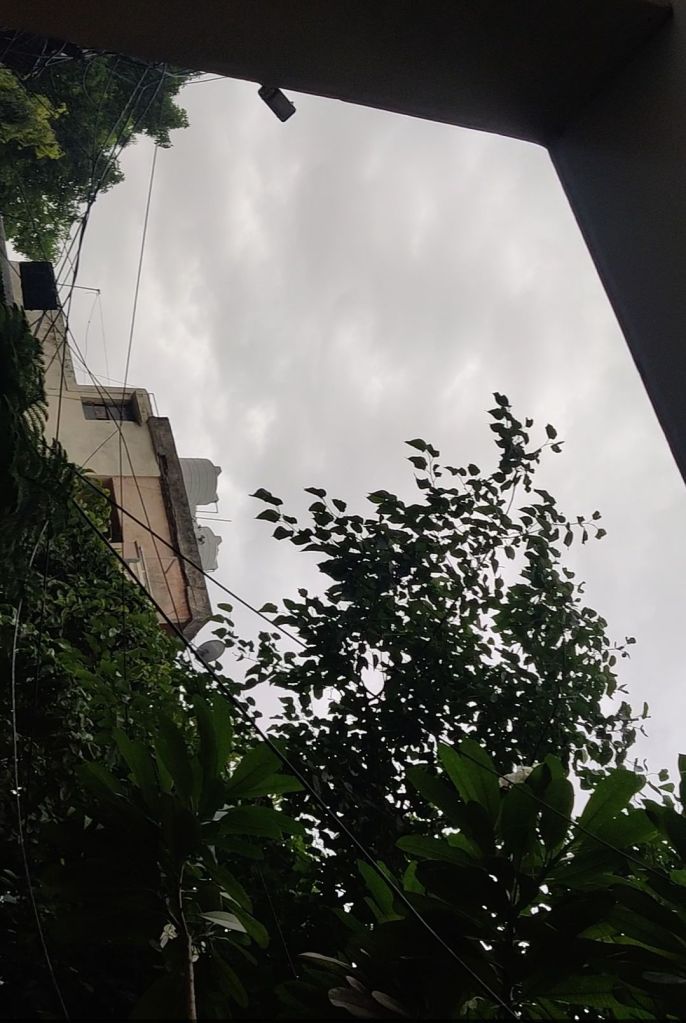
For the last two weeks during the day a dazzling sun beams down while by the afternoon a dark and overcast sky brings in sudden showers – not too heavy but the temperature shoots down – a relief!

Health : Been visiting the ENT Specialist due to recurrent throat infection – (most probably a decline in  immunity) – an old school medical practitioner  believes in prescribing not too heavy medication.

Yet,  I cannot hold the dosages for long – follow loss of appetite, stomach upset, overall fatigue and body ache – disrupting daily routine – especially, walks and exercises for the time being put to a halt.

Lost three and a half  kilos in one week which made me happy and unhappy given the sudden spells of heart palpitations. Not any crash dieting just a little bit of tweaks here and there –  less sugar, carb less dinner, lighter meals and things like that.

Surrounds : Trial runs of the new Metro line right outside the block are on. Can hear the trains rushing past from inside the flat. Will make a video soon.

Two days back my Champa tree got a real shaving. Bunches of recently bloomed flowers were casualties. 😭

Advantage – more sunlight for other plants. Disadvantage – anticipated increase in heat inside – worrisome because I am averse to artificial cooling systems.

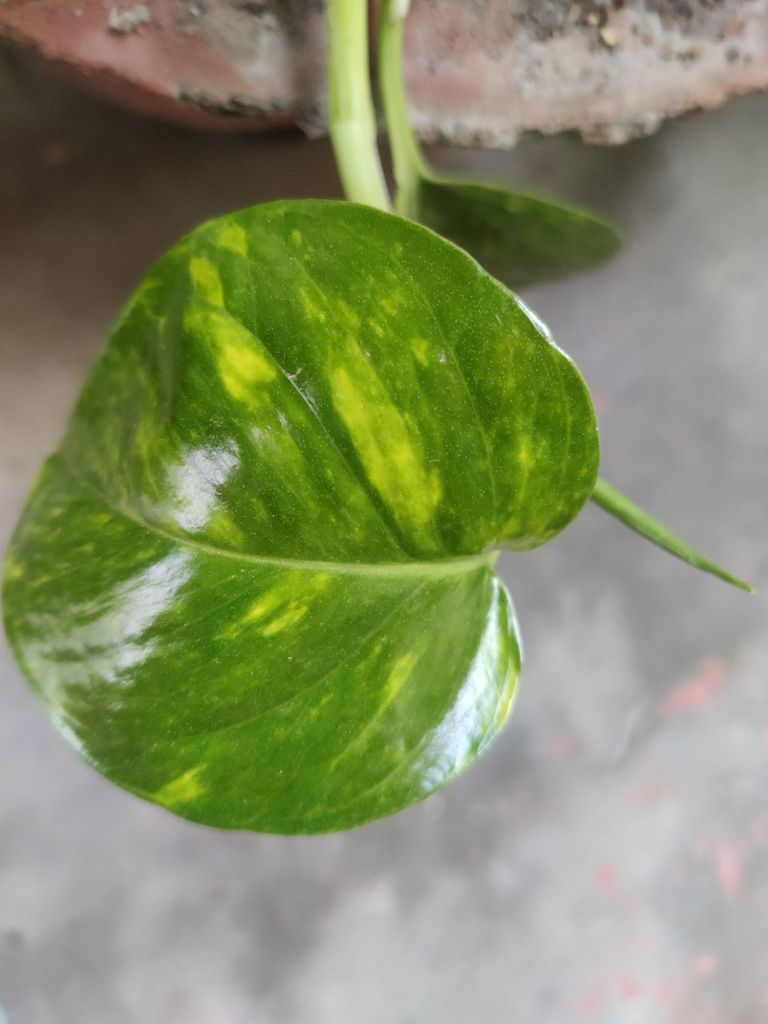
A long stem growing perpendicular in the money plant pot was a surprise – turned out to be weed which has since been scooped out. More new leaves sprouting. Glad.

Books And Binges : After one historical tome,  half way into another collection of short stories around historical figures. Too much history – have to change the subject now.

More into soft themes – started on Doctor Bahu (Pakistani Serial).  Kdrama Can This Love Be Translated is still not over. Also in the bucket list are a few retros. Made In Korea, a multi lingual movie, was an interesting watch. Back to Bong movie – Projapoti 2 and  dramas from the other side of river Padma (Bangladesh) – short, cute, fun and romantic.

In audio stories now listening to Nilesh Misra. More on this later.

Family Time : An unexpected family bash – quite happening but tiring. The venue near the Airport was a long drive! The catch-ups went on way past lunch. Was afraid the hotel staff might shove us out. Thankfully saved.😂

Heavy duty emotional moment meeting my grand niece for the first time. Yes, the tiny fairy was in the city!!! No pics to maintain digital privacy.

A Few Missed Opportunities: A Heritage Walk, so very much looking forward to, never happened. 😢

The community service planned for the 4th of March, father’s  anniversary day , had to be postponed twice as it coincided first with Holi and thereafter with the arrival of my grand niece.

Experiments And Innovations: Innovated with induction cooking. Sustainable. Only the water quotient in preparations has to be checked as evaporation is less compared to gas stove.

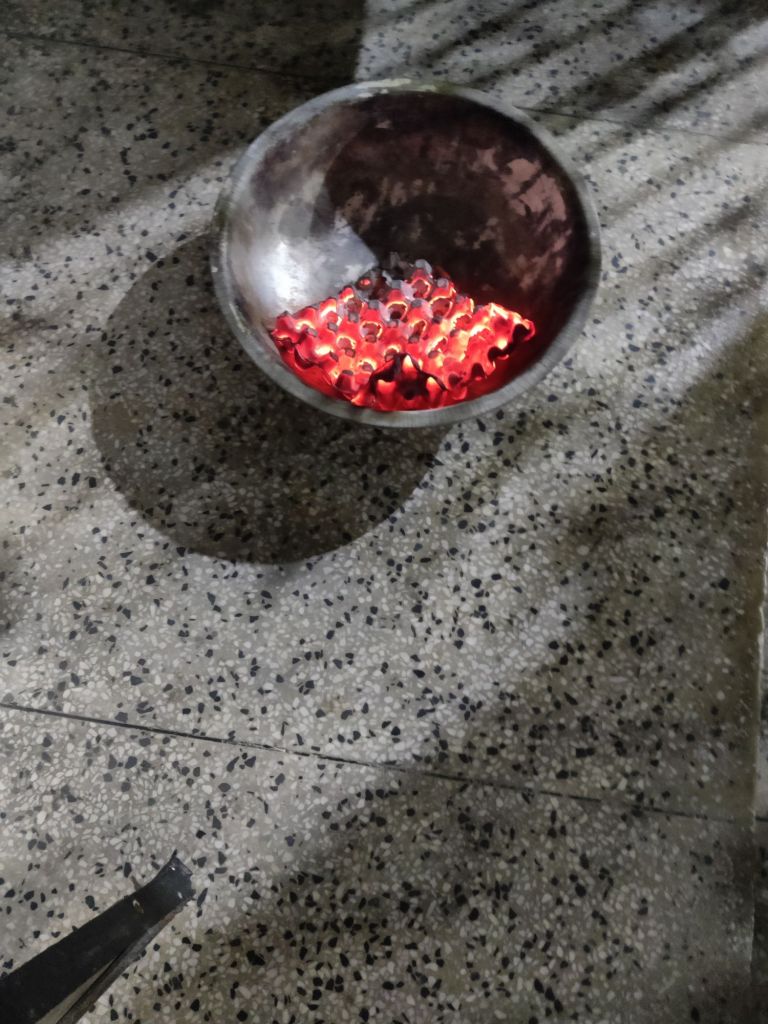
Warfare against mosquitoes the alternate way – burning egg crates – a tip off from one of my house-helps – surprisingly effective!!

Since my Echo Dot was giving trouble switched over to FM Radio. So you can go backwards in technology too.

Culinary Adventures: The Nepali dish Chukauni has become quite a staple. Tried Machher Tauk for the first time which is a tangy fish curry for the summers. Turned out well.

Phew….

Quite a lengthy list. Makes me feel very ‘accomplished’. Ahem… May have left out a few. If I remember later may edit the post.

Till then…