A Book Of Sijo


In my post on TBR 2026 I had said poetry would sneak in some way or the other in due course of reading and how correct I was.

I have been reading sijos, off and on , in different posts of co-bloggers. But when I browsed through Amazon for an anthology I found them out of reach price wise. Then I happened to find this ebook containing one hundred sijos, translated by Seo, Kang-Jin.
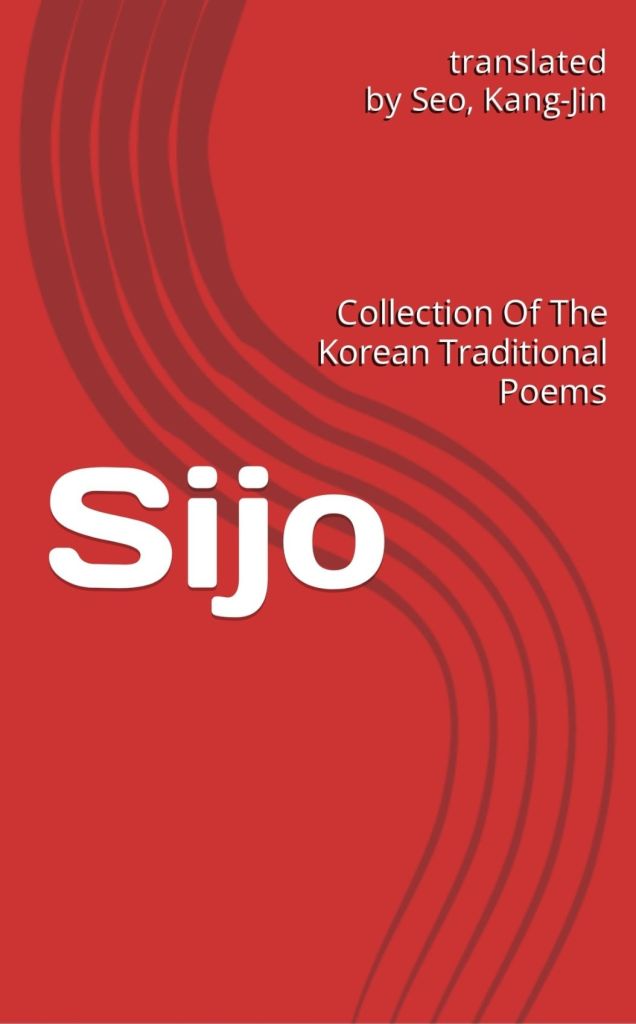
Wiki says Sijo is a traditional Korean poetic form that emerged during the Goryeo dynasty and flourished in the Joseon dynasty. It is still an active form of poetry consisting of three lines (42-48 syllables total) featuring a three line structure. Line-1 is the theme which gets elaborated in Line 2 with a counter-theme/twist followed by a conclusion in Line 3.

Traditionally each line has a pause (caesura) in the middle, totaling 14–16 syllables per line and explores bucolic, metaphysical, cosmological or personal themes with the first half of the final line introducing a “twist”. This form of poetry was originated by the yangban (educated elite) to express loyalist, philosophical or nature-focused sentiments, later expanding to include personal emotion.

In this book many of the sijos are socio-political, culture and history specific to the country. Yet, some have a universal tenor to it.
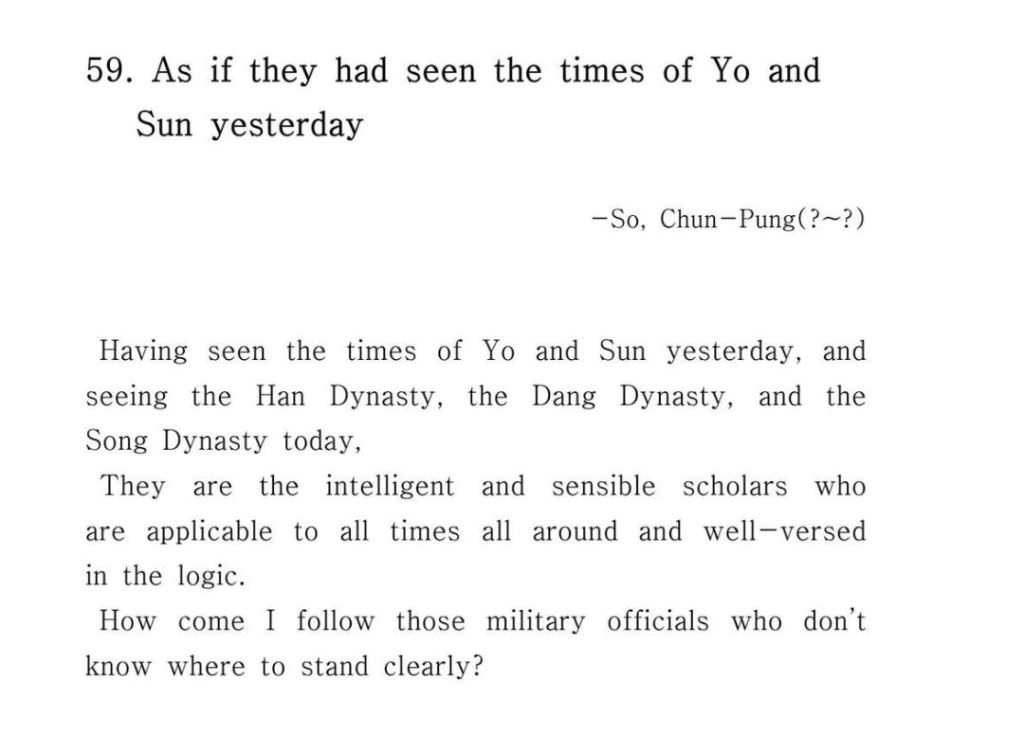
Translations, if not done accurately, lessen the beauty of the form. Having said that, it is difficult to exactly translate poems contextually which is very apparent in this poem.
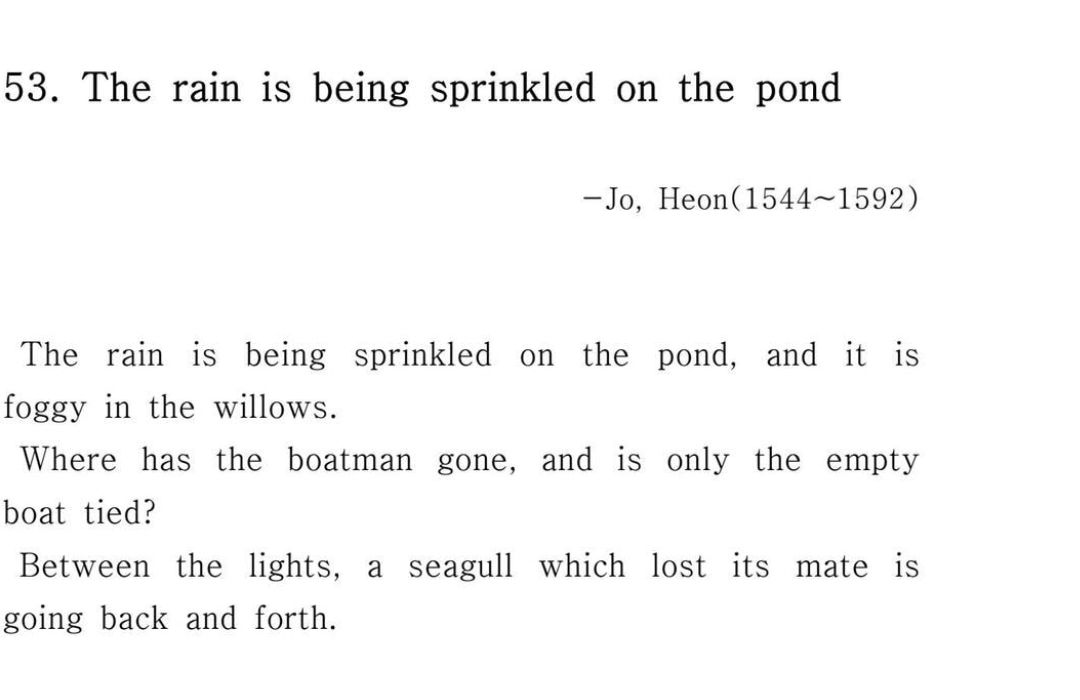
The metaphorical note in this poem is captivating.
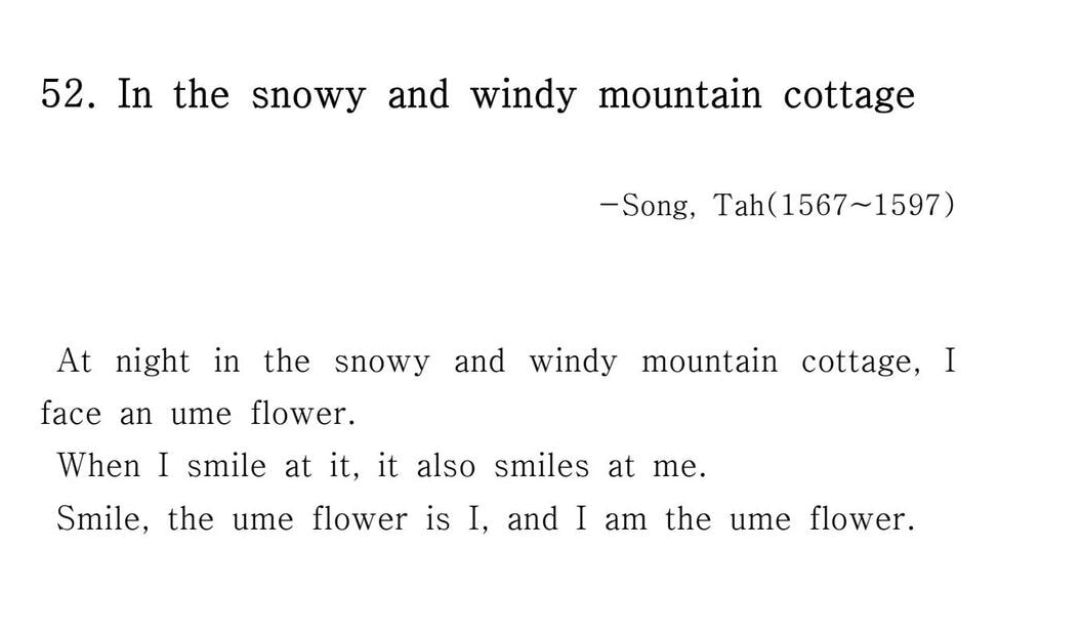
Sometimes, the poems acquire a factual facade belying deeper meanings beneath.
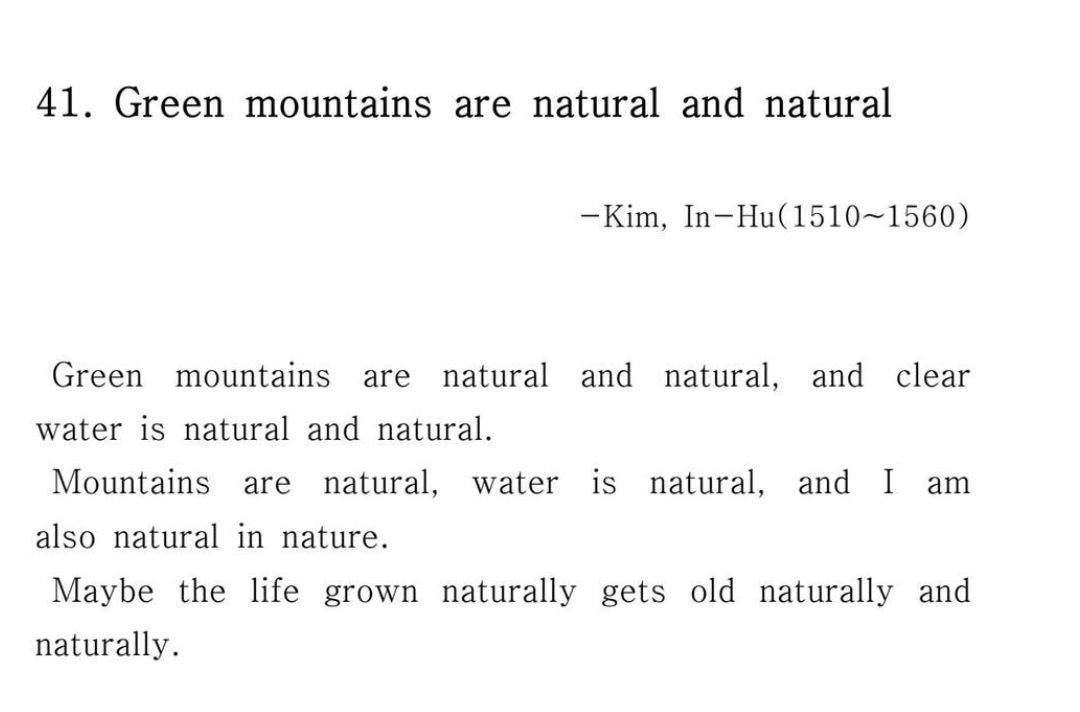
I found this poem pragmatic and twisty at the same time bringing in a sharp contrast between reality and desire.
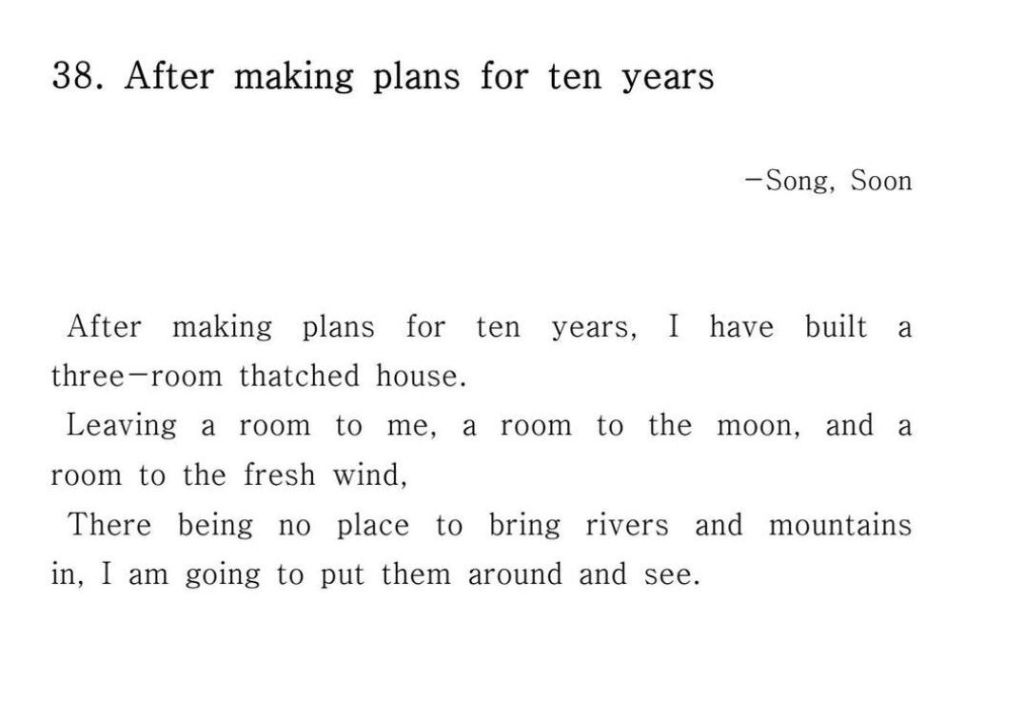
The deep underlying pathos in this poem is moving and makes one deeply aware of the transience in life.
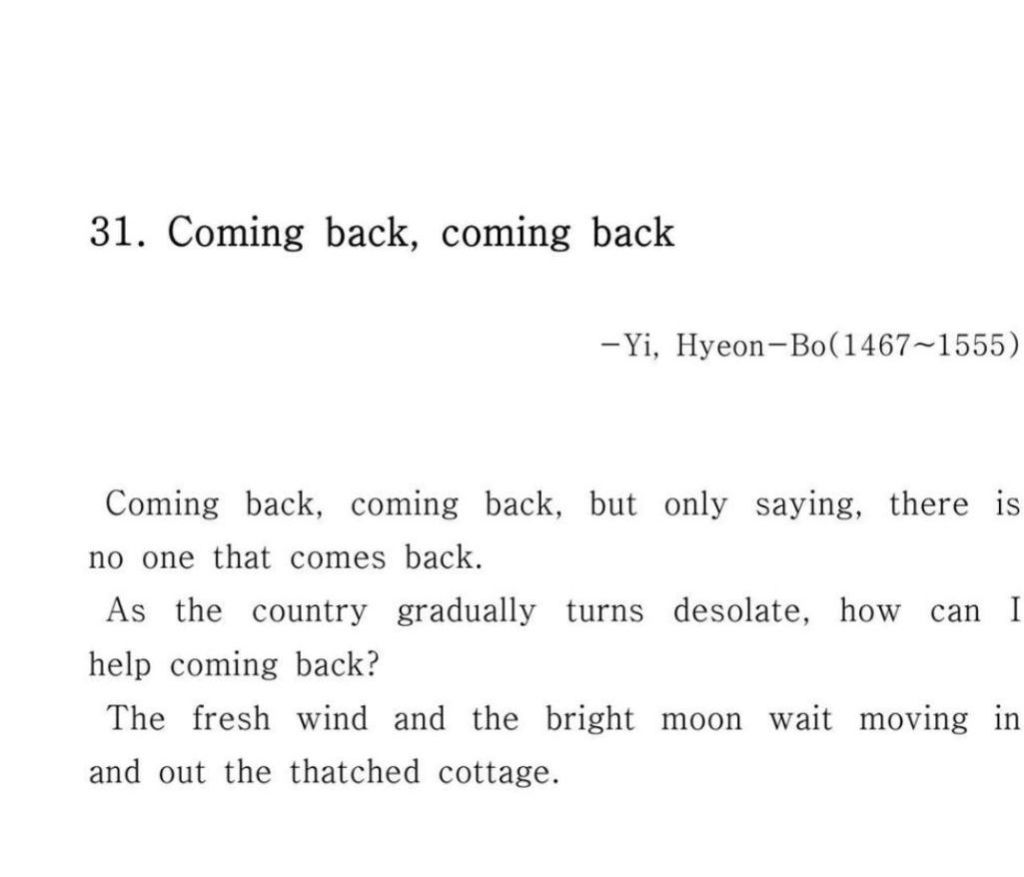
I won’t say this is the best book on Sijo. There are many examples of the poetic form available online. A breakaway from the traditional Japanese style of minimal poetry, haiku and senryu, it appears to be a combination of both, grounded in the ethos and ethnicity of the country, where it grew as a distinct form of expression having that remarkable art of caesura, leaving a lot to the imagination and interpretation of the readers and not lacking in universality either.

This book by  Seo Kang-Jin gives a fair idea of this borrowed but at the same time a unique, standalone poetry.

Enjoy reading.
Multitasking And Me


It is said that the human brain is not meant for multitasking. Contrary to this my boss thought the ability to multitask denoted efficiency and speed. However, I was also witness to his making blunders in a bid  to reach the finishing line within  a slim timeline.

My mother always forbade me to  do anything else while keeping something on the stove to cook. Of late I have found it hard to focus on multiple tasks at the same time, especially, reading the Newspaper while the milk is put to a boil on the gas stove. The milk invariably condenses to half its quantity by the time I remember checking on it. That has made me buy a Milk Cooker. Its shrill whistle at boiling point can even wake up the dead.

The other day a persistent burning smell made me scoff at my neighbour. I was glad that I was not the only forgetful resident in the Block. However, a chance peep into the kitchen proved me wrong. A narrow escape from an explosion made me take a vow to singularly focus on the job in hand.

In fact, multitasking implies doing multiple tasks at the same time which in turn means not focussing enough on one particular job. I guess this habit itself can be the cause of the attention deficit that we all suffer from in today’s times. Or it can be the other way round as well. We suffer from attention deficiency which is why we are unable to do several jobs at the same time. Whichever way  it may be, it is better to concentrate on one single task, absorb in the moment, complete it satisfactorily and then move on to the next.

I see young jobbers with ear pods on listening to music or chatting while feverishly tapping away on the keypad. When we were small all our activities were slotted. Mornings were for study or for school if it were a week day, breaks were for partaking meals or for other daily routine works, afternoons we napped or read a book, evenings were playtime, returning home we did our homework, the family met at the dinner table at night whereafter we either listened to the radio or read a book before going off to sleep. Though my sister said it was relaxing for her to listen to soft music while doing the sums for me it was an absolute no no as music always distracted me.

Post retirement, I have again slotted my day to day chores as per convenience. If something seems tough and taxing I break it down to bits and pieces. As my esteemed co-blogger Nusrat puts it one gentle step at a time. But it’s taken me pretty long to adopt a slow pace though lifestyle management experts say that sedentary living is the root cause of many ailments.

In contrast,  three years back I was given to working at a breakneck speed so much so that it often felt like I was racing against time. Managing the house and office simultaneously was not easy. I worked non-stop even during lunch break, while commuting to and from the office and even waking up in the dead of the night. My colleagues accused me of being a workaholic.

But as life took a three hundred and sixty degree turn last year I realised that pacing out was as much necessary as delivering outputs without rest. But much before that I had been suffering from acute mental and physical exhaustion. I guess I was burned out. So when my seniors suggested that I continue in my present assignment for a while even after retirement I had put down my foot and said no.

In hindsight it was the best decision I could have ever taken though it meant foregoing a continued source of income.

This Evening


I have not been keeping well since my last outing – the reason why I am posting less on WP. Also the fact that I have decided to read more and write less.

After almost a week I was out for a walk in the evening. It was hot and sweaty. Nevertheless, I was determined to push myself, crossed over to the park, chose my favourite red bench and rested awhile before getting up and walking through towards the nearby  market across the busy side road.

Today I made many exceptions – wore a saree, carried a bag full of clothes and left the mobile home. So no pics.

On the way I met my sister’s group of friends with whom she takes her walks. Incidentally, she is not in station. They asked me whether she was back. On hearing an answer in the negative they told me to take care and go safely wherever I was headed to. I smiled and nodded.

Close to the exit gate of the park I met another neighborhood lady – a busybody. She asked me where I was off to. I tried to evade her question. She was insistent. So I had to tell her where I was going. She told me I should have taken my sister along. I smiled again.

Sometime back such queries would have irked me. I would have taken them as an intrusion in my privacy. Today I felt safe and secure and happy. There were so many here looking out for me. I am not alone.

Time changes perception changes perspective.

My Publishing Experience


I have been writing since 2010. At first it was poetry. Then short stories. I would submit to online journals. They’d approve and publish. After a while a bulk of my writings became available online. I decided to compile and publish them through traditional mode.

I started sending samples of my work to known Publishing Houses (PH). Months went by without a comeback. Soon I learned about slushpile, i.e., a kind of a dumpster where submitted works of  first timers and lesser known writers (in print medium) languished. I was even told there was no market for poetry and short stories. This seemed  contradictory because my experience said readers loved reading them online.

I also learned about literary agents to whom  writers submitted their work for evaluation and onward submission to PHs. However, the evaluation was more from a commercial perspective. A paid and  time consuming service with no set deadline for a revert which could be in the negative as well.

Self publishing had just started making inroads. However, it was considered downmarket and a last resort for rejected writers. Established PHs also did self publishing on chargeable basis which only included printing of the book. Any add-ons  like editing, book launching etc were extra.

Weighing the pros and cons, I decided on self publishing which seemed a better option  than an indefinite wait. The PH which was a name in the field turned out to be helmed by an ill-reputed  person. He too kept me waiting on the pretext of being busy in launching books of other authors. I politely backed away.

It took me a few more years to find a well meaning PH which largely published books by retired defence personnel. We negotiated on the publishing amount. I forwent the royalty. They forwarded a contract which was by and large unilateral the entire onus of breach being on the writer. The marketing of the book would be my baby but they agreed to give me a few complimentary copies for review and publicity.

The editor was sincere to the core. We discussed and re-discussed the handful of short stories which I intended to get published. Editing turned out to be a two way process and involved ‘n’ number of drafts and re-drafts from her as well as my side.  Finally, it was time to go for printing.

The cover jacket was made by one of my very good online friends whom I had never met in person. The PH was reluctant to give her the due credit. But I was adamant. Then the day dawned when my book went on-shelf. All these happened with a demanding job. I had to, as per HR policy, take special approval from my Organisation to get published.

My friends and acquaintances appreciated my work.  However, due to paucity of time I couldn’t go in for aggressive marketing. There was no mechanism to find out the actual sale of the book too. Although the monetary gain did not matter but the lack of  transparency in the system was an eye opener.

Years later when I approached the PH for e- publication of the book I was told my manuscript was compromised by one of their former employees who had run away with the soft version of the documents.

😔😔😔😔

The Emerald Mystery


This time it is Purulia, South of Bengal –  Ekendra Sen, the self evasive, eccentric detective of Calcutta Police Force with his two friends, Bappaditya Dasgupta aka Bapi, a Professor of English and passionate photographer and Promotho Bapu, a research scholar, are out on vacation. But can there be a holiday for the sleuth without a mystery to solve?

The Upasana Ashram,  a highly disciplined and guarded spiritual centre founded by Kaliprasanna Sen, is now run by Amiyanath Sen, his son. Amiya is assisted by his friend, Shubimal Bagchi. Both have left their jobs in the US and joined the Ashram after the death of the founding father.

Every year Poush Parab, an annual function is held at the Upasana Ashram. As per ritual Amiya  garlands the statue of his father with an emerald necklace, valued in millions, to mark the beginning of the auspicious ceremony. The day the function ends the necklace is kept back in the locker. The locker is in the Ashram itself and its password is only known to Amiya.

However, this year when Amiya opens the locker he is shocked to find that it is empty. The necklace, apart from its material value, has immense sentimental value for Amiya as it is a cherished inheritance from his late father. But is the necklace truly a family heirloom? Surprisingly, nobody seems to have broken in and the doors and windows of the room where the locker is located are all locked from inside.

There are many suspects who have an eye on the necklace. Monika Mandi, the head librarian, Dr. Shubhankar Kundu, Amiya’s  late father’s and now his physician, Shubimal and Anukul , an ashramite who has an odd habit of extracting information from the other inmates. Then there is Shreemoyi, the physician’s daughter, who is in love with Ajay Hembram , the rebel Santhal leader,  whose father was once an employee of Amiya’s father at the Ashram. But why does she keep on getting the same book issued in her name from the Ashram library? And who is that masked man who has attacked Amiya more than once?

Eken babu, as usual, unintendedly gets involved in solving the case of the missing necklace when Anukul recognises him as the ace detective and requests help. So the trio is invited to stay in the Guest House maintained by the Ashram to facilitate the investigation. But will Eken be able to nab the culprit when, according to him, his cerebral abilities slow down if he has to have strictly vegetarian food served in the Ashram’s guest house?

However, when a dead body is found floating in the nearby lake a simple theft turns into a mind bending  case of homicide. Now, even an unwilling Eken cannot remain disinterested. More so, if a little genius named Shombuddha, one of the students at the Ashram, keeps on challenging him with riddles and puzzles pushing him closer to the perpetrator and the truth.

Puruliyaya Pakrao (Caught In Purulia) is the latest adventure of Eken (Season 9) this summer streaming on Hoichoi.

Hoichoi Series’ fans tune in fast.

Cryosphere


Cryosphere is the part of the earth surface where water exists in solid form, e.g. sea ice, glaciers, ice sheets, snow cover and frozen ground (perma frost). Cryosphere is derived from the Latin word Krios meaning cold and  is vital for the global climate system as it regulates temperature by reflecting solar heat.

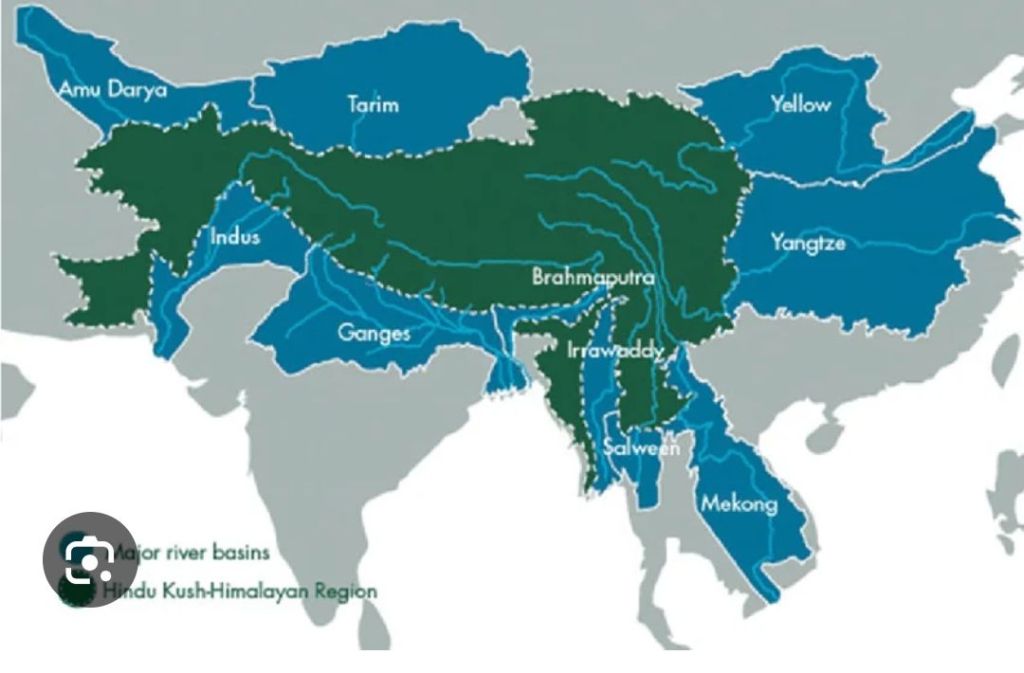
The Hindu Kush holds  the largest volume of ice outside the poles. The Hindu Kush Himalayan (HKH) region is a vast mountain system spanning eight countries from Afghanistan to Myanmar, often called the “Third Pole” due to its massive ice reserves. It serves as Asia’s water tower supplying water to over 240 million people in the mountains and 1.65 billion downstream via ten major river systems (see map).

The region includes the Hindu Kush range in the west (Afghanistan/Pakistan) and the Himalayas in the east, bordering China, Nepal, India, and Bhutan. It holds the largest volume of ice and snow outside the Arctic and Antarctica and is considered a crucial region for regulating regional climates. 

It holds 66731 glaciers across 55786 square kilometres. It is the source of at least ten major river systems supporting food, water, energy and livelihood security to billions. However, 78% of these glacier areas are situated between 4500 and 6000 metres above sea level and are exposed to elevation dependent warming – a phenomenon wherein temperature rises faster at higher altitude than at lower ones.

The region is highly vulnerable to climate change with glaciers melting rapidly, increasing the risk of floods, avalanches, and long-term water shortages. This region features diverse ecosystems, ranging from high-altitude deserts to tropical forests, supporting immense biodiversity. However, it also faces significant challenges, including unsustainable development and climate-induced disasters impacting the livelihoods of millions.

In this region rivers Ganga and Brahmaputra hold the largest glaciers. The region’s smaller glaciers are, however, shrinking faster creating risks of localized water shortage for high mountain communities and hazards like glacial lake outbursts and floods. A study shows that the glacier melt rate has doubled since 2000 in the Hindu Kush region.

Curbing the rapid glacier melt in the HKH region requires a number of measures like cutting black carbon emissions, reducing greenhouse gases, implementing regional scientific cooperation, managing glacial lake outburst floods (GLOFs), reducing localized air pollution, promoting sustainable land use and enhancing monitoring networks.

Regional pollution can be controlled by preventing open burning, brick kilns, and diesel engines.

Urgent adherence to the Paris Agreement to limit global temperature rise to 1.5°C is of paramount importance to prevent massive glacier loss.

Strengthening science-led collaboration  to share data and coordinate adaptation across borders will facilitate a consolidated global action towards implementation and monitoring of sustainable and developmental measures in this region.

Other ways of curbing the rapid glacier melt are:

Researching localized techniques such as artificial snow/ice creation to protect vulnerable, smaller glaciers.

Avoiding environmental damage in sensitive high-altitude areas by strictly regulating construction, avoiding explosives in development and expanding forest cover.

Installing early warning systems and implementing structural measures to drain risky glacial lakes.

Expanding and maintaining long-term observational networks and on-field studies to track glacier health in real-time.

Engaging mountain communities in conservation and empowering local adaptation efforts.

Image Courtesy Wikipedia


(Information Source: Hindustan Times dated 21/03/2026 and ICIMOD – International Centre for Integrated Mountain Development)

Jab We Six Met


I had kept the month of April clear of all engagements when my school buddy, who is now settled in California, called up to say that she was coming to India. A meet up was a given.

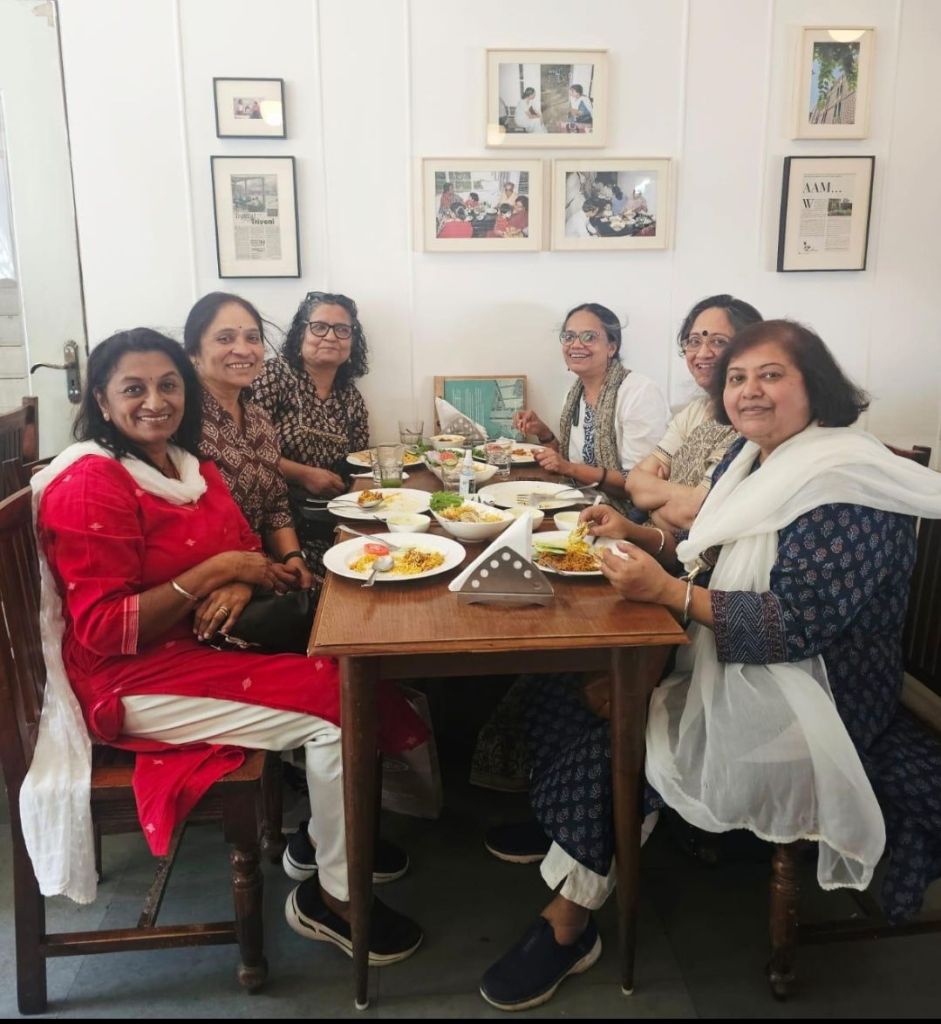
It’s generally three of us. And our rendezvous is always Triveni Kala Sangam in Mandi House , a place redolent with nostalgia for all of us. Our school’s just close by. Often we walked down to Mandi House bus stop to catch our respective buses if we had a late stay in school for some project, extra curricular activities or exams. In short when the school bus was not available.

One of us was a student of dance in  Bharatiya Kala Kendra, again situated within the vicinity, where after school visits were quite often. Triveni has that typical ambience –  subdued and sophisticated – and a strong reminder of our teenage years !! So it was not an unusual choice to get together and reminisce about old days.

But this time was a bit different. Three more of our school buddies, with whom one of us had reconnected, wanted to join. And of course we said yes – more the merrier. What followed were big bear hugs and a rowdy (in terms of Triveni’s code of conduct) reunion. Triveni has a well known terrace cafe where the decibel level has to be of ‘certain’ frequency in order to allow the ongoing workshops and classes to be carried on unhindered. We more than once crossed that limit, were respectfully rebuked which we dutifully ignored and continued to be our chattiest and noisiest best. Triveni should have known that we were together after more than four long decades!!!

Friends’ union is incomplete without a feast. So the starters, an assortment of crisp pakoras, preceded jackfruit biryani, keema paranthas, salad, papad and raita. For desert there was beetroot halwa which was a first for all of us. We were not only inquisitive but game for all sorts of experiments.

The conversation was predominated by reminiscences of school days, the pranks that were played as a tribute to our conscientious teachers, our situations now and getting updates on many of our class mates – where they were now and what they were up to.

Soon it was time to say goodbye with a promise to meet again but not before we had left our loud presence in the corridors from where we were politely shooed and shown the exit.  It was mid afternoon when we finally parted ways to Triveni’s immense relief. Three of us took a few minutes more to browse through the renowned painter, Anjali Ela Menon’s paintings exhibited in one of the Halls therein.

What next? A sleepover at my place and more chats, more catch-ups, more laughter and a lot more memories.

On the aside,  we also took a vow to steer clear of Triveni for a whole one year in fear of getting blacklisted permanently.

Yep! That’s how it was….

Shubho Nabobarsho


Courtesy: Instagram

Today is the beginning of the Bengali New Year (শুভ নববর্ষ) or Poila Boishakh – the first day of the month of Baisakh  – celebrated on the 14th or the 15th of April annually.  It is also the day when a new business account or  Haal Khata is opened.

We bow down for divine blessings early in the morning. Then touch the feet of the elders at home, in the family and in the neighborhood seeking their blessings.

We happily greet friends and juniors saying, “Shubho Naboborsho”. Shubho means auspicious and Naboborsho means new year.

This is also the day when sweets typical of this celebration and season are made at home like Paatishapta, Puli Peetha, Paayesh etc.  followed by an elaborate feast.

As now we are separated from our elderly aunt’s and uncles by distance we make it a point to wish them over the phone and say, “Pronam niyo” which means accept our pronaam.

That is how the traditional way of celebrating the new year goes. Families may have their own rituals of the day and reunions. Some, like ours, have a simpler way of celebrating.

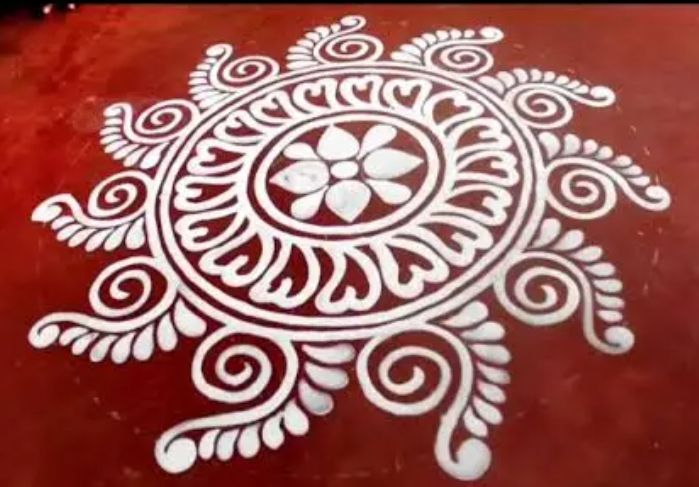
Preceding the day homes are spring cleaned. New linens are spread. Aalpona  (rangoli) are drawn in the  doorway.  New dresses are worn, especially, the traditional dhuti and panjaabi for men and saree for women. It is a major cultural festival marked by music, dance, processions or Mongol Shobha Jatra, highlighting the Bengali cultural heritage.

Along with decorating the house and decking up our own selves we also deck up our favourite fictional characters the way we want to see them. So Tintin becomes a Bangaali Babu arriving with a big fish in hand in a yellow taxi with dear little Snowy on the banks of river Ganges while the Howrah Bridge gleams in the backdrop. And seeing him we lovingly holler, “Tintinda, Shubho Naboborsho.”

😁😁😁😁

Wishing you all my dear friends in the blogging community

“Shubho Naboborsho!!!”

Trivia:

It is a public holiday in Bangladesh and West Bengal. It coincides with other regional New Year celebrations in India such as Bihu, Vishu, and Puthandu.

Aalpona Courtesy Pinterest

A Dose Of Laughter And Fun


While enjoying Chetna’s post on the quiet intrusion of Iranian flavour in Indian languages, cuisines and socio-cultural fabric, I was really happy to note that she is quite familiar with the typical dialect of Bangla spoken in East Bengal (later East Pakistan and now Bangladesh) which is an interesting amalgam of Hindi, Urdu and Bengali. Etymologically the Urdu words may have their roots in Persian.

Chetna also surprised me when she revealed that her father-in-law hailed from the then East Bengal and that she was quite taken up with the humour ingrained in the dialect of that region known as Bangaal. Bengalis –  the Bangaals especially –  are known for their  rejoinders which at times border on the outrageous. However, the wit and humour of East Bengal is as distinct as that of West Bengal. I thought of grabbing this opportunity to talk about the short Dramas of Bangladesh, called Bangla Naatok (Bengali Play), which are replete with those  quintessential tongue-in-cheek repartees. To illustrate a few –

Shushkong Kashtong (Dry Wood) is the story of a very romantic hearted girl getting married to the most unromantic boy and what happens thereafter. There is one scene where the girl tells her husband,”Yesterday was Teddy Day. My friend’s husband gifted her a teddy. But you did not give.” To which the husband’s iconic reply is,”I don’t know your friend. Won’t she get angry if I give her a teddy?” What follows after this is anybody’s guess.

In another drama captioned Fun a girl tells her fiance to break off their engagement after a month of courtship. The boy wants to know the reason but the girl refuses to give any. Enraged the boy asks her to apologise to him. But the girl refuses to do that too. The boy in retaliation asks his mother to prepone the date of marriage to the very next week. What follows is the girl resorting to all kinds of tricks to get rid of the boy which even includes deploying the local goons to make him “understand” the urgency of the matter. However, the goons get bashed up by the boy and his friend. To irritate the girl more the boy happily informs her that all her henchmen are hospitalized. He even marvels at the uncanny resemblance of the goon with the girl when he smiles and how they’ll look like identical twins if only she’ll consider shaving off her hair punk style.

In Mr. Absentminded a mother grapples with a husband and a son, both suffering from acute absentmindedness. The son is a brilliant scholar but when it comes to day to day dealings he cannot remember the  commonest of  things. Suffering from stomach pain he consults a doctor (with whom he subsequently falls in love) who advises him to submit his urine sample for further tests. However, he absentmindedly brings the sample home. When his father, equally absentminded, looking for his medicines in the fridge, comes across a bottle of liquid the boy realises his mistake. The confused father, only half listening to his son,  remarks that he has heard of many Vitamins, like A, B , C, D and E but has never heard of Vitamin U.

In another comedy (I have forgotten the name) a boy catches a girl red handed standing on the water tank placed on the terrace of a high rise office building just about to take the final leap to death. Alarmed he tries to convince her in many ways to come down but the girl is adamant and tells him to go away. Finally, the boy comes up with a brilliant proposal for the girl which is if she  continues to live she may get a better opportunity of jumping off a building higher than the present one. And guess what that makes sense to her and she agrees to climb down.

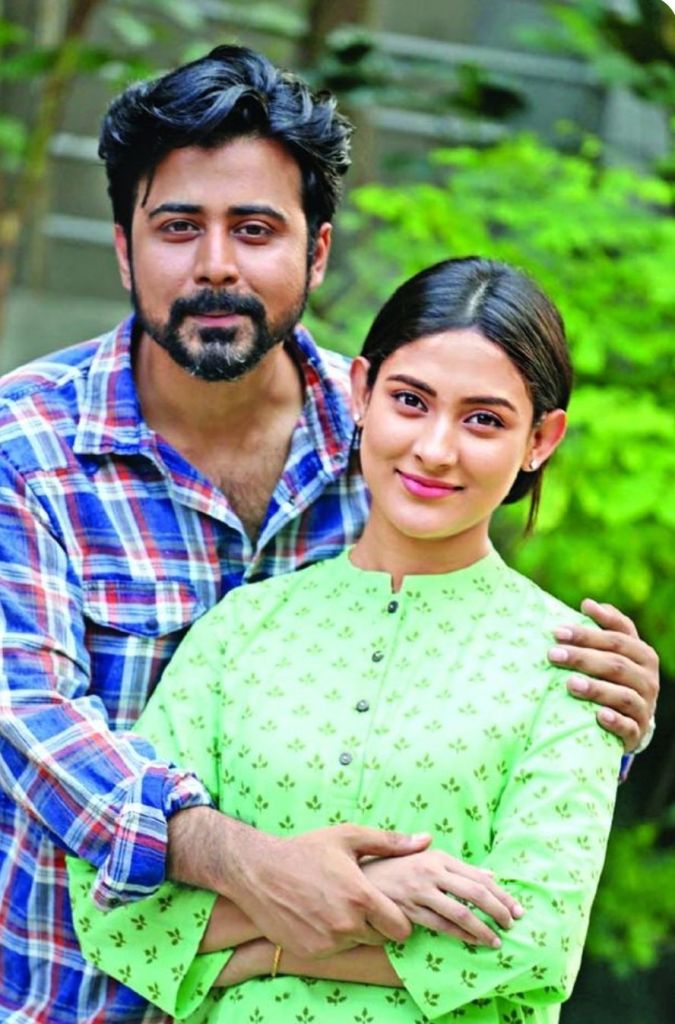
Mahzabin Choudhury, a very pretty and the most natural actress, pairs up with Afraan Nisho in Shushkong Kashtong, Fun and the drama whose name I can’t remember while Tanjin Tisha, another pretty actress and Ziaul Farooque Apurba make a cute couple in Mr. Absentminded. Both Nisho and Apurba rock.

Many such Bangladeshi dramas are available on You Tube. Though technically these short films are not up to the mark but they make up in terms of entertainment, fun and humour.

Nisho And Mahzabin

Tanjin Tisha and Apurba

Community Service


In the wrap-up post for the month of March I had regretted having lost the opportunity to serve the community on the 4th of the month which was my late father’s birthday.

We had then postponed the date to the 9th of this month. So on that day, me, my elder sister and B-I-L spent the afternoon in the Blind School, Lodhi Road run by the Blind Relief Association.

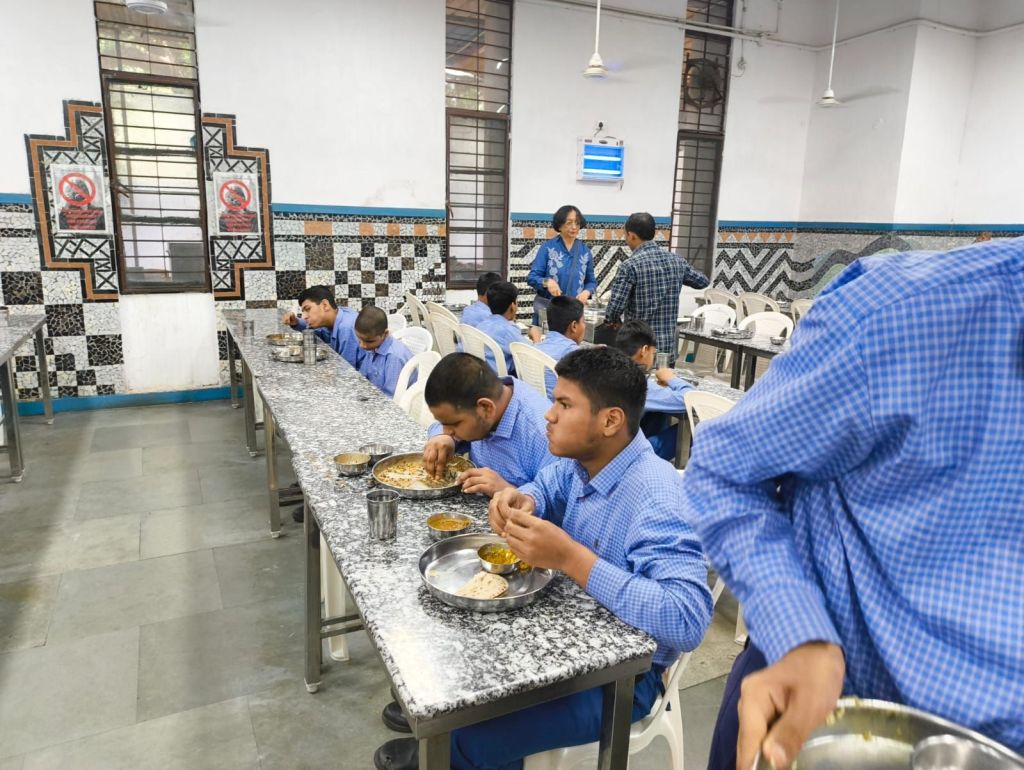
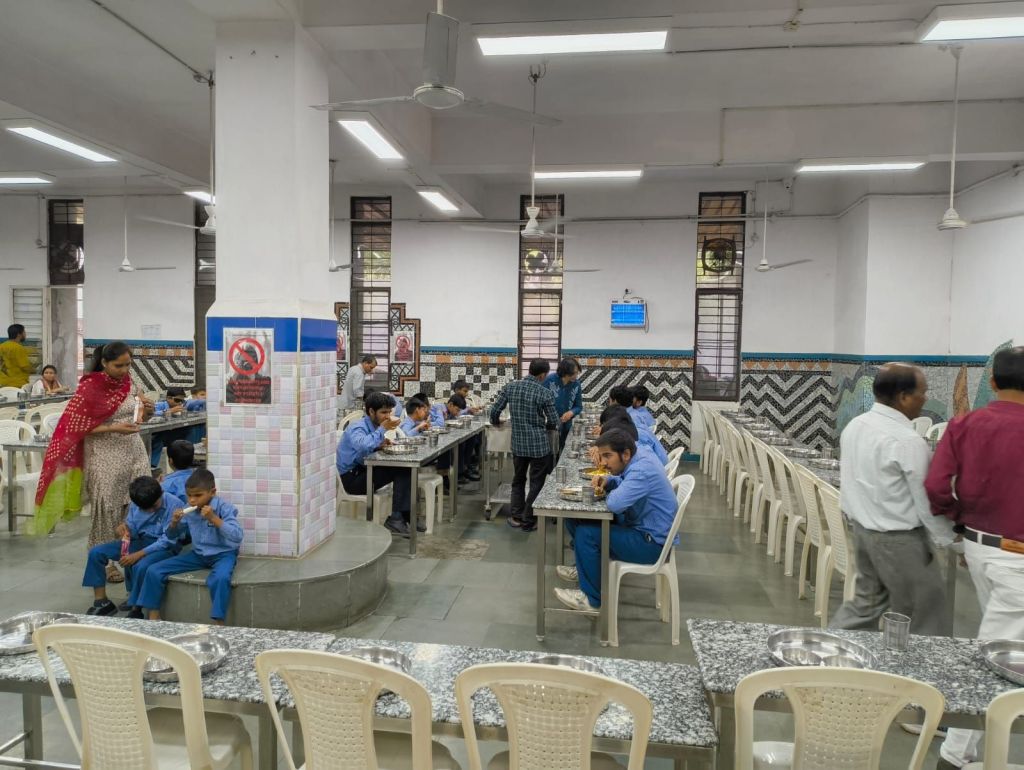
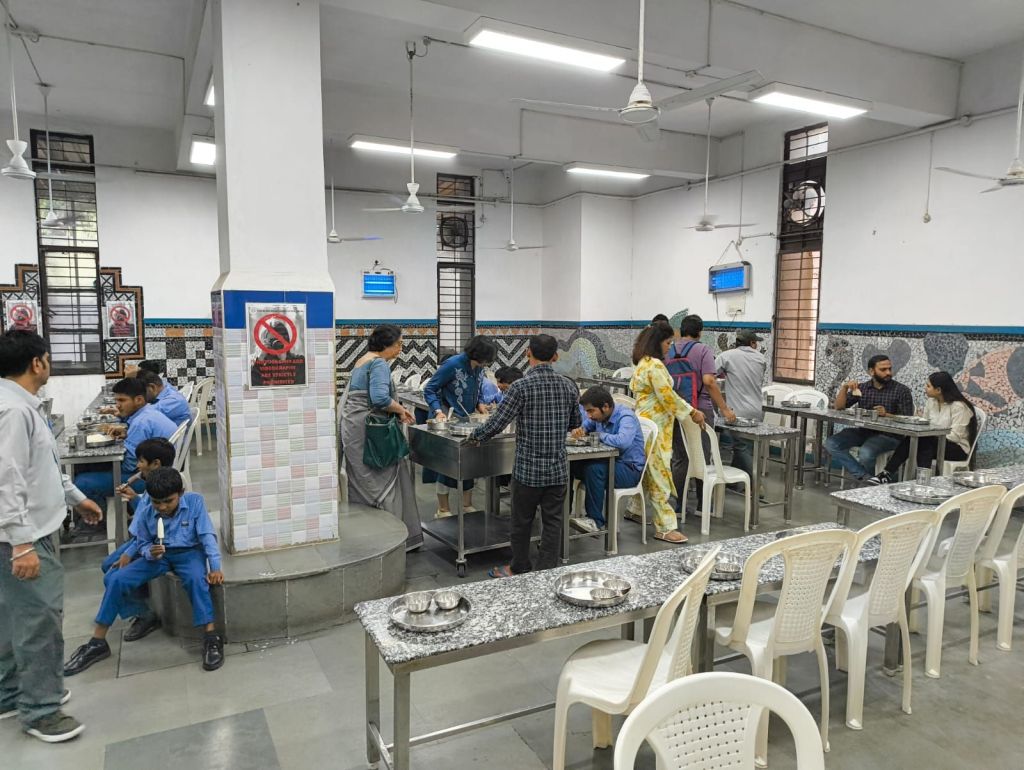
As already planned, we donated lunch for the children. Allowed by the school we also assisted in serving the meal to them. We arrived a few minutes late due to traffic and the distance. Lunch had already started at the scheduled time, i.e., 12.00 PM. The children, some of whom were inmates while others attended as day boarders, came in batches. So we served the coming batches.

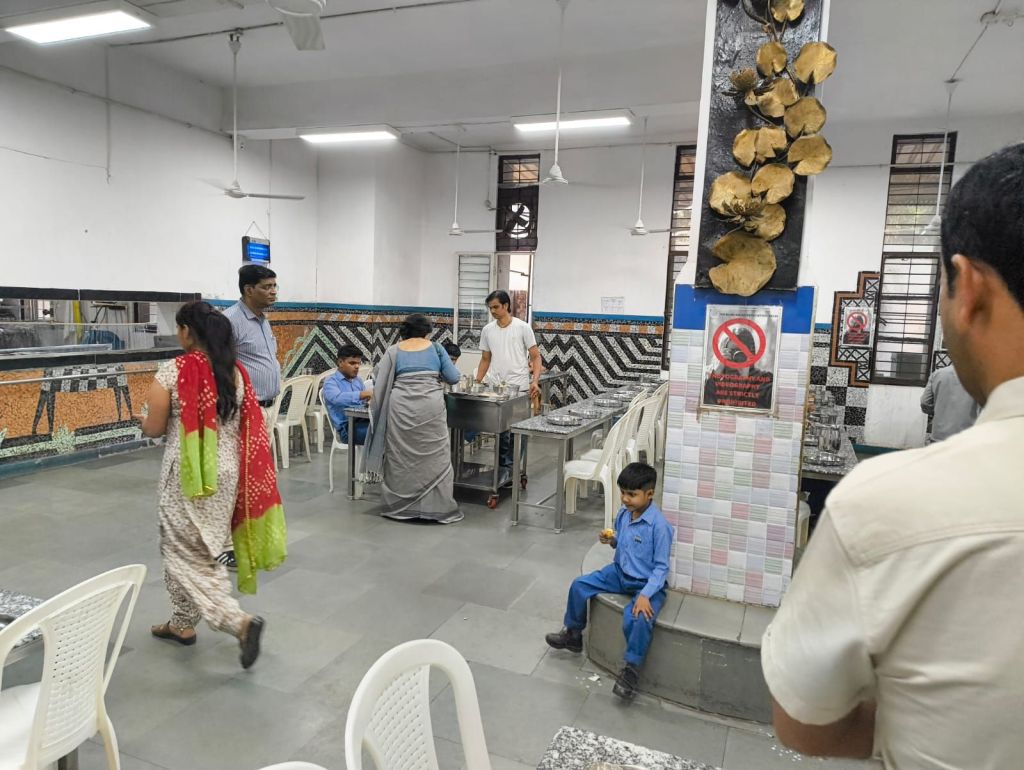
The school has day-wise pre-fixed menu. We added a sweet dish which was ice-cream. The dining hall is big. The number of children, we were told, is around three hundred to three hundred and fifty. The school is well maintained and run by a Trust. A lot of private donations are also made towards meals, medicines, uniforms and other things needed by the students.

The best thing about the school is its cheerful and positive atmosphere. All the students of various age groups are very well behaved, nest and tidy, in proper uniform and look happy. The staff is attentive and caring. The arrangements are smooth and very orderly. It’s like a huge well-oiled machinery working systematically and noiselessly. We also saw the children attending various classes post lunch quietly working on their arts and crafts. The teachers appear to be well trained as well.

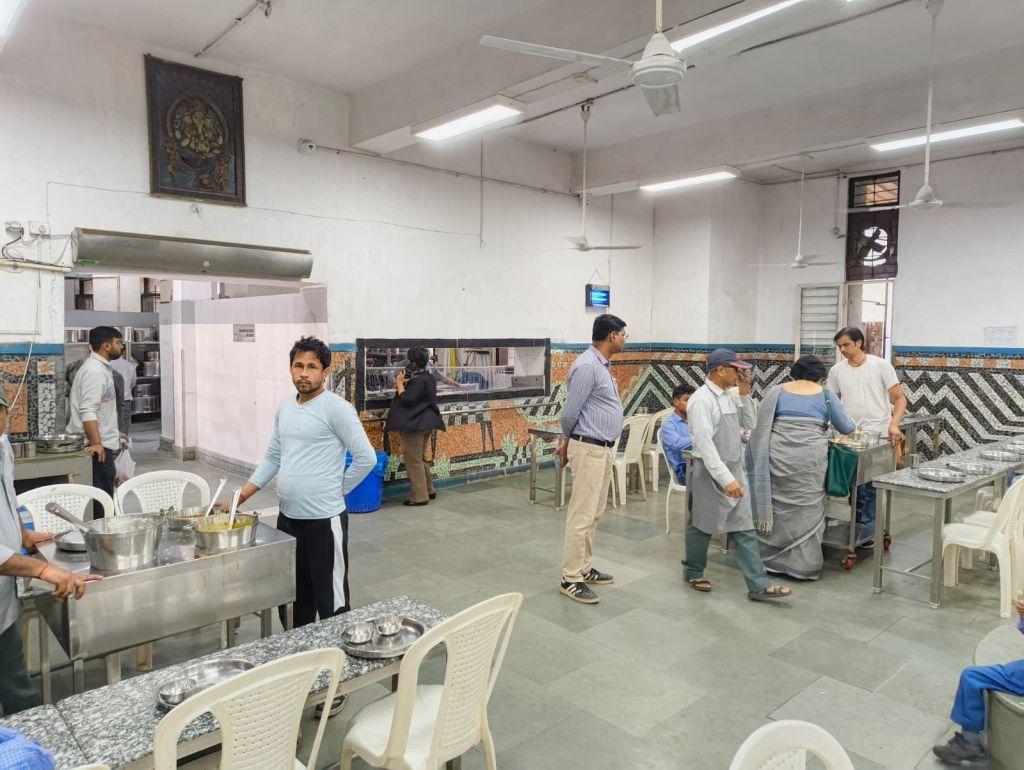
We took a round of the kitchen which was spotlessly clean. We were very much taken by the roti maker which could make three hundred rotis in an hour. The school gives  vocational training to the students on candle making, book binding, computer operation, stitching (for girls) among others. The students also run a cafe, little known to the public, inside the premise where they make and serve vegetable sandwiches and coffee.

Every year before Diwali, the school holds a fair, famously called the Diwali Mela, wherein candles, cards and other decorative items hand crafted by the students are sold. This school and the fair is in the vicinity of my Office. I know how the products displayed in the Mela sell like hot cakes. I once purchased a huge candle and a bunch of envelopes from there. I still have those envelopes. 

It is very difficult to navigate the traffic during the Mela time as a humungous crowd, from various corners of the city, throng the place. Our Organization, being welfare oriented, have often made substantial contributions to the school. I remember, once a lunch was arranged by the WIPS (Women In Public Sector) wing of our Office. I could not participate then but I always had a mind to do so if ever life allowed. This month by God’s grace, we did it and it was such a humbling and soul satisfying experience.

Postscript: Learn more about the school here.