
In my post on TBR 2026 I had said poetry would sneak in some way or the other in due course of reading and how correct I was.
I have been reading sijos, off and on , in different posts of co-bloggers. But when I browsed through Amazon for an anthology I found them out of reach price wise. Then I happened to find this ebook containing one hundred sijos, translated by Seo, Kang-Jin.
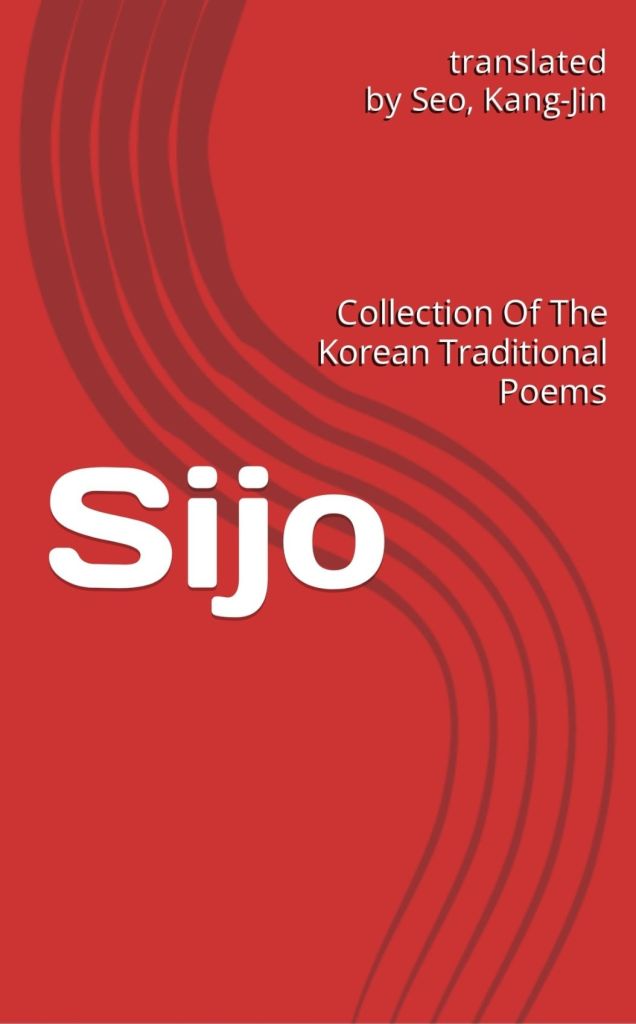
Wiki says Sijo is a traditional Korean poetic form that emerged during the Goryeo dynasty and flourished in the Joseon dynasty. It is still an active form of poetry consisting of three lines (42-48 syllables total) featuring a three line structure. Line-1 is the theme which gets elaborated in Line 2 with a counter-theme/twist followed by a conclusion in Line 3.
Traditionally each line has a pause (caesura) in the middle, totaling 14–16 syllables per line and explores bucolic, metaphysical, cosmological or personal themes with the first half of the final line introducing a “twist”. This form of poetry was originated by the yangban (educated elite) to express loyalist, philosophical or nature-focused sentiments, later expanding to include personal emotion.
In this book many of the sijos are socio-political, culture and history specific to the country. Yet, some have a universal tenor to it.
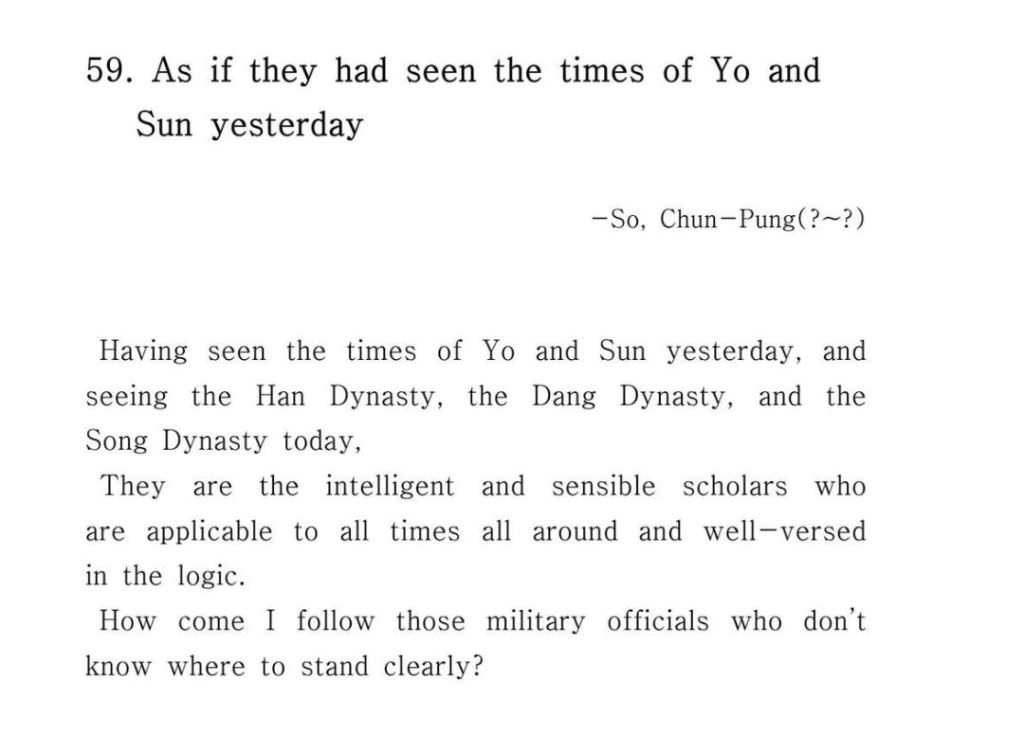
Translations, if not done accurately, lessen the beauty of the form. Having said that, it is difficult to exactly translate poems contextually which is very apparent in this poem.
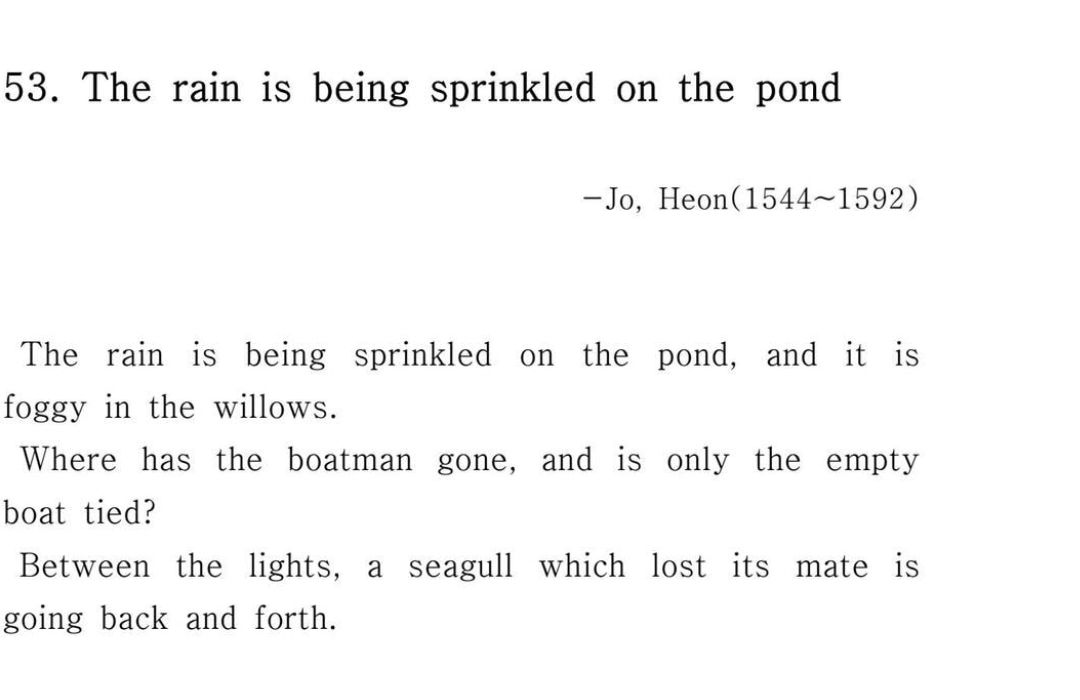
The metaphorical note in this poem is captivating.
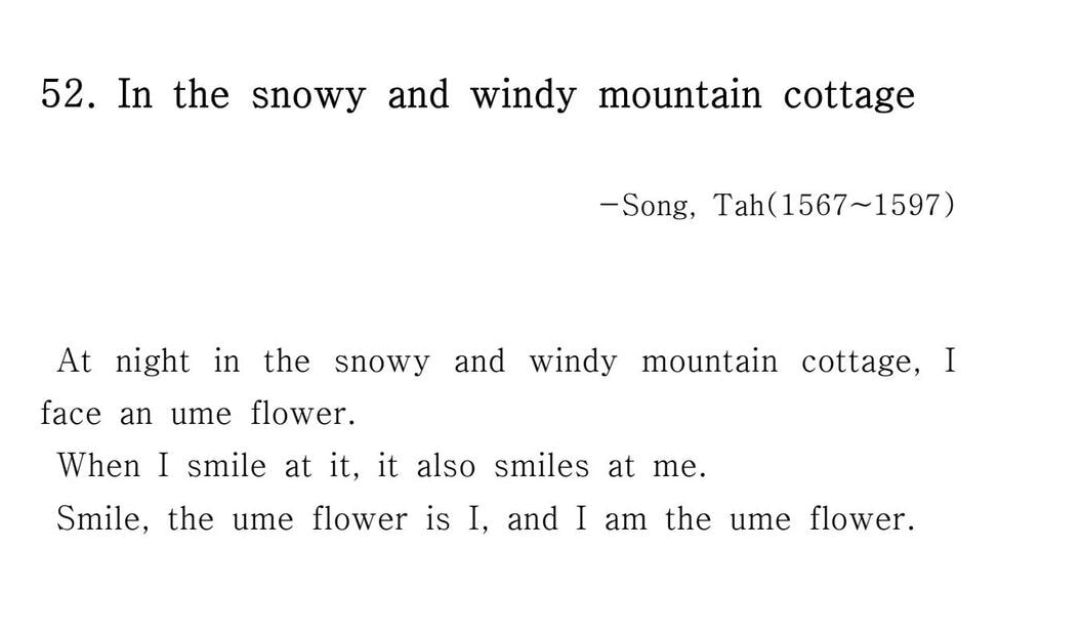
Sometimes, the poems acquire a factual facade belying deeper meanings beneath.
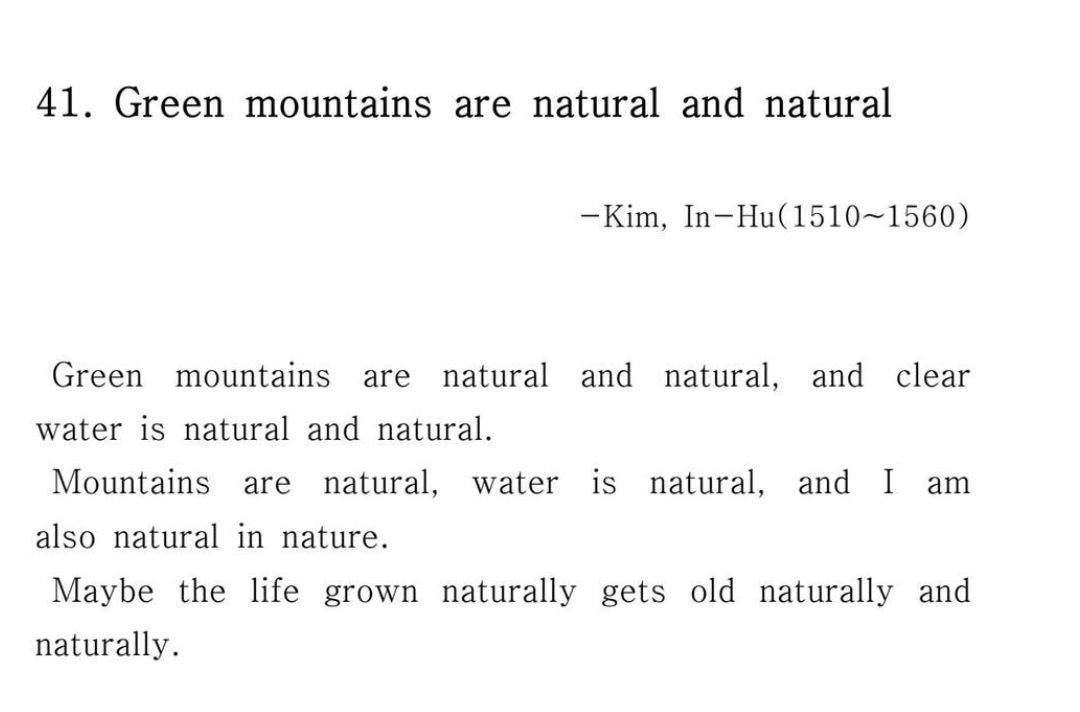
I found this poem pragmatic and twisty at the same time bringing in a sharp contrast between reality and desire.
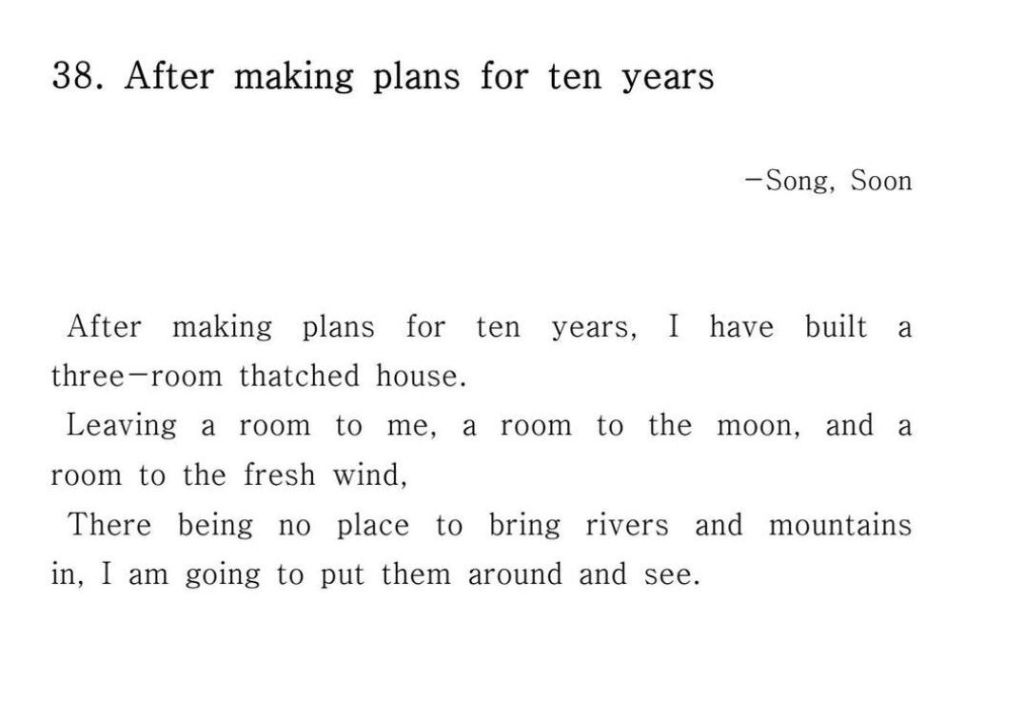
The deep underlying pathos in this poem is moving and makes one deeply aware of the transience in life.
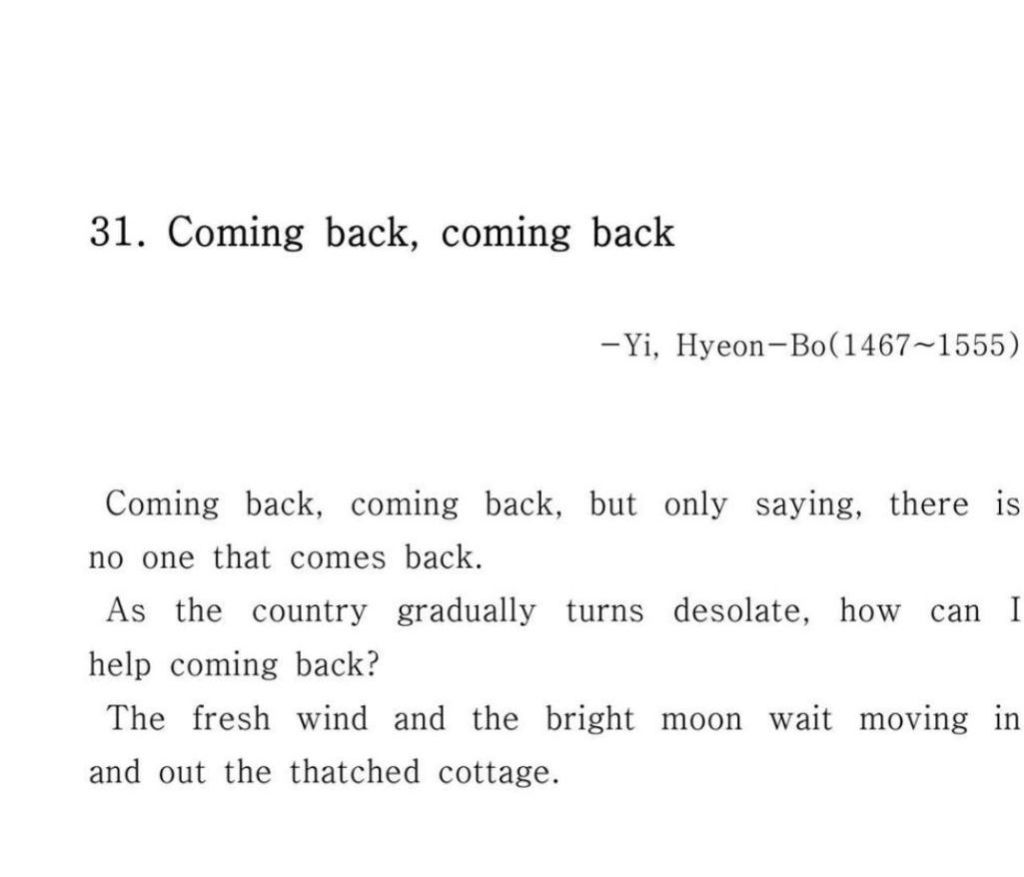
I won’t say this is the best book on Sijo. There are many examples of the poetic form available online. A breakaway from the traditional Japanese style of minimal poetry, haiku and senryu, it appears to be a combination of both, grounded in the ethos and ethnicity of the country, where it grew as a distinct form of expression having that remarkable art of caesura, leaving a lot to the imagination and interpretation of the readers and not lacking in universality either.
This book by Seo Kang-Jin gives a fair idea of this borrowed but at the same time a unique, standalone poetry.
Enjoy reading.





Enjoyed reading all the poem,the poem I liked most is
After making plans for 10 years……
LikeLiked by 1 person
*poems
LikeLiked by 1 person
Yes, Nusrat. I can figure how much you will be able to relate to that poem. It’s beautiful.
LikeLike
Uniquely poetic
LikeLiked by 1 person
Isn’t it?
Thank you so much Derrrick 🙏
I hope you are going ahead with your dead heading.
LikeLiked by 1 person
Quite distinctive form.
I knew nothing about these different forms. Thanks to WP.
LikeLiked by 1 person
Yes. Absolutely true. I learnt a lot from the posts of my co bloggers.
LikeLiked by 1 person
I didn’t know about Korean poetry, Geeta. I enjoyed reading your work.
LikeLiked by 2 people
Thank you very much Mary
LikeLiked by 1 person
I like this poetry form! I shall look for this book!
LikeLike
Yes, Carol. Sijo has different formats. I hope you like them. Your comment went into spam, I don’t know how. Just retrieved it. Sorry for the delayed response.
LikeLike
Interesting review Geeta.
LikeLiked by 1 person
Thank you Sadje
LikeLiked by 1 person
You’re most welcome 🙏🏼
LikeLiked by 1 person