For Bengalis Durga Pujo is a very big festival which falls in the lunar month of Ashvin (September – October as per Gregorian Calendar). The festival is predominated by worship of Devi Durga who is the embodiment of Shakti (power). The festival begins with Mahalaya , i.e., the day on which the deity is welcomed to martyalok or the land of mortals.
Durga Pujo coincides with Navaratri celebrated in the North of India which means nine nights. The devotees fast these nine days. Navaratri denotes worship of Devi Durga in nine forms or avatars. The tenth day is celebrated as Dussehra which symbolises the victory of good over evil. On this day Lord Rama defeated the Demon King Ravana in the epic battle of Lanka.
There are many legends surrounding the festival of Durga Pujo or Durgotsava. Being pestered by the demon Mahishasura , all Gods in heaven come together to empower Devi Durga to battle against Mahishasura. She takes the form of a warrior riding a lion. Each God bestows upon her their respective power in the form of weapons. She thus has ten arms holding ten different objects including a trident 🔱. After a fierce battle Durga finally kills Mahishasura.
Another legend has it that Durga comes to visit her natal home with her sons, Ganesha (God of well being) and Karthika (warrior God) and daughters, Lakshmi (Goddess of prosperity and wealth) and Saraswati ( Goddess of knowledge, music and art). Durga is treated by the community as the quintessential daughter-in-law. The rituals begin on the sixth day (shashthi) and carries on the seventh (saptami), eighth (ashtami) till the ninth (navami) day. On the tenth (dashami) day the immersion or visarjan takes place symbolising her return to her husband, Lord Shiva and marital home in Kailash Parvat.
Durga Puja is a socio-cultural festival. For months the pandaals are prepared and decorated and the deities are sculpted with care and devotion. There is a seperate locality in Kolkatta which is the hub of sculptors and potters who are into making the idols. It is know as kumortuli or the residence of the potters. The pandaals and idols every year pivot around contemporary social issues which are in vogue. The makers and artists compete with each other and the best of creation is awarded at the end of the festival.
The puja pandaals usually host a number of food stalls as no festivity can be without finger licking treats. Pandaal hopping is one of the main attractions of Durga Puja. On ashtami or the eighth day chanting mantras in Sanskrit in eulogy and veneration of Devi Durga is considered extremely important and auspicious. This is known as pushpanjali. On the tenth day sindoor khela or playing with vermillion is also another enjoyable ritual wherein all the married ladies wearing white saree with red border play with vermillion with Maa Durga as well as with one another after Puja coaxing her to come back again the next year with her family to meet her devotees.
Durga Puja was patronized by Kings and rich zameendars or landlords of erstwhile Bengal. The centuries old tradition is still maintained in many families who every year hold the Puja in their ancestral homes. You can search for Puja Parikrama 2024 on You Tube and get a visual tour of important and beautiful pandaals of Kolkata and other parts of the state. Durga Puja is also celebrated in the eastern states of India, like Orissa, Bihar, Assam, Jharkhand , eastern part of Uttar Pradesh and even other states. It is also celebrated globally by Indian community abroad.
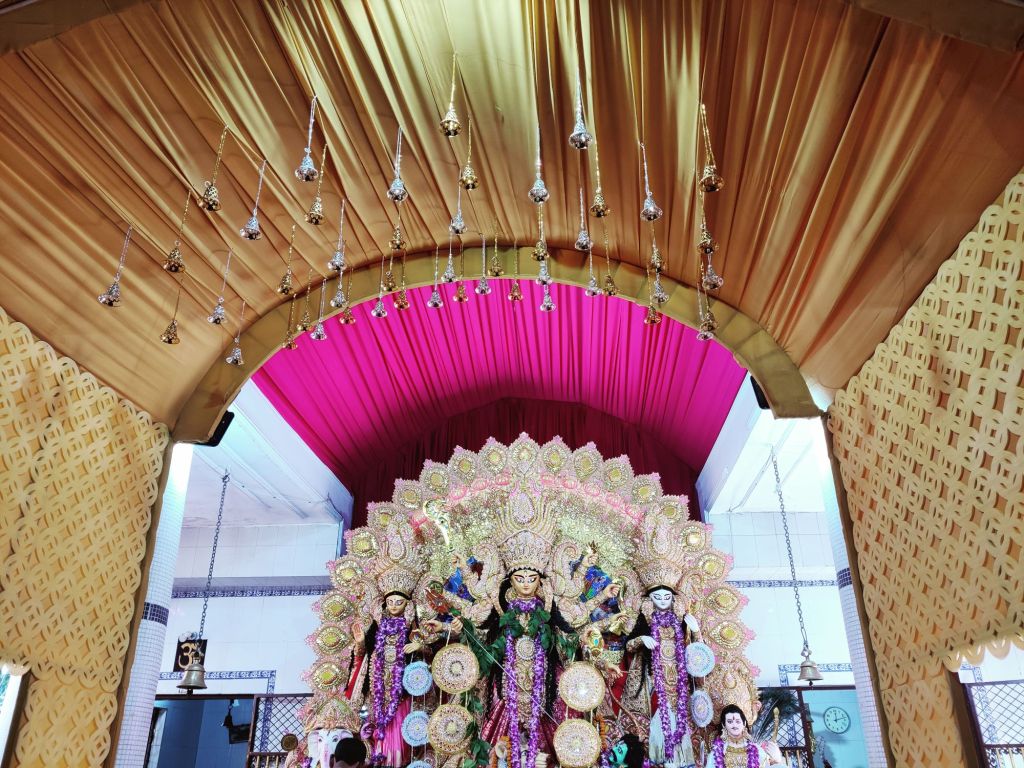
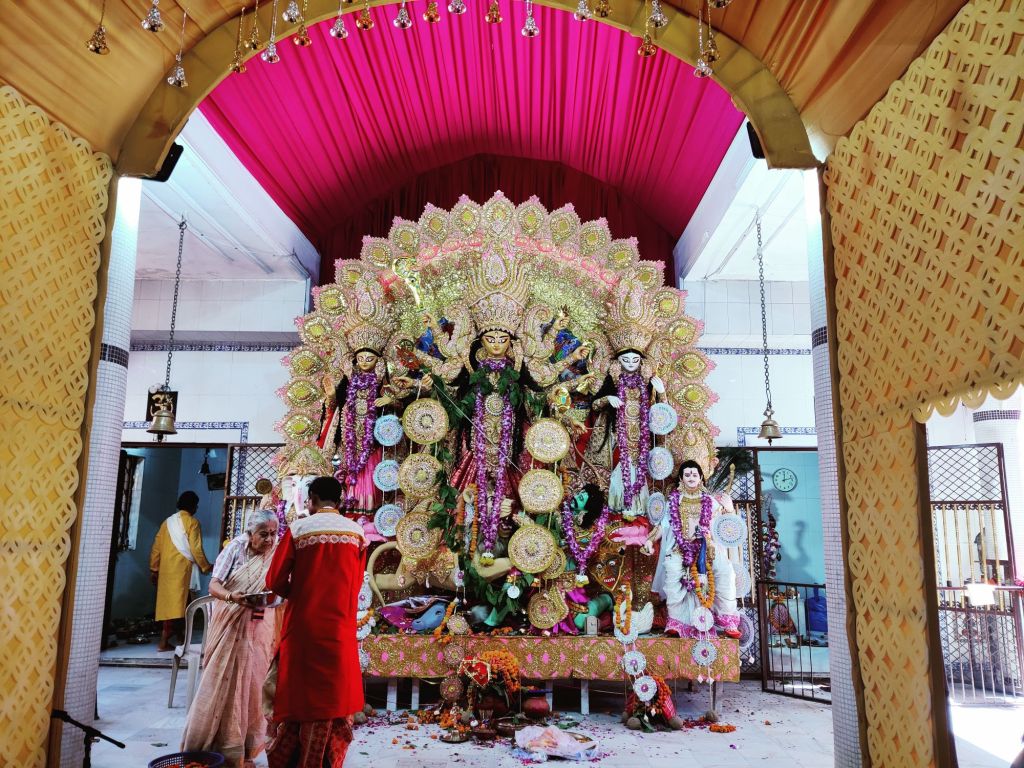
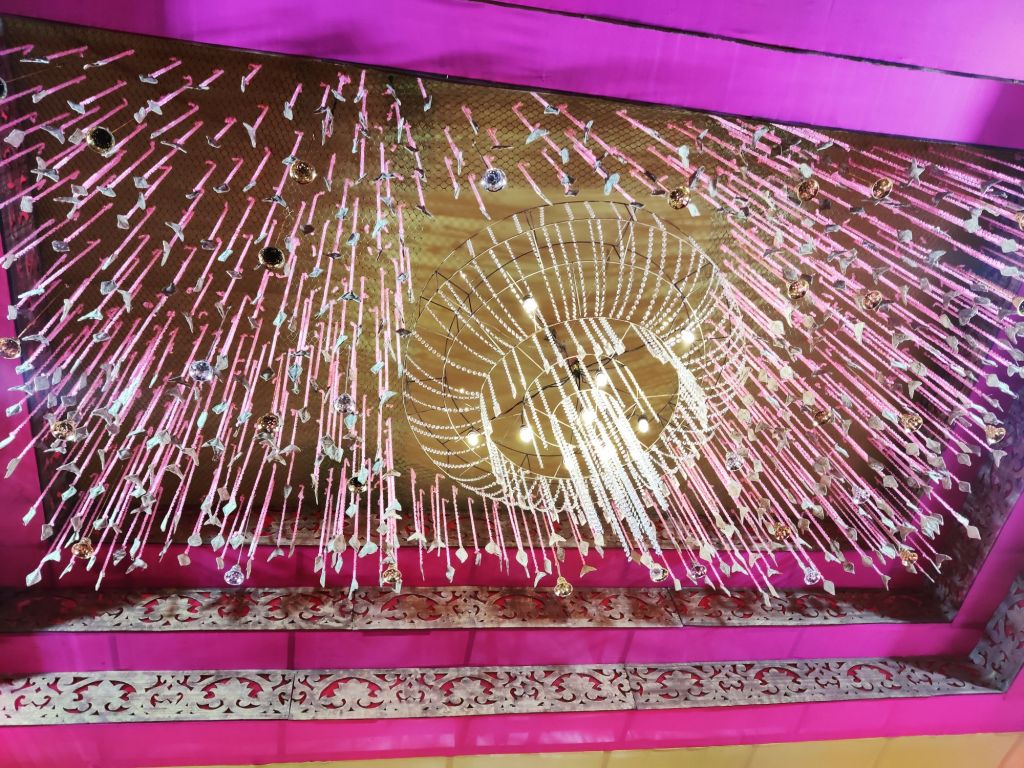
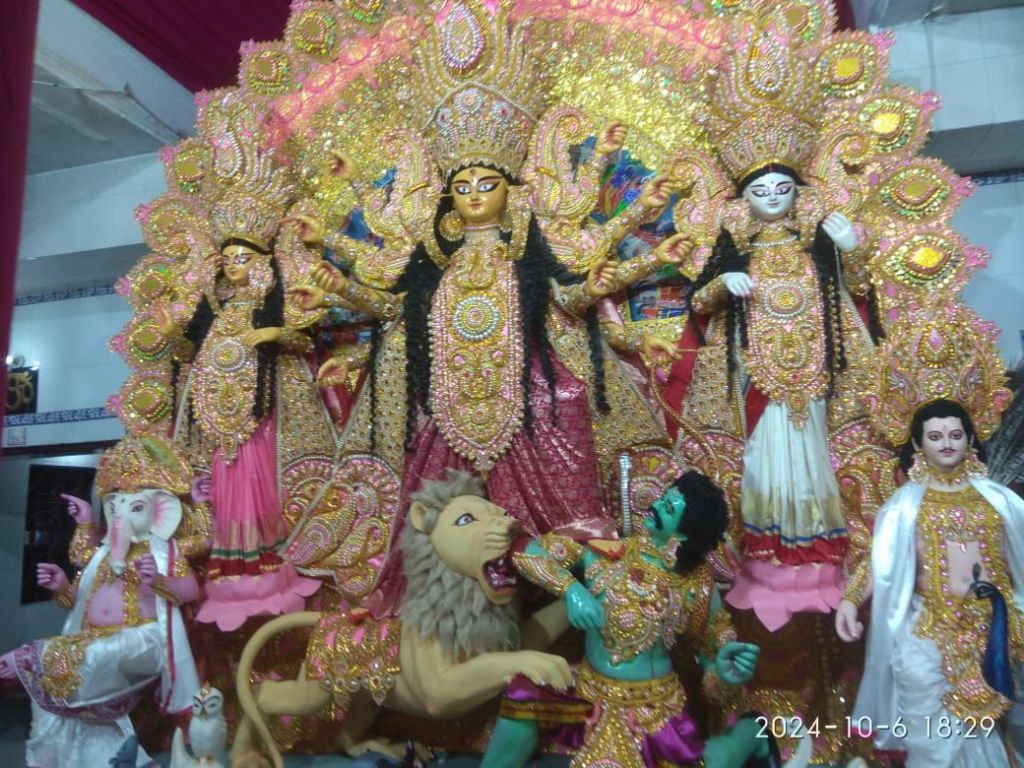
These pics above are just a glimpse of the pandaal decor and the deity of one of the many Pujas held in Delhi. The enlarged version can be seen inthe gallery.
The temple where the festival was being, held was under major renovation which was however stalled midway for the Puja. Durga Puja is just the beginning of the festive season in India which goes on till the month of December ending with the New Year celebration.
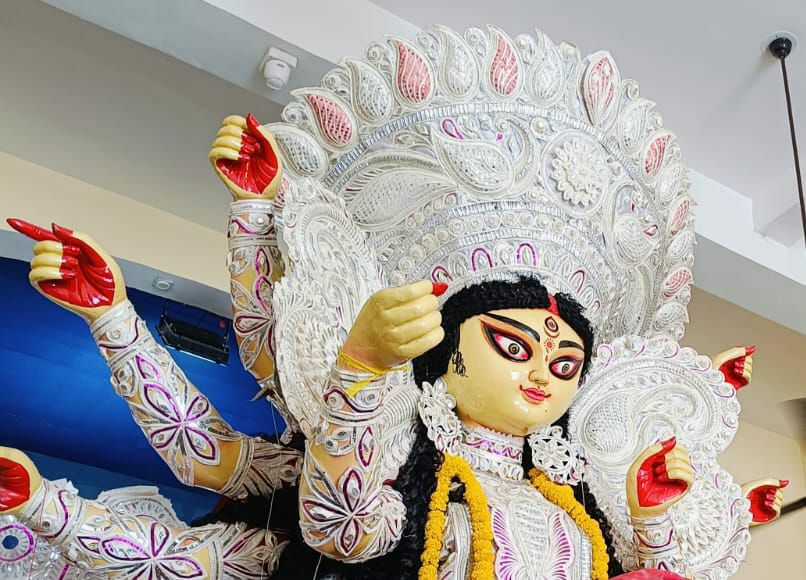
The above pic is of the deity inthe making and the weapons and other artifacts and jewelleries have not yet been placed on her.
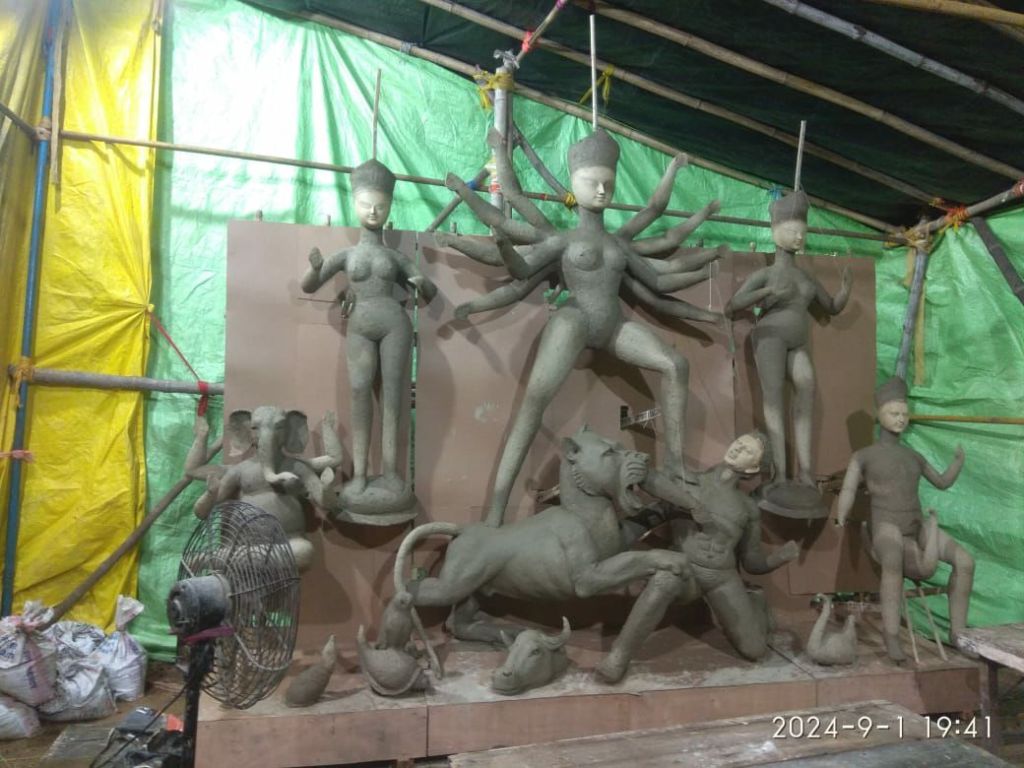
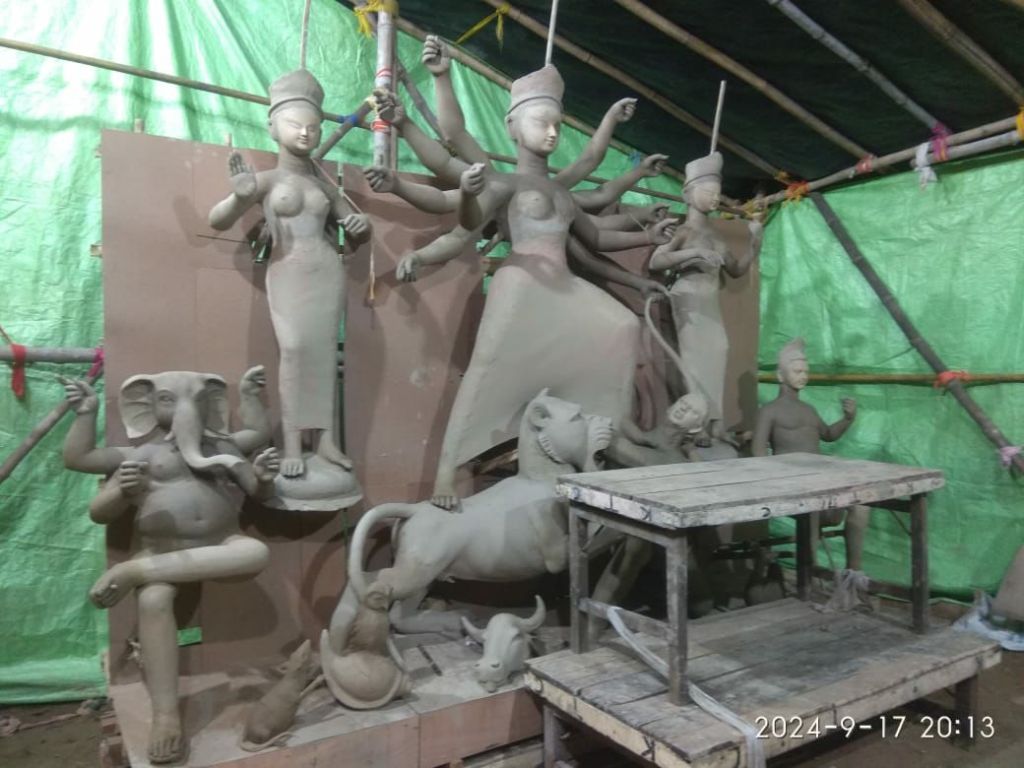
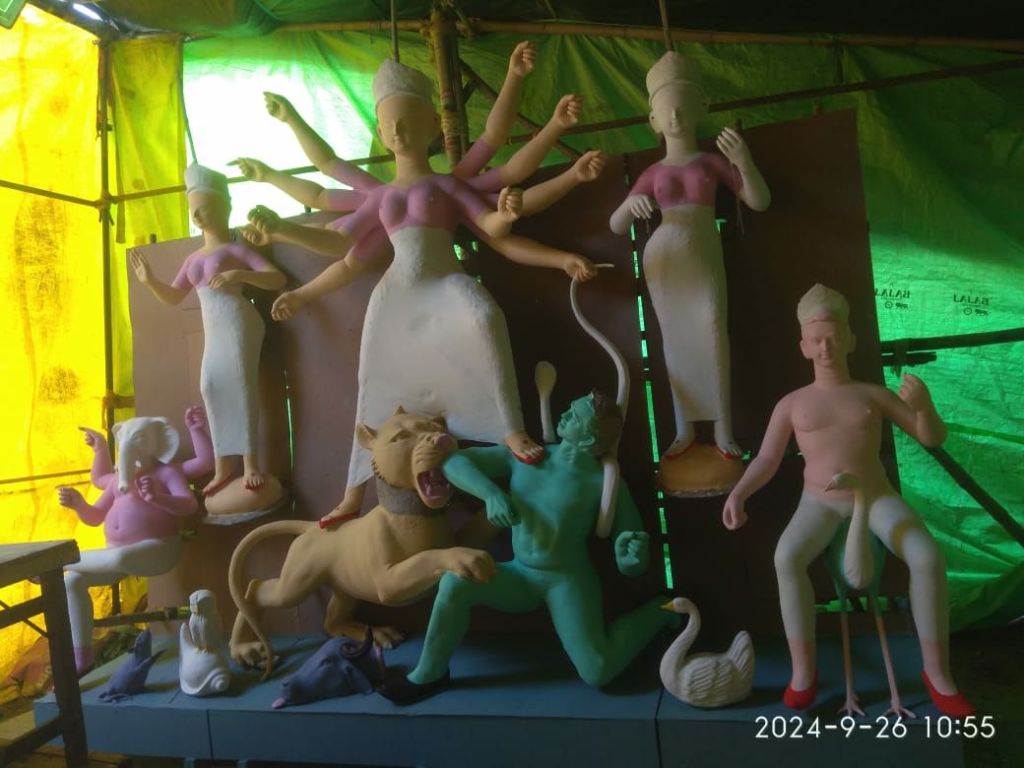
The above three pics are of the deity in the making.
Barring the first three pics all the rest were shared by the temple priest on WhatsApp.





Such a creative festival
LikeLiked by 1 person
Yes,very much so. Thank you Derrick.
LikeLike
What a magnificent celebration.
LikeLiked by 1 person
Yes, it is. Thank you very much.
LikeLiked by 1 person
Durga Puja is a festival that is as much social as it is religious.
LikeLiked by 1 person
You are right. But I believe the religiosity has diminished over time. My personal view.
LikeLike
Yes, and it’s now Durgotsav!
LikeLiked by 1 person
Very surprisingly this time instead of thrice we had pushpanjali only twice. The second time without flowers. I could not fathom this economisation. Thakur moshai said it was due to paucity of time and since he was fasting his throat went dry chanting the mantras over and over again.
LikeLiked by 1 person
Puja rituals are now a formality. Many Bengali thakur moshais don’t know Sanskrit and often recite mantras with opposite meanings. People parrot the same wrong meaning mantras during Pushpanjali, being ignorant of the meanings.
LikeLiked by 1 person
I used to be a regular visitor of Puja pandals in Shillong. Very mesmerising ones they were.
LikeLiked by 1 person
Yes. The rituals are extremely attractive and the involvement of the community adding to it.
LikeLike
This is absolutely amazing! Chaitra Navratri is going on currently! I have made an attempt to capture some of its essence. Please check it out if possible. It would mean a lot to me: https://mythmeetsreality.wordpress.com/2025/04/05/from-myth-to-mind-why-we-still-celebrate-chaitra-navratri/
LikeLiked by 1 person