
What are your feelings about eating meat?
This prompt is very crucial to the way beliefs are developing in our society in today’s times.
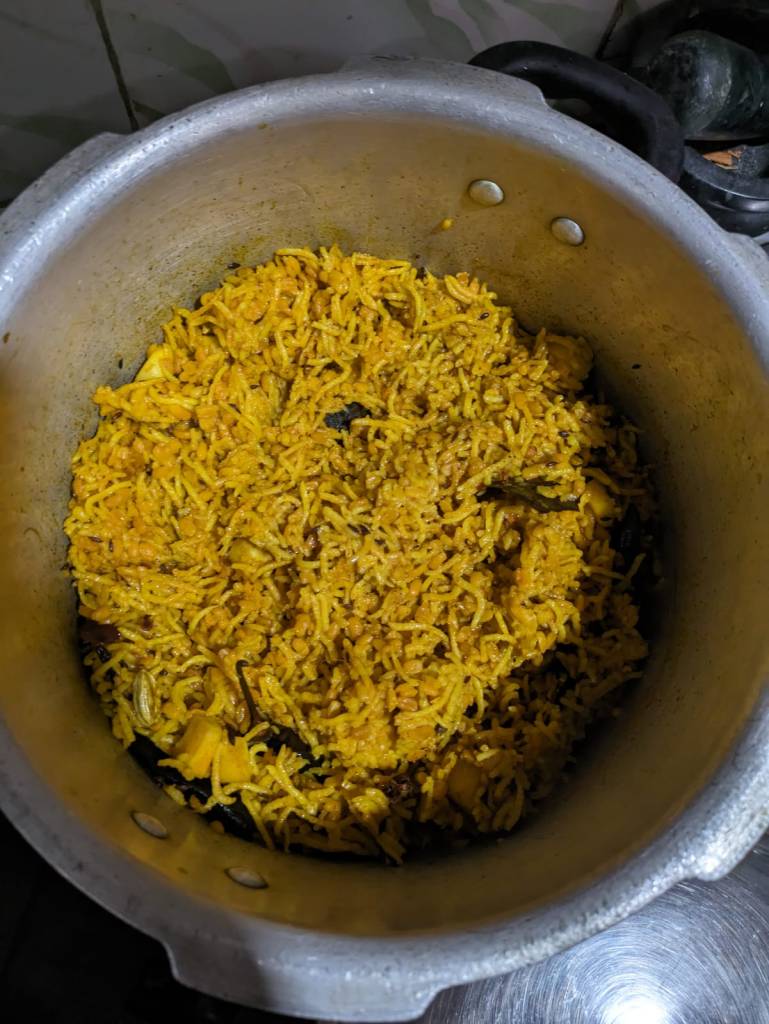
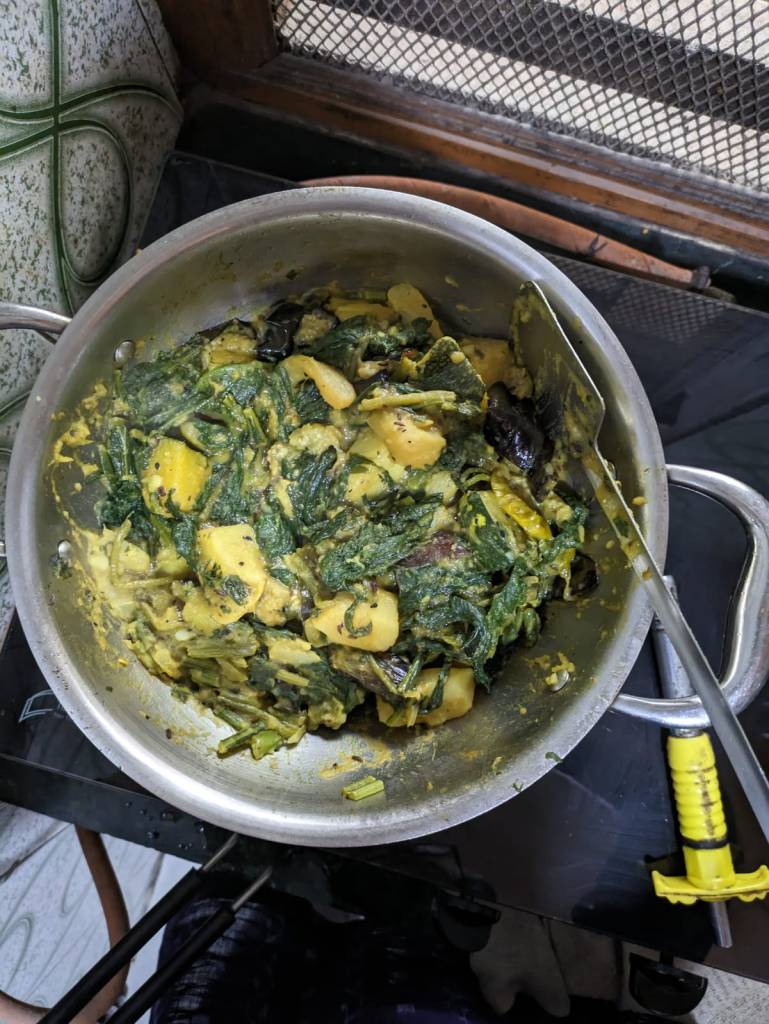
Indians are broadly divided in two segments – vegetarians and non-vegetarians. The divide, in some cases, is very watertight while in others not so much. Some vegetarians take eggs. Some vegetarians may also eat fish. But mostly vegetarians do not have meat of any kind. Strict vegetarians do not have any kind of meat, fish or egg.
In some households, the younger generation may have non-veg outside home, that is, in hotels or get togethers, because at home it’s entry is completely disallowed. In other households non-veg is cooked for young ones, however, under lot of restrictions, like the utensils in which non-veg is cooked are kept separately and not to be mixed with utensils which are used for cooking vegetarian dishes for elders and other members of the house. Needless to say, the same utensils are never used for cooking both vegetarian as well as non-vegetarian dishes.
Caste system in India is still very strong. Higher castes, like Brahmins, do not have non-vegetarian food at all. While other castes like Kshatriyas are non vegetarian. Castes are basically guild/profession based. Brahmins are priests and preachers. They are also the intellectual class of teachers. While Kshatriyas are warriors. Of course, the bounds of profession have blurred by now. One must also take into account the vastness of this subcontinent wherein different regions have different eating habits which we ourselves as Indians are not aware of.
However, there are always exceptions. In Bengal, Brahmins are also non-vegetarians. While the Vaishnavites or worshippers of Lord Krishna are pure vegetarian. They do not even have or prepare food with onion and garlic.
Hinduism has many sects. The Brahmakumaris believe that when you are having meat you are not only devouring the flesh but also the anguish and agony felt by the animal just before it’s slaughter. Of course, now science has taught us even the trees feel and express pain and pleasure. So they must also be agonised when we pluck fruits and vegetables off the branches or cut the leaves , stems or twigs of a tree. Brahmakumaris and also other religious groups advise against having onion and garlic because of their inherent (heat producing?) qualities.
There are many who take pride in saying that we are a class apart of veggies. You, who eat non-veg, are nothing short of barbarians. Nowadays, a belief is getting frequently vocalised that a true blue Hindu is a staunch vegetarian. Given the enormous encompass of Hinduism it is not right to equate or identity Hinduism with vegetarianism. There may be many voices for and against this statement.
Though, due to various reasons, I and many like me, have taken to vegetarianism, I still occasionally have chicken, fish or egg. I do not have red meat. In our religion having beef is banned. I have never tasted pork or crab.
However, Bengalis are ‘fashionably’ non-vegetarian and do not mind experimenting with or experiencing ‘good food’. They are basically foodies. If you invite a Bengali and only offer veg food it will be nothing less than personal humiliation. I always tell my guests I prefer veg and can only serve them the same. I guess that kind of waters down the humiliation quotient.
In sharp contrast, on auspicious days of Puja (worship) a Bengali household will not cook or even allow non veg to enter their premise. In ancient times, widows relinquished all pleasures of life including eating non veg and also some protein rich veg. Paradoxically, this stringent rule was not applicable to a widower. Even now, in many Bengali households there is a separate kitchen for elderly members of the society. Having the genes of a true blue Bengali me too following the same line of eating habit with growing age and turning into a veggie perhaps!!
I strongly feel against nurturing a goat or sheep or lamb like pets and then slaughtering it when ocassion arises. It’s immoral, unethical and inhuman. My mother’s caregiver, who is a tribal, follows similar practice at her home. I keep on advising her against it. It’s like killing the animal twice – bodily as well as emotionally.
While on the subject I should also write about the limitation of a confirmed veggie. Having stopped eating or infrequently preparing non veg at home, my sense of smell revolts when I visit a meat shop. There are many who store non veg like vegetables in the refrigerator. It’s a simple no-no for me. I cannot tolerate the smell of fish, chicken, egg or mutton kept for long in the fridge. Especially, river fish – they stink. Even if they are fresh and just out of water. Cooking fish means cleaning the kitchen over and over again after preparation. You may call it a psychological issue. But I am paranoid about smell. I do not like smelly house, more specifically, kitchen (cars/cabs/train compartments etc.). Many Bengalis have a ‘fishy’ smell in their house/kitchen. I hate it. I am allergic to strong smells. There are many other smells which I cannot bear.
Coming to the topic of discussion, I basically feel there is nothing wrong in having meat. But again it depends what kind of meat we are talking about. Given the practices detailed above, perhaps there is a religious flavour in our eating habits. But to disparage a Hindu just because he/she is a non-vegetarian is a malpractice and narrow mindedness.
Like the essence and larger motive of religion, eating habits should not be a cause of discrimination. (In earlier times, a staunch vegetarian would not sit with a ‘bohemian’ non vegetarian at the same table to partake food!!) While non vegetarians are very quick to furnish ecological balance in favour of their preference of food, a vegetarian has his own theories of religious proprieties.
Basically, I feel the bigger question should be whether our eating habits make us better human beings ? What food kills or minimises our primitive impulses of hurting our fellow brethren? What do we eat to make us more compassionate, big hearted and all embracing? What do we exclude from our meals to make us better human beings , more caring towards nature and mother earth, less conflictual and more fraternal?
Food for thought…





A very thorough treatise on such a complicated issue. Certainly “food for thought”
LikeLiked by 2 people
In deapth analysis.
🙏🙏🙏
LikeLiked by 1 person
Thank you Mr. Philo
LikeLiked by 1 person
You are welcome.
LikeLiked by 1 person
I believe are beliefs are conditioned by what we are accustomed to and how we grew up. After attending an Episcopal (Christian) school for my school years, I attended a private college in a state 8 hours north of home, with a respectable number of international students, of which some were Hindu. The dining hall decorated for diwali once, but they must not have done a very good idea of explaining it, because it frightened me. Christians, like Muslims and Jews, grow up with the story of one God but also one “bad guy,” Lucifer, who supposedly lives underground in hell (at least in young people’s imagination) and who is associated with the colors red and black. So when a Hindu acquaintance and I were about to enter the dining hall, and it was dark inside, with little reddish lamps on the tables, as is traditional for diwali, I was scared and backed away. Seeing my malaise, she didn’t do a very good job of explaining why, but simply said, kindly, “I’m so sorry you’re afraid…bye!” and walked in without me. I don’t think they had even put up a sign explaining why the unusual decor… Even after dating a man who had grown up in India, I still had no knowledge of Indian spiritual traditions and moral stories (except for satyagraha thanks to the Mahatma Gandhi. Our planet is vast and contains many different traditions…more so than we as individuals can ever really understand. Luckily I now have a greater comfort level with the unfamiliar than I did then!
LikeLiked by 2 people
Please pardon all the grammar and spelling mistakes! It should read “I believe our beliefs…,” not “I believe are….”!
LikeLiked by 2 people
Ah actually, we did read parts of the Bhagavad Gita in our high school religion class, but I had no way of making the connection between that text and the red lights….! Sigh.
LikeLiked by 1 person
Thanks for such an elaborate comment. Through my posts I always try to explain India, it’s varied culture, the enormity of our religion and also our societal maladies. Someday I will definitely write about the concept of light in our beliefs.
LikeLiked by 1 person
Glad that you like it Derrick.
LikeLike
Very interesting post. I have a lot of respect for vegetarians.
LikeLiked by 1 person
Thank you very much.
LikeLike
Ramathra Fort
LikeLike
An insightful glimpse into the intricate tapestry of Indian dietary habits, challenging stereotypes and emphasizing the need for unity despite diverse food choices. 🌍✨
LikeLiked by 1 person
Enjoyed this and appreciate it. Great break down. Peace
LikeLiked by 1 person
Thank you for the visit and appreciation for my posts.
LikeLiked by 1 person
You are very creative and so much depth knowledge wisdom and a strong spiritual vibe. Appreciate you and peace
LikeLiked by 1 person
Taking a bow
LikeLiked by 1 person
I’m the one honored to read your work
LikeLiked by 1 person
Such an interesting and important essay Gita, can’t say how I missed it. I have had my stories and ample of travelling and living with meat eating Communities and today it feels rather brave of how I followed my instincts and kept my head low for eating whatever i got and not dead food somehow.
Bengalis are real experimenters with senses, be it language, food or art. And have had many friends over the years some who coaxed me to eat and some who left eating non-veg because of me. 🙂 it ll be a good dive down someday to talk about it. Great to read this Gc.
LikeLiked by 1 person
Thanks so much Narayan. Would love to know your views too. Your comments are really encouragement to my sporadic writings.
LikeLiked by 1 person
I am not Indian but I certainly love the food. And I have been vegetarian for about 16 years now. I dated an Indian guy many years ago and his mum taught me how to make proper Indian food. I can literally eat Indian food all day, every day, And I love how much vegetarian recopies, your chana masala, paneer, potato curry etc. And I love roti and naan break (especially homemade),
LikeLiked by 1 person
Oho! That comes as a delightful surprise!
LikeLike
Informative article
LikeLiked by 1 person
Do Visit For Details and Depth Knowledge and Reblog to your site
https://avcjblog.com/mango-seed-health-benefits-and-vedic-recipes/
LikeLike