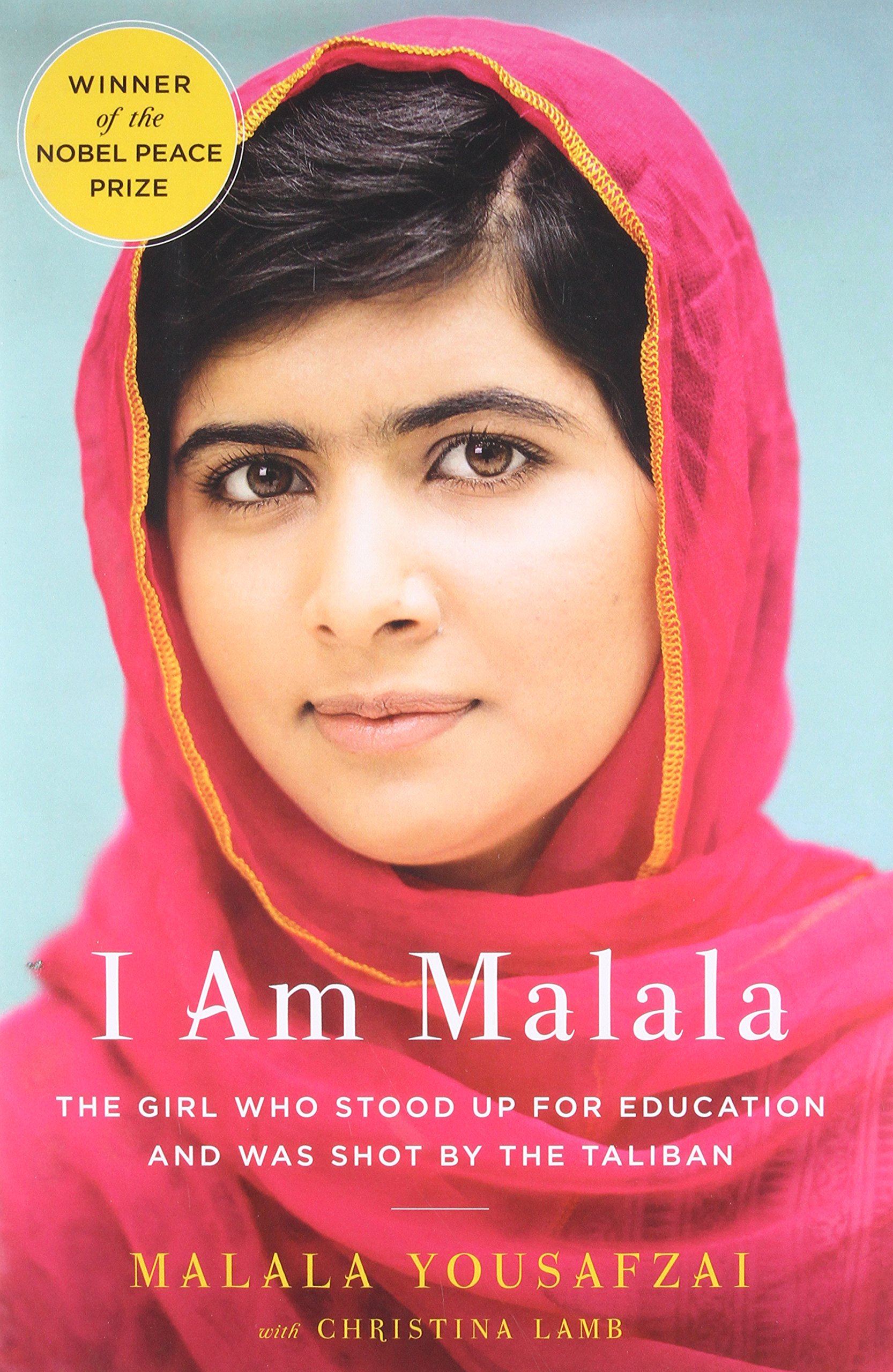
Have you heard of the Swat Valley. I hadn’t till I read “I Am Malala” the story of a fifteen year old girl who was shot by the Taliban because she stood up for female education and spoke against Talibanization of the beautiful, verdant valley.
Swat is the fifteenth largest district of Khyber Pakhtunkhwa province in Pakistan, centered on the Valley of Swat, surrounded by the Swat river. The valley was a major centre of early Buddhism under the ancient kingdom of Gandhara. After the tenth century, the area became largely Muslim. Until 1969, Swat was part a self-governing princely state that was inherited by Pakistan post independence from British rule. The region was seized by the Tehrik-i-Taliban in late-2007 until Pakistani control was re-established in mid-2009. Swat is a popular tourist destination of Pakistan given its scenic beauty and cooler climate than rest of the country. (Source : Wikipedia)
The name “Swat” is derived from the Swat River. The Swat River referred to as the Suvāstu –in the Rig Veda, which literally means “of fair dwellings” Some have suggested the Sanskrit name may mean “clear blue water.” Another theory derives the word Swat from the Sanskrit word shveta (white), also used to describe the clear water of the Swat River. To the ancient Greeks, the river was known as the Soastus.[1 The Chinese pilgrim Faxian referred to Swat as the Su-ho-to. (Source : Wikipedia)
“I AM Malala”” is the autobiography of Malala Yousafzai of Swat Valley, her childhood home. She was named after Malalai of Maiwand. Malala lived with her father Ziauddin, her mother Toor Pekai and two younger brothers Khushal and Atal. Ziauddin was an advocate of mass education He opened the Khushal School with a partner and struggled hard to maintain it amidst dire financial difficulties. Slowly the school grew and made profit. Ziauddin’s wife, Toor Pekai, would give shelter to many needy children and Ziauddin would give them free admission in his schools.
Malala describes the changing political scenario in Pakistan, the gradual talibanization of the peaceful valley converting a heavenly, picturesque abode into a seat of terror and blood bath and how amidst regressive political turmoil she and her father continued their advocacy of education. How, on one hand, they were praised for their fearless campaign and how, on another hand, death threats loomed large over them from those who thought that the father and daughter duo were trying to westernize the populace and turn them into anti-Muslims.
On 9th October 2012, Malala and two of her friends, coming back from school, was shot by a Taliban. The bullet travelled from her left eye to her shoulder. Her friends were also injured but not fatally. It is hereafter that the book narrates how the wheel of the government functions, the avoidable delays made by the bureaucracy, the attempt to politicize her attempted murder, the trauma her family goes through unable to reach out to their severely wounded child who is taken to the Combined Military Hospital in Peshawar and then airlifted to a military hospital in Rawalpindi and then to Queen Elizabeth Hospital in Birmingham, and the various complex medical procedures she undergoes to be blessed with a second life.
She lives in Birmingham with her family, continues her fight for education but also dearly misses her homeland and wishes to go back to the Valley.
In October 2014, Malala, shared the Nobel Peace Prize with Indian children’s rights activist Kailash Satyarthi She was seventeen and the youngest person to become a Nobel Laureat. Her impassioned speech in the United Nations Headquarters won a standing ovation. I have heard her on You Tube. She speaks out of deep conviction and nurtures true vision. She is soft spoken but strong, a reformist to the core, a realist but harbours wealth of optimism. She is married to Asser Malik, Manager of Pakistan Cricket Board.
“I Am Malala” was well received, declared a bestseller and honoured with several accolades. But Wiki says that it is banned in certain parts of Pakistan perhaps because of her straightforward commentary on Pakistan’s political and social issues. The book is straight-from-the-heart-kind. Needless to say, it is also a scoop of life which is despicable to say the least. The writing is simple but lucid in portrayal. It does not take much to understand how peace can be systematically destroyed by fundamentalism, illiteracy, lack of clarity in terms of political goals and dualism.
Malala’s speeches and interviews are available on You Tube. Her Instagram showcases her continued zeal for her cause which now transcends geographical borders. Malala ends her book saying that she does not want to be known as “the girl who was shot by the Taliban” but as “the girl who fought for education”.
Kudos to her indomitable spirit.
Shared with Goodreads