
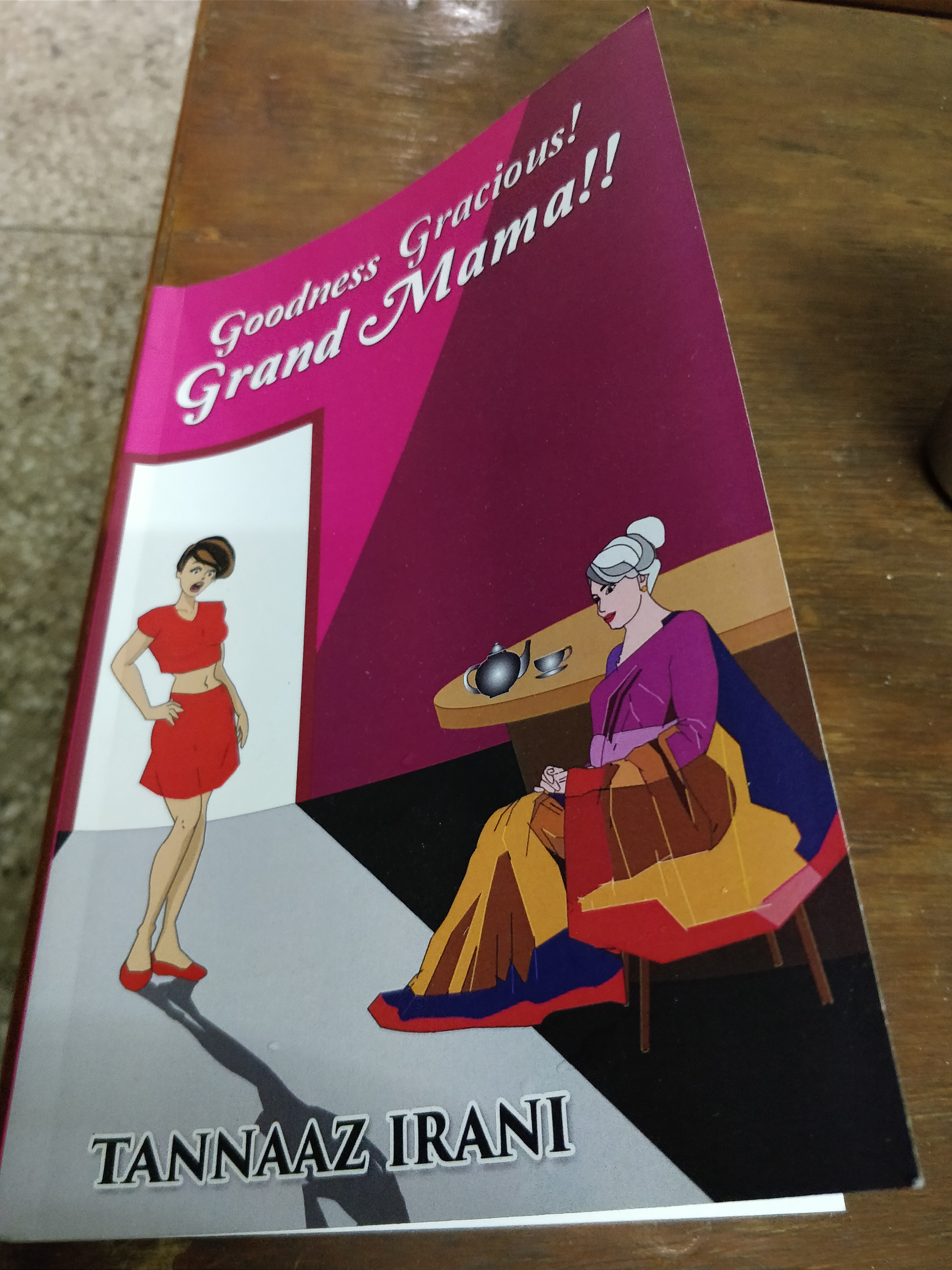
I have just finished reading Tannaaz Irani’s “Goodness Gracious! Grand Mama!!” (GGG) – a memoir so lovingly written. But I am not much into memoirs. The last read was Shobha De’s “Selective Memories” which I found very, very selective in every sense of the term. In contrast, Tannaaz’s tribute to her grandmamma, through this book, is not only an invitation to meet her “idiosyncratic” family and the colourful persona that her granny was, but it also chronicles passage of an era.
I, generally, do not “review” a book – I merely put in words the thoughts that race through my mind and the feelings that whelm my heart in the process of assimilating one. Whether that can be called a review is definitely debatable.
A few chapters into this one, I was transported to the Kolkata of more than three decades back – a difficult phase of my life which I’d rather not prefer to remember but for the peek it provided into those impassable alleys of life! An unthinkable exposure to a sheltered middle class existence, years later which coagulated into clusters of unforgettable experiences serving as fodder to a pen much inclined to put to account the vagaries of human life in all its kaleidoscopic extravaganza. It was also during this time that I had my first encounter with Parsis and Anglo-Indians which also coincided with my entry into the corporate world. The secretary to the CEO of the esteemed organization, I debuted in, was a Parsi lady whom I found most intriguing. She had a name way different from the names I was accustomed with. More than that, she was quite unapproachable being associated with the higher echelon of the organizational ladder. She spoke less, smiled much lesser and maintained a distance from the rest. Perhaps it was the requirement of the post she held or she thought it was. However, my bitchy colleagues attributed her stiff-backed stance to confirmed spinsterhood. Parsis are an affluent but closed community with an acute aversion towards socio-cultural intermingling. Reading Tannaaz, I now understand the socio-historical anatomy of this exclusiveness stemming from a regrettable colonial hangover which we all Indians, more or less, suffer from and the consequent misplaced diffidence.
Are memoires supposed to invoke wistfulness? I thought as chapter by chapter, Tannaaz’s words retraced my steps back to childhood – those carefree days of fairy-tale dreams oblivious of the limitations of hard-hitting realities.
The best thing about GGG is that it is in no way a deliberately packaged product. The writing is free-flowing sans the intent to make it attractive. Grandmamma leaps out of the pages as the formidable matriarch, fiercely guarding the family from disintegration, even if that means the not-so-well-to-do-relations unabashedly taking advantage of her hospitality and generosity. Her indomitable spirit is infectious. Her valiance in the face of adversity is inspiring. A unique combination of feudal grandiose and charming grace, bestowed upon those whom she considers deserving of the same, Grandmamma epitomises a class long-extinct and times long gone by. Perhaps, one can even take the liberty of saying she would have been a misfit in today’s times, yet, she seems to be such an integral part of the past – a past that would remain incomplete without personas like her who defined the ethos of those times – a birthing nation with its umbilical cord still tied to a decadent imperial dominance! Understandably, Grandmamma, thus, desperately sticks to her self-created image of the virtual mater familias dictating terms, imposing rules and overshadowing all her kith and kin who toe her line either willingly or unwillingly or just as a matter of practice. Yet, Tannaaz, describes her Grandmamma’s royal eccentricities with a handful of humour which may have bordered on irreverence if she were not in awe of her. Grandmamma is fun to the fresh crop of the family, the gen next – the budding scions of a different time!!
Tannaaz inks her memories without a single trace of malice. GGG is a flipbook of memories visited with care and creditworthy neutrality. One can make out how much the writer must have enjoyed penning her thoughts. And that is what makes the read enjoyable and engrossing. Yes, writing is cathartic and in the process, many an emotion, suppressed, dormant or hidden, wells up within surprising even the writer. The introspective chapter right before the epilogue-ic analysis of the pivotal character is commendable. It is balanced, unbiased and skillfully crafted. There are some which inspire and even prove to be life-changers, but this book has been catalytic for me and not too far in future I too may think of weaving an honest account of those who have shaped me into what I am today.
Thanks Tannaaz for sharing this book with me.