To Be Or Not To Be


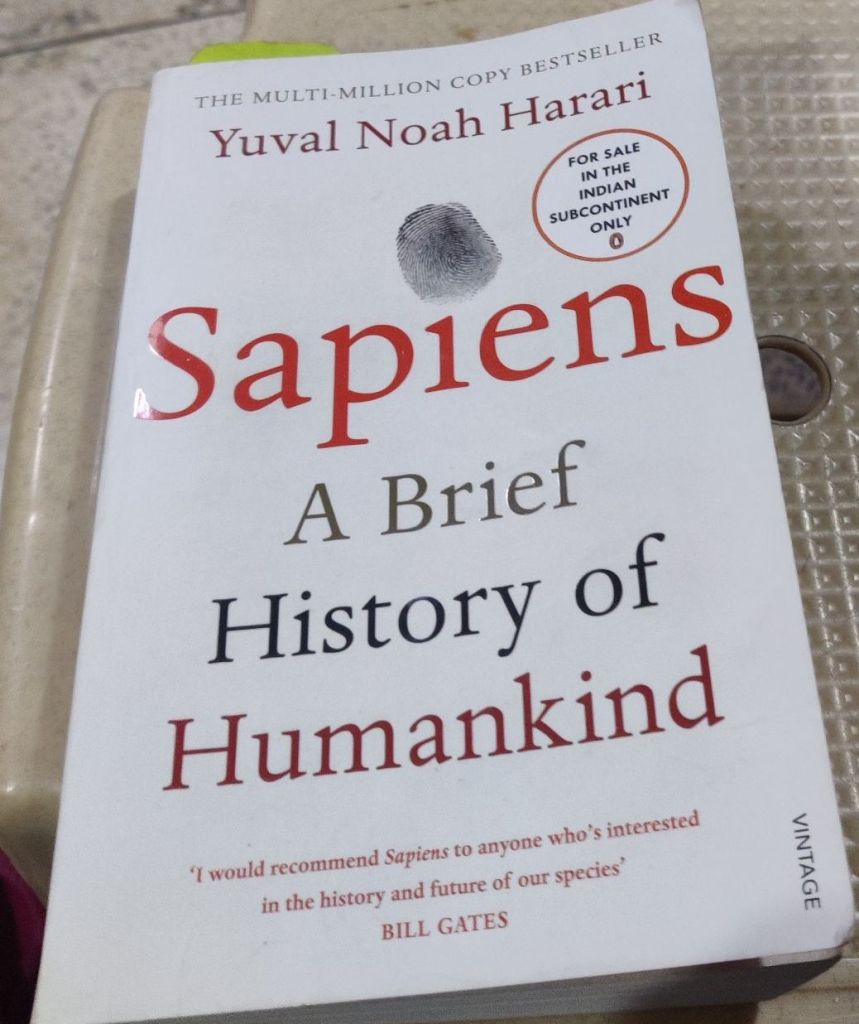
It’s massive. It’s a perspective shifter. It’s a myth buster. It’s a must read for all those who are interested to know how in such a short period of time Homo Sapiens came to rule over this planet earth. It’s a retelling of history but in a very different way.
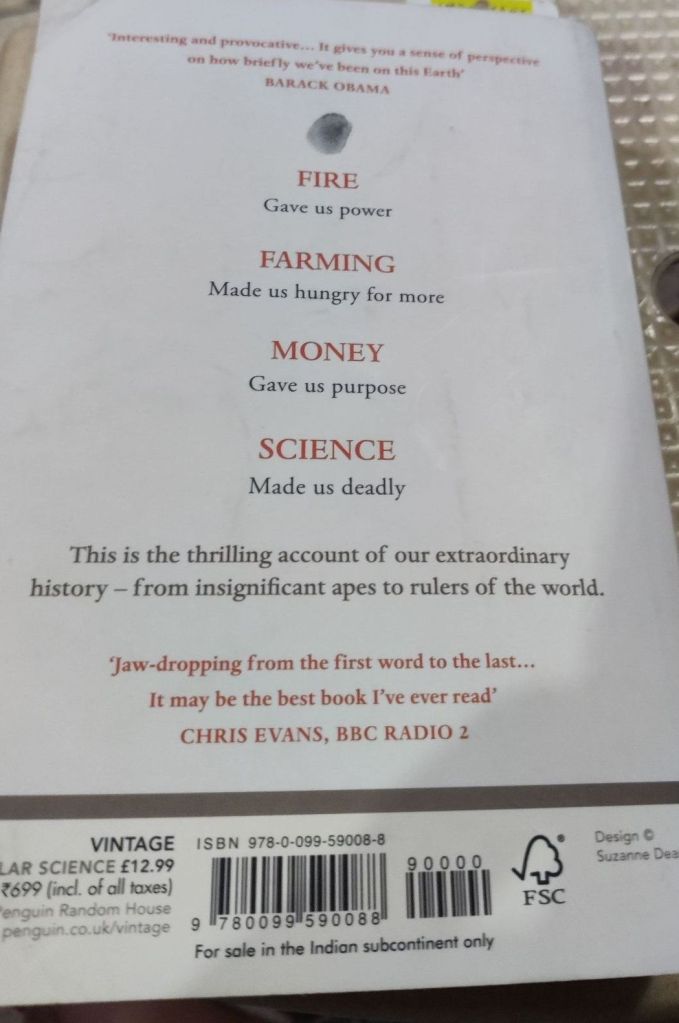
The blurb says “FIRE gave us power FARMING made us hungry for more MONEY gave us purpose SCIENCE made us deadly.”

For me to find the book interesting is not that I have suddenly developed an interest in history but because of the way it is retold.

Yuval Noah Harari’s mammoth work covers the entire period of human history from the genesis to its evolution through various phases till now (2014).

In school the subject “History” meant mugging up a whole lot of dates and events. It was boring because it failed to present our  most important narrative in an interesting  manner. The text books stated what and when events happened and the students were supposed to learn by heart and reproduce them exactly on the answer sheets.

Harari’s re-telling of the history of humankind is different in the sense that in very vivid language and an intense manner the book answers not only what and when but also why and how history happened. In doing so, it provides clarity and comprehensibility to our past. Merely knowing the historical landmarks do not suffice. Grasping why and how these happened shift perspective and facilitate understanding of the larger order of things.

To clarify why this book is a myth buster I will cite my own history book of 9th and 10th standards (more than four decades back). I do not know whether there is any change in the content now but I distinctly remember we were given to understand that the human species went through various phases of evolution from Paleolithic (early stone age man) to CroMagnon (early modern man known for art and tools). The Neanderthals were Homos who first took to agriculture leaving the nomadic life of their predecessors – the hunter-gatherers. Each phase of genetic evolution superseded the previous till the  Homo Sapiens or the Wise Man evolved.

Harari, on the contrary says, no, various species of Homos or humans existed in different parts of the globe at the same time, e.g. Homo Neanderthalensis (Europe and Western Asia), Homo Erectus (East Asia), Homo Rudolfensis (East Africa) and many others along with Homo Sapiens but it’s the latter which overtook or conquered over the rest of the species and came to rule the Earth. How ? That is what Sapiens is all about.

It is very difficult to put in briefly what this enormous study brings forth. This “Brief History of Humankind” takes into account  many other disciplines – Geography,  Politics, Religion, Anthropology, Sciences, Art & Culture , Sociology,  Economics and even the role of  Comparative Study of Languages and Acturial Sciences to lay down a comprehensive documentation of  creation, growth and progress of human civilization and rightly so because otherwise it would be an incomplete street view of our past , present and future.

Three revolutions shaped human history – Cognitive Revolution, Agricultural Revolution and Scientific Revolution. It’s the superior learning abilities and complex social structure that made humans the most powerful animal. Unfortunately, wherever Homo Sapiens set foot ecological degradation and extinction of other and variants of its own species followed.

Interestingly, the growth of Homo Sapiens was aided by language – a mode of informal communication – or gossip as Harari puts it. Language became a very effective instrument of transmitting  information. Also, it was the ability to co-operate with large groups that gave Sapiens an edge over the others.

Harari says language evolved with gossip. Gossips facilitated  creation of fiction or imagined realities or social constructs which in turn aided Sapiens to work in large groups towards a common goal.

As we all know,  the Agricultural Revolution saw the primitive hunter gatherers settling down to domestic life.  Harari says, contrary to the common belief that  humans gradually learnt to gravitate towards an agrarian life, its the wheat that domesticated Sapiens. And before they knew Sapiens had opted for a more complex system of sustenance compared to their earlier lives of foragers.

A settled life required unifiers like religion and imagined order and written records (Sumerian) and systems that could be well regulated and standardized, e.g. the advent of money  for transactional ease replacing the barter system. Harari says the worth of money did not lie in its intrinsic value but in  the amount of trust that everyone reposed in it.

It is also interesting to note that the first written record in Sumerian Cuneiform script was all about trade transactions and collection of taxes and not about poetry and literature.

Industrial Revolution galvanized scientific experiments and inventions. Scientific Revolution boosted voyages and expeditions. The thirst to know coupled with scientific inventions led to exploration of the unknown. But these expeditions were not altruistic ventures triggered by knowledge seeking and embracing new cultures and peoples. These were motivated by profit. First encouraged by monarchs and then by merchants exploration led to conquests and conquests led to the establishment of Empires. Soon empire building became the most profitable enterprise exploiting the conquered land, its populace and its resources.

Harari says scientific experiments were not standalone academic ventures. They involved huge expenditure and needed funding. Those who funded obviously were the ultimate decider of the subject of scientific study. Needless to say the compass always tilted towards inventions which could generate profit.

Thus it was capitalism that pushed forward the project of empire building and scientific innovation.

With these mercenary ventures soon grew the complex systems of banking and advancing credit. As profit making became more and more hazardous individual financing gave way to joint stock companies and the institution of stock exchange. Harari meticulously explains why in contemporary times the credit score of a country is the most important factor in its international standing and economic growth and development.

Human history, according to Harari, is directional. It has moved towards the making of a unified global village and ecosphere.

After the two World Wars, the fear of nuclear annihilation compelled nations to cultivate peace which in turn benefitted trade. However, given the fact that science has empowered humans to the extent that they are able to control the environment to a large extent, discover alternate sources of energy, provide advanced medical support to the sick, make significant progress in health care thereby  bettering the quality of human life, venture into space and even think of creating super humans in future but has it made them happy? He also warns of a future dominated by Biotechnological Revolution which can enable replacement of humans by a superior breed with more advanced cerebral and neural abilities. While history of happiness is a paradigm shift in the approach to the traditional discourse the most significant query raised by the author is that humans should now think what they want to want?

As I have said before Harari’s narrative is not about the milestones but the elaborate detailing of the course which propelled Homo Sapiens to reach there. In its approach the book is unique. However, Harari’s atheism renders a cynical tone to an otherwise gripping account. Sadly, Harari’s theological discussions  exclude mention of Hinduism, the oldest religion of the world. The last chapter on History of Happiness necessitates an expansive and exclusive debate by dint of its very context. Harari’s picture of a futuristic world of cyborgs . computers with brain, organisms with extraordinary sensorial capabilites is rather a threatening and formidable end to a fascinating and scholarly treatise.

A little about the author: Yuval Noah Harari is a professor of History at the Hebrew University of Jerusalem. He is a popular science writer, military historian and intellectual. He has many bestselling books to his credit, His book Sapiens is based on his lectures to undergraduates of world history class.

I highly recommend this brilliant exposition of a brilliant mind to all my friends and readers who wish to know about this “thrilling account of our extraordinary history – from insignificant apes to rulers of the world.”


FF : The Triangle


This flash fiction is in response to Rochelle’s photo prompt for Friday Fictioneers. A very late entry indeed but couldn’t stop myself from participating.

Fiction Limit : 100 Words

The Triangle

He thrust a glass of wine in her hand spilling some on her lap,

“Drink up. It’s party time.”

“Why do you take all that shit from him? You are not a doormat, you know!!“

I seethed.

“And let people know that the VP of an MNC can’t manage her own life?”

She sniffed

***

I cornered him,

“Why do you treat her like that?”

“Come back to me.”

His reply was terse.

I scoffed

“Thank God you never returned. I am not like her, you see”

I pointed at the half lit alcove

But it was empty…

(98 Words)

***

You can read the other stories here.

Health Care


How do you practice self-care?

The year 2025 has been a year of learning and  unlearning. How important well being is nobody knows better than a person who has survived a life and death crisis. Listening to the body is majorly overlooked. The body does give signals. My body did but I chose to adopt short cuts. Consequently, I suffered. But suffering is a precursor to a new beginning.

It is generally believed that mental well being precedes physical well being. In my experience both are intertwined and essential for healing. Mental strength depends on physical strength and vice versa. However, sustaining both,  physical and mental health, is crucial and requires constant self care.

I have now conditioned myself to take care of both. I eat well, sleep well and consciously maintain a daily routine which includes physical and mental exercises. I also have cheat days when I  break all self imposed rules. But that is also at times necessary.

As we all know we have to restrict ourselves to a nutritional diet supplemented by prescribed medicines to be healthy. At present, I have been advised to take high protein and high fibre meals and lots of liquids. Accordingly, I regulate my intakes and check the parameters on a daily basis

To keep my mind off overthinking I have divided the hours of the day into small activities. I read.  I write. I cook. I watch TV. I take care of the strays. I try to do most of the household chores myself. I have also picked up my childhood habit of colouring and doodling. I am trying to reduce screentime and binging.

I have become very conscious of what I consume on a day to day basis. I avoid news, books, serials and movies which disturb. I listen to talks which enrich and allow me to see things in a larger perspective. I am also careful in personal conversations and steer clear of being judgmental or too emotional on any issue.

I have also learnt to draw a line and tell myself repeatedly that I will not focus on bad memories. Life is linear. We cannot go back in time and undo  what we were not supposed to do. Taking the lesson from mistakes committed and moving on is a healthier option.

Lately, I have started keeping mobiles out of reach during bedtime. Scrolling is a disease I am trying to cure myself of. 

I am also trying to make my reading more intellect oriented. Same with what I watch. Meditation is ideal before retiring to bed. Also listening to relaxing music and stories.

All said and done, there are days when everything goes haywire. But again coming back to “new normal” is rejuvenating and reminds me that I have to unlearn a lot.

I guess life goes on like that. Nothing is permanent, orderly or perfect. But rising again and again from the ashes like a phoenix  is our calling in the last leg of this journey.

The Reluctant Tripper


What countries do you want to visit?

I am not one of those who is very fond of travelling. At one point in life I used to hate it. I even avoided undertaking tours for official purposes. The pet nag of both my nephews is that I have never visited them even once till date – the elder one is settled in the US of A and the younger one is in Bangalore which is very much within India. In my present health condition I am not too enamored by the idea of going anywhere far from home.

At different phases of life I have been curious about different countries. Having been an avid K drama watcher I became curious to know about South Korea.

My fascination for haiku heightened my interest in Japan not as a country but more as a way of life. Long  before that Bruce Lee had overpowered my impressionable mind and I thought every household in that country homed a Ninja. I am still exploring Japanese authors and untranslatable words in that language.

Having been brought up on Christie I had this unarticulated desire to visit, no, not London, but the English countryside.  I firmly believed that every sleepy English village  honed the woolly skills of at least one Ms. Marple.  And after Harry Potter Hogwarts was no less than a dream destination.

I can name a few more and the rationale behind my liking for those countries may appear weirder. But before that a few universal ones – Denmark because of the tulips, Venice because of its waterways, Greece because of its history, Switzerland because of its scenic beauty, Spain and Italy because these have much to offer as touristy countries. I could even add Antarctica for the Penguins and the Arctic for the Northern lights but even for a flight of fancy that would be quite farfetched. But the fact remains that I am absolutely intrigued by the phenomenon of Northern lights and being an animal lover find Penguins most adorable. Reading about them satisfies my appetite for places I cannot even dream of visiting. Here’s one that I wrote a post on:

All About Antarctica

However, to be very honest, two countries which I really wish to visit are the neighbouring ones – Pakistan because my father started his career in Lahore. I have grown up hearing a lot about how hospitable the people of that city were. The other one is Bangladesh for the simple reason that I have my roots there.

Unfortunately, India has strained relations with both the countries, though they were once very much parts of this sub continent. From a Socio-cultural perspective, we have much in common. I have immense respect for the Urdu language and tehzeeb or social courtesies. There is a common saying that even if somebody is abusing in Urdu it will be with great politeness and in a very sophisticated manner. And what to say about their cuisine, workmanship , ethnic fashion, literature and poetry?

I love the dialect of Bangladesh known as Baangaal. Although I cannot speak very fluently but a few words here and there get into my conversation as I grew up hearing it from both my maternal and paternal sides. Which Bengali lady will not swear by a Dhakai Jamdani Saree? I have heard a lot about the mouthwatering cuisines of various districts of Bangladesh each having its distinct flavour. Above all my rich family history is rooted in that soil. So understandably  I have a drift towards , in our parts as it is said, Padma paar or the other side of the river Padma.

I do not know whether I shall ever be able to make it to these countries and of course to my nephews’.

Yet there’s no stopping me from dreaming …

Moments


Describe one of your favorite moments.

It will be difficult, if not impossible, to single out one moment  as most favourite. Life does not work like that. Human memory has a capacity to store innumerable moments, which on retrieval,  can produce varied emotions – amusement, astonishment, revelation, serendipity and even disgust. The last one may not strictly fall within the realm of favourable, yet can still be educational. Again it depends on how it is perceived. But any incident which adds to learning can definitely be categorised as favourable.

The last few months have been a prolonged period of suffering and continues to be so.  My stay in the hospital at regular intervals (on an average after every two months) to undergo two major surgeries, has been a part of an arduous journey, which I  believe, was preordained. I had to undertake it in my orbit of life, the necessity of which, I am sure,  will be revealed sometime in due course.

I was entitled to a twin sharing room, as per my office’s  Post Retirement Medical Scheme. Sharing rooms in the hospital can be bothersome because your roommate may not have the same sensibilities as yours.

Prior to the surgery I shared a room with a middle aged woman ailing from Jaundice.  Her day started late  when her son came to be with her. A family of shopkeepers their morning started midday and ended past midnight – an absolute contra to mine. Having all along  been fed the efficacies of early to bed and early to rise  since almost infancy, any routine other than that was quite a disruptive revelation.

However, from the robust discussions on the other side,  easily filtering through the flimsy partition in between, I in spite of least interest, became privy to intimate family matters e.g. the lady did not quite see eye to eye with her husband,  her jewellery was under mortgage which her son proposed to get back soon, her daughter longed to go back to her kid who was missing her immensely and such other. I would not say I relished these tid bits – an auditory barrage which I could have done without. However, to be honest, it did provide some distraction in my condition of utter distress and despair.

Post surgery, I was in a stupor for many days, partially because of the medications and mostly because of the physical discomfort and pain. It was a big sunny twin bedded room which I came to occupy. The other bed was at first occupied by a child who insisted on watching the TV with raised volume. The mother was even louder who made it a point to admonish the son at the drop of a hat. The father added to the cacophony with his continuous haggle with the Billing Desk.

In between my sister had to request them to keep their voices low which was taken as an affront by both the parents. It was quite a relief when the boy got discharged.

My sigh of relief soon turned into horror as the patient who came to share the room next started hurling abuses interspersed with gasps and howls. Even in that haze I was appalled by the magnitude of his anguish. He cried uncontrollably like a child! A bunch of rather uncouth men attending on him, the  nurses administering painkillers, the physicians checking on him failed to relieve him of his acute misery. At this juncture, my sister got me shifted to another room as I was quite shaken by the entire spectacle.

The room was window less, much smaller and of course on sharing basis but nevertheless had an air of cheerfulness. The nurses’ station was also close at hand and the length of a corridor separated it from the earlier one from where the shrieks and shouts of my erstwhile neighbour could still be distantly heard but not so much as to bear down on me.

Soon another inmate joined – a retired daroga (Head of a Police Station) who made it a point to throw his weight around, refused to listen to the nurses and staff, insisted on leaving the hospital without the doctor’s permission as  according to him he was absolutely fit and fine. It was only before the attending physician that he would suddenly go mute. A great source of entertainment, at the expense of a flustered nursing staff, he made me smile with his antics.

I know all the moments  revisited are not exactly enjoyable. Nonetheless these have left an imprint on me – some by their disruption , some by their novelty and some by their gimmickry.

I am yet again to be admitted very soon and do not know what lies in store. Whatever be, if  it happens to leave a mark on me,  will surely evolve into another post. Amidst all the uncertainties , it’s this that I am very sure of.

Pic from Pixel

Fears


What fears have you overcome and how?

I am the one riddled with many. I thought I had succeeded in overcoming them but the fact remains I have not. Lately , I have succumbed to  fear of inflicted as well as anticipated physical pain , like, cutting of sutures or stitches, forcible insertion of dyes and contrasts for body scan, surgical incisions, infections at the wound or dressing sites, and such others.

It’s fate that every time I grow nutritionally fitter I am felled down by a major surgery. The surgery itself is not so formidable an experience because, you know, it’s under general anaesthesia obliterating awareness of the process. It’s the post surgery recovery which is traumatic and always unsteady.

I wonder why I have become so cowardly given the fact that I have suffered physical pain, in some form or the other, throughout my life. At one point of time I used to believe that endurance has made me stronger, braver and tougher. Alas! I realise it has not.

I am given to analysing my reactions Why? Is it age? Is it  bodily weakness? Is it that the memory of the past has become sharper  that each time the surgeon’s forceps touch my skin I become super sensitive? He prepares me for the next onslaught. Makes me aware of the invariability of the scheme of things. I want that. Not knowing is more painful. The unexpectedness of everything!! But every time he counsels I tell myself “Don’t be scared…No..No…” He thinks I am a nervous wreck. I wish to tell him not to judge me by my weakest moments.

I guess when the ordeal is over I will tell myself, ” See. You passed with flying colours. It’s over. And you are still alive!!”

Till then this nightmarish battle with my own demons goes on. I have not overcome my fears. I am in the process of realising them. Each time it comes back with renewed vigour and unprecedented shades. Each time I try to fathom why I am still there to withstand it.

The pundits say that fear exists because of our deep attachment with our body. I tell myself I am not the body but only the consciousness of my physical presence. Does that heal ? Does that alleviate? Does that elevate me to a higher plane ?

Theoretically, yes. But not experientially. As I prepare myself for the next phase of hospitalization I shiver inside. It’s another cycle of agony which will conquer my soul deflating my spirit. Does courage mean complete eradication of fear from the mindscape or is it this tug of war between getting scared yet pulling on?

I have not found the answer …

Do you have one?

Of Serenity


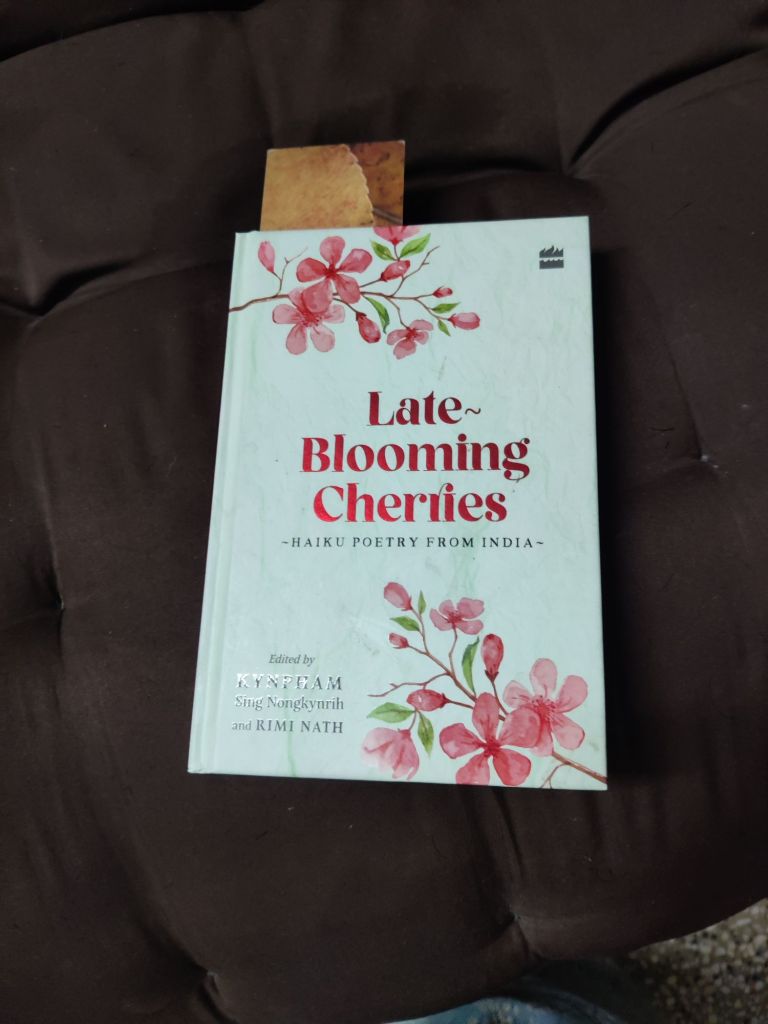
Amidst the pain of bereavement, heartbreaks and suffering  God showers His blessings. A poessy of haiku from India – Late Blooming Cherries – edited by Kynpham Sing Nongkynrih and Rimi Nath. Kynpham is a highly acclaimed Khasi poet from Meghalaya and Rimi Nath is a Professor of Literature in North – Eastern Hill University. I feel highly honoured and privileged to have shared space with haiku stalwarts in this well curated anthology.

But this post is not about me and my humble contribution. As the blurb rightly says this book invites ” readers to reflect on life, nature and human bonds and is meant to be savoured slowly.”

This incredible collection is an eclectic mix of humour, poignancy, irony, introspection and above all serenity.

To quote a few :

crowded bus —

a fly takes the seat

I leave

                    Muskan Ahuja

dissection hall —

can I steal a kidney

for my mother?

                     Kinshuk Gupta

court room

how white the shirt

of the rapist

                     Arvinder Kaur

late-blooming cherries

by the highway –how else can I

describe my haiku?

                       Kynpham Sing Nongkynrih

hot noon

the sweet seller and flies

nap together

                        Milan Rajkumar

As I have said earlier haiku is a way of life. Its beauty and aesthetics lie in minimalism and simplicity. Haiku teaches us to declutter our thoughts, learn from myriad day to day experiences, embrace Nature and heal from within.

This anthology is a must for all poetry lovers, whether or not into haiku, because it gives a glimpse of an alternate form of expression which is experiential as well as a perspective shifter.

…Of Books


Amongst the various books that I have read during this current period of my recovery, two books stand out about which I wish to talk in detail.

Dopamine Detox by Thibaut Meurisse

It’s a short guide on how in today’s times we are high on over stimulation losing in the process the ability to think long term and work towards our main goals. In short, we procrastinate.

Dopamine is a neurotransmitter which stimulates our brains to anticipate rewards. For example, craving for food. Eating is a self gratifying activity , especially, fast food or food with sugar content which makes us salivate for more. However, each time we eat our craving increases because now we are not satisfied with the amount that we have had last. We want a bigger scoop.

Similarly, the time we spend on social networking – checking on the number of likes, comments, views, news feeds, notifications, emails etc. – grows till we become addictive. These are modes of immediate gratification which keep us hooked and over stimulated. This, the author defines as dopamine hijacking – we are overtaken by the external stimuli and require a constant increase in its number in order to remain stimulated or the same amount of dopamine to be released with ever growing number of stimuli. We want to remain on a high.

In order to come back to our natural state of mind, the author recommends the process of under stimulation i.e. to be away from such external stimuli which keeps the dopamine flowing in our bodies and captivating our minds. This is the process of dopamine detox.

This detoxification is necessary because without being calm, mindful, focussed and consistent we reduce the opportunity of channelising our energy into completing our key tasks which may be more challenging or time consuming but have greater impact and fulfillment in our lives.

The author suggests many practical action guides to avoid distractions, sharpen concentration and productivity and detract from a natural relapse into dopamine toxification after an interval.

Recently, the suicide of a promising Instagrammer, Misha Agrawal (on account of fall in the number of her subscribers), is a burning example of how important it is to reclaim a deaddictive and self reflective life than get caught  in the destructive, attention gobbling entrapment of phone, internet, facebook, instagram etc. It is relevant to mention that Misha was not only a digital star but also pursuing a degree course in Integrated Law. To lose a few subscribers would not have been the end of the world for her. She had other career options too.

I recommend this handy self help book to all who wish to adopt an improved and empowered lifestyle.

The Birthday Girl by Haruki Murakami

A rain splattered night. A girl, working as a waitress in a vintage Italian restaurant in the upmarket locality of Tokyo,  has to work a double shift on the most important day of her life – her twentieth birthday. Although she doesn’t have much of a plan, yet,  working late into the night is also not her idea of spending the day.

As fated, the night manager  suddenly takes ill on the same night and has to rush to the hospital. It’s the manager’s nightly duty to  serve dinner as room service to the reclusive owner of the restaurant who puts up on the sixth floor of the same building. Being a rainy night the clientele is scarce. Before his hasty departure the manager entrusts the girl to deliver the dinner in his place.

Years later, the girl who is now settled in life, recounts to her friend the experience of meeting the restaurateur on that night whom no other employee has ever seen.

She tells her friend that the old man, on coming to know that it’s her twentieth birthday,  asks her to name a wish which he will fulfill since she , instead of celebrating, is spending such an important day discharging her duty.

The friend asks her if the wish has been fulfilled. It is here that Murakami leaves the question unanswered.

This is my first Murakami. I chose a short story. A story that left me baffled …. zapped at first. And then…it dawned slowly…

The build up of the story is electric, intense, gripping, atmospheric and yet it leaves a white space for the readers’ immersive intrusion. What must the girl have wished for which the old man after a moment’s thought agrees to grant? Does it change her life ? Undoubtedly, it makes her twentieth birthday memorable!

Every author has his or her own style of writing. Japanese authors, I have figured out, have this art of leaving gaps in the narrative for the reader to intersperse with their thoughts and interpretations (even biases and prejudices …?). It takes  some time to gather that the protagonist is actually sharing her experience to her friend after many years. There is a jumpiness in the storytelling which puzzles the reader.

But why am I talking about this book? Because it reminds me of another widely acclaimed Bengali classic – Mrinal Sen’s Ek Din Proti Din (1979). A girl, the sole breadwinner of a lower middle class family, fails to return from work on usual time. Her family is worried not about her but whether she will at all return home or not. When the girl finally comes home a wave of relief sweeps over the family. But nobody wants to know why she is late. Whether she is safe and not fallen prey to anything untoward. Even if she tries to tell them she is cut short.

When Director Sen was asked by one of his demanding viewers why he in the film did not clarify the reason for the girl’s delay in reaching home, his cryptic reply was “Why? Would you have been able to judge her better after knowing the reason?”

A Few Quick Reads

In school we had a Moral Science class. Yes, you heard me right. It was generally the last period wherein we listened to the teacher reading out stories with moral lessons in a soporific state. But I believe some remnants of what she narrated must have got embedded somewhere that powered my value system throughout life.

I still love kid stories.

108 Panchatantra Stories is a collection of simple stories with lessons to remember attractively  illustrated.

Into The Dark is a haunted house story by C J Loughty. I like his stories but this one was too  yucky and a bit of a drag for me.

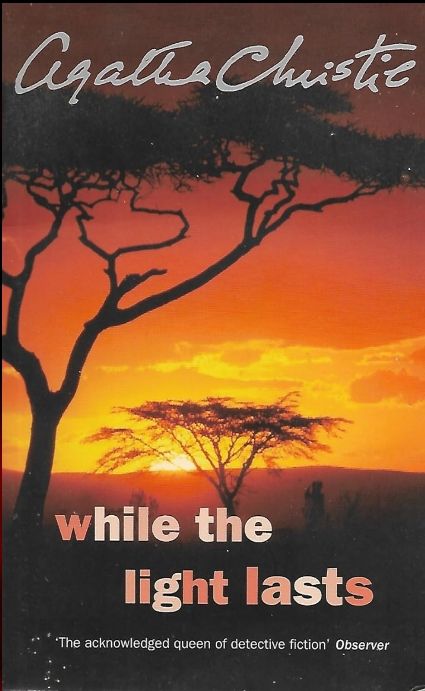
While The Light Lasts – a collection of nine short stories of various hues – paranormal, romantic, love triangle, revenge, murder mystery – by none other than the Dame herself, Agatha Christie. Some of them are writings of her early life which never got the chance of getting republished (60 to 70 years old). The style, therefore, is a bit different but nonetheless, enjoyable.

Sound Of Anklets – a collection of slow burn intimate haiku and senryu by two of my favourite poets Sanjukta Asopa and Kashinath Sarkar. I intend to dedicate a separate post on this one.

Till then…

Au Revoir

Fictitious But Not Frivolous


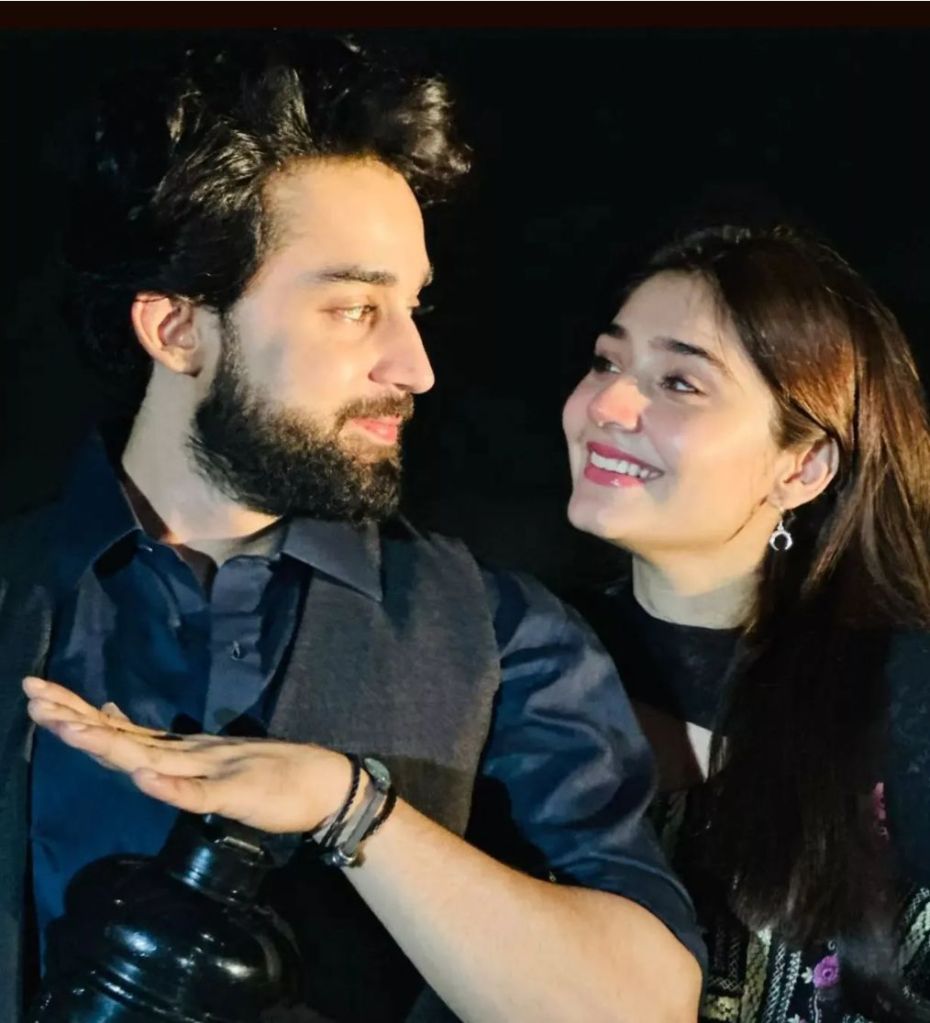
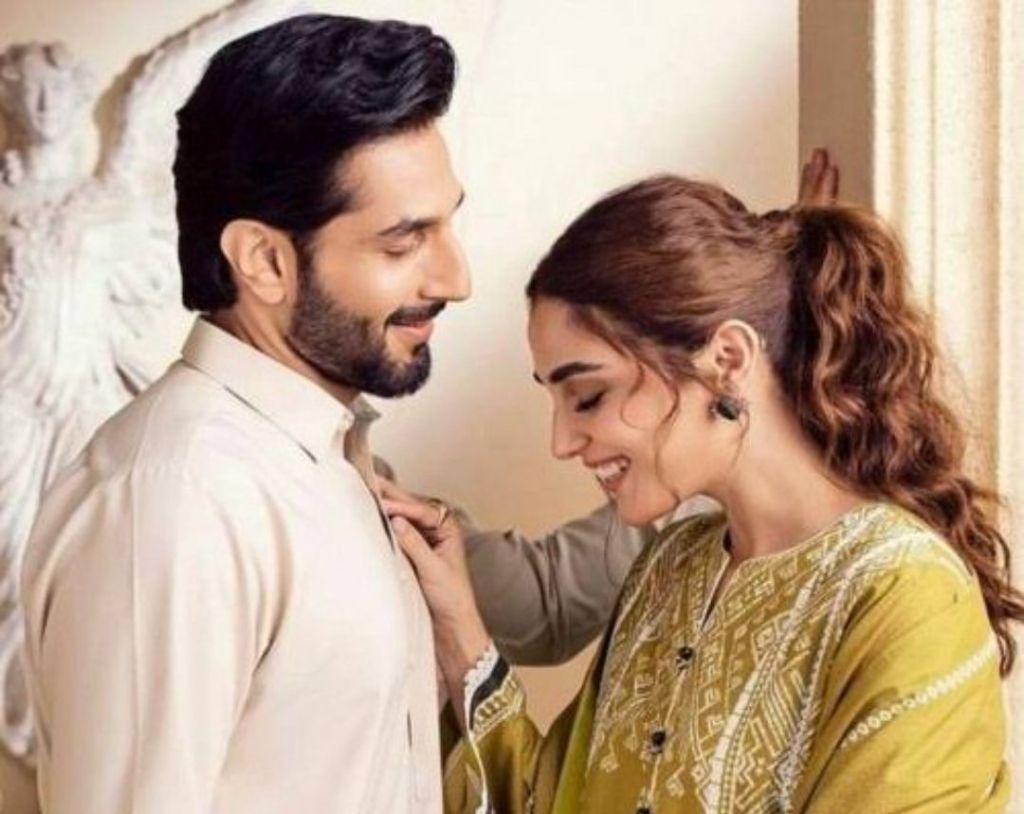
Fiction has been my coping mechanism in trying times. Losing myself in fictional characters is such a fascinating diversion!! I watched a few Pakistani dramas of late.

A well narrated story, be it any genre, can be highly entertaining and engaging.

My recent watches are a mix bag. Some have disappointed me but many  I have enjoyed wholeheartedly.

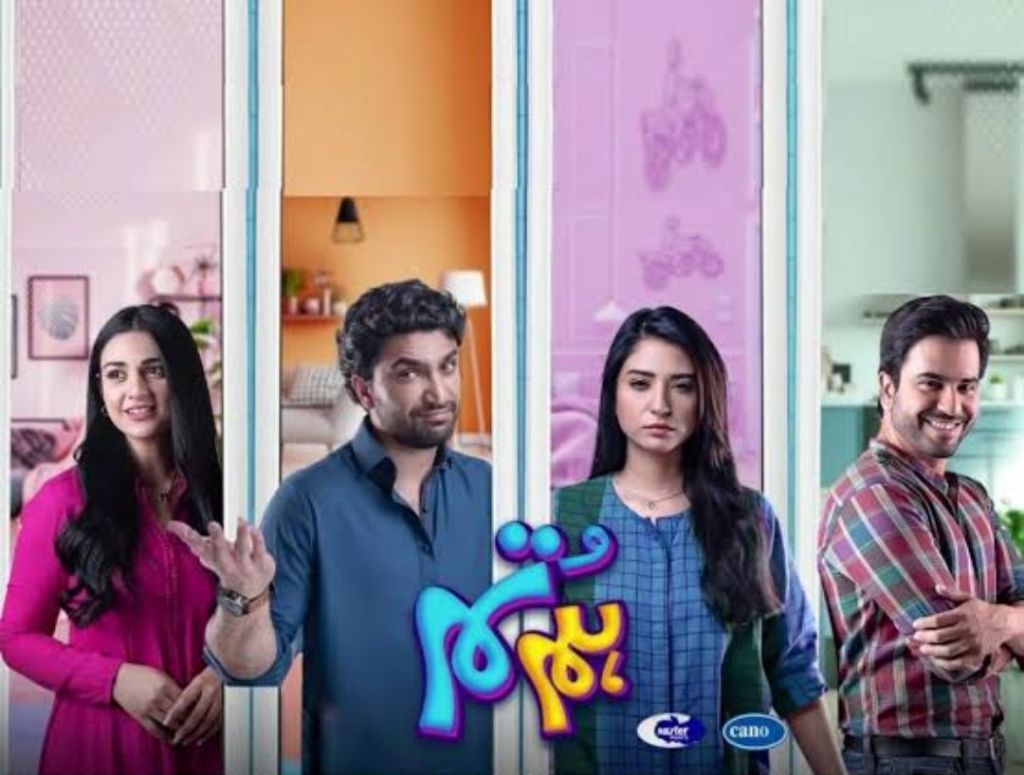
Ishq Murshid (Love Guide)

Shahmeer Sikandar, son of Zubaida Sikandar and  Dawood Ali Khan,  returns from abroad to find the political party, founded by his late mother and currently helmed by his corrupt and manipulative father, dwindling in image.

Dawood wants Shahmeer to take over the reins. Shahmeer is willing but constrained by the interfering presence of Haroon Baig who does not leave one single opportunity to remind that the party is sustained by his financial and political backing. Baig’s over possessive daughter Mehreen wants to marry Shahmeer.

But he is head over heels in love with Shibra, a well educated girl of a modest middle class background, unswayed by money , power or social status. She is also the elder daughter of Suleman Ahmed,  who was the most trusted follower of Zubaida Sikandar.

Shahmeer, in order to woo Shibra, takes on a fake identity of a poor commoner called Fazal Baksh and manages to secure a job in Suleman’s department. Subsequently he comes to stay with his family as a PG and win hearts.

Ishq Murshid, despite having the elements of a serious socio political drama, loses track and drags on like a comedy of errors.

Yunhii (Just Like That)

Naveed, a US based surgeon, returns to his estranged extended family in Pakistan , with his daughter in toe, after twenty seven years to seek forgiveness of the patriarch, Haji Karamat or Dadajaan. Naveed was engaged to Dadajaan’s daughter, Khursheed. However, after migrating to US he refuses to marry her. A heartbroken Kursheed dies of tuberculosis. An enraged Dadaajaan cuts all ties with Naveed. The family is astounded when Dadaajaan decides to welcome Naveed and his daughter, Kaneez Fatima, with a warm heart after all these years.

Naveed wants his daughter to be married in Pakistan. However, Kaneez or Kim, as she prefers to call herself, considers all Pakistanis unworthy of marriage. In due course, however, she agrees to get married to her cousin and Dadaajaan’s favourite grandson, Dawood to “experience marital life”.

From the very beginning, Kim makes it clear that she intends to settle in the US because Pakistan is not fit a place to live. She keeps on urging Dawood, who is a doctor and a devout Muslim, to accompany her back. But Dawood   wants to serve his own country.

Amidst crusades devolving into fiascos, Kim, unsteadily bungles her way into the hearts of her in laws and cousins. Surprisingly, she finds her husband supportive and open to her fight for personal space.

The fabric of an orthodox patriarchal set up imperceptibly transitions into a more flexible and adaptive family under the grudging influence of the impulsive, vocal and tactless Kim. In turn, Kim also comes to acknowledge that the western stereotypical image of a conservative Pakistani Muslim as an out and out anarchist is a misconception.

The serial ends on a positive note with Kim’s return to Pakistan after a year’s sabbatical – a period which she devotes to learn more about her religion and culture.

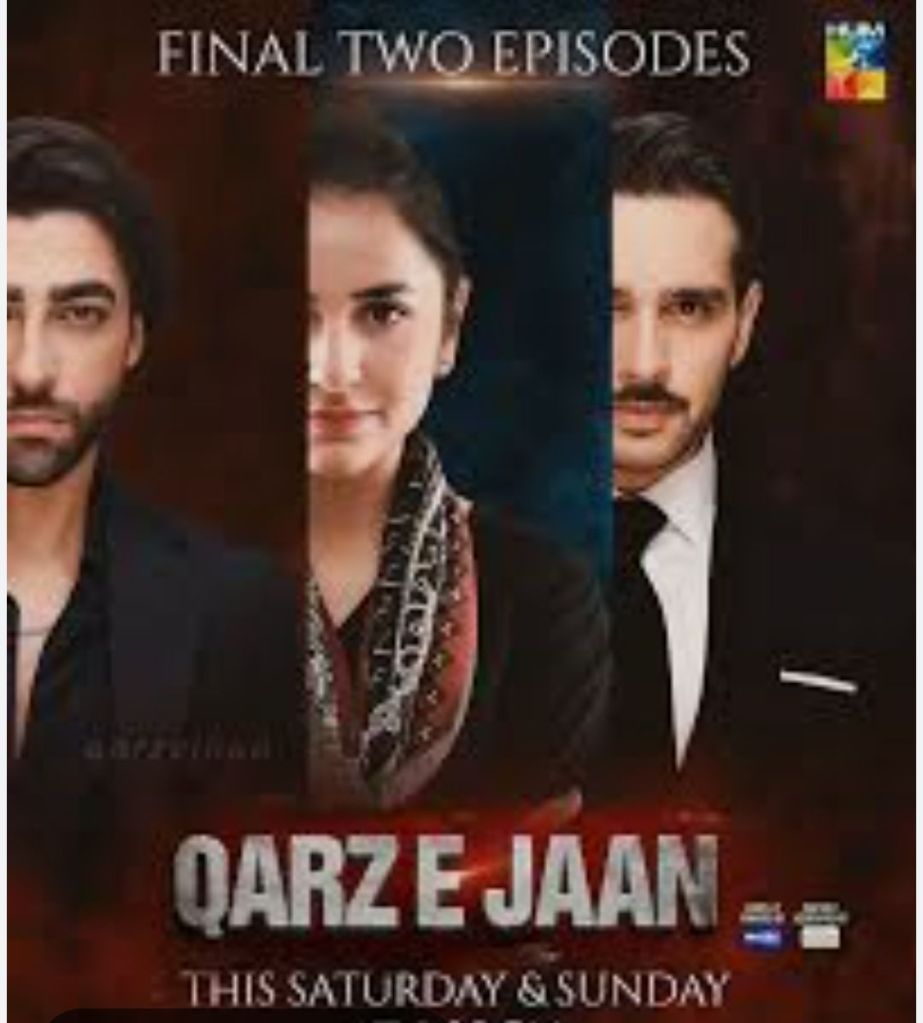
Qarz-e-Jaan (Loan Of Life)

This is the story of Nashwa and her strife to gift her mother, Bisma, widowed at a very young age, a life of love and peace. However, Nashwa has to lock horns with her autocratic grandmother and crooked paternal uncle, Bakhtiar Behzaad,  to fulfill this mission. Of steely grit and determination, Nashwa, agrees to enter into a contract with Bakhtiar to marry Ammar , her cousin (Bakhtiar’s son) in lieu of her mother’s freedom.

Nashwa is a practising lawyer. Ammar has a criminal past of rape and murder. Being of a rich and influential family, Ammar is still at large.

On the other hand, Burhaan, Bisma’s step son and Nashwa’s professional mentor, is madly in love with her. Nashwa’s sacrifice for her mother stuns and pains him. By a twist of fate Burhaan is pitted against Nashwa to defend Ammar in court. But Nashwa is hell bent on putting him behind bars.

Qarz-e-Jaan begins promisingly and effectively portrays the ills of flawed parenting. Though it ends up converting a repentant villain into a hero, still its an intense watch.

Kabhie Main Kabhie Tum (Sometimes Me Sometimes You)

Two offspring of the same family.

Adeel , the elder brother, well qualified and over ambitious, wants to reach the top of the social ladder by hook or by crook.

Mustafa, younger brother, laid back and lazy. A drop out but also a computer genius, does not want to get bound in any routine job.

Adeel is set to marry Sharjeena, a brilliant and modest girl of a middle class family. It’s a marriage arranged by the family.

Adeel’s lady boss, Rubab has a secret crush on him.

When Rubab comes to know of his marriage, she  proposes to Adeel. A greedy Adeel readily agrees and calls off his marriage at the last minute. 

A humiliated and heartbroken Sharjeena requests Mustafa to marry her so that her family is saved from social embarrassment. In a daze Mustafa says yes.

Sharjeena and Mustafa are poles apart. But surprisingly they bond and cling to each other.

Bitter turns of fate make Mustafa realize the importance of money. The carefree genius, once taunted  for being good for nothing, makes his mission to be rich so that he can give the best of everything to his wife and the baby growing inside her womb.

His talent gets recognised. His passion becomes his livelihood. But a lonely Sharjeena misses the erstwhile Mustafa –  his care and company.

A fast paced narrative keeps the viewer hooked. Sadly, the end is a bit of a damper.

Meem Se Mohabbat (L For Love)

Roshii aka Aayat Sultan is a fun loving, happy-go-lucky girl who hails from a family of engineers. Her mother wants her to pass the aptitude test for  engineering too. But Roshii makes it a point to fail  seven consecutive times because studies will prevent her from having fun. She tries all the tricks up her sleeve, including getting married, to avoid  enrollment in college.

Roshii’s father gets her into his friend’s office as an intern so that her restless energy and overactive brain can be engaged in healthy pursuit. Roshii is not interested in the job but  definitely intrigued by her stern and disciplined boss, Talha Ahmed.

Roshii’s whirlwind presence  turns Talha’s life upside down as she works less and troubles more.

Unknown to Talha, Roshii is a witness to his break up with his fiance, Sabika. She jells well with Talha’s father and young nephew suffering from speech impair. They too, in turn, like her very much.

Talha carries a baggage of a traumatic past. He thinks it will be unjust if he encourages Roshii to fall in love with him. On the other hand, Roshii passes the aptitude test and gets admitted in college to please Talha and change his opinion about her.

Meem Se Mohabbat is a romcom in its truest sense. Trending in India and Pakistan it has grossed million views on You Tube.

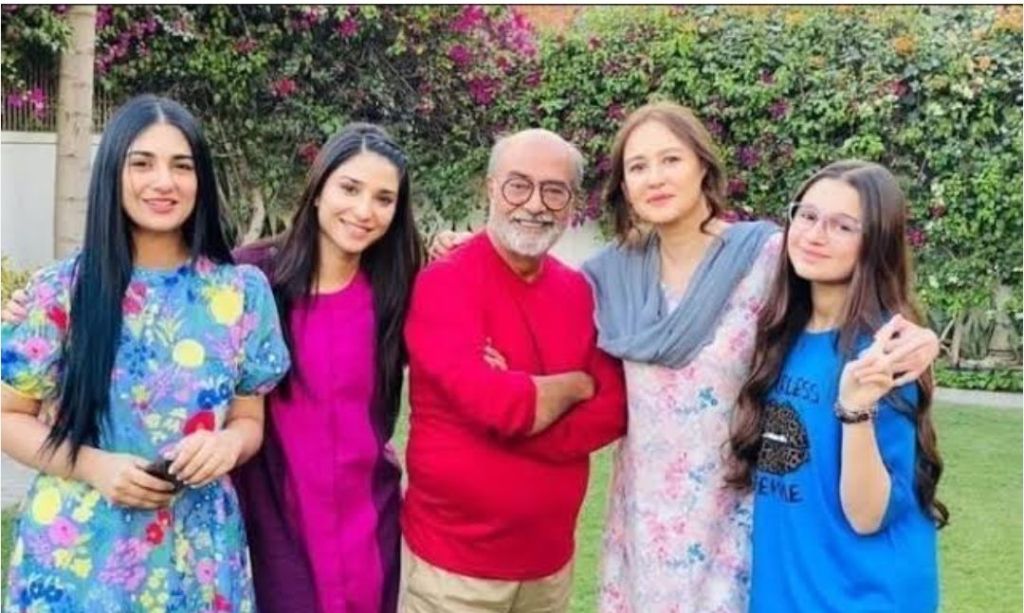
Hum Tum (Me And You)

They are neighbours. They have grown up together. They are  college mates. This is the story of two  genius kids embroiled in personal rivalry. Their goal is to seek the attention and appreciation of Professor Qutub-ud-din.

Qutub-ud-din and Sultan Ahmed are best friends and neighbours. While Qutub-ud-din is a highly qualified Chemistry Professor Sultan has spent his entire life in frivolous betting and losing hoping that one day he will surprise everyone by making it big.

Qutub-ud-din has three daughters – Maha, Neha and Sasha. Maha wants to do a PhD in Human Psychology. Neha is a brilliant student with a streak of evil. Sasha, a school kid, is an ace hacker. Qutub-ud-din’s father, Safiullah, is a celebrity tick-tocker by the pseudonym, Daddoo Handsome. Qutub-ud-din’s wife Ulfat’s daily project is to hide from her husband whatever does not fit into his rigid views about life, family and relationships.

Qutub-ud-din is not a happy man. He cribs about being deprived of a son. He is ashamed of his father’s insane online fan following. He is dissatisfied with his wife for not being a perfect homemaker and cook and nor having adequately trained their  daughters in these departments. However, he has a very soft corner for Sultan’s younger son, Aadam.

In sharp contrast, Sultan has two obedient  sons – Sarmad and Aadam and a daughter, Milie who is a karate champion. Sarmad is an excellent chef running the family restaurant. Aadam is Neha’s competitor in class and assistant to Sarmad in business. Both the sons are perfect in home management too. Milie and Sasha are school mates and best buddies. Sultan’s wife Halima valiantly puts up with her jobless husband. Her stressful marital relationship has made her attention deficit and forgetful. Halima’s mother, Tamanna, runs a marriage bureau. However, matches made through her agency have a history of running into divorces.

Neha and Aadam have grown up in fierce one-upmanship playing pranks on each other. However, both realise the other’s talents though they don’t express it in so many words. However, their equation changes drastically with the entry of Sarim, son of Professor Javer, Qutub-ud-din’s colleague.

Hum Tum is a spool of quirky characters coming to terms with the imperfections of their lives in quaint ways. A spoof on role reversals this is a must watch.

Thus Speaketh A Foodie


What is your favorite restaurant?

I have learnt of late that even a foodie’s taste buds do not always crave the same type of food all the time. With age, health condition,  nutritional requirements and mental state gastronomical yearnings change.

My first preference is home food. But sometimes one surely requires chatpataa (delectable) food to get over the boredom of daily routine. Let me once again emphasize that the longings of the stomach are not always related to the gut. It is purely psychological. Lack of excitement in life can also prod one to go for spicy stuff just to bring in that extra zing absent from the daily rut.

Before the advent of Zomato and Swiggy, lunching or dining out was a must with occasional outings. I am talking about my childhood days…

I remember Karachi Sweet Shop in Ajmal Khan Market, Karolbagh, used to be our favourite joint for a plate of lip smacking chhole bhature post window browsing/regular shopping. Subsequently, Karachi Sweet Shop fans got smitten  by Roshan Di Kulfi located in the same market. The latter’s eponymous kulfi faluda was something to die for.

Udupi, in Channa Market, was another family restaurant which served traditional South Indian food. As soon as one entered the premise, the  typical aroma of dhosa, idli, vada and sambhar filled the nostrils. Choices at that  time were limited but what was served in terms of   price,  quality and quantity was most satisfactory.

Yet, in those days it was not fashionable to eat out. Rather friends and relatives were invited home for elaborate meals, especially, during Bijoya Dashami, soon after Durga Puja. My mother was an excellent cook. We, as a family, believed in treating guests as gods. They were to have their fill.  Mother would spend the whole day preparing exotic food – mutton cutlets and chops with rashogollar paayesh – a dessert made out of condensed, sweetened milk in which swam mini rasagullahs or sweet  dumplings. Sometimes the paayesh would get replaced by chhaanaar jilipee – jalebis in the shape of concentric circles made out of paneer fried and immersed in thick sugary syrup till each piece  got fully soaked and dripped. Those were the days !!

With the passage of time,  Karolbagh’s transition from a purely Bengali (nicknamed mini Kolkata) residential hub to an out and out commercial area, robbed the locality of its vibe and dramatically altered the social landscape. The householders ensconced for eons gradually migrated to the suburbs or the upcoming Chittaranjan Park which then came to replace the former in all its quintessence.

We too moved towards the north-west wherein Delhi  lost its prefix “new” and grudgingly  came to be acknowledged as a necessary extension of the dilwaalon ka shahar (the city with lots of heart).

In due course, North-west suburb developed  into one of the most happening places of the NCR or the National Capital Region. The Metro tracks (Red Line) was the first to be laid here. A network of other lines – proud engineering marvels – followed suit. Underpass (first of its kind again) coupled with  strings of flyovers,  District Court and a number of hep Malls are prestigious  local landmarks.

But what is most revelling is the number of eateries lining the main road just a stone’s throw away. Prem Se is a bakery which excels in eggless cakes, pastries and cookies. Bansal’s sweets made of pure desi ghee (clarified butter) are gastronomical delights. The famous Gulab competes fairly with Bansal’s. The crowded Food Courts in the Malls have a wide variety of offerings. 

Notwithstanding the essentially vegetarian culinary fabric of the locality,  mouthwatering kebab joints,  roadside barbecues,  Behroze’s Biryani and Moti Mahal’s signature delicacies also have a strong foot hold wooing the die hard non vegetarians. Not to mention the staple brands – Haldiram, Bikanervaala, KFC, Domino’s, Pizza Hut and McDonald’s – for the GenZ. All are readily accessible.

Notwithstanding the local availability,  Delhites are adept at snooping out their respective  hang out places far and wide. Be it the unassuming kiosk in Jantar Mantar for a plate of Utthapam and Kesar Halwa or waiting patiently at Sarwana Bhavan for a wholesome South Indian fare, the irresistible melt-in-the-mouth mutton steaks of Hotel Ambassador or the aristocratic Ginza’s understated Chinese, Connaught Place (CP) is Central Delhi’s all time family favourite. Nirula’s has always been the college bunkers most frequented icecream parlour.

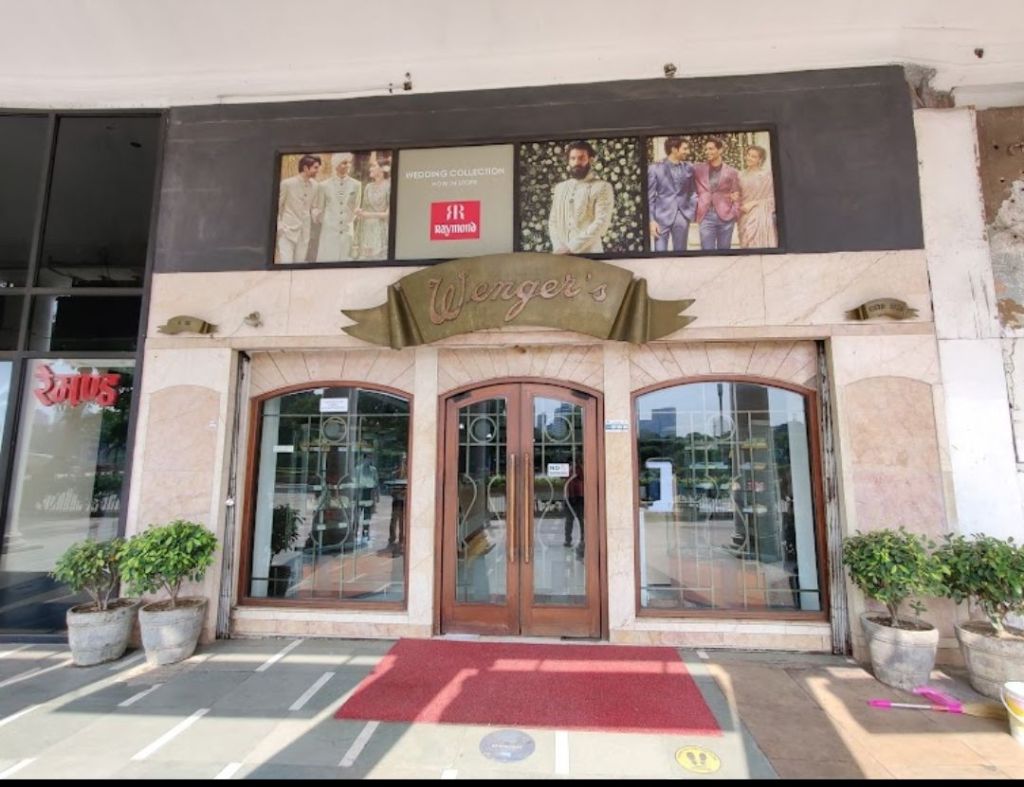
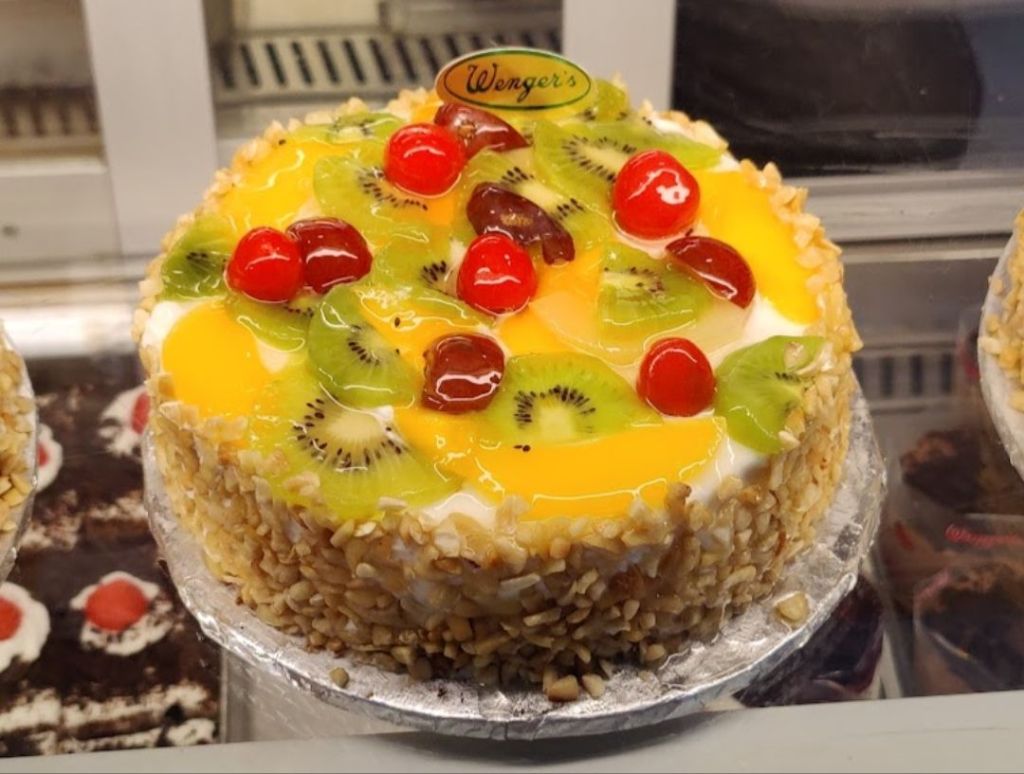
Oho! Did I not tell you about Wenger’s established in 1824 to serve tea and confectionery to British troops settled in Delhi? It was my father’s favourite – the elegant chicken sandwiches, the rich cakes and pastries and the swoon worthy mutton shami kebabs!

Wenger’s

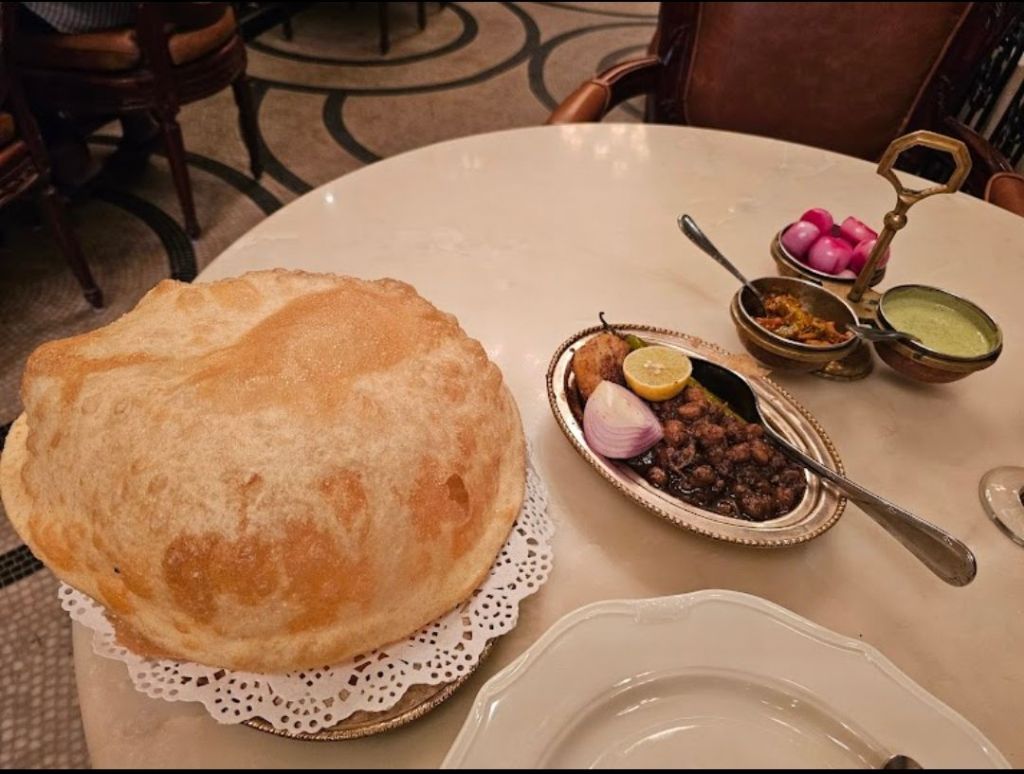
And how did I forget Kwality next to Regal Cinema where my maternal uncle took all us kids for softies. Kwality has transformed itself into a posh and fine dining restaurant in due course. It serves Delhi’s most expensive Chhole Bhature. It’s bombastic bhatura is the talk of the town!

Kwality’s Chhole Bhature

Delhi is a foodie’s paradise. There is O!Calcutta for a lavish spread of authentic Bengali cuisine in Greater Kailash Part – II. Their boneless hilsa fish is a must try. The Kathail (Jackfruit) Biryani along with Puri Basket with an assortment of chutneys or the tantalizing Veg Thali on a desultory afternoon at the  Potpourrie in  Bihar Nivas is ideal. If you wish to explode your taste buds with  variants of state cuisines at one spot Delhi Haat should be your pick. If you are a momo addict rush off to Sikkim House.  Are you salivating for Spicy Biryani?  Check out the day they serve it in Hyderabad House. O! you are the street food type then your go-to place is Bengali Market. And if you have a sweet tooth don’t miss Annapurna Sweets in Yusuf Sarai Market right behind the IndianOil Building. You will go berserk once your tongue implodes with the delightful mishtis or sweets of Bengal.

Alas! My only lament being in Delhi for over five decades is that I have not been able to  experience the food haven of the older part of the city – Chandni Chowk or Sadar Bazaar! Of course, I have had the good fortune of savouring the mutton at internationally acclaimed Karim’s right behind Jama Masjid ! But I am yet to visit the legendary paranthe wali gully where your guts are put to real test –  each parantha fried in pure desi ghee is equivalent to two! My to-visit list also includes Haldiram near Chandni Chowk Metro Station which is said to be the original. All the rest in other parts of the city are mere franchises.

So, now you know how hugely impossible it is for a Delhite to single out one particular restaurant as the favourite ?

Wenger’s Cake